Porsche Mission S design: exterior and cockpit
Porsche Mission S is a mid-engined sports car concept presented on 15 October 2026 in Queens, New York. The vision model previews Porsche’s evolving design identity and a planned super sports car platform positioned above the 911.
Developed under the leadership of Tobias Sühlmann, Vice President Style Porsche, the concept combines references to the brand’s historic vehicles with new approaches to exterior architecture, interior ergonomics and driver interaction. It forms part of Porsche’s Sportwagenschmiede ’35 strategy, which outlines the company’s direction through 2035.
Exterior design and Porsche references
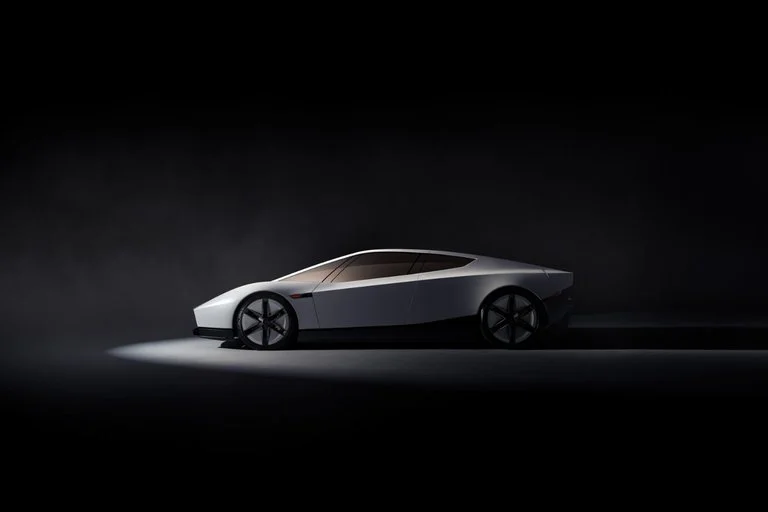
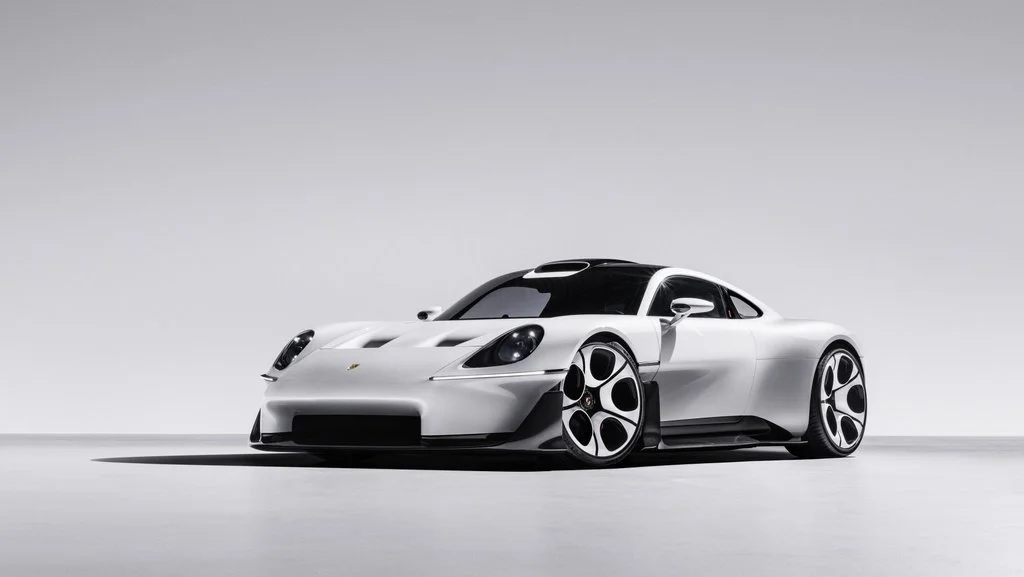
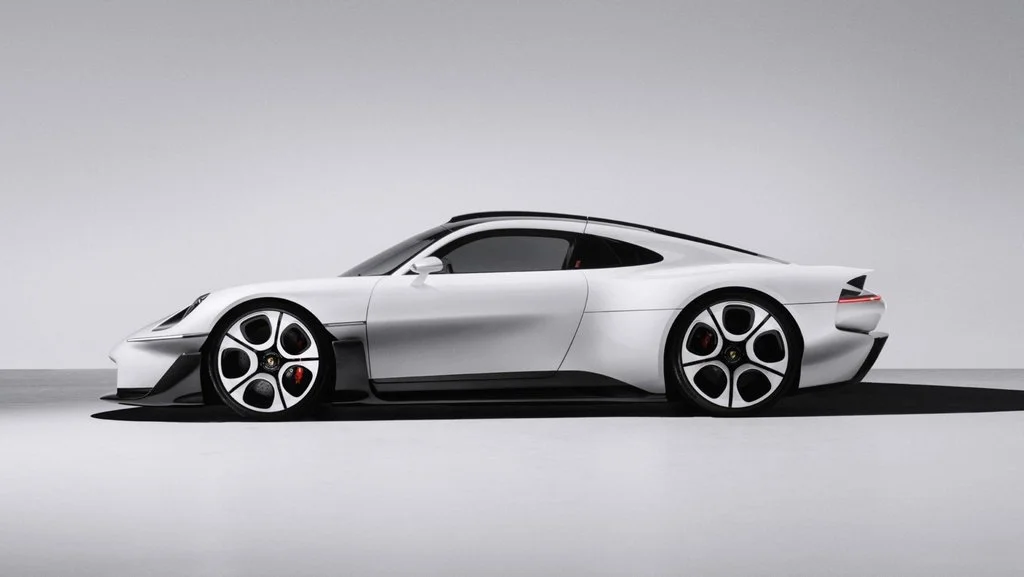
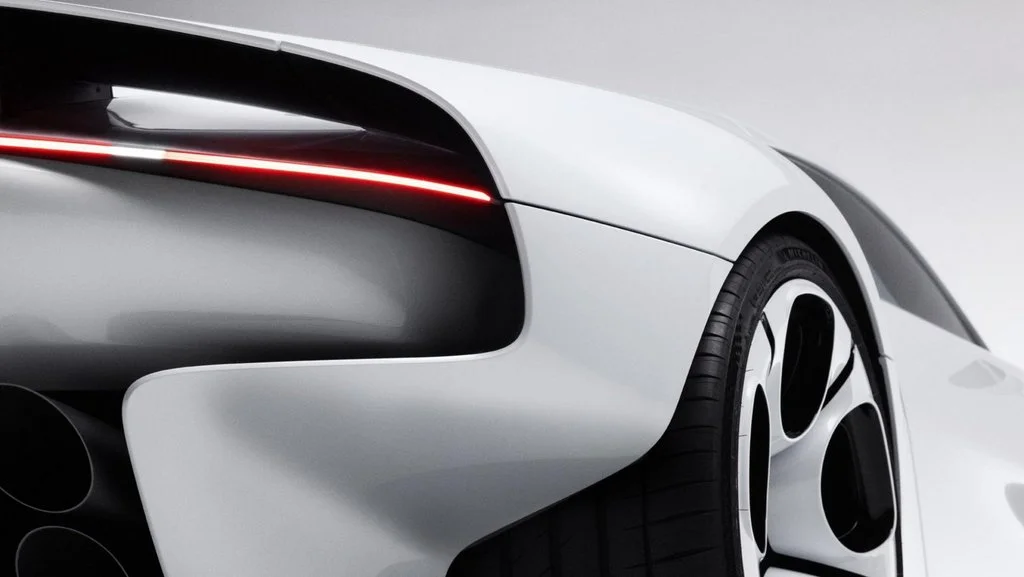
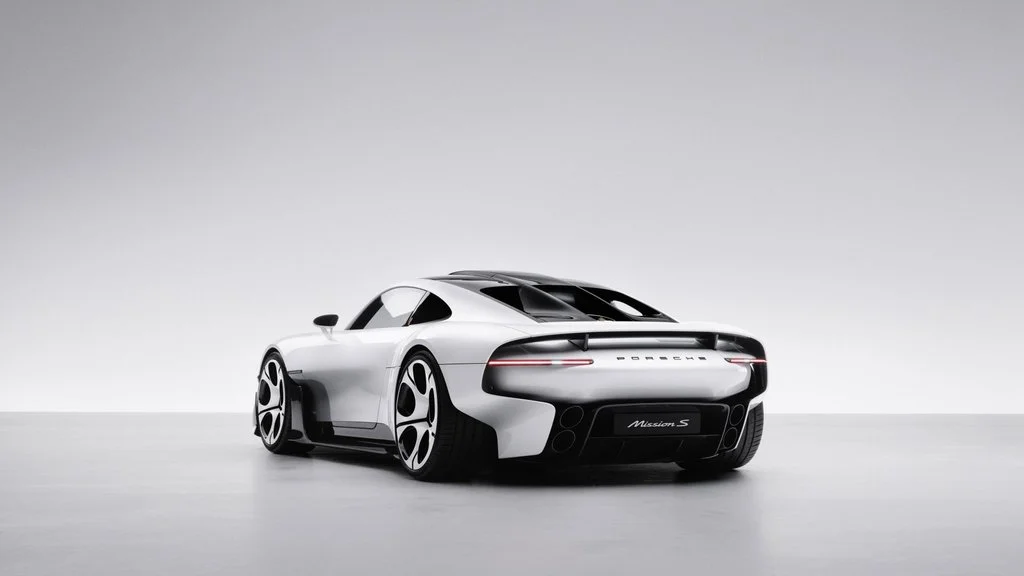
The exterior design develops familiar Porsche proportions through an exceptionally low body, pronounced wheel arches and an extended roofline. Its sculptural volumes appear to float above the technical elements beneath, establishing a distinction between the upper body and functional components. A continuous line connects the front and rear lighting signatures, while circular headlights recall the 911. Additional references include the flat front of the GT1, the roofline of the 959 and the rear architecture of the GT1. The lightweight wheels reinterpret the characteristic dial design of the Porsche 928.
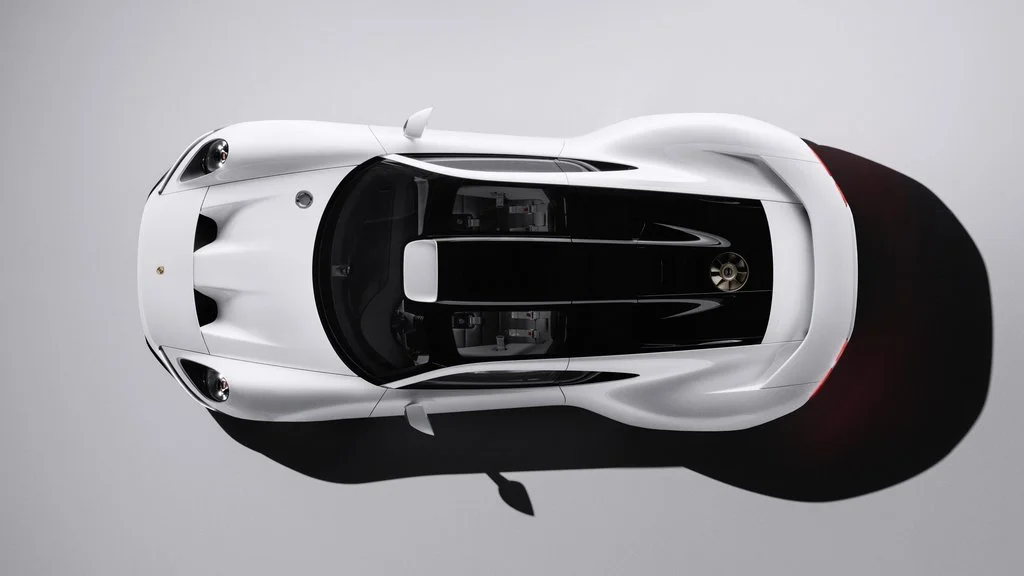
In the side view, the black sill and the deep cutaway behind the front wheel separate the white upper body from the road. That contrast gives the car a layered appearance without interrupting the line running along its flank. The overhead view makes the same contrast visible across its width, with a dark centre section framed by the broad white fenders.
Several technical features are integrated directly into the Porsche Mission S exterior. The centrally positioned engine determines the vehicle’s proportions, while a fully integrated active rear wing contributes to its aerodynamic architecture. A cooling solution recalls the radiator fan of the Porsche 917. The show car’s palette combines Firn White Metallic, Light Red Metallic and Black Chrome, with Special Black used in the interior. These colours reference Porsche’s motorsport heritage and establish a visual connection between the contemporary concept car and its historical precedents.
Inside the Mission S cockpit
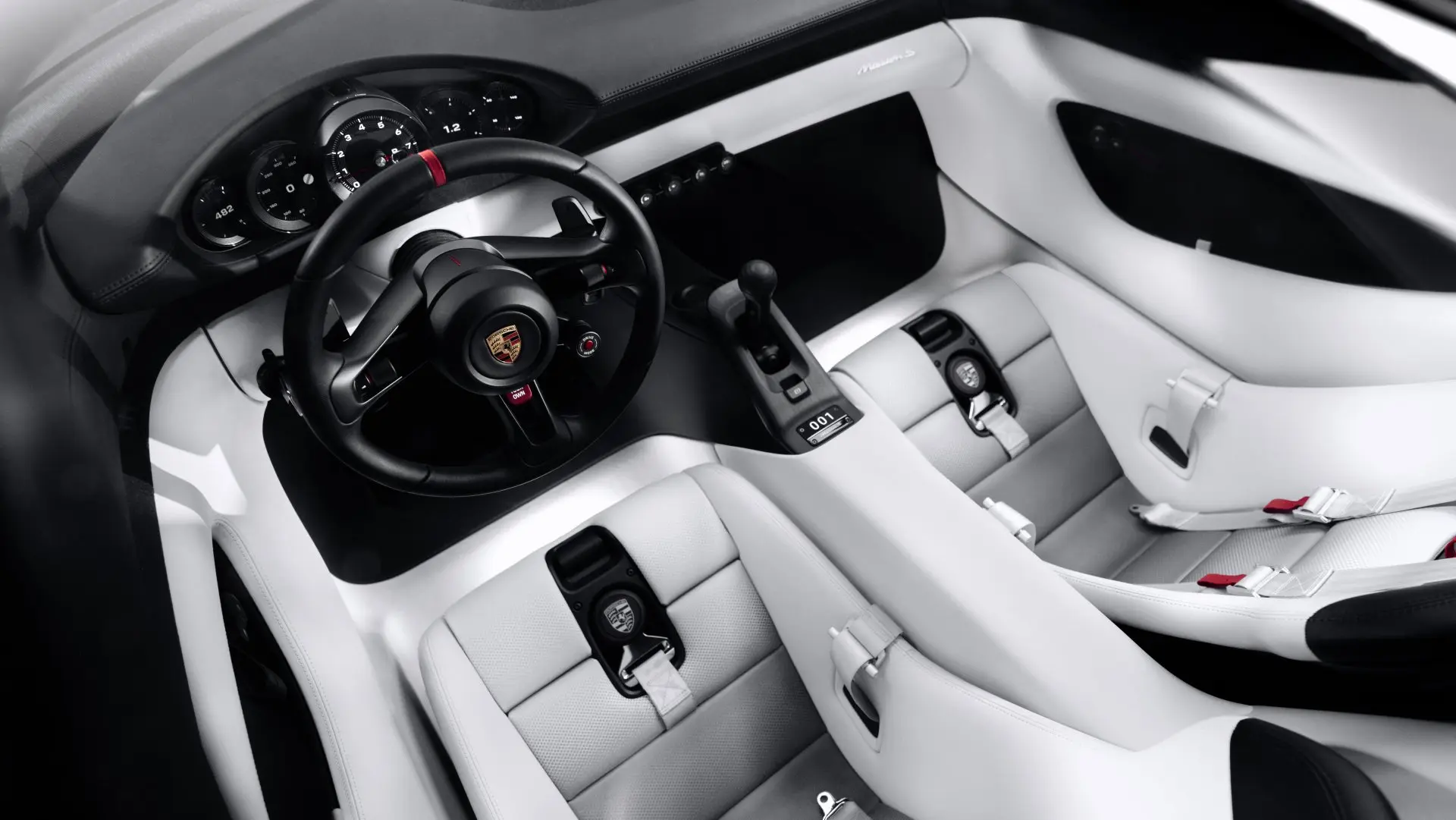
Inside, the Porsche Mission S adopts a driver-oriented interior informed by the Porsche 550 Spyder and 356. Two continuous architectural lines extend across the dashboard and doors, reinforcing the low seating position. Physical switches and mechanical controls are combined with digital interfaces, with five circular instruments positioned behind the steering wheel. The central rev counter incorporates an analogue needle and an integrated display, moving closer to the driver according to the selected driving mode. The surrounding instruments can also change their arrangement, adapting the information displayed to different driving conditions.
The cockpit image gives the instruments a distinct visual boundary: the dials and steering wheel sit within a dark band, with the white centre tunnel and seat shells below. The circular forms concentrate attention in front of the driver, while the broad passenger-side panel gives the rest of the dashboard a quieter presence.
The dashboard of Porsche Mission S deliberately excludes permanent central and passenger displays. Instead, a retractable MagSafe-compatible smartphone system provides navigation and additional information when required. The approach differs from the Tesla Roadster cockpit, where a steering yoke sits alongside a central touchscreen and two forward displays. Newly developed push-pull controls offer access to driving and comfort functions, while the redesigned Sport Chrono element retains its analogue character. Other details include repositioned electric seat controls, an integrated seatbelt buckle and a specially designed key holder to the left of the steering wheel.
Production plans and confirmed details
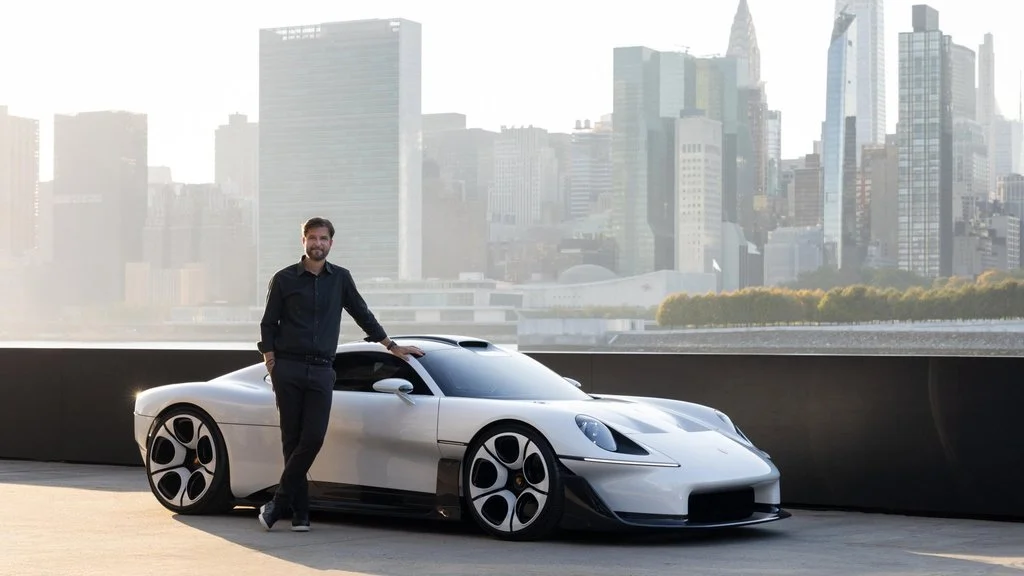
The Porsche Mission S made its debut on a pier in Queens where the Porsche 550 Spyder was photographed in 1953, connecting the presentation to an important moment in the company’s history. Beyond its role as a design study, the concept establishes the direction for a new mid-engined super sports car platform intended to sit above the 911. Porsche’s October 2026 presentation does not specify power output, pricing or a production launch date. The Mission S therefore serves as both an expression of the manufacturer’s evolving design language and an indication of its future product strategy.
All images courtesy of Porsche