Clematis Armandii Credenza by Daniel Swarilov captures nature in cast aluminium
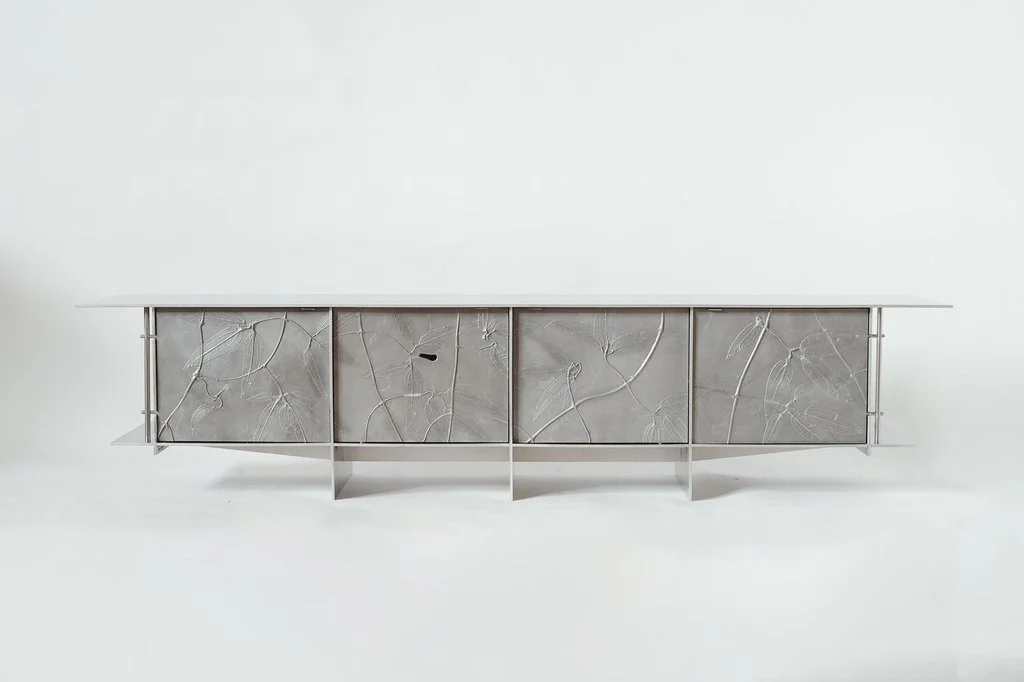
Daniel Swarilov‘s Clematis Armandii Credenza is a sculptural furniture piece developed in London that preserves the delicate forms of plants through cast aluminium. Completed in 2026 as part of the designer’s Herbarium series, the credenza features four botanical reliefs produced from direct impressions of gathered Clematis armandii specimens. Each panel records the intricate details of the original vegetation, introducing natural textures into a precisely fabricated metal structure. The project connects traditional casting techniques with contemporary furniture design, examining how organic materials can be documented and preserved through metalworking.
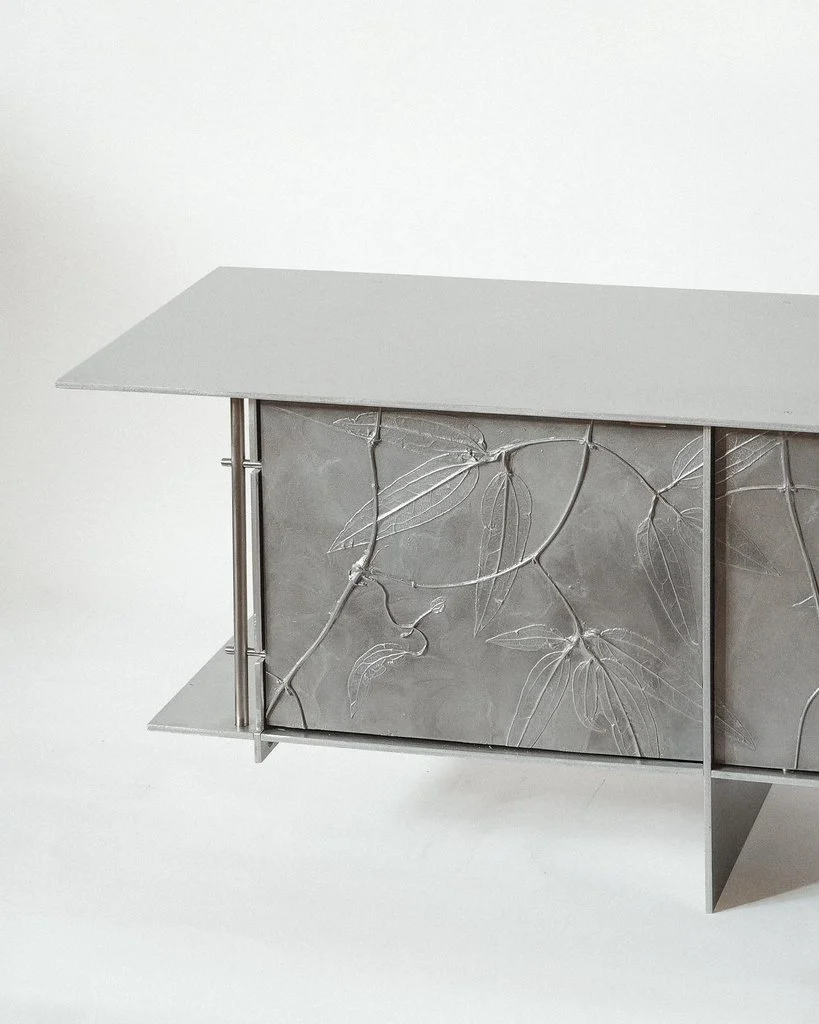
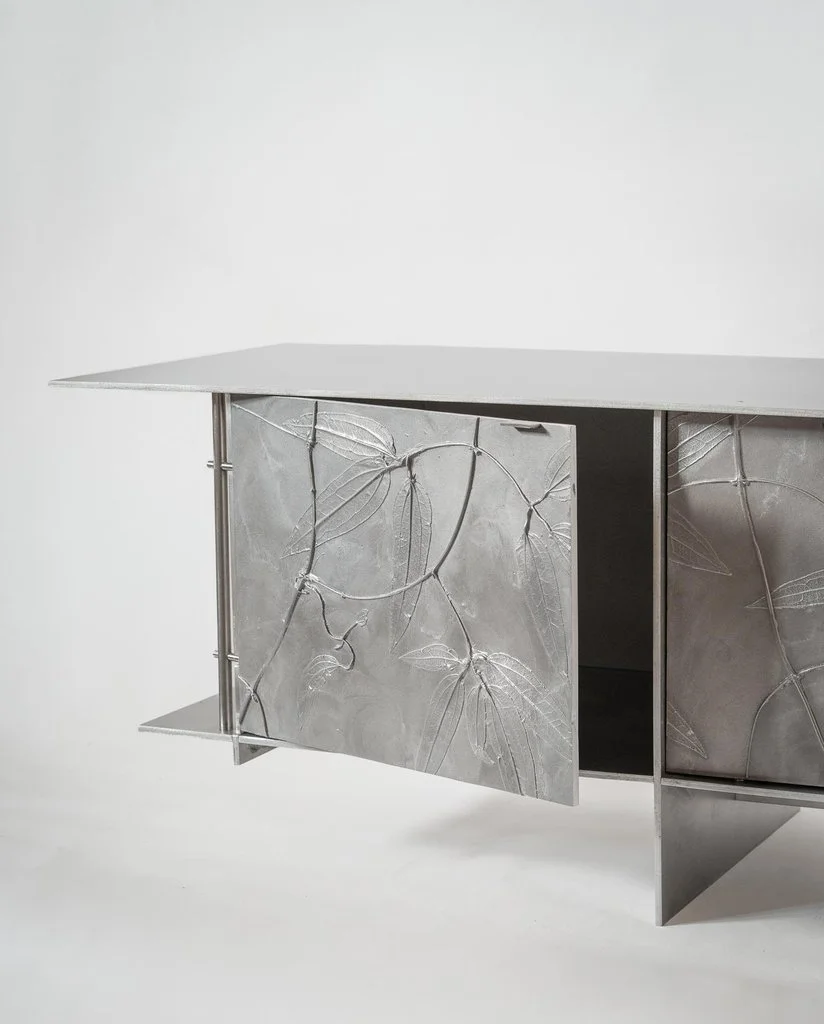
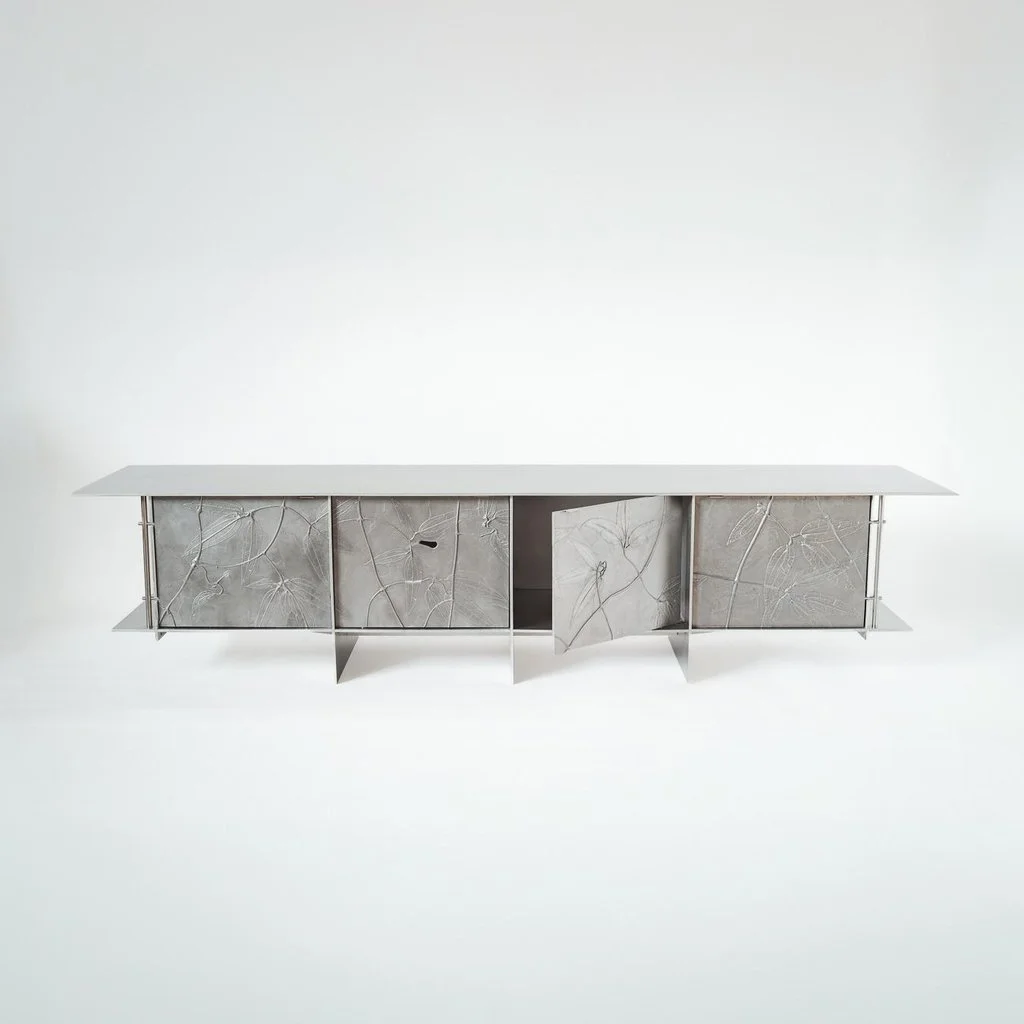
Measuring 190 centimetres wide, 35 centimetres deep and 45 centimetres high, the Clematis Armandii Credenza consists of four individually cast aluminium doors enclosed within a fabricated aluminium framework. Stainless steel components complete the construction, reinforcing the object’s architectural character. The elongated proportions establish a clear geometric composition, while the botanical surfaces introduce irregular patterns across the front. Each relief retains the distinctive outlines and textures of the plant specimens, producing subtle variations between the four panels. The contrast between these natural impressions and the controlled geometry of the structure gives the credenza its sculptural identity.
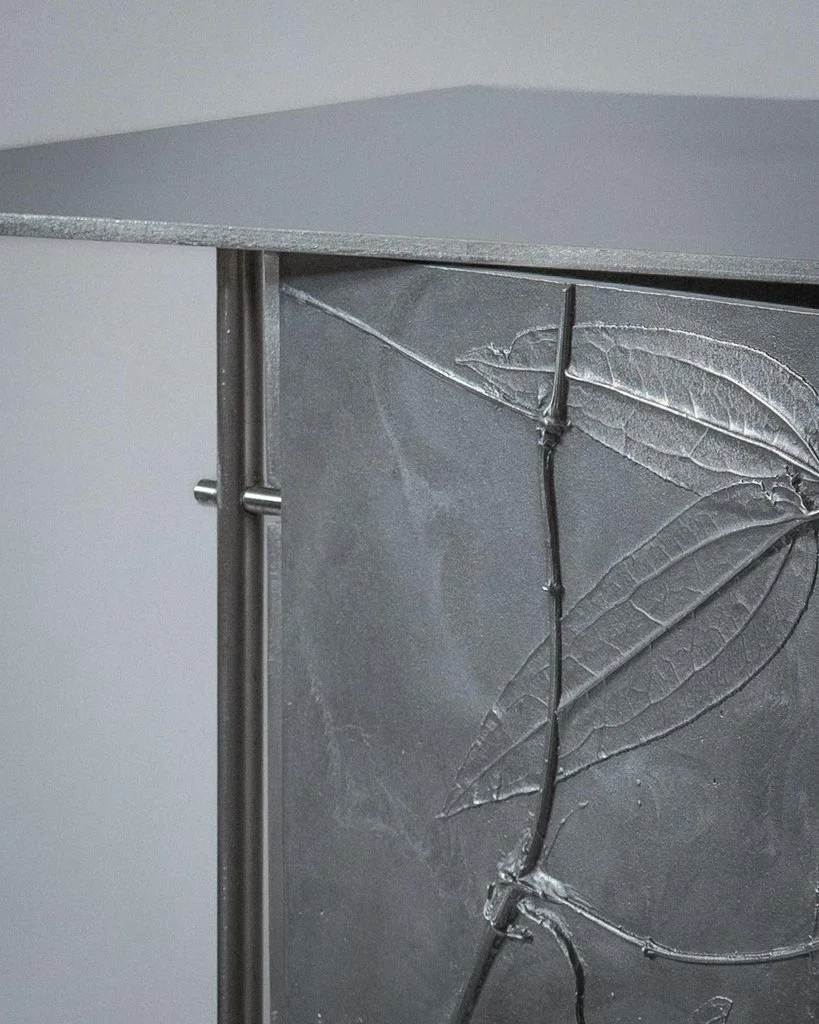
The production process begins with gathered specimens of Clematis armandii, an evergreen climbing plant known for its foliage and flowers. Swarilov uses direct impressions to transfer the plant’s physical characteristics into cast aluminium, recording details that would otherwise disappear as the organic material deteriorates. The resulting metal surfaces retain the individual arrangements of the specimens, making each botanical relief unique. Through this approach, the designer treats casting as a method of documentation, allowing natural forms to become permanent components of a functional object.
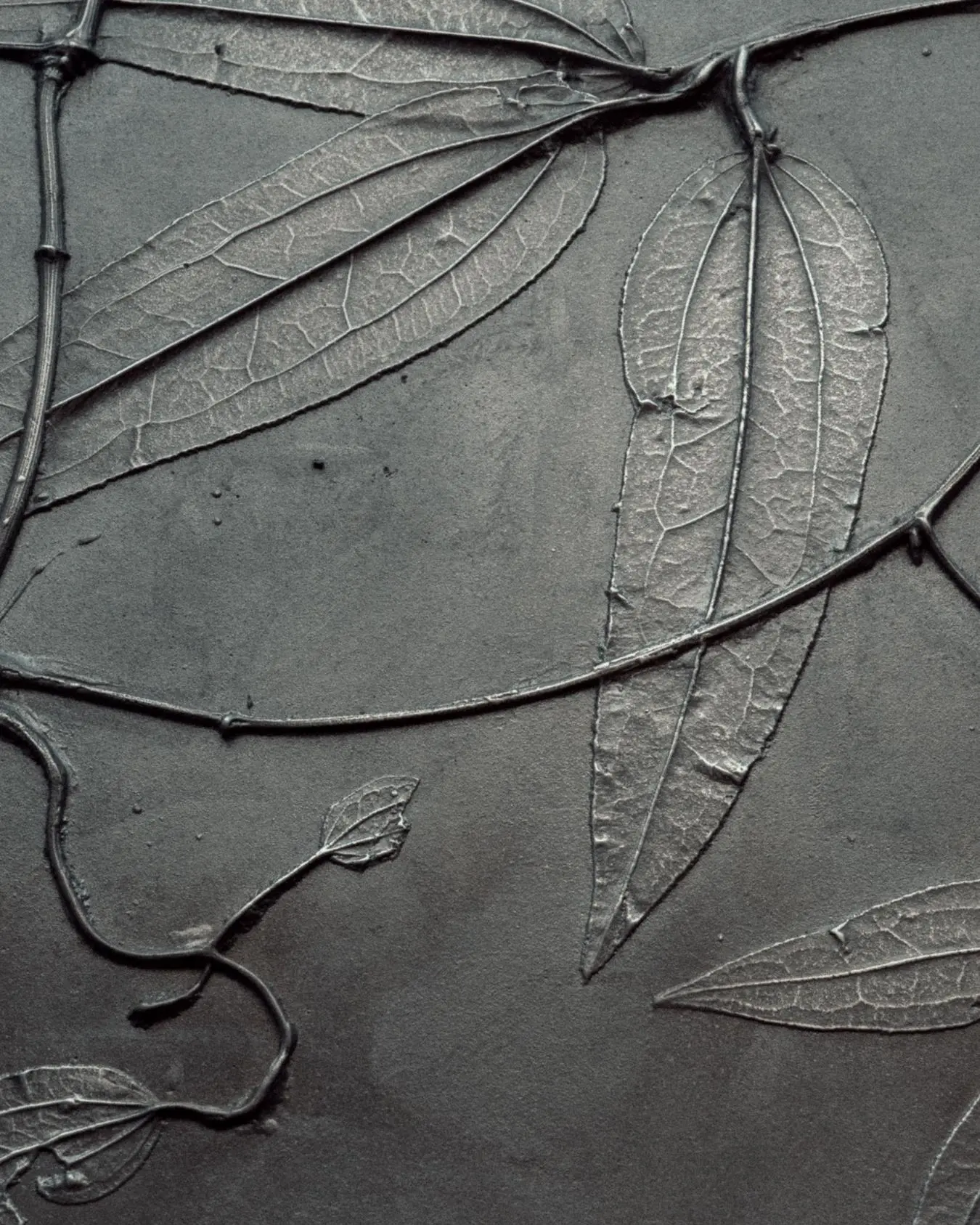
The Clematis Armandii Credenza draws on the historical traditions of botanical herbariums and reliquaries. Herbariums preserve plant specimens for study and documentation, while reliquaries are designed to protect objects of particular significance. Daniel Swarilov references both practices through the arrangement of the cast panels within an architectural enclosure. The four reliefs function as individual botanical records while collectively forming the front of the furniture. This relationship between preservation and utility extends to the wider Herbarium series, which includes aluminium diptychs and larger botanical compositions developed from gathered vegetation.
Based in London, Daniel Swarilov works across sculptural furniture, functional objects and jewellery, with a practice informed by architecture and traditional metalworking. He studied at the Architectural Association before training under a goldsmith and at a historic London iron foundry. His work incorporates sand casting, lost-wax casting and direct casting, frequently using botanical and geological specimens to investigate surface, texture and material. These techniques inform his approach to collectible design, where natural references remain identifiable within carefully constructed metal objects. His work has been presented at the Royal Academy of Arts, the Victoria and Albert Museum and Alcova Milano.
All images courtesy of Daniel Swarilov, shared with permission