BEYOND SEEING brings light material and spatial perception into focus at Villa R
BEYOND SEEING at Vienna Design Week 2026 brings together objects, spatial systems and visual experiments that examine how perception changes through material, light, position and physical experience. Curated by Yanwen Hang and Xinyue Hope Shen, the exhibition focuses on the shifting boundaries between surface and depth, stillness and movement, reality and illusion, and two- and three-dimensional space. Presented during the 20th anniversary edition of Vienna Design Week, which runs from 25 September to 4 October across around 50 locations, the project considers design as a way of reconsidering how people see and experience their surroundings.
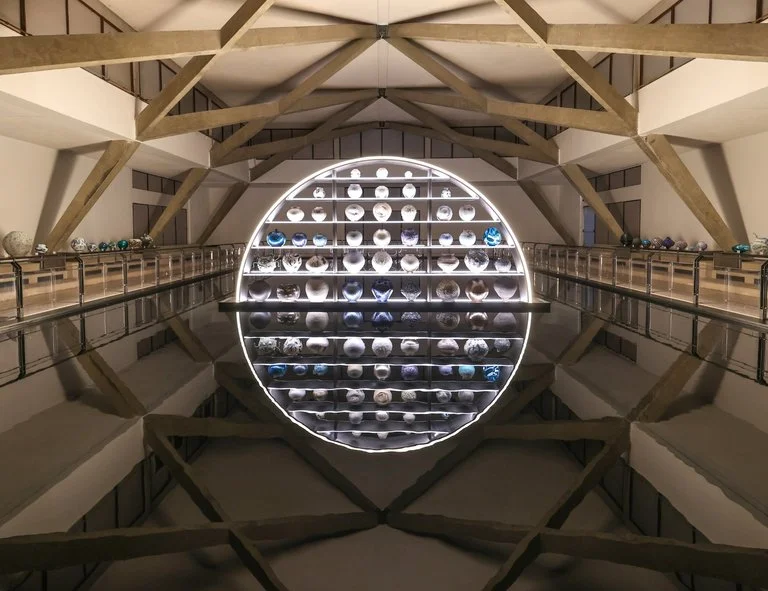
The exhibition is installed at Villa R in Vienna’s 19th district, where the renovated historic villa provides a domestic architectural setting that changes the way the works are encountered, offering an intimate curatorial lens akin to how Milan Design Week 2026 through the lens of Lynne Khouri documents international showcases. This choice follows Vienna Design Week’s wider approach of extending design beyond conventional galleries, trade fairs and exhibition halls into public spaces, hotels, restaurants, temporary venues and neighbourhood settings—a curatorial ambition also seen across Central Europe as Designblok 2026 brings light-themed design festival to Prague. Within Villa R, the existing architecture becomes part of the experience, allowing relationships between object, room and viewer to shift as visitors move through the building.
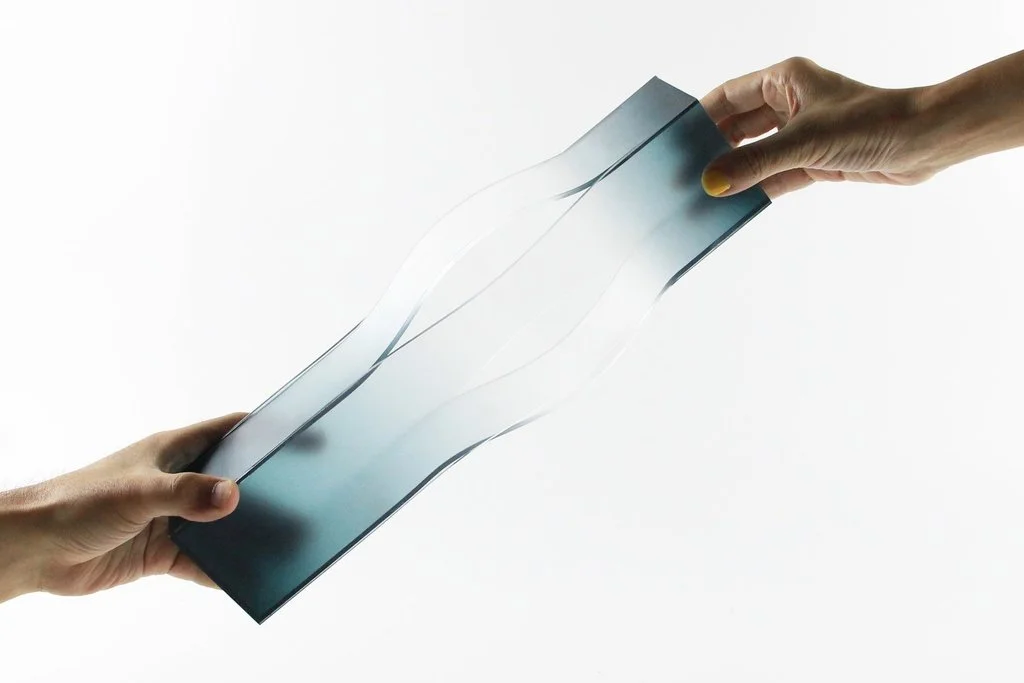
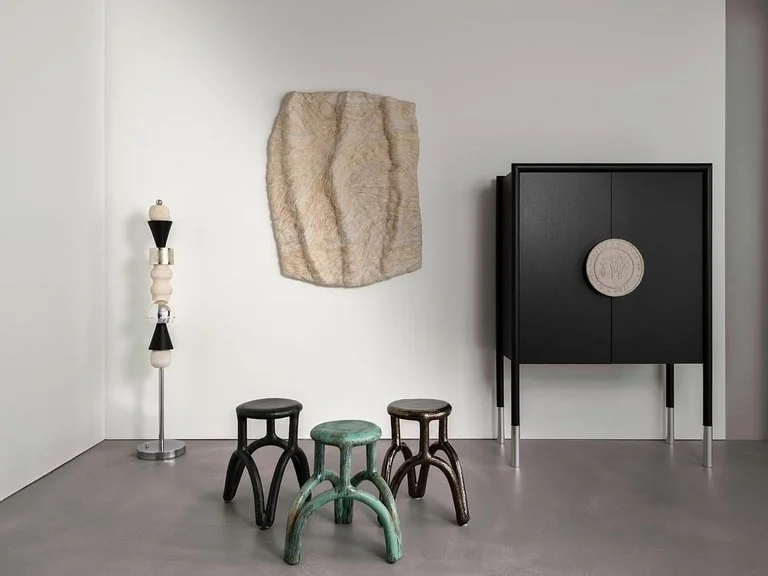
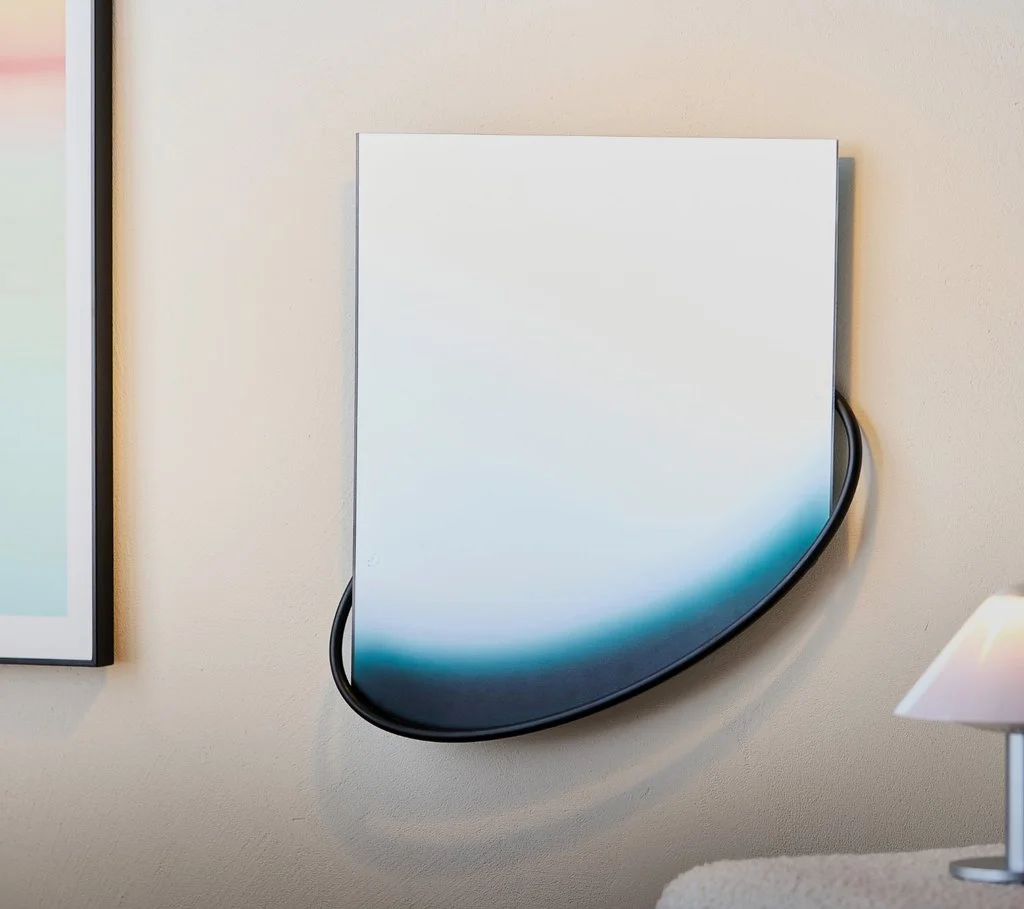
Questions of visual ambiguity emerge through Bo Zhang’s Stretch Color and Mirror Out, two works that test how easily the eye can distinguish surface from depth. Stretch Color uses a curved silhouette and gradient colour to give the vase an impression of visual extension, while partially disappearing areas make the object appear unresolved as colour continues through three-dimensional space.
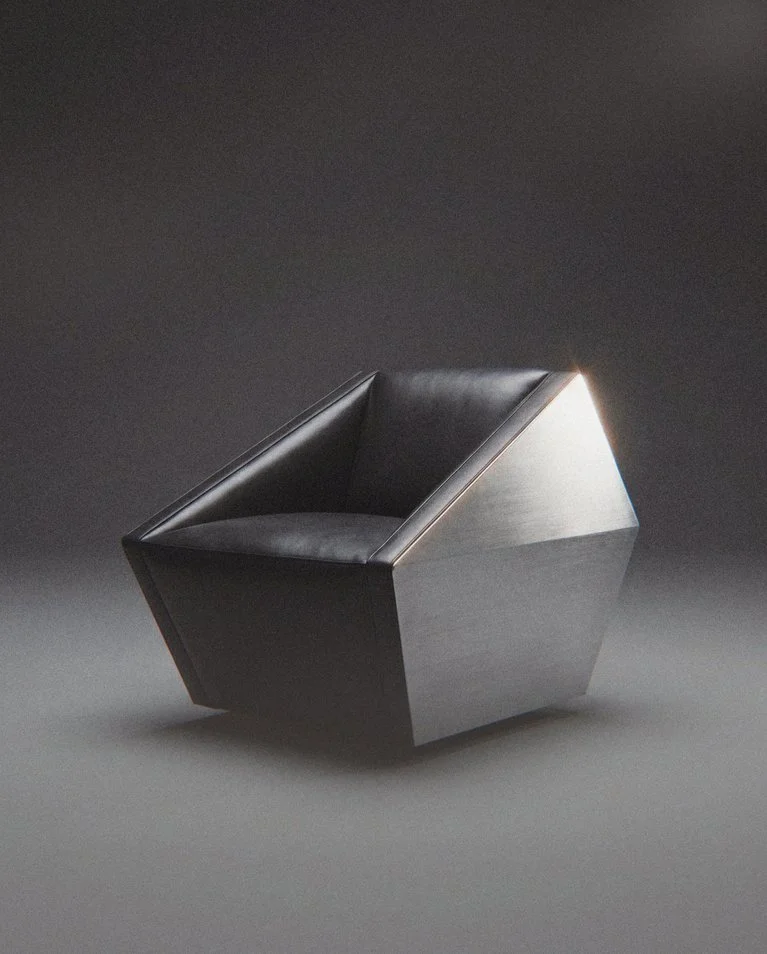
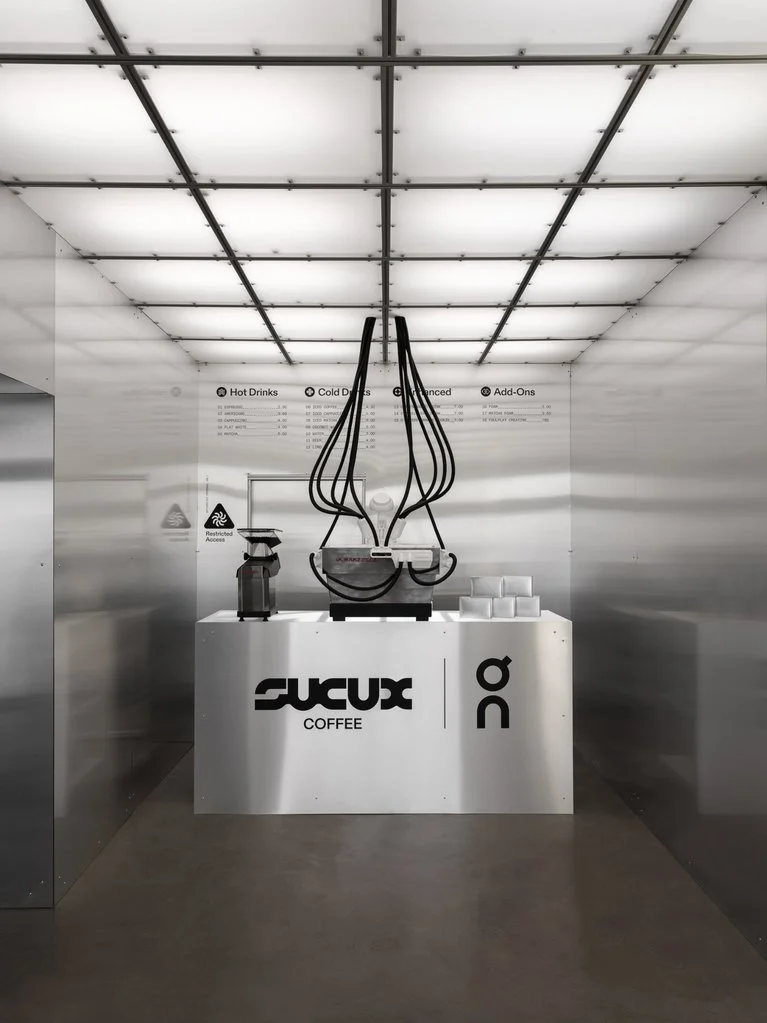
Mirror Out shifts the emphasis toward spatial perception, examining how two- and three-dimensional readings can overlap and how reflection can complicate the viewer’s understanding of surrounding space. Zhang, founder of DESZ, works across sustainable design, craftsmanship, culture and contemporary design, using material experimentation to investigate the relationship between function, aesthetics and artistic expression.
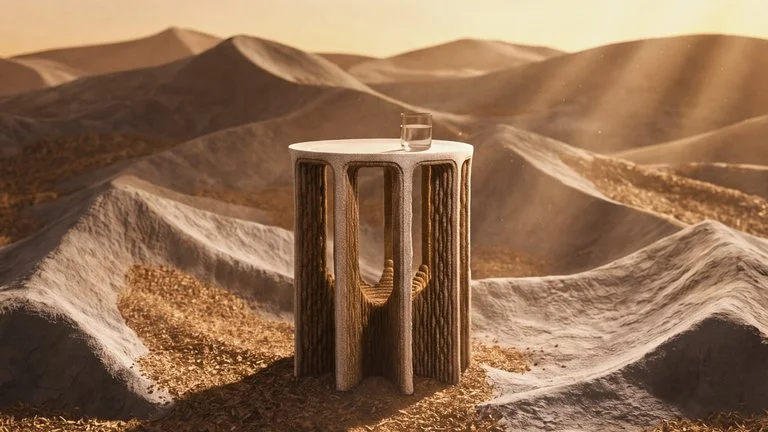
BEYOND SEEING’s investigation of perception then expands into climate and atmosphere through Soft Eclipse, a small-scale shading structure by Xinyue Hope Shen that responds to urban heat through filtered light, colour and planting. Its gradient canopy moves from cool blue through champagne to pale violet, casting coloured shadows beneath the structure while marking a transition from exposure to shade and thermal comfort. A planted core creates a protected microclimatic refuge, extending the idea of comfort beyond human use toward vulnerable urban ecology.
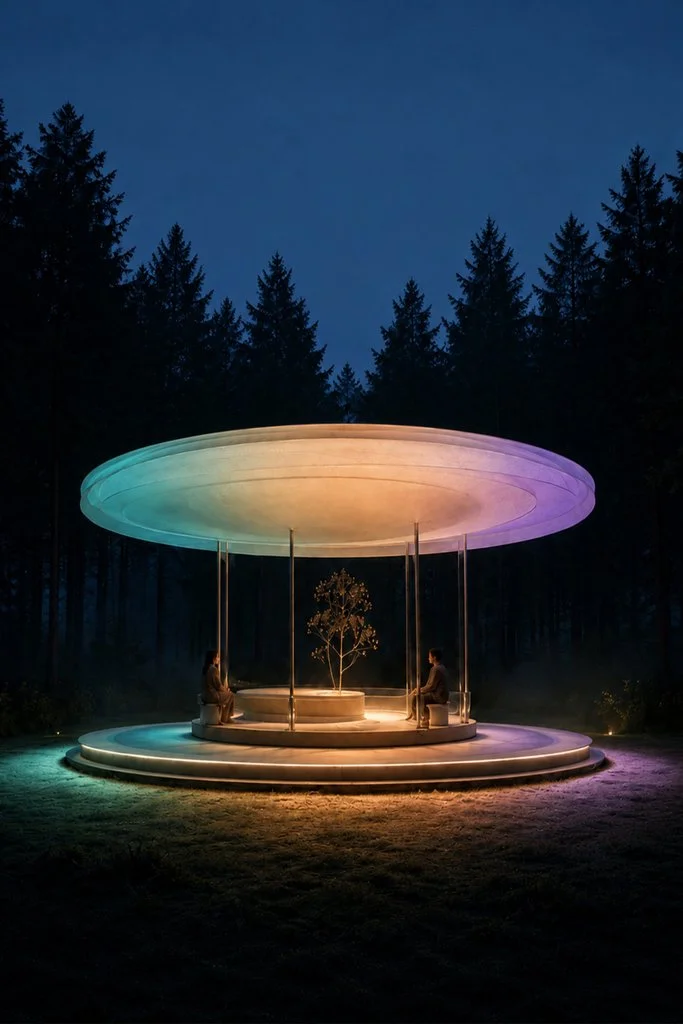
Positioned between landscape, object and atmosphere, the work considers how lightweight surfaces can mediate heat, light and living systems. Shen’s broader practice spans landscape architecture, ecology, spatial art and public experience; she is a Cornell University graduate and Associate Landscape Architect at SWA Group, with work across North America and Asia and recognition from the National ASLA Awards, Texas ASLA Awards, IDA Design Awards and MUSE Design Awards.
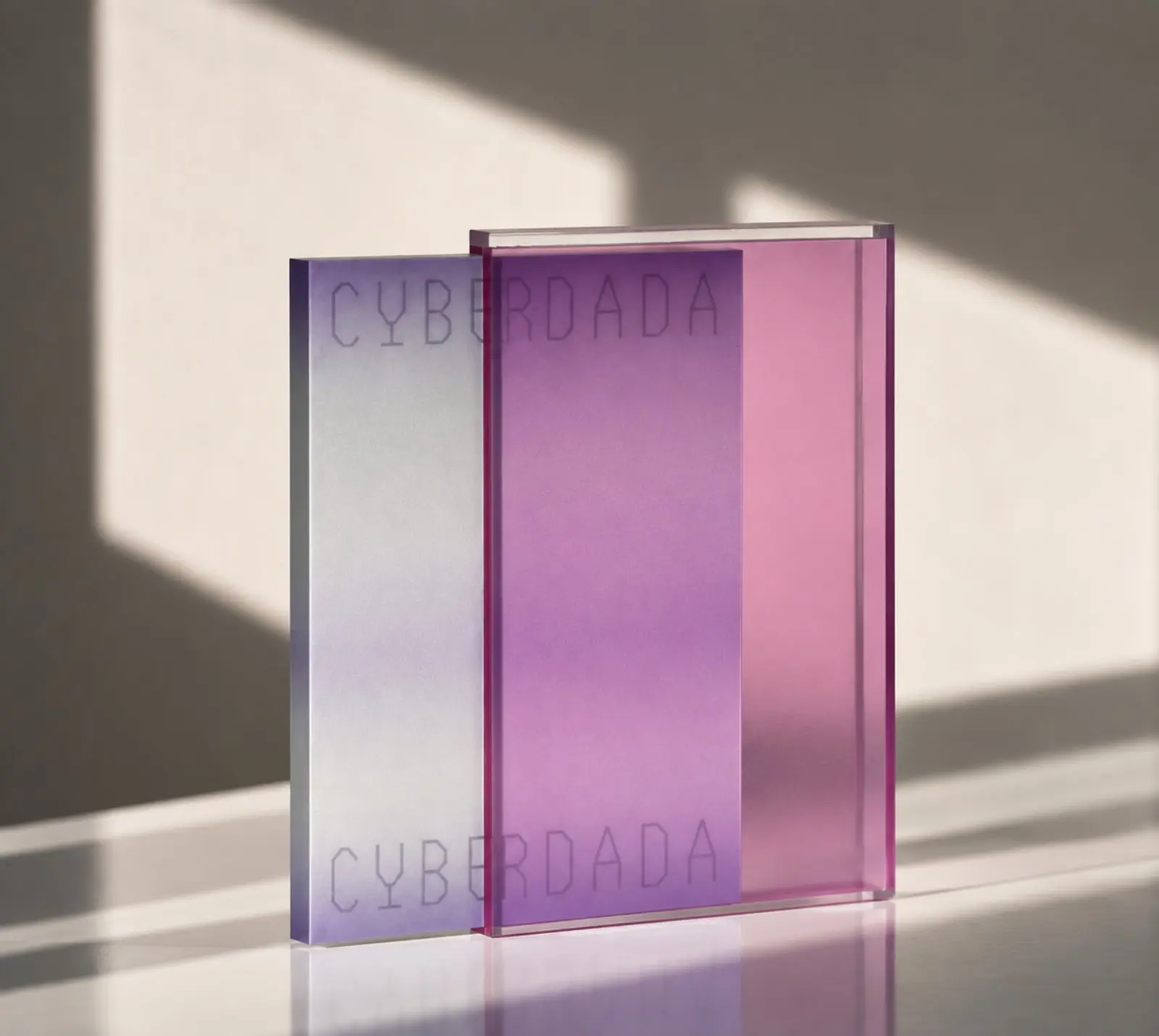
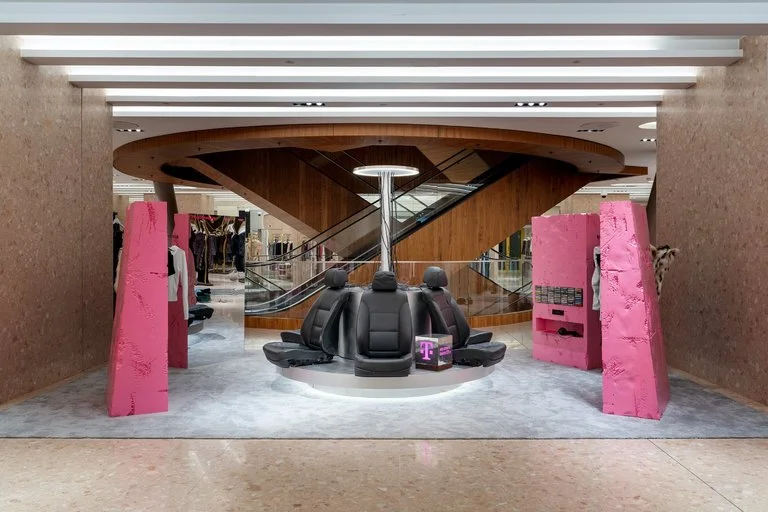
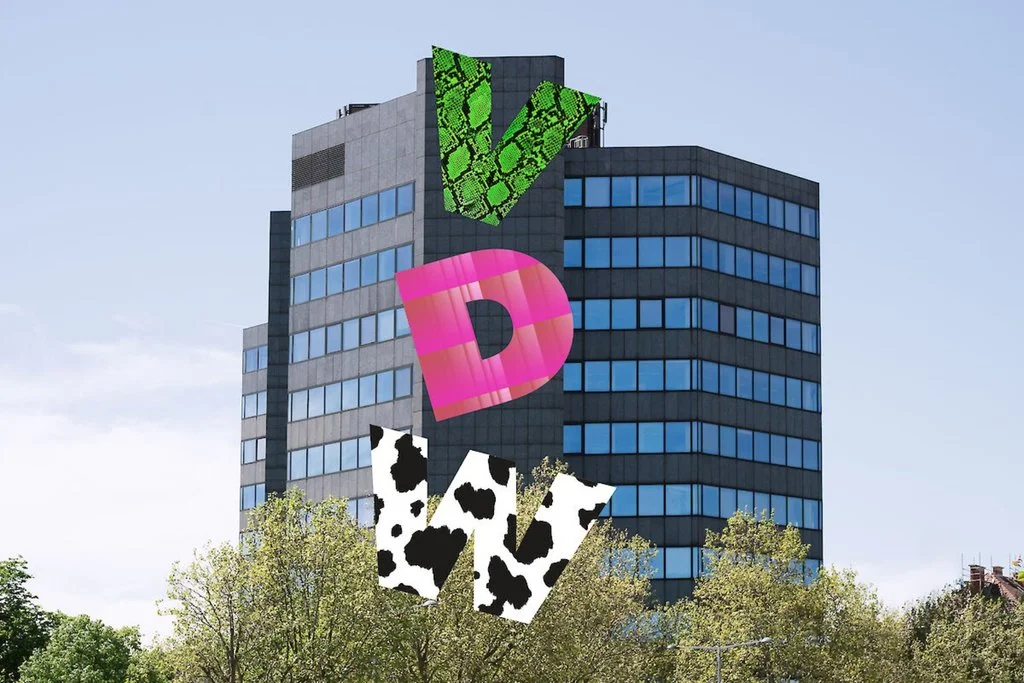
A different shift occurs in Cyberdada, where Yanwen Hang moves graphic design beyond the flat surface and into three-dimensional space. The project translates a non-linear visual language into an immersive spatial narrative, using the relationship between people, objects and surrounding architecture as part of the work itself. Hang also developed the exhibition’s logo, identity and overall visual system, connecting Cyberdada directly to the broader presentation of BEYOND SEEING.
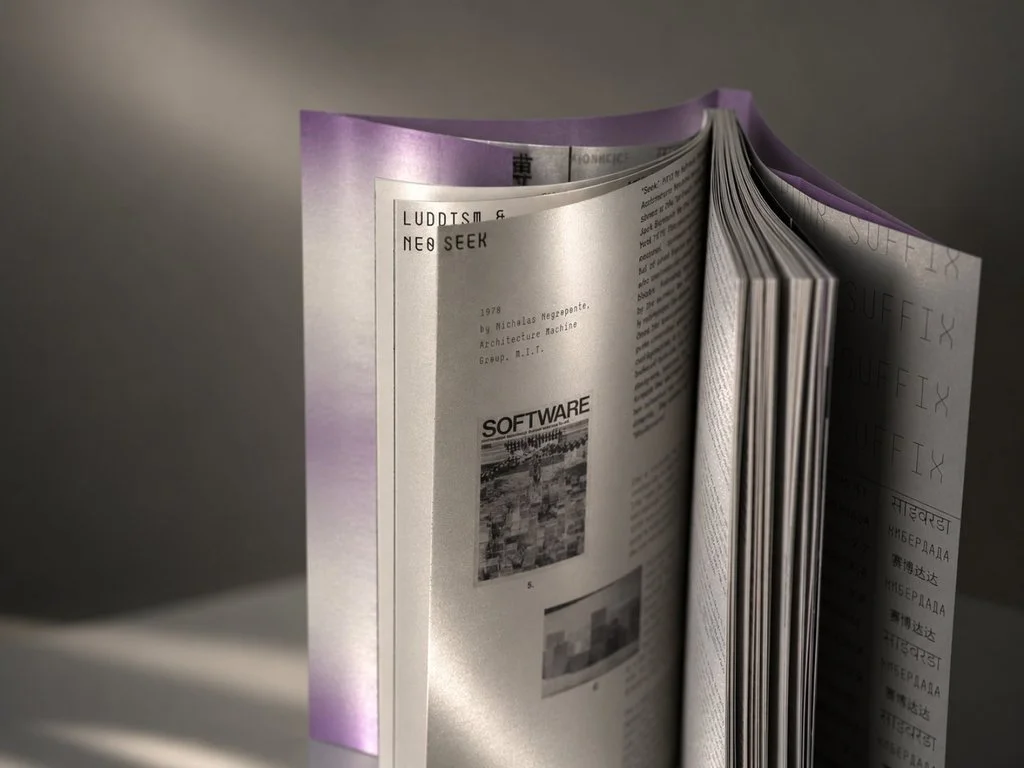
Her practice spans brand design, technology and contemporary visual culture, including previous work in brand and experience design at IBM and projects connected with HashiConf, AWS re:Invent, KubeCon and RSA Conference, while her independent work focuses on experimental typography, visual systems and cultural narratives. Her work has received TDC66 and TDC68 Certificates of Typographic Excellence from the Type Directors Club and a Platinum honor from the MUSE Creative Awards.
Across BEYOND SEEING, the projects approach perception from different scales while remaining connected by a shared interest in how design can alter visual and spatial understanding. A vase appears to extend beyond its own boundaries, reflective surfaces complicate dimensional reading, a canopy changes light and thermal conditions, and graphic language becomes something that can be physically entered—an investigative spirit into form, tactile materiality, and spatial presence shared by TACTUS’s ‘The Art of Assembly’ with Jon Pilkington. By bringing these approaches together inside Villa R, the exhibition frames perception as a dynamic relationship between body, material, environment and viewpoint, allowing design to operate not only as an object of observation but as an active condition that influences how space is understood.