Dante Shivers´s “Changes” is a song about the distance between imagining a different life and actually moving toward it. The song began with a night in London, a conversation about dreams and travel, and the image of a sleeping ballerina with her ballet shoes hanging nearby. Fifteen years later, Shivers completed the recording in Thailand while traveling the world in search of himself, giving the song’s central question a very different answer than it had when he first wrote it—a journey of personal evolution and DIY creative independence also explored in karlo bromsen: Parlin Papito.
The story surrounding “Changes” gives its passage through time a concrete shape. A young man wondering whether he would ever pursue the life he imagined eventually found himself doing exactly that, with the unfinished song following him from London to New York and, much later, Thailand. The distance between those places matters less than the fact that the person who began the song and the person who finished it are separated by the life he once wondered about. “Changes” carries that history without needing to resolve it. What began beside a sleeping ballerina and a window looking at the moon ends with Shivers still moving, the old question traveling with him.
For those who might not know you yet, how would you introduce yourself?
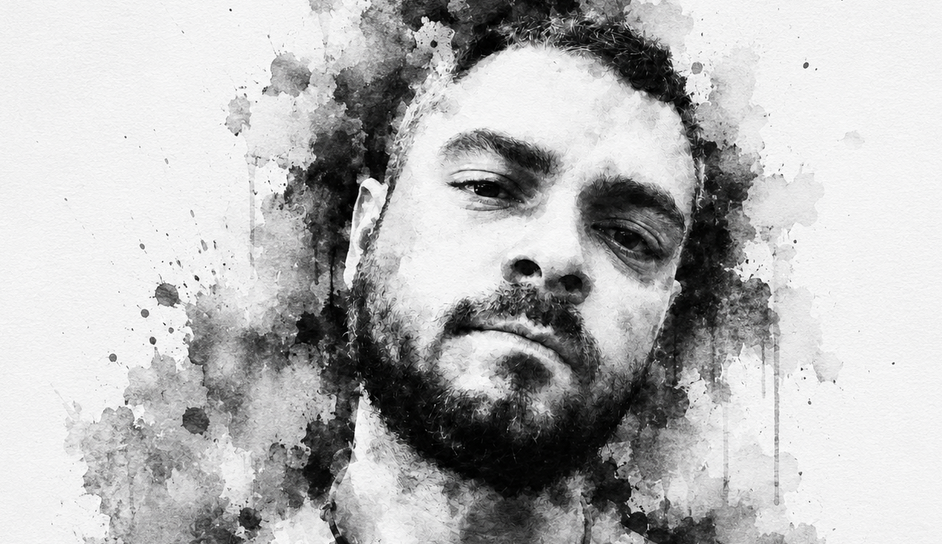
I’m Dante Shivers. I’m an American songwriter, musician, and probably a storyteller before anything else. I’ve been writing songs since I was about fifteen, and I’ve spent a good portion of my life playing music across the United States and in different parts of the world.
My songs tend to come from very real places. Sometimes they’re about people, sometimes they’re about moments, and sometimes I don’t completely understand what they’re about until years after I’ve written them. I don’t really sit down and decide what kind of song I’m going to make. I usually find something I need to say and let the song tell me what it wants to become.
If you had to bottle up your sound into just three words, which ones would you choose?
Cinematic. Vulnerable. Unpredictable. I think those three leave enough room for everything I do. I don’t particularly like being confined to a genre. One song might lean into alternative rock, another into blues, another might feel almost orchestral or cinematic. But emotionally, there’s a thread connecting all of it.
Which artists, not only music-related, or moments have left the biggest mark on your music?
There have been a lot, but Alejandro Sanz, Porcupine Tree, and Damien Rice are three artists who have definitely left a mark on me, all for very different reasons.
I’ve always admired Alejandro Sanz as a songwriter. There’s a looseness and emotionality to the way he writes and performs that I love. Damien Rice showed me how powerful a song can be when you strip away everything unnecessary and allow vulnerability to do the work. And Porcupine Tree opened my ears to how adventurous an arrangement can be, how a song can evolve, change shape, and still remain emotionally coherent.
But I think life itself has probably influenced my writing more than any individual artist.
I started as a poet before I really understood myself as a songwriter, so language has always mattered to me as much as music. I’m fascinated by people who can take something incredibly complicated and express it in a way that feels painfully simple.
Some of my biggest influences have ultimately been experiences: traveling, falling in love, losing people, being broke, being afraid, meeting strangers, and sitting alone somewhere completely unfamiliar. I’ve spent a lot of my life moving around, and you begin to realize that people can be remarkably different and remarkably similar at the same time.
Those experiences inevitably find their way into my songs.
When you hit play on your songs, what kind of feeling takes over?
It depends on the song.
Some of them are difficult for me to listen to because I remember exactly who I was when I wrote them. Others almost don’t feel like mine anymore. It’s like finding an old photograph and recognizing yourself while simultaneously feeling like you’re looking at somebody else.
More than anything, though, I feel lucky that I get to make them. I’ve been writing songs for more than twenty years, and I still find it kind of incredible that something can exist only in your head and then eventually become something another person can hear and make their own.
That’s probably my favorite part. Once I release a song, it isn’t entirely mine anymore.
If you could team up with anyone in the world, no limits, who would be that dream collaborator?
Hans Zimmer. I would love to hear what someone with his musical imagination would do with one of my songs. I’ve always been drawn to music that feels cinematic, where the arrangement isn’t just supporting the song but actually becomes part of the storytelling. I think putting the way I write against the way he builds atmosphere and emotion could create something completely unexpected.
What are you working on now, and what are your plans for the future? Anything exciting you can tell us about?
Right now I’m finishing my first album, American Nightmare.
It’s essentially a collection of songs from different periods of my life, so there’s a strange amount of history inside it. Some are relatively recent, while others have followed me around for years before I finally understood what they needed to become.
After that, I already have another record taking shape called Memoirs of a Fallen Man. A collection of my most recent songs, I’m hoping to release by the end of next year, if possible.
But mostly I want to keep writing, recording, traveling, and sharing the music. I don’t have much interest in predicting exactly where it leads. I’ve spent enough of my life trying to control the destination. I’m much more interested now in seeing where it goes.
Can you walk us through the story or emotion behind “Changes”?
Changes began in London almost fifteen years before I eventually released it.
I had met a ballerina through a mutual friend, and one night I walked her home. We spent hours talking about life, traveling, our dreams, and how frightening it can be to actually leave the life you know and pursue the one you imagine for yourself.
Later that night she was asleep beside me, and I couldn’t sleep. I remember looking through the window at the moon and seeing her ballet shoes nearby. Something about that image stayed with me. Here were these two young people talking about everything they wanted their lives to become, without having any idea whether either of us would actually have the courage to do it.
I started writing Changes around that experience and eventually finished the original song after returning to New York, but I never released it. I put it away, and nearly fifteen years passed.
When I finally returned to the song, I was on the other side of the world, traveling and trying to rediscover who I was and what I wanted from my own life. I ultimately completed the recording in Thailand.
That’s when the song became something completely different to me.
When I was younger, I had written a song asking what happens when time passes, and life changes around us. Fifteen years later, I was finally able to answer the person who wrote it.
There’s a line in the chorus, “Watch the clock grow old, but don’t lose your rock ‘n’ roll.” The image of the clock was partly inspired by Big Ben. I was in London when the song began, and that clock became intertwined in my mind with everything I was thinking about at the time: time passing, getting older, and wondering whether we would actually become the people we imagined ourselves becoming.
But “don’t lose your rock ‘n’ roll” isn’t really about music. It’s about holding onto that essential part of yourself while everything around you changes. People leave. Dreams change. We get older. Entire versions of our lives disappear. Change is inevitable, but I think there’s something within us that’s worth protecting through all of it.
Fifteen years later, I think I finally understood what I was trying to tell myself.