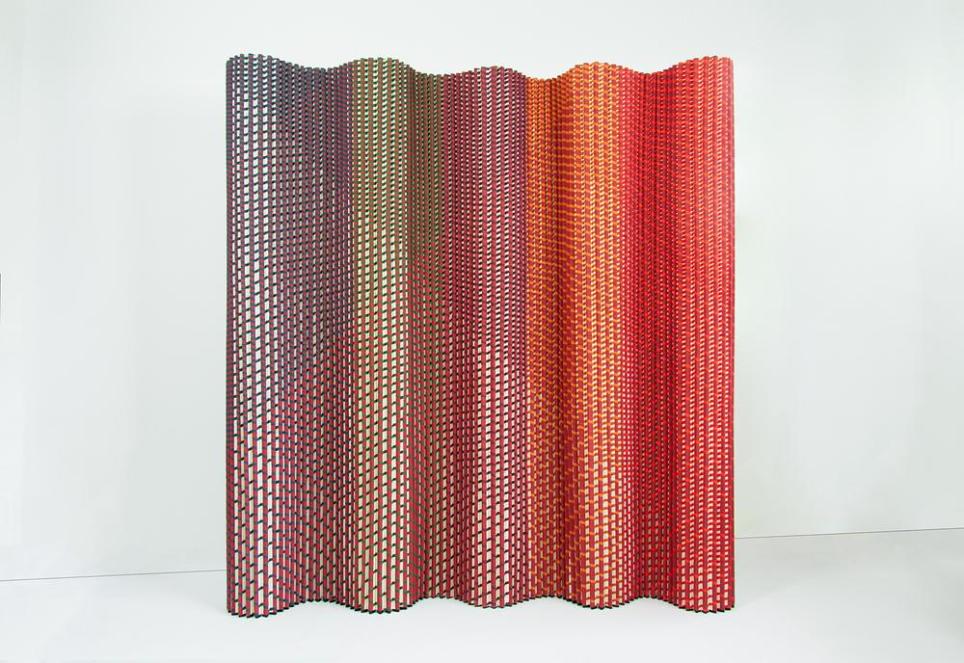
Lightweight pleated textile divider by Luis Marie offers modular acoustic privacy
Plissade by Luis Marie proposes a new reading of textile craft, treating pleating not as ornament but as a system capable of shaping space. The project evolves from historical folding techniques yet operates with a contemporary sensibility, advancing textile as both form and function.
Through precise manipulation, the material gains rigidity, generating volumetric presence without recourse to conventional frames. The textile becomes self-supporting through a binder- and adhesive-free stiffening technique, allowing a sculptural architectural element to emerge from a single material logic.
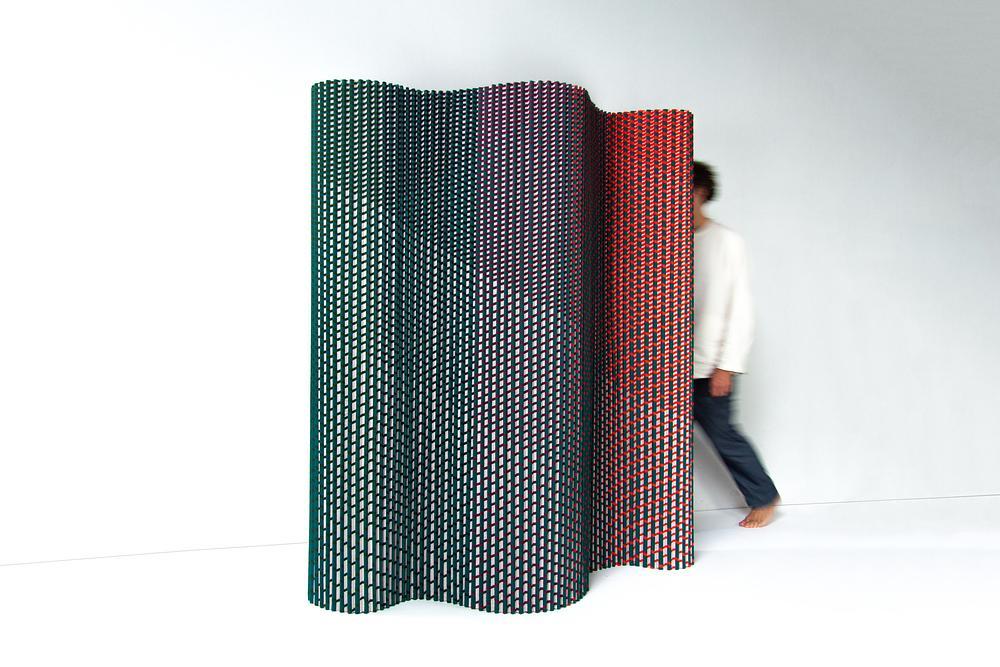
The room divider reflects research into how textiles can assume responsibilities typically handled by metal, wood, or composite structures. Instead of adopting hybrid construction, the studio pursued a purist approach, testing how pattern, direction, and repetition could distribute load and maintain geometric definition. The result remains lightweight and modular, capable of adapting to different spatial conditions while contributing to acoustic comfort in residential, cultural, and workplace environments.
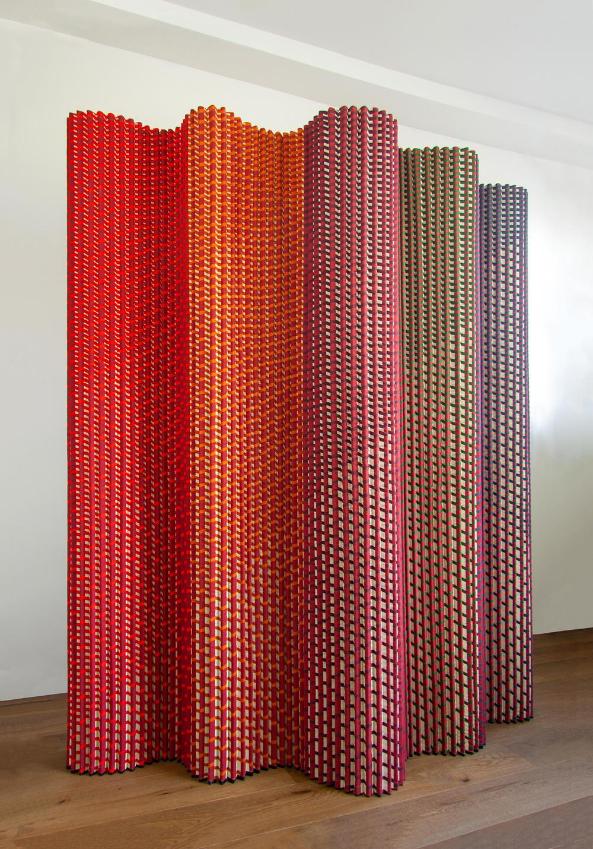
The Luis Marie project draws influence from garment construction, where pleated textiles achieve stability through controlled tension. From that reference point, the studio questioned whether textiles alone could assume structural roles for acoustic partitions while preserving softness, movement, and expressive color. This inquiry drove extensive prototyping focused on material behavior, pleating calibration, and production workflows.
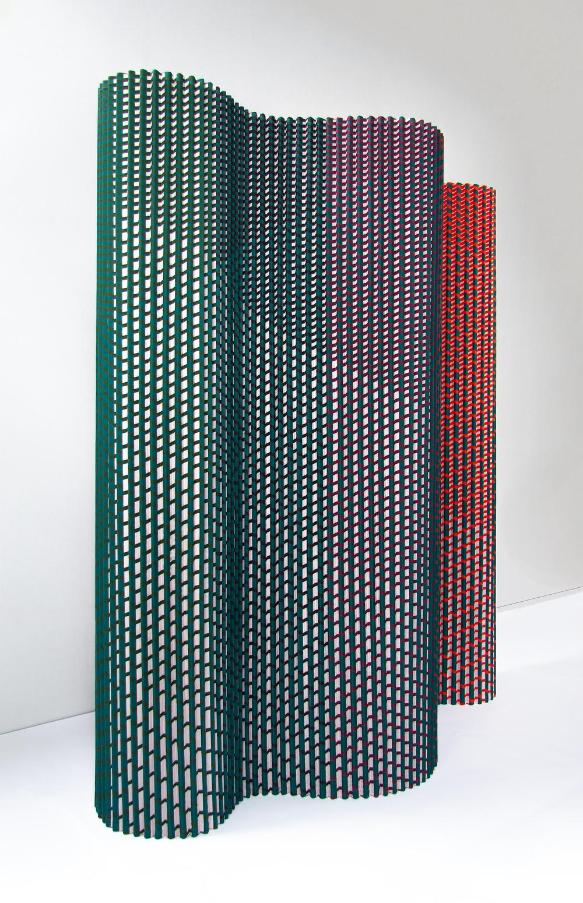
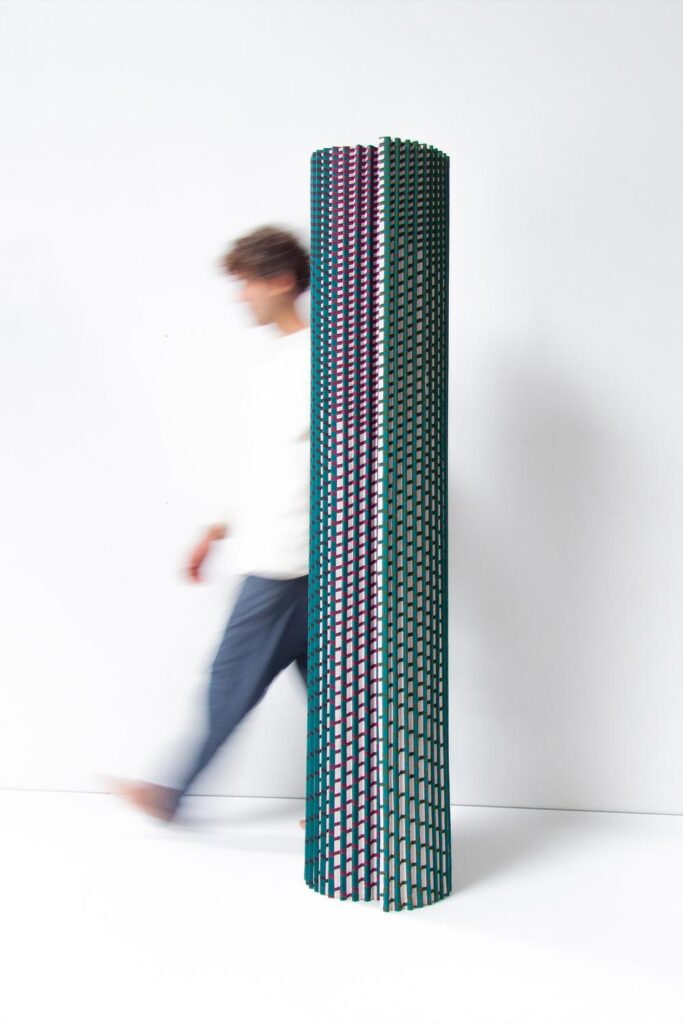
Local production played a significant role. Luis Marie collaborated with manufacturers outside the interior domain, particularly those working in automotive upholstery and fashion, where textiles are stabilized through repetition and precision. Instead of commissioning new machinery, the team encouraged partners to reinterpret existing equipment, significantly limiting waste and reducing tooling requirements. This strategy demonstrates how design can bridge industries, activating overlooked knowledge and infrastructures.
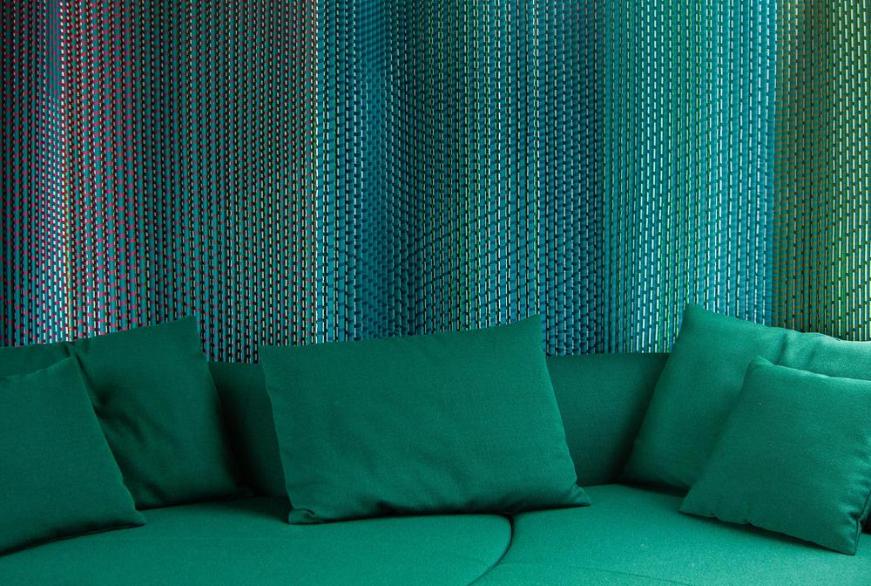
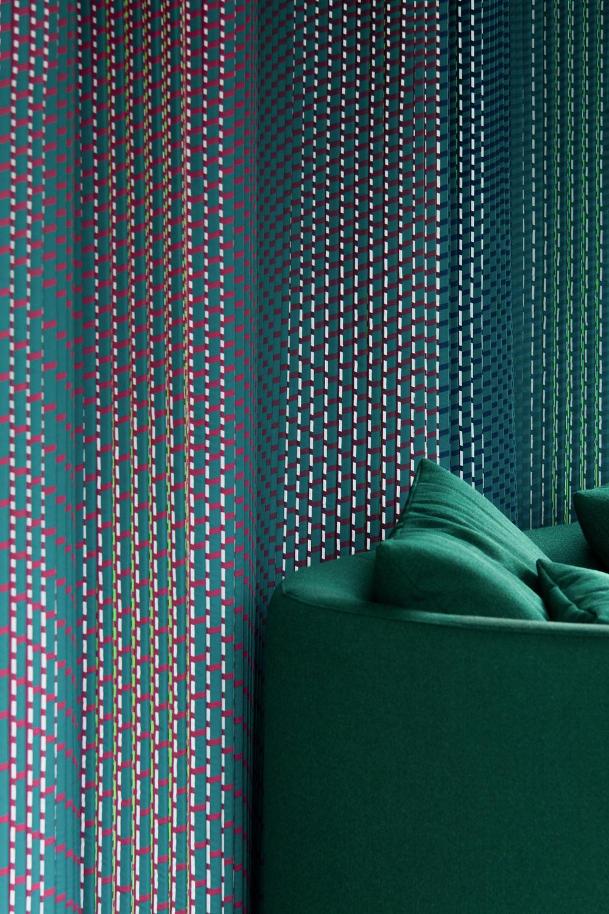
Plissade also responds to a broader rise in demand for acoustic solutions caused by open-plan environments and flexible office layouts, echoing how Frederik Fialin designs modular Spaghetti Shelf System pieces to adapt and organize contemporary living zones. Many current products use textiles laminated to foam on rigid frames, raising recyclability concerns, or rely on pressed felt panels that constrain flexibility and chromatic variation. Plissade positions itself as an alternative. Its hollow diamond-shaped tubes, formed by two interlocking textile layers, use what the studio refers to as a “fold and friction” method. By removing adhesives, resins, and rigid inserts, the system supports full disassembly and recycling, advancing a circular approach to interior elements.
Luis Marie, a partnership between Fenna Marie van der Klei and Patricio Luis Nusselder, operates with a heightened sensitivity to tactility and material refinement. Their work examines how textiles can bring warmth and comfort into present-day interiors while challenging production norms across industries. Their projects have been presented internationally and recognized through national and European development grants as well as respected design awards.
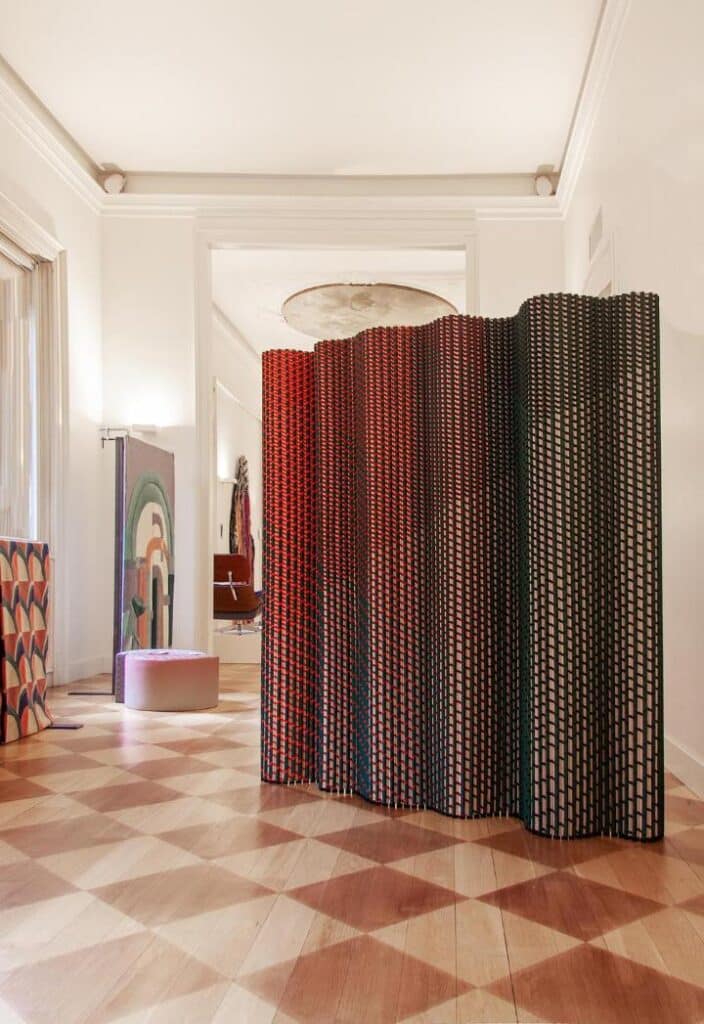
Photography by Luis Marie, with courtesy of v2com
Luis Marie: https://luismarie.com/