Michael Grandel’s “Eta Carinae” brings rave textures and thick driving drums that propel recovery. He transforms personal romantic disappointment into a peak-time house and techno record, using a radiant topline vocal as a direct directive to reclaim self-worth. By naming the track after a hyper-luminous star system, Grandel frames emotional recovery not as a quiet retreat, but as a scale-shifting burst of energy designed for the floor.
A wide lead synth rises above warm chord progressions to execute the turn from doubt to triumph. Drawing from a background in software engineering and competitive dance, Grandel builds a precise, high-impact architecture where a deep long-tailed kick measures the distance between isolation and full-body release. The vocal operates as a commanding internal dialogue, cutting through dense club pressure to demand immediate movement over lingering grief.
Grandel captures the exact window before an emotional state dissolves, finishing the arrangement while the initial sting remains fresh. The track abruptly cuts its expansive synth layers at the peak of momentum, leaving the listener suspended in the physical aftermath of the drop.
For those who might not know you yet, how would you introduce yourself?
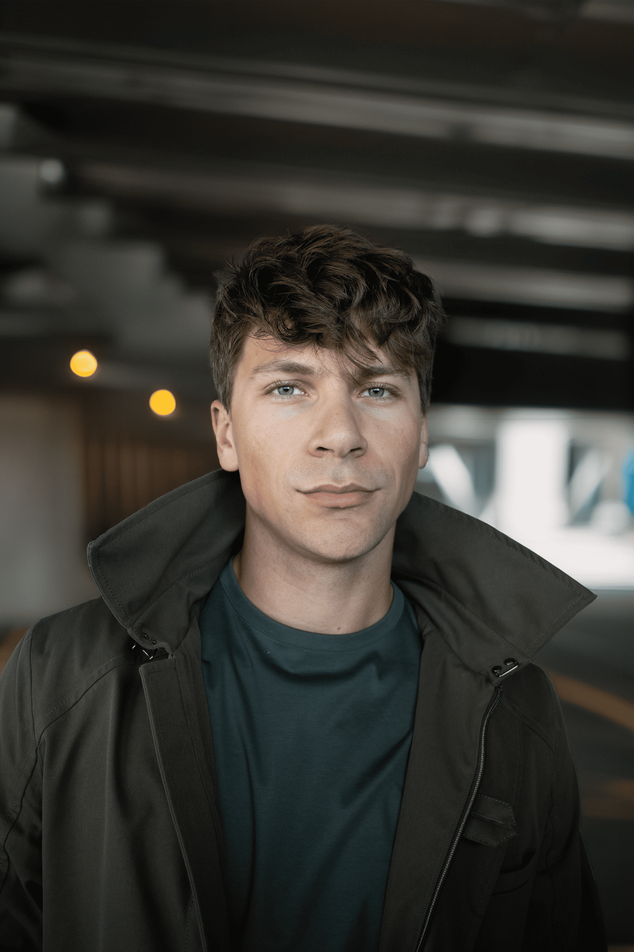
I’m Michael Grandel—a NYC/Miami-based DJ and producer, a software engineer, and generally someone who gets bored when life collapses into only one dimension. So I built a multidimensional life around music, technology, sports, and human experience. Those worlds inevitably seep into one another.
People may label my music as house or techno. Those are useful coordinates, but neither reaches the true core. My genre is rhythm: I tell stories through a rhythmic lens. Sometimes I want a track to feel festive, mysterious, sinister, playful, sexy, grand, or—as with “Eta Carinae”—triumphant. The emotional world can change completely, but rhythm is always the engine.
And because I cannot stop being a scientist, I naturally approach production through experiments, systems, and questions: What new process might unlock a sound I have not reached before? How can I keep evolving without repeating myself? What new ways of thinking unlock creative arrangements? That lens shapes how I produce and grow, but it never dictates what the music is allowed to become.
If you had to bottle up your sound into just three words, which ones would you choose?
Grand. Rhythmic. Kinetic.
Grand, because my instinct reaches for scale: large chords, expansive percussion, and emotional arcs that feel bigger than the room.
Rhythmic, because I need something my body can dance to. The groove is not decoration; it is the language through which I tell the story.
Kinetic, because even when the music is restrained, I understand emotion through movement.
Which artists, not only music-related, or moments, have left the biggest mark on your music?
Carl Cox, William Kiss, Rory Marshall, Horatio, and especially Nicole Moudaber.
Most of my conscious influences are musical artists and lived moments. I have been involved in music since childhood, especially through competitive dance. In college, around 2018, I began DJing and playing house and techno at small parties before I really understood the scenes or labels surrounding those sounds.
I was already curious about creating my own music and would tinker with production, but I did not yet have the patience to survive its learning curve. My ear already had the tune, but not the skill to execute ideas. Most of my discipline, however, was going toward building my engineering education and career, and I could not convince myself to endure all the dry, muddy, disappointing sounds that come before you become competent.
Then, in October 2021, I attended my first music festival: EDC Las Vegas. There were stages everywhere, but I kept following the low end until it pulled me into neonGARDEN. I saw Nicole Moudaber in the booth—this silhouette beneath an enormous halo of hair—and felt goosebumps rise across my skin.
I remember thinking, “That is a goddess playing beats. There is my reason. I want to be up there.”
To this day, I do not think any later version of that stage has recaptured the same magic for me.
When I returned from the festival, I actually committed to the production journey. My younger self had been correct about one thing: the learning curve is brutal. It takes years of making sounds like pots and pans before you can finally make a clean one-bar pattern. Forget a whole track—I am still figuring that out. But Nicole became the engine powerful enough to keep me moving all these years.
Carl Cox, Rory Marshall, William Kiss, and Horatio have also shaped how I think about groove, club pressure, and possibility. But Nicole is the icon at the center—not simply a sound I want to imitate, but the symbol of the dream, the discipline, the command of the room, and the scale of artist I could become.
In a way, she embodies “Eta Carinae” for me: the source of energy bright enough to keep an entire world in motion.
When you hit play on your songs, what kind of feeling takes over?
Generally, I gravitate toward festive, triumphant, or mysterious attitudes. However, with every track I want to try something different, so I explore a much wider emotional range. I am drawn to states that are layered, contradictory, and difficult to name. What I do instead, is I imagine a scene and make a track that feels like the background to that.
For example, a recurring vision I have is of a track playing as I lock eyes with a man across a dance floor. We hold our distance at first, smiling and almost having a dance-off. We circle and test the space like two tigers before play, slowly moving closer.
It is not predator and prey; it is mutual recognition—an elegant, polished skirmish charged with desire and mystery. The tension becomes almost more exciting than the resolution. There is no simple word for that feeling.
A producer—especially at my stage—is always evolving. Lately, I have leaned more deliberately into my technical and scientific instincts to develop an emotion-first production process. I begin by identifying the state I want the track to embody, then I build a dance loop whose rhythm and sound design already carry that state before I worry about the larger arrangement.
Each record asks for something different.
“Eta Carinae” is about remaining grounded inside uncertainty, then becoming triumphant and celebratory when you have to pick yourself back up.
“Body and Mind” lives in the gap between what the body knows and what the mind is willing to accept. You sense something, doubt it, and eventually realize that your intuition was right from the beginning. It feels like meditation, grounding, and neurological recalibration—the body and mind finally agreeing with each other.
“Keep Up” reaches toward something more primal and carnal: the deep pulse of drums, collective movement, and the image of human beings gathering around rhythm before dance had genres. It becomes dark and physical, but also festive.
I want my catalog to possess the kind of emotional range we admire in a singer, even when rhythm and sound design are doing most of the speaking.
Earlier in my journey, I was not always this conscious of the emotion I intended to create. I was often practicing techniques and trying to make the sounds in my head less muddy. Yet even across those older records, one instinct keeps returning: grandeur. My chords tend to open outward. My drums are rarely timid or restrictive. The music wants dimension.
That mirrors how I move through life. I rarely leave an interest at the level of a casual hobby; my mind immediately imagines the furthest version it could become. My mother always told me, “Dream, baby, dream,” and I think that instruction settled somewhere permanent in my brain.
The grandeur is not about loudness or spectacle for its own sake. It is the feeling of possibility expanding—and, conveniently, “Grand” is already built into my last name.
If you could team up with anyone in the world—no limits—who would be that dream collaborator?
Nicole Moudaber, of course—the goddess of Eta Carinae.
I would not want to enter the room merely to imitate her sound. I would want to discover what happens when her dark, commanding language across techno and house meets my rhythmic storytelling and instinct for emotional scale. She represents the point where sound, presence, discipline—and being just absolutely cool—become one.
It would also close a very personal circle. She was the artist who made me decide that producing could no longer remain a distant idea. To someday make a record with her—and, most of all, learn from her—would mean that the artist who gave me the reason to begin was now creating with me because I kept going.
What are you working on now, and what are your plans for the future? Anything exciting you can tell us about?
I just wrapped another track called “His Surface Tension,” which explores desire and mystery while intimacy is still suspended between possibility and action.
It lives in a dance-floor moment: his breath close enough for me to notice, my hand on his chest, and then one of us pulling back just enough to keep the tension alive. I imagine people moving across a dance floor, playful and self-possessed, slowly recognizing that each can match the other’s energy like a twin flame. The record moves between teasing, restraint, and surrender.
More broadly, I am building a catalog that can travel from dark, intimate rooms to enormous festival moments without losing its identity. I want every release to enter a distinct emotional world while the rhythmic core remains unmistakably mine.
The other major project is Quanta, a music-intelligence system I am building from my engineering background. The simplest way to explain it is to begin with what it is not: Quanta is not a prompt-to-song generator, and it is not meant to replace the artist or make music for me. It generates no sound. Instead, it is designed to operate like a context-aware co-producer.
I am building it to understand a producer’s actual session—the tracks, routing, sound choices, references, goals, and history—so it can respond with complete context rather than offering generic chatbot advice. The benchmark in my head is the level of specificity I would hope for when collaborating with someone at Nicole’s level: a partner who can hear the entire session, remember why every decision was made, and challenge me specifically rather than reciting general production tips.
I am also extending Quanta beyond the studio. An emerging producer is expected to be the producer, mix engineer, A&R, publicist, content strategist, metadata technician, campaign manager, and analytics team—usually before their music earns enough money to hire any of those people. That steals time from the craft on which everything else depends.
I want Quanta to become an artist-operations agent that can research labels, organize releases, prepare DJ promos, manage outreach and follow-ups, monitor DJ support, track campaigns, and turn real evidence into useful marketing and EPK assets.
The current technology conversation is often about generating more content. I am more interested in using technology to protect the human creator’s time. Until I can hire the team around me, I am engineering one—so I can spend more of my life doing the fun part: making music.
Can you walk us through the story or emotion behind “Eta Carinae”?
“Eta Carinae” did not begin with a concept. It began with a dance loop.
I had the rhythm and the chord progression, but not the vocal, not the expansive lead that eventually arrived over the main drop, and no clear idea of what the track meant. I was building it in fragments during a week when engineering work was consuming most of my attention. At the same time, I was living through romantic uncertainty, so the music existed before I understood the emotional story it was waiting to hold.
When that uncertainty ended, I found myself ruminating over a disappointment that did not deserve so much of my energy. Around then, I remembered an idea I had heard on a podcast: the music that stays with people is often made from emotional resonance.
That kind of music is not created by trying to manufacture something universally relatable. The artist expresses something private and exact without diluting it for an imagined audience. Because the feeling is human, other people who have experienced it eventually recognize themselves inside it.
So instead of asking what the track needed technically, I asked, “What am I feeling right now, and what do I need to hear?”
I had allowed one uncertain connection to eclipse everything I knew about myself. I was forgetting my own worth and the confidence, warmth, and radiance that people in my life see in me. I wanted a message from a goddess of the Sun—something loving, commanding, and slightly irreverent:
“Boy, wake up. Do not forget who you are. You spend so much time supporting and igniting other people; do not let that become the reason you dim yourself.”
I wrote the vocal as the exact message I needed to hear in that moment.
Then the scientist in me interrupted the metaphor. The Sun is radiant, but I started wondering: what could represent something even more radiant? That question led me to Eta Carinae, and the title transformed the entire sonic world of the record.
The original chords felt like the Sun—warm, grounded, and familiar. The wide lead I added over the main drop represented stepping into the scale of Eta Carinae. It sits above the chords because it is the moment I come back into myself and realize that I had been measuring my light against the wrong system.
The chords belonged to the Sun. The lead belonged to Eta Carinae.
From there, the track became a transformation of grief and emotional uncertainty into triumphant attitude. I imagined going to a dance floor alone, returning to the place I come from, and remembering my strengths through movement. I wanted to dance by myself and remember who I was, what I carried, and how much life remained beyond my disappointments.
I entered an unusually intense flow state and finished the record in two days. By the second day, I felt almost desperate to complete it because I was already recovering. As the grief loosened its grip, I could feel myself losing access to the exact emotional frequency that had opened the song.
Annoyingly, “Eta Carinae” did its job as the remedy almost too well. I kept looping it during production, and it was already pulling me out of the emotional state I was trying to preserve long enough to finish.
That is the emotional core of the record: when I feel down, I do not necessarily make sad music. I make the music I need in order to get back up and dance.