Studio Sarah Naghawi transforms stainless steel into sculptural furniture at Amman Design Week
Studio Sarah Naghawi presented JAWF, an experimental stainless steel furniture collection, at Amman Design Week 2026 in Jordan, investigating how internal pressure can transform rigid metal into sculptural objects. Developed through hydromechanical forming, the project examines the relationship between material deformation, enclosed space, and functional design. Its reflective surfaces expand and contract into irregular volumes, revealing the physical forces responsible for their formation. Through this process, JAWF questions conventional methods of metal fabrication while introducing an alternative approach to shaping contemporary furniture.
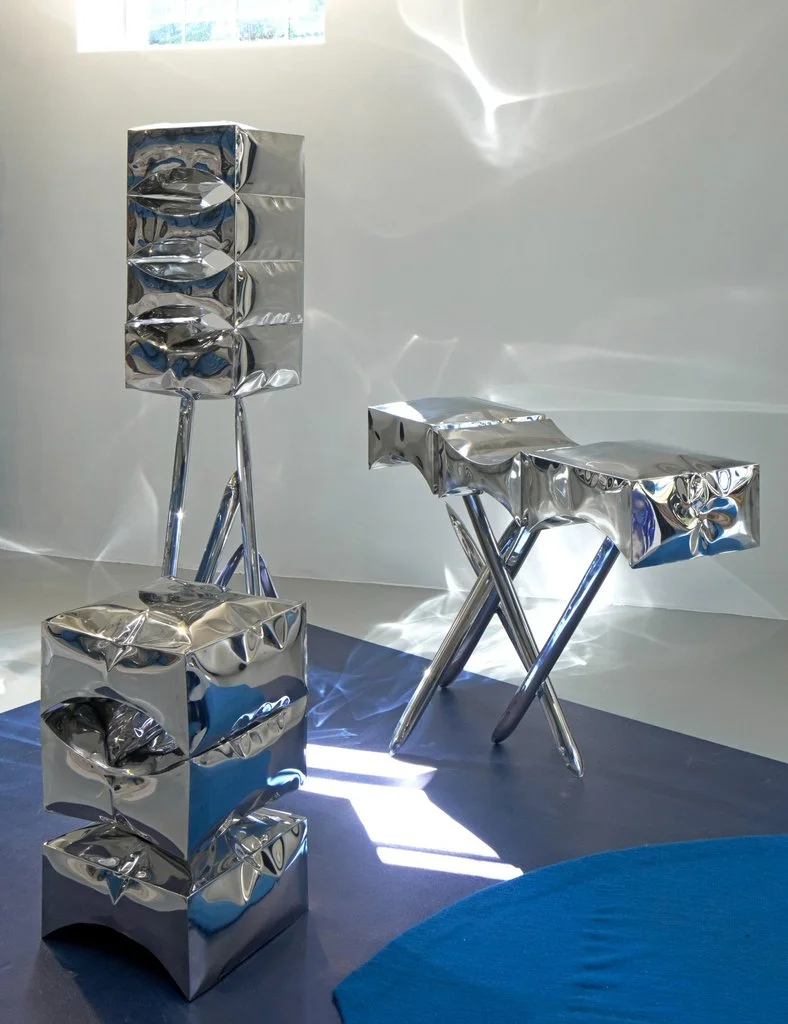
The collection takes its name from the Arabic word Jawf, referring to an inner chamber or protected cavity. This concept establishes the foundation of the project, where empty space becomes an active component of the design. Instead of treating stainless steel as a solid material requiring external manipulation, Studio Sarah Naghawi investigates its capacity to respond to forces generated from within. Convex surfaces extend outward while concave sections recede, producing interconnected geometries that establish spatial depth. These opposing movements create volumes in which the relationship between exterior structure and interior space determines the final configuration.
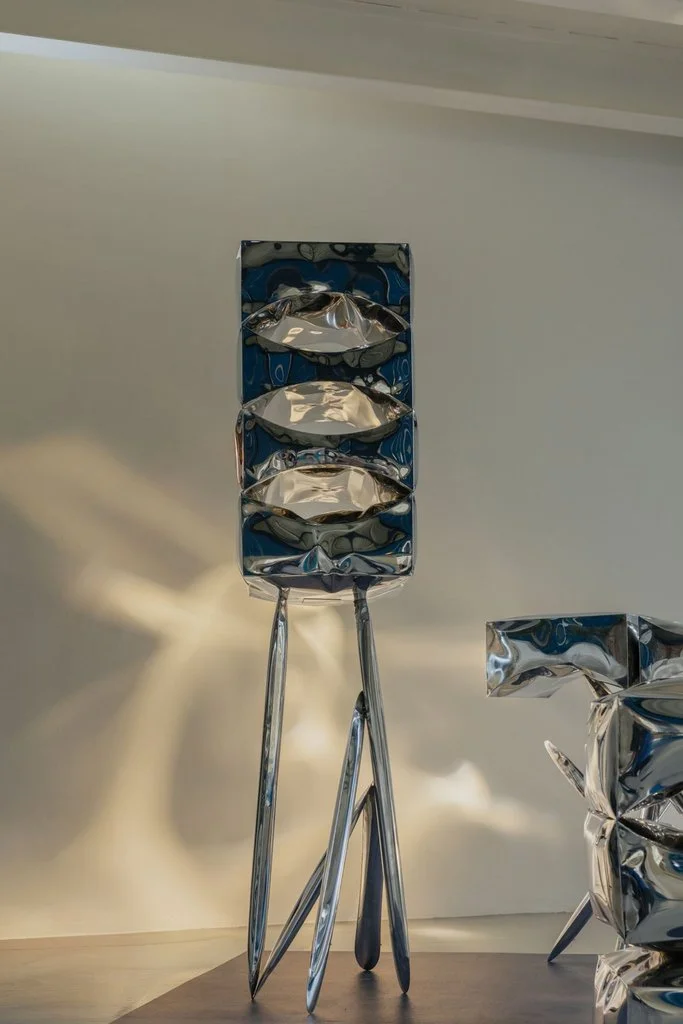
Central to JAWF is hydromechanical forming, a fabrication technique that uses internal pressure to reshape metal surfaces. According to the studio, it is the first practice in Jordan to employ this methodology in shaping stainless steel. The process subjects the material to controlled inflation and deflation, redistributing tension across its surface and producing permanent deformations. Unlike traditional metalworking techniques that depend primarily on cutting, folding, or joining predefined components, this approach allows pressure to participate directly in generating form. The resulting objects retain visible evidence of their transformation through compressed edges, expanded surfaces, and irregular cavities.
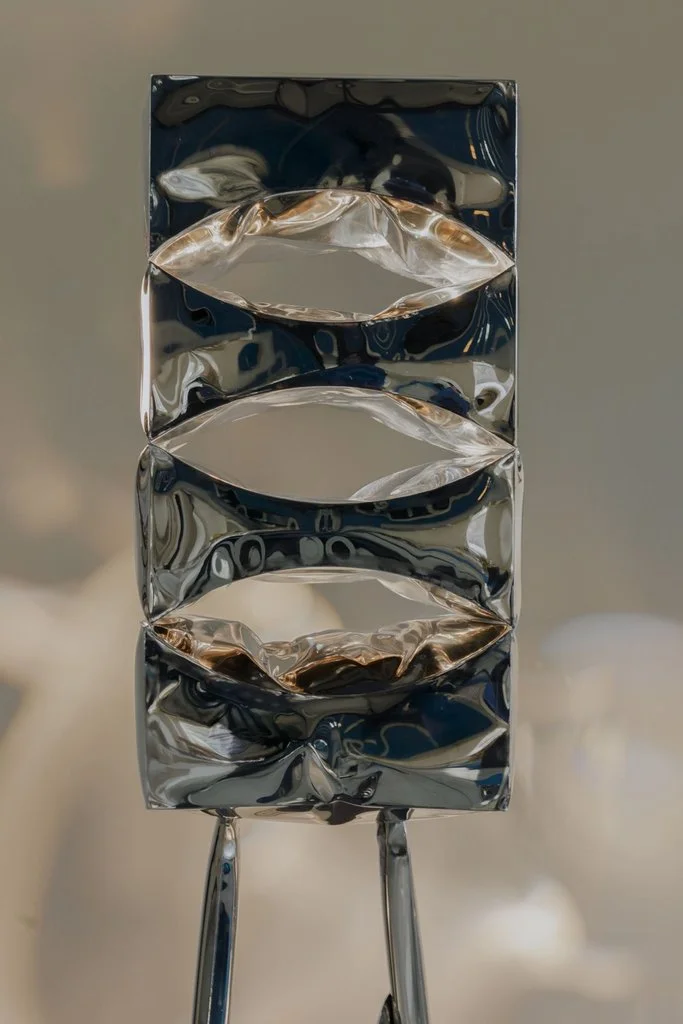
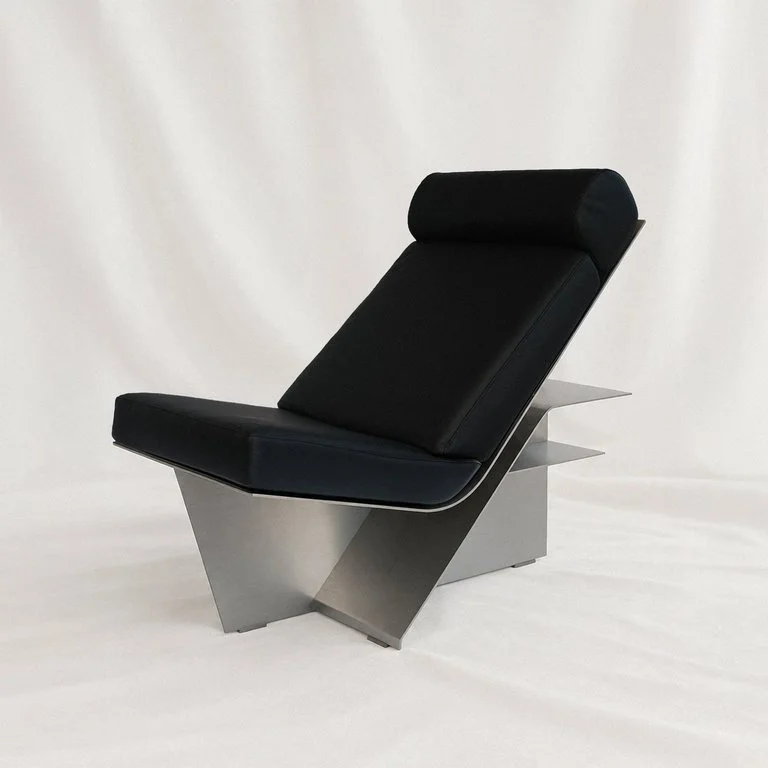
The furniture collection investigates the relationship between sculptural expression and practical function. Its metallic volumes resemble inflated architectural membranes, with reflective stainless steel emphasizing changes in curvature and surface tension. Recessed areas introduce protected interior spaces, allowing the deformation itself to establish possibilities for storage and enclosure. Function therefore develops through the physical characteristics of each object instead of being imposed through a predetermined geometry. The contrast between the material’s structural resistance and its apparent softness creates a visual tension, giving the pieces an appearance associated with inflated forms despite their rigid construction.
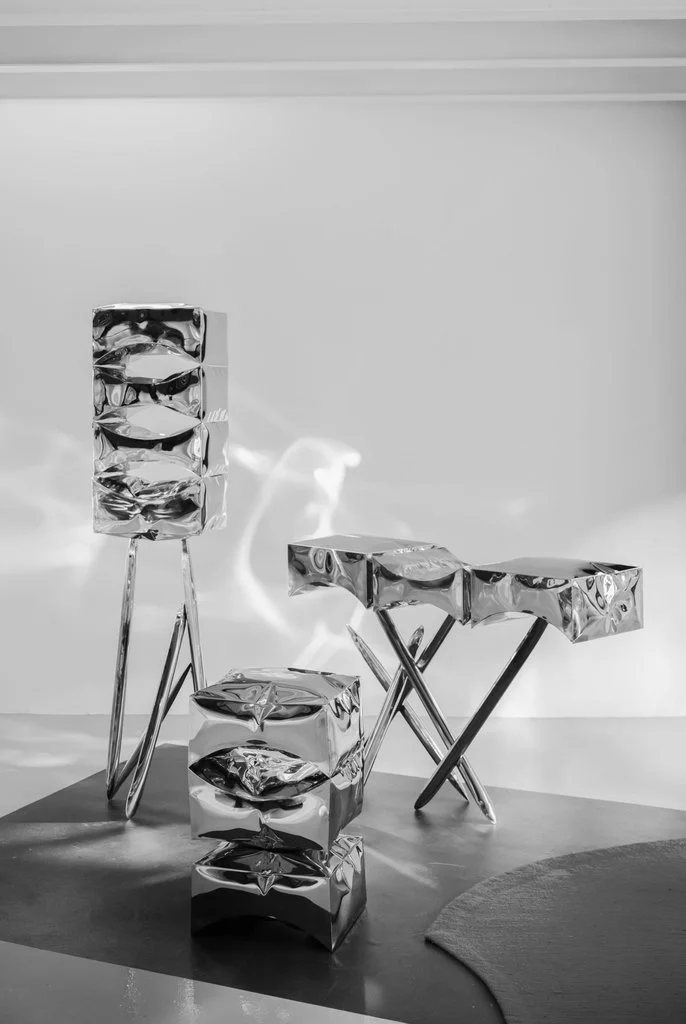
An important reference for the project is the balloon, which Studio Sarah Naghawi identifies as an object whose geometry depends entirely on internal pressure. As a balloon expands, its membrane and internal cavity develop together, while the release of pressure causes its volume to collapse. JAWF translates this temporary condition into a permanent material transformation. Through hydromechanical forming, the stainless steel maintains the geometry produced by pressure even after the shaping process is complete. The resulting surfaces preserve a physical record of forces that would otherwise remain invisible, establishing a connection between experimental fabrication, material research, and collectible design.
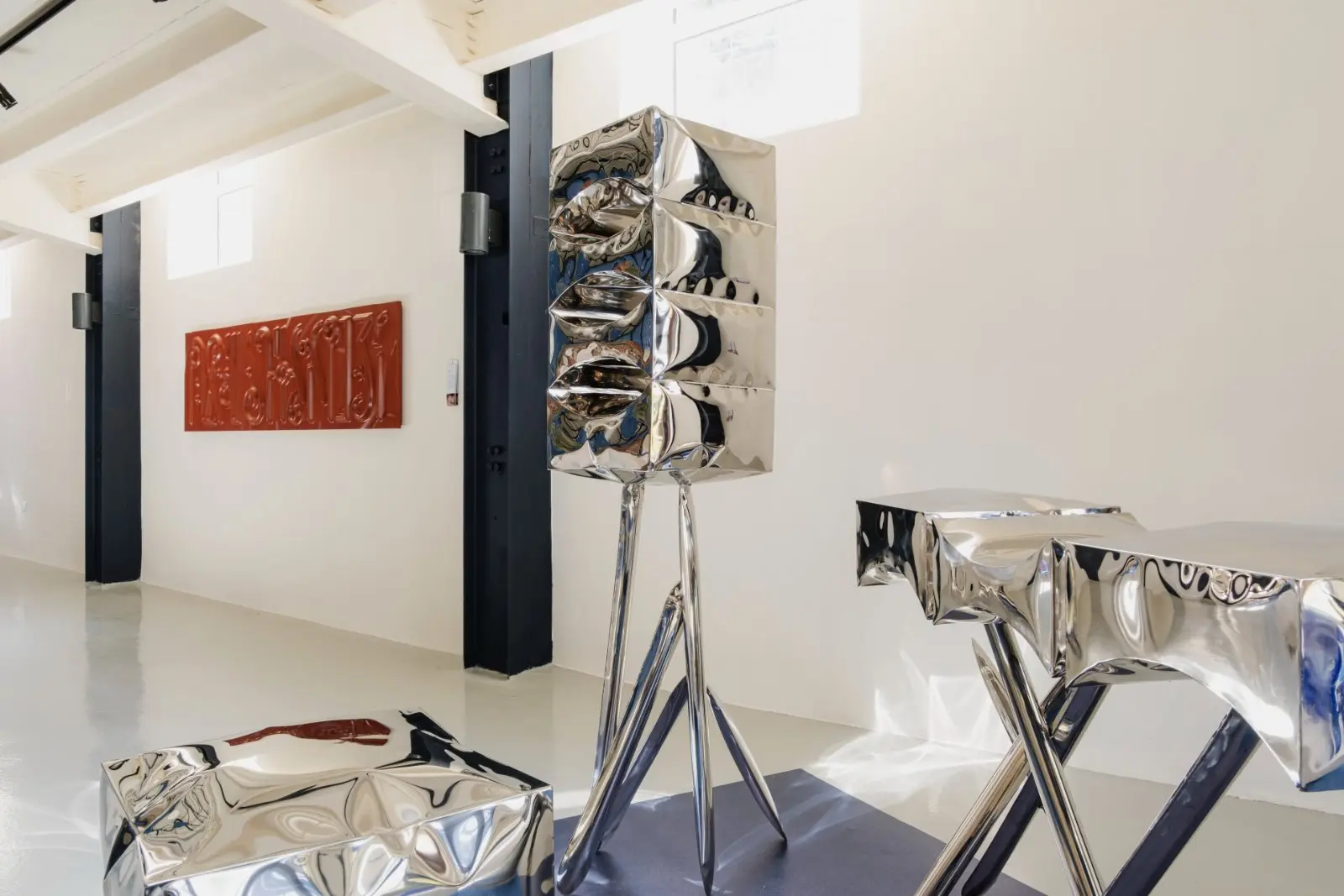
Presented during Amman Design Week from October 2 to 17, 2026, JAWF formed part of an exhibition program organized around the theme Accumulations. The fourth edition of the event examined how materials, cultural memory, and inherited knowledge influence contemporary creative practices. Within this context, Studio Sarah Naghawi’s collection offered a material investigation in which the manufacturing process becomes inseparable from the finished object. Working across architecture, spatial design, and experimental fabrication, the studio uses JAWF to examine how pressure can generate structure, enclosure, and function through a single material system.
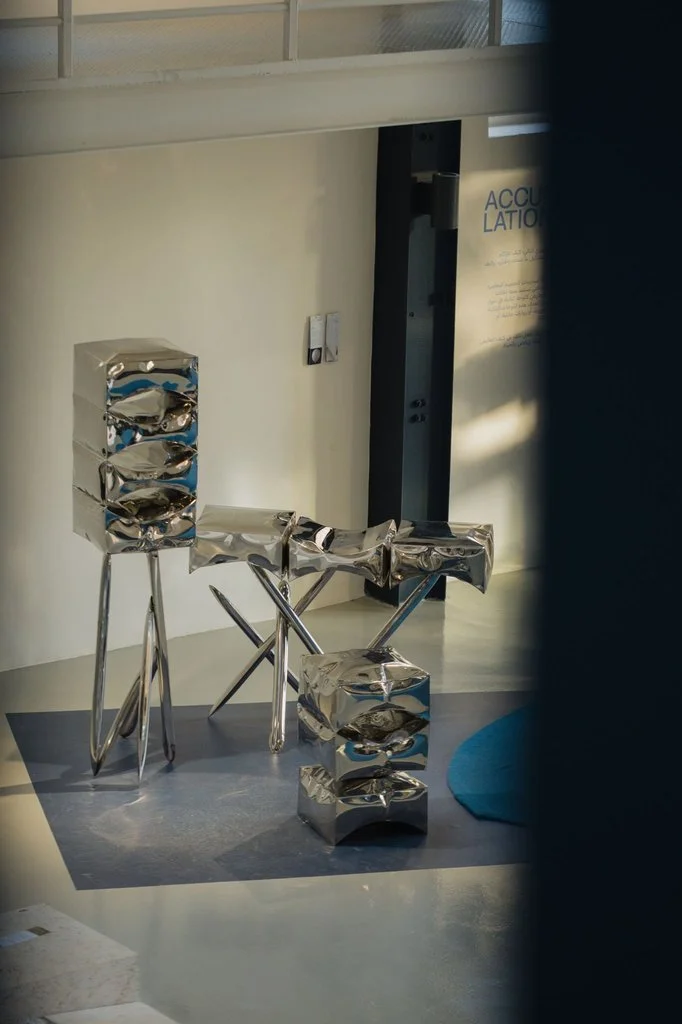
Photography by ASPIRE Ali Saadi, with courtesy of Studio Sarah Naghawi