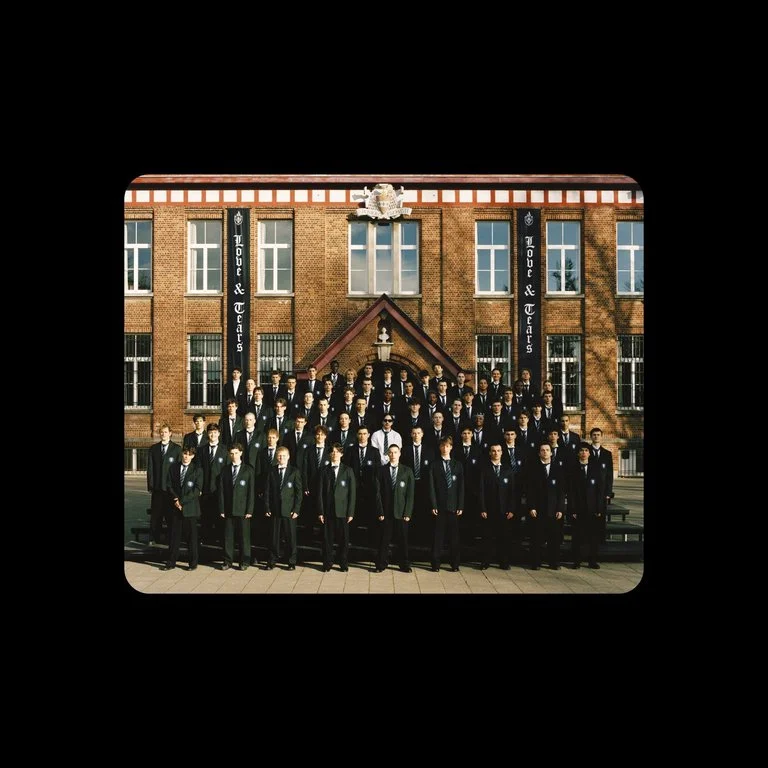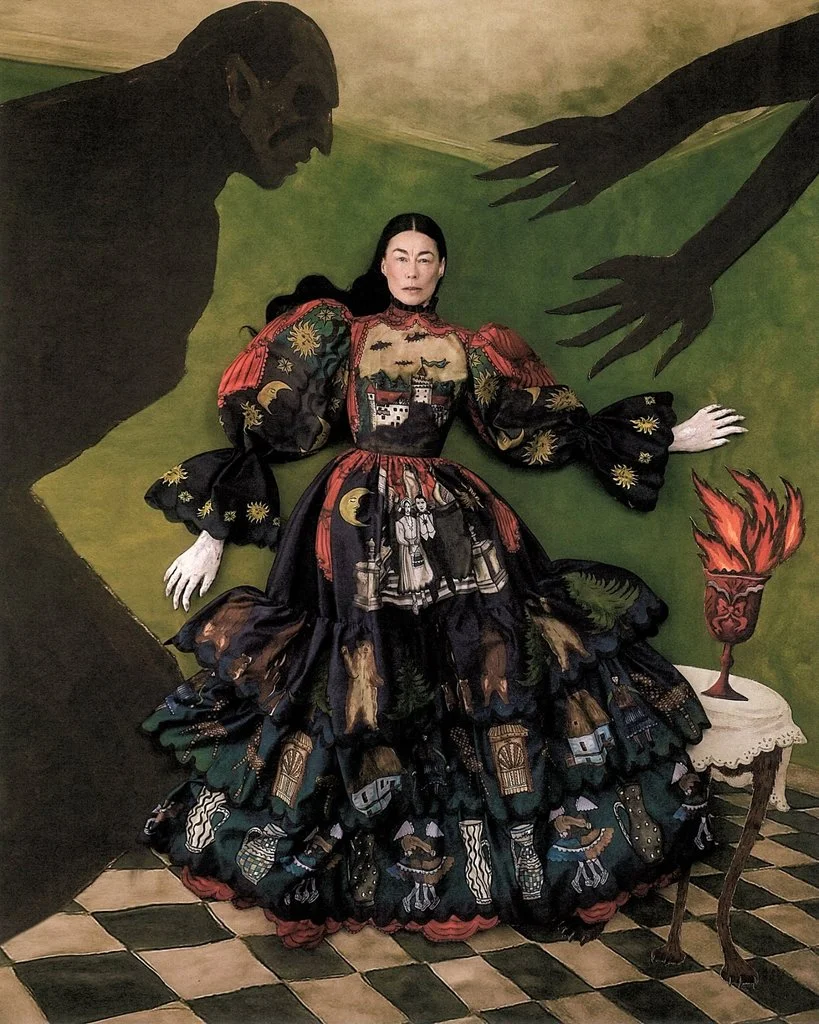
There is a certain theatricality to Szilveszter Makó’s photographs, but it is never simply a matter of staging. His images seem to exist outside a specific moment in time, drawing on the visual traditions of painting while maintaining a distinctly contemporary sensibility. A portrait of Willem Dafoe or Cate Blanchett becomes something more than a study of a familiar face. Makó introduces an element of fiction, allowing his subjects to inhabit characters and situations that feel at once improbable and strangely convincing.
Born in Hungary and now based in Milan, Szilveszter Makó has developed a practice in which the construction of an image is as important as the photograph itself. His attachment to physical objects and carefully considered compositions reflects a desire to give imagination a tangible form. There is also a personal dimension to this process, informed by childhood memories and a particular relationship with order and control. In this interview with Visual Atelier 8, he speaks about the experiences that have influenced his artistic perspective, the freedom he finds in creating his own environments and his conviction that even the most surreal image should begin with something real.
You have said that photography is simply the medium that keeps pace with your mind, and that you don’t necessarily define yourself as a photographer. How do you understand your relationship with the medium?
I am certainly not a painter, though I once imagined I might be. Painting depends upon a patience I do not have. My mind moves quickly, it does not linger long enough for oil to cure or for paint to dry. The textured, stark, solemn tone of my work comes from an enduring admiration for makings that bear the evidence of touch. It is in studying paintings carefully that you see the carefully placed architecture of light and the authority of a brushstroke. I do not speak easily about what moves me, there is a density of thought within me that does not translate comfortably into words.
Photography is simply the medium that keeps pace with that interior weight, allowing me to show what I cannot fully say. I sometimes question whether I am a photographer in the strict sense, or simply someone who has found a medium that allows me to arrange what I see, feel and have to say. Yes, I take photographs, but long before the camera is held in my hands I am building the environment. I move through the set, adjusting a sleeve, altering the fall of light and I might repaint a cloud. The camera simply gathers what has already been shaped. It is the final gesture in a longer, more attentive process.
Your upbringing in Hungary seems inseparable from your visual language. How have those early experiences influenced the atmosphere of your photographs?
It isn’t something I consciously search for. Maybe it is pulled from my subconscious mind, my childhood, my memories and imaginings. Unconsciously, I tug scraps from the architecture of my personality, later seeing a splinter of myself translated into the images. I was raised by my post-communist grandparents, inside a structure built on discipline, tradition and rules. That is still heavily embedded in me, and I prefer it this way. It runs through the work whether I permit it or not. The seriousness, the melancholic tone, is inherited.
My childhood and adolescence were strict, yes, but never without play. I found a game inside each rule. Restriction to me, even now, is chosen; this doesn’t mean I cannot wander inside. I think this is why the images carry both a seriousness and a playfulness. Similar to how I talk, I am very ironic, but the contradiction remains. I often think in opposites, I enjoy holding tension between severity and play. Mainly for my own enjoyment.
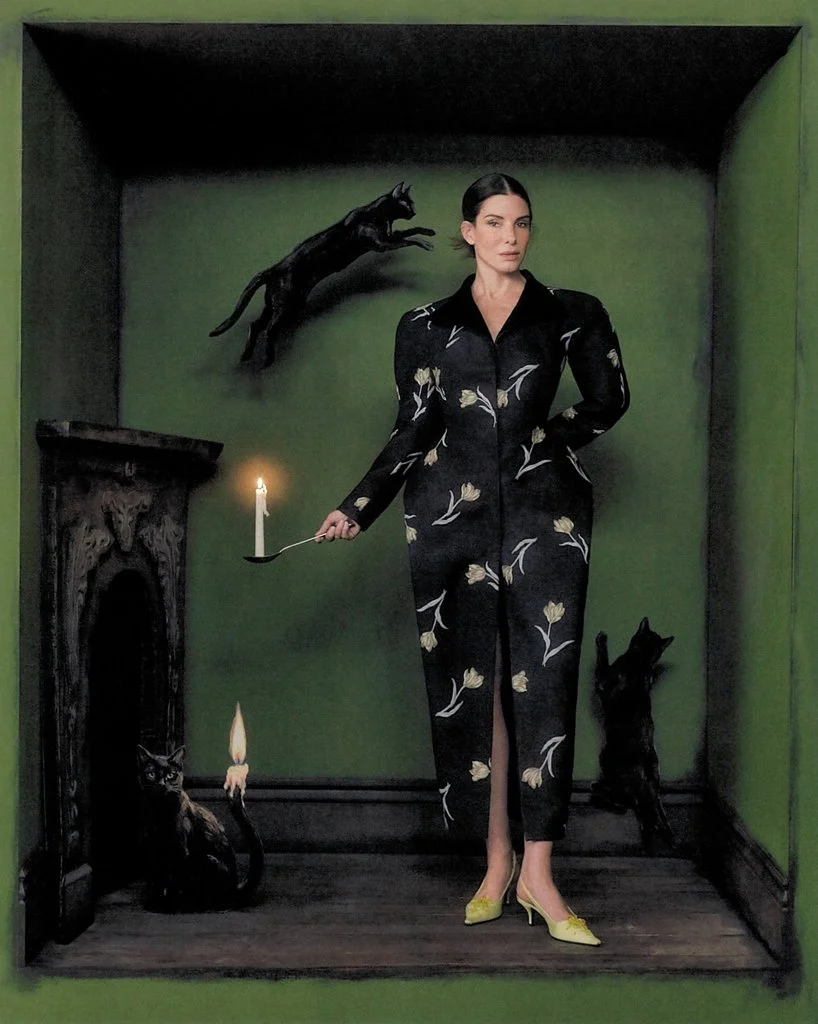
The box has become one of the most recognisable elements of your work. What does this structure offer you creatively, and how do you see it evolving?
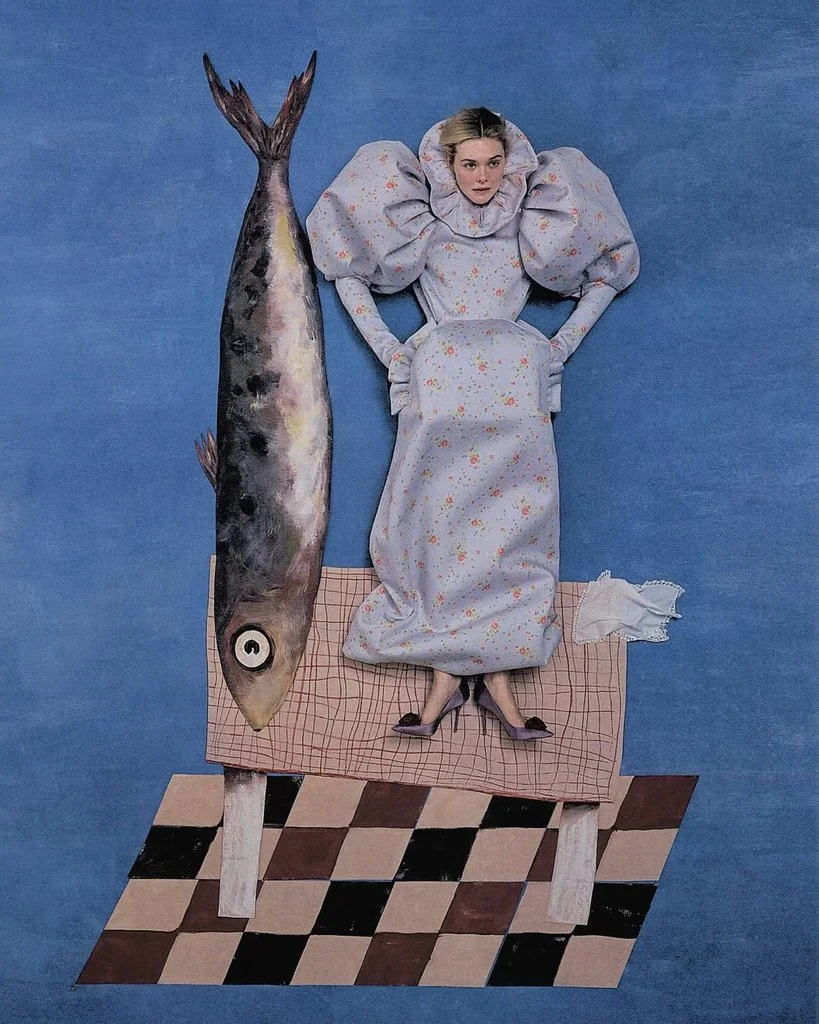
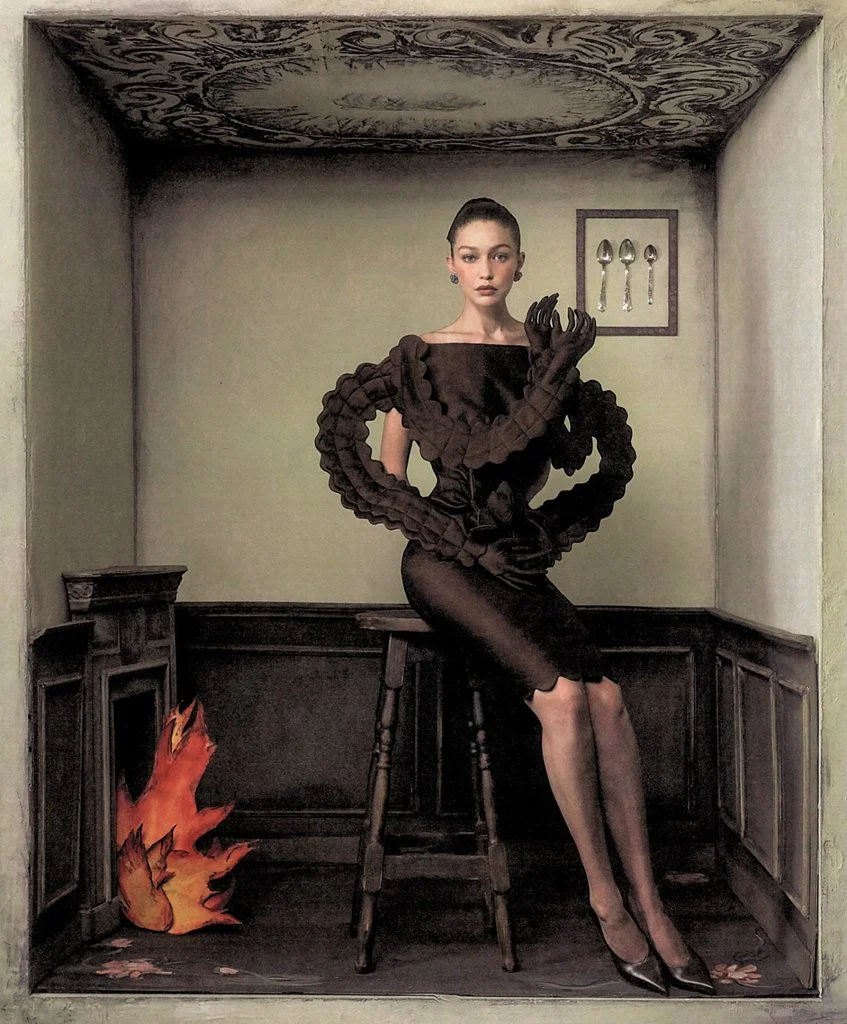
For me, the box is both a restriction and a liberation. It centralises the host whilst simultaneously amplifying it, preventing energy from scattering across the frame. My senses demand order, and I feel in sync with the discipline of boundaries. A geometrical frame allows me to move from A to B without losing myself in the openness of the studio. The box gives me refuge, acting as a grounding structure, a rule I create for myself. I evolve with the set design in a natural way. Elements appear and when they can no longer be reinvented, they slowly disappear.
Over the years, you can see I have built boxes in many forms, translating older set designs and giving them another life. Now my focus has shifted toward the two-dimensional, where perspective collides and the box flattens into something new. I cannot predict where this will lead. My sets transform with time and everyday motifs. But I do know that I am not seeking something outrageous or spectacular. I search for simplicity and there is nothing simpler than a box.
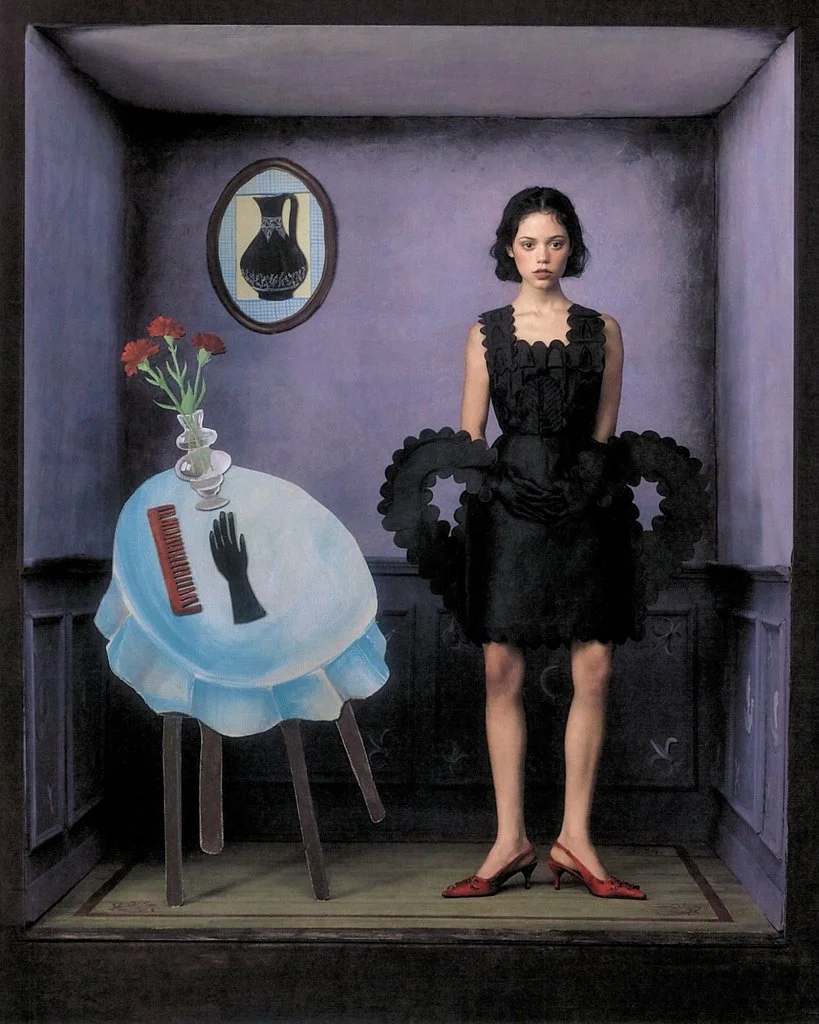
Your visual language has moved through Renaissance influences, Dada, Bauhaus and folklore. How do you navigate these different references while maintaining such a recognisable identity?
In my work the transitions between time periods and styles happen naturally. When I feel drawn to a new time period or style I search for the one element that speaks to me, then I reshape my experience through my own rules, through the restrictions I impose on myself. The coherence of my work comes from this self-created boundary. I do this subconsciously, like a habit or effect of my mental state.
I say that 95% of what I see I do not like and only 5% survives, but when I gather those fragments, the outcome is inherently mine. This is why I can move between Renaissance, Dada, Bauhaus, or folklore without losing identity. The identity comes from the filter itself, my discipline, my restrictions and my way of seeing.
I know the history and the ideologies. I do not begin until I comprehend the social background of these movements. I do not carry over the theory, I carry over the visual impact. I take a fragment, filter it through my eye, meet my boundaries, hear my judgments and it becomes something else. I use photography only as a medium to create images, not to preserve a narrative. I build my own visual language from the fragments that remain.
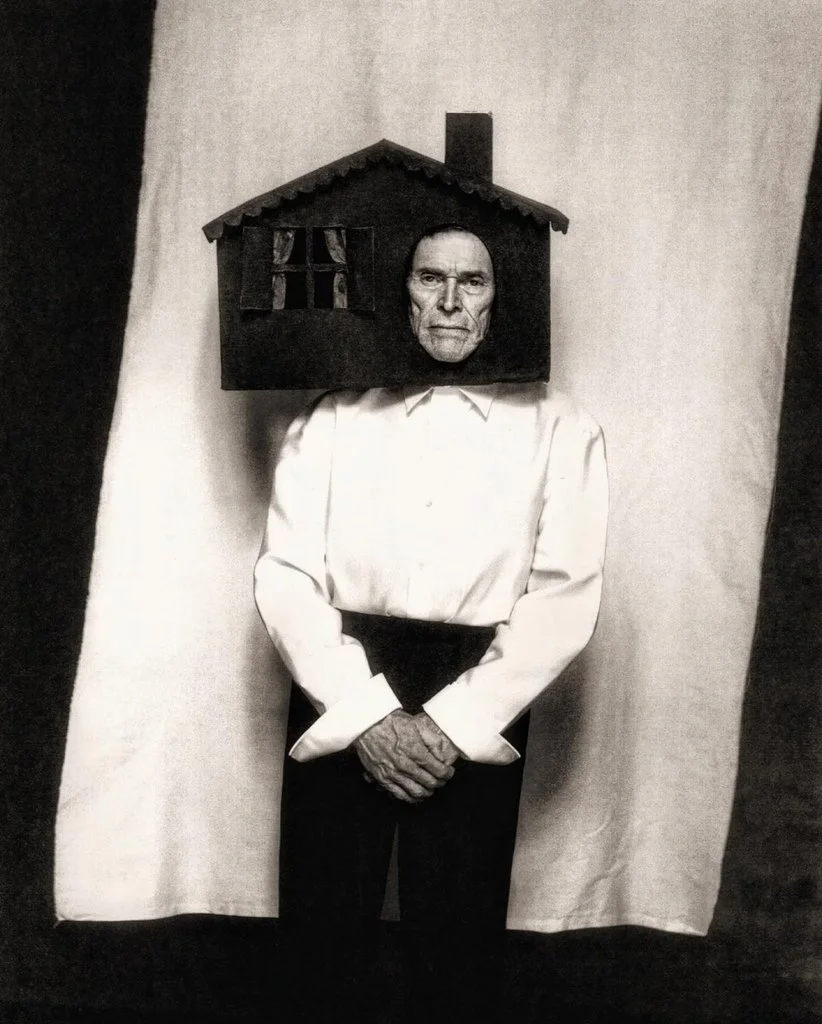
One of your most memorable portraits features Willem Dafoe wearing a house-shaped headpiece. What is the personal story behind that image?
The shoot with Willem Dafoe was a last-minute booking. I had to travel from Milano to Rome to meet him. On the day I was informed of the vision for the shoot: simple, clean, standing in a suit and shot in black and white. It felt irregular to go this way. I wanted the images to go beyond the surface and symbolise the depth of his intellect and obsession with art. Willem Dafoe in a suit has been done a thousand times before, I wanted to make this personal and carry the weight of who he was. Months prior to the shoot I was back in Hungary visiting my grandparents. On this visit my grandma and I were looking through childhood photographs and I saw a photograph of my kindergarten self with a cardboard house on my head.
I have a vivid memory of their disturbance toward Farsang, which is similar to American Halloween, although it was more a carnival children attended dressed up in costume. My grandparents dressed me in my formal school wear and constructed a headpiece resembling the house I grew up in. This is the origin of the cardboard house headpiece. So when I was photographing Willem, this was my vision, for his head to be in a house. I was uncertain at the time, would he say yes or no, but I knew this picture would mean something, if not to others but me. We were set in a botanical garden, a team of six and relying on daylight.
There was no drama to the day, it was very simple and familiar. I asked Willem to wear the headpiece and act as if his parents had just sent him to the corner of the room for misbehaving. It was as if the air around him changed and he became a stubborn child in defiance. Three shots in and I had the image. This picture became very significant in my career and it’s truly beautiful that it’s tied to my grandma and grandpa.
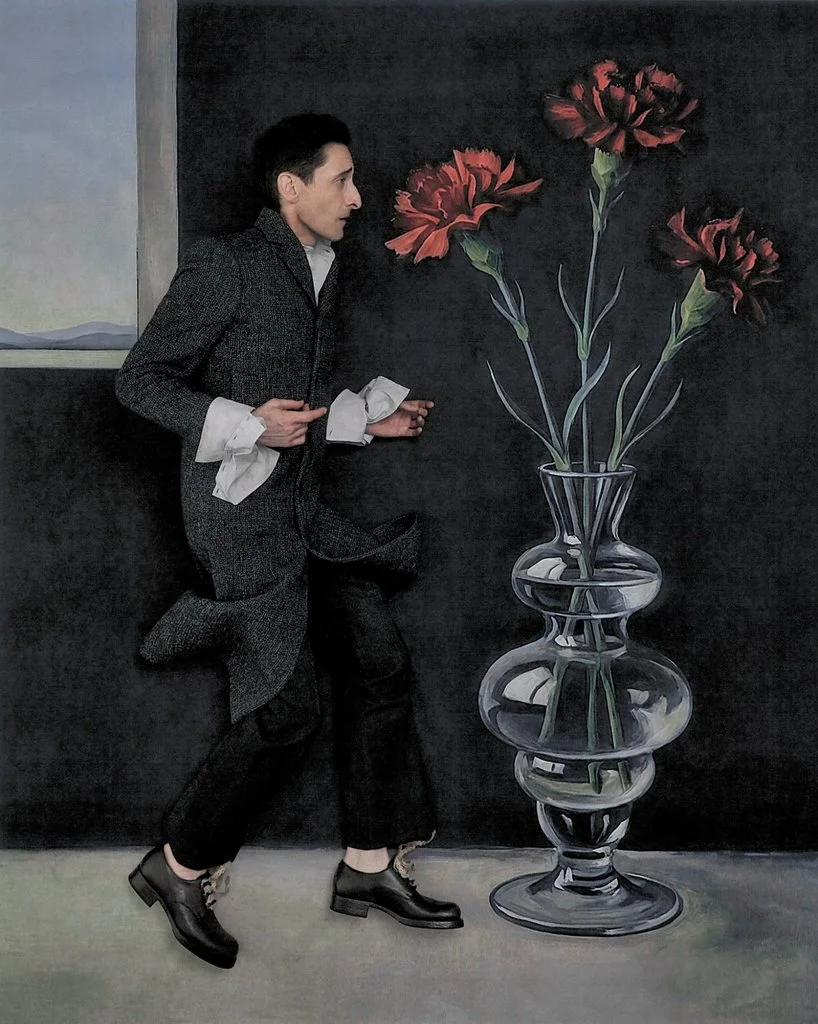
Your compositions appear meticulously controlled, yet you leave considerable room for spontaneity. How do these two opposing forces coexist during a shoot?
I have certain poses that have stayed with me through the years, like the wide-open legs and the finger gestures. They serve as timestamps from different seasons of my life. These poses are my base which I can always return to. I find them aesthetically pleasing, they balance my craft which gives me peace. So I place them inside a story to anchor my image. But this calls for the unexpected. On set I leave a large space for spontaneity, and I protect that space carefully. Even in commercial work, I warn clients not to be too strict and to allow room for alteration. Control makes images cold and calculated, leaving much without meaning. A shoot should breathe, it should evolve, it should shock even those who are making it.
When we come into the studio everything that my team and I have prepared, like the props, the costumes and the designs, piles up in one room. I like to see it all collide. What we imagine beforehand does not always come together in the way we planned. Sometimes the idea refuses to be born in the form we intended and when that happens, we change. We give it another life. This is the most exciting part, to begin with the base of the poses then allow the unforeseen to interfere with the story. That tension between control and release is what keeps the images alive.
You have photographed some of the most recognisable figures in film, fashion and music. How do you establish the trust needed to bring someone into your visual world?
I do not treat celebrities differently from anyone else. We enter the room as equals. The set is not a hierarchy, it is a space where we work together. I never feel the boundaries that others describe, this worry of asking too much or the nervousness of how to behave. These things do not exist in me. When they arrive, we often begin to talk about unusual things, strange things you would not expect between two people who have just met. That honesty and unpredictability creates a shared ground. I think I make them feel in good hands. I repeat it constantly; we can try, we can push into new directions, but there is no risk.
I give them the guarantee that every pose, every set design, has a reason behind it. There is always a sense, a logic, for why I ask them to do something. With Willem Dafoe I explained to him why I wanted to build that house, where the idea came from, what it meant. Once he understood the reasoning, he trusted the process. It is not about arriving on set and staying strangers, that hardly ever happens in my shoots. We talk, we connect and we exchange visions. It is not about becoming friends but about creating a temporary partnership of two people working side by side in complete openness. Unfiltered and direct communication is what makes the image possible.
Many of your sets are constructed from handmade, recycled or repurposed objects. What drives your commitment to working with materials that have already had a previous life?
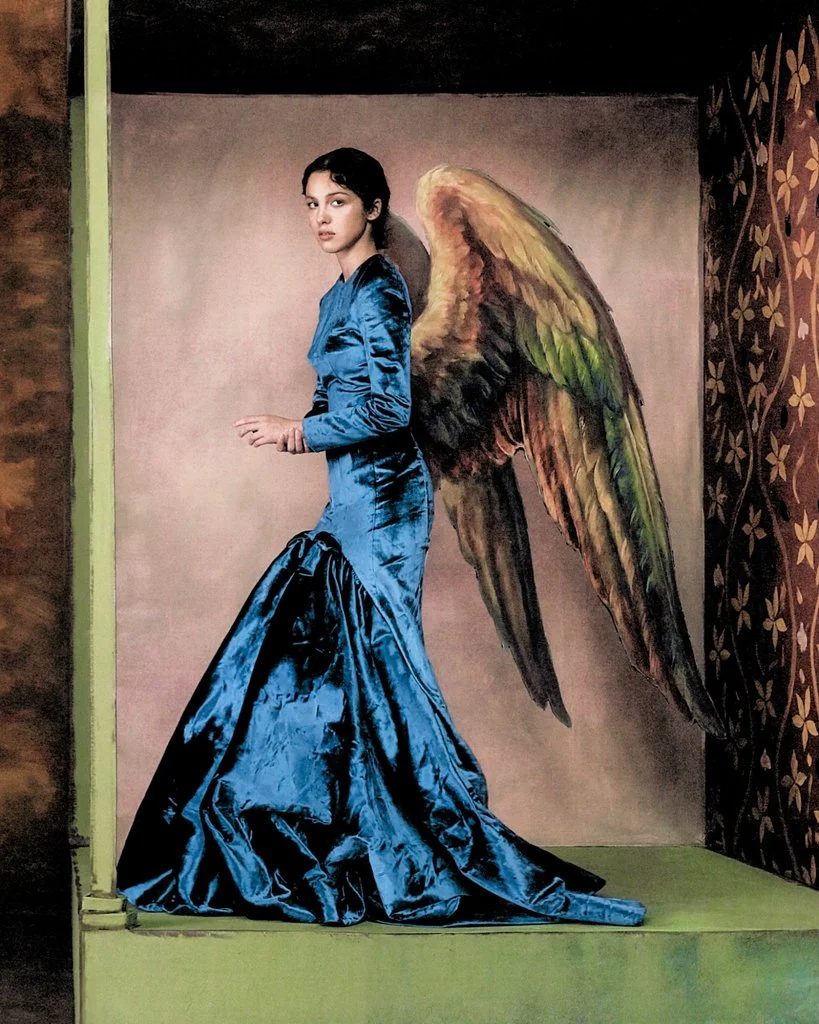
There is an overproduction culture in this industry, things are spat out and discarded quickly. I have never felt comfortable participating in this rhythm. Waste to me feels irregular, it leaves a scratchy sensation in my body. I reuse my props until they are tired within me, they must be fully explored and only then, once they have reached their final form, do I consider replacing them. This pattern is less a physical decision than a mental one. Naturally the cardboard will wear, but it must be deteriorating, collapsing at the touch, before I allow it to leave the frame. There is something careless in discarding what still holds potential. I would rather reshape and paint over what already exists than introduce something new without necessity.
My props carry an honesty, bedsheets, boxes, cut-outs of fish and clouds, they have all already lived. Gradually they build texture and patterns, evolving through moments in time. Their previous life lingers, and that can be felt, it leaves me with a feeling of familiarity. There are more responsible places where resources can be directed and money can be spent. This industry is often extreme, sustained by continual consumption and a constant appetite for something new. If I can disturb even a small part of that cycle, by reusing, repurposing, and exhausting what already exists, then that feels more aligned with the way I think and work.
Your photographs often occupy a space between reality and fiction. How important is it that everything within the image physically exists in front of the camera, particularly with the increasing use of artificial intelligence in image-making?
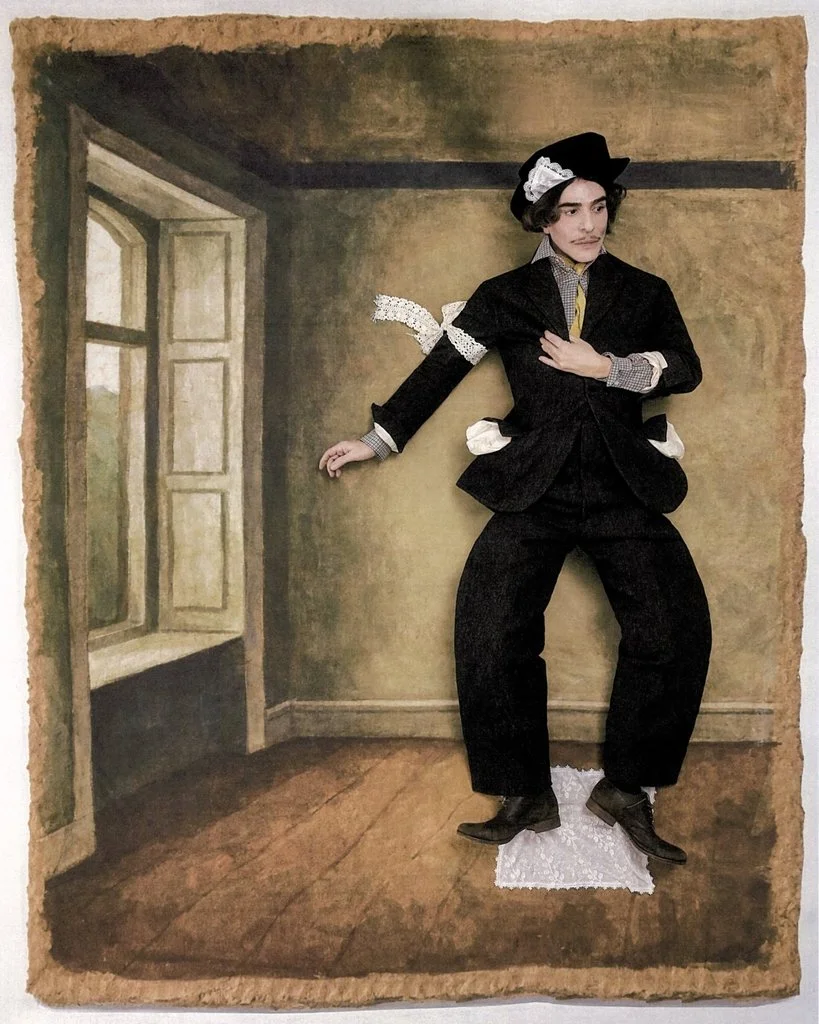
Yes, it is important to me that everything you see was physically present in front of the camera. I don’t shoot anything that isn’t there. I don’t use Photoshop to add in elements, and I refuse to use AI. If it’s in the image, it existed on set. I can’t imagine constructing something afterwards in Photoshop. For me, that feels like cheating.
I don’t acknowledge AI in my process at this point. I don’t see how it would make my work better, faster, or more precise. Maybe that is simply the way I operate, but it does not fit my practice. I work with real materials, real space, real light. The image has to exist before it is captured.
You have described post-production as a process of idealising reality, not pursuing perfection. What does idealisation mean within your photographic language?
My post-production method is not in pursuit of perfection but idealisation. I prefer to stand at the romantic edge of vision, where reality begins to warp. I chase idealisation the way the ancient Greeks carved marble, by not copying life but bending it into something, like a tale. I do not feel the need to hold a mirror to the world and force people to confront its rawness. I want my pictures to breathe in the same territory where dreams return, where imagination wakes, a space for dreams.
My images are not commercial beauty campaigns or manuals for how a body should look or rules for belonging. My characters are not there to be imitated, they are not a space for the viewer to step into. I do not dictate body types or prescribe how one should appear. It’s not an aspirational campaign, it’s simply a picture. My photographs are closer to figures in a novel. You encounter them and then you leave them behind.
In a culture saturated with images and constant visual stimulation, what makes a photograph worth remembering?
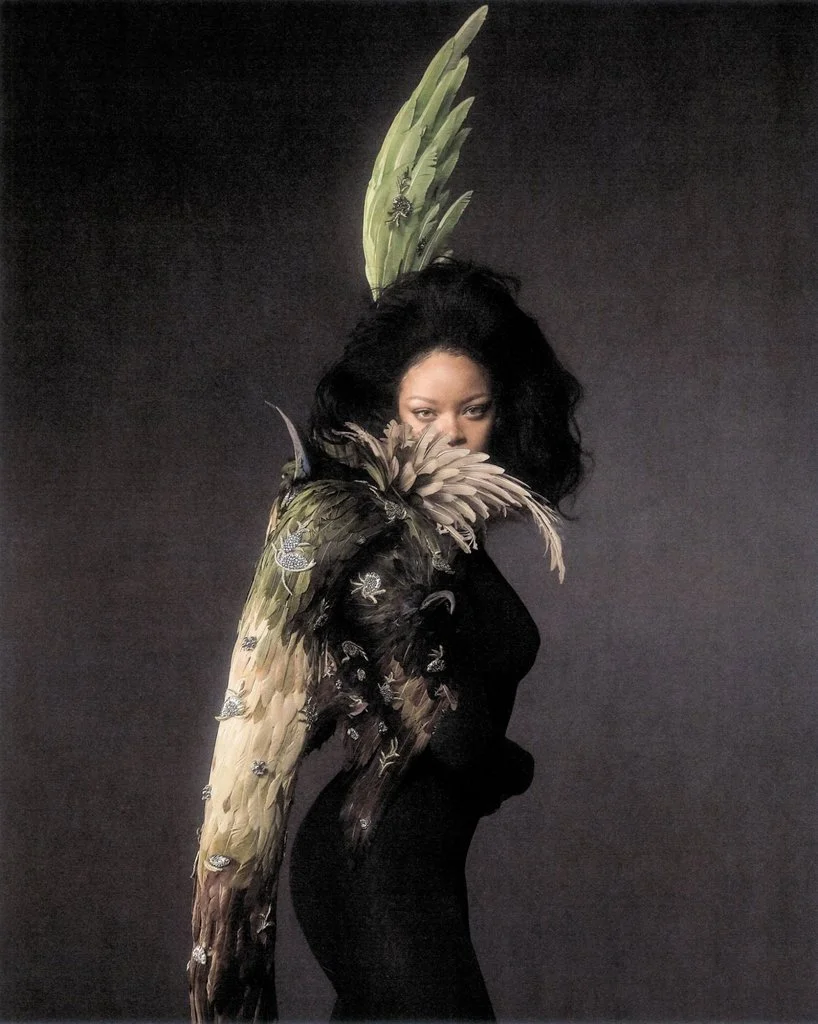
The amount of information we have now feels infinite. It makes any form of work harder. After a day on set, I want to end knowing at least one image feels timeless. That should be the goal of every photographer. It is difficult. But not impossible. To achieve that, I’ve learnt you have to be composed within yourself. Understanding who you are, what your tools are, and what truly belongs to you. When you know that, you’ll feel the harmony of your creation within, and that brings us back to control.
Is there a creative ambition that remains particularly important to you, something you have been preparing for but have not yet had the opportunity to realise?
Tilda Swinton. I have a visual board of ideas created for her, accumulated over the years. I haven’t had the chance to work with her yet, but it would be a milestone in my career. There are many moments where I catch inspiration for a shoot with her, so my board is quite full. She is a consistent thought, an idea, in my mind. If I have the chance to work with her, I’d be ready.
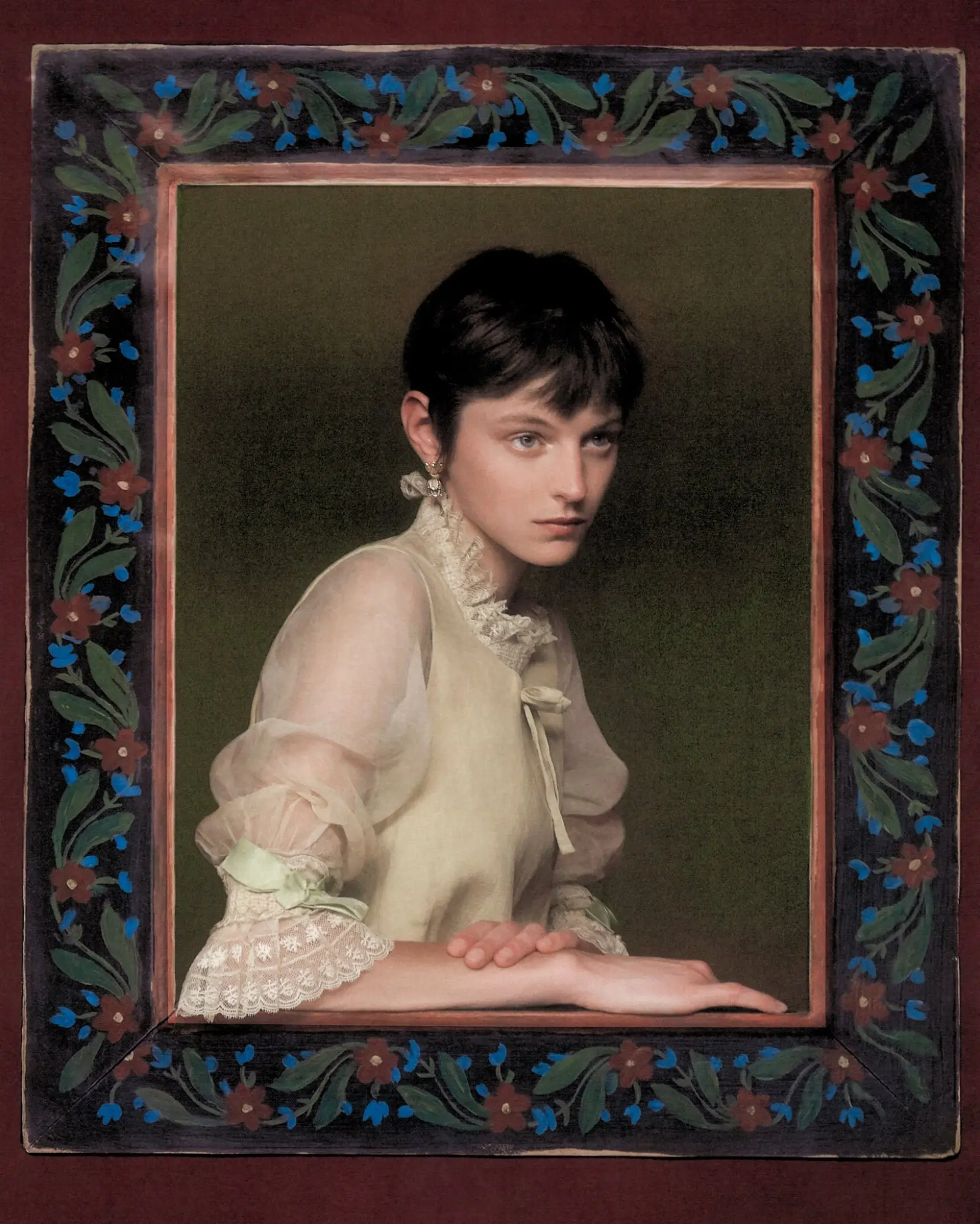
All images courtesy of Szilveszter Makó, shared with permission