Inside the EP/BC-1 and its hands-on approach to CD playback
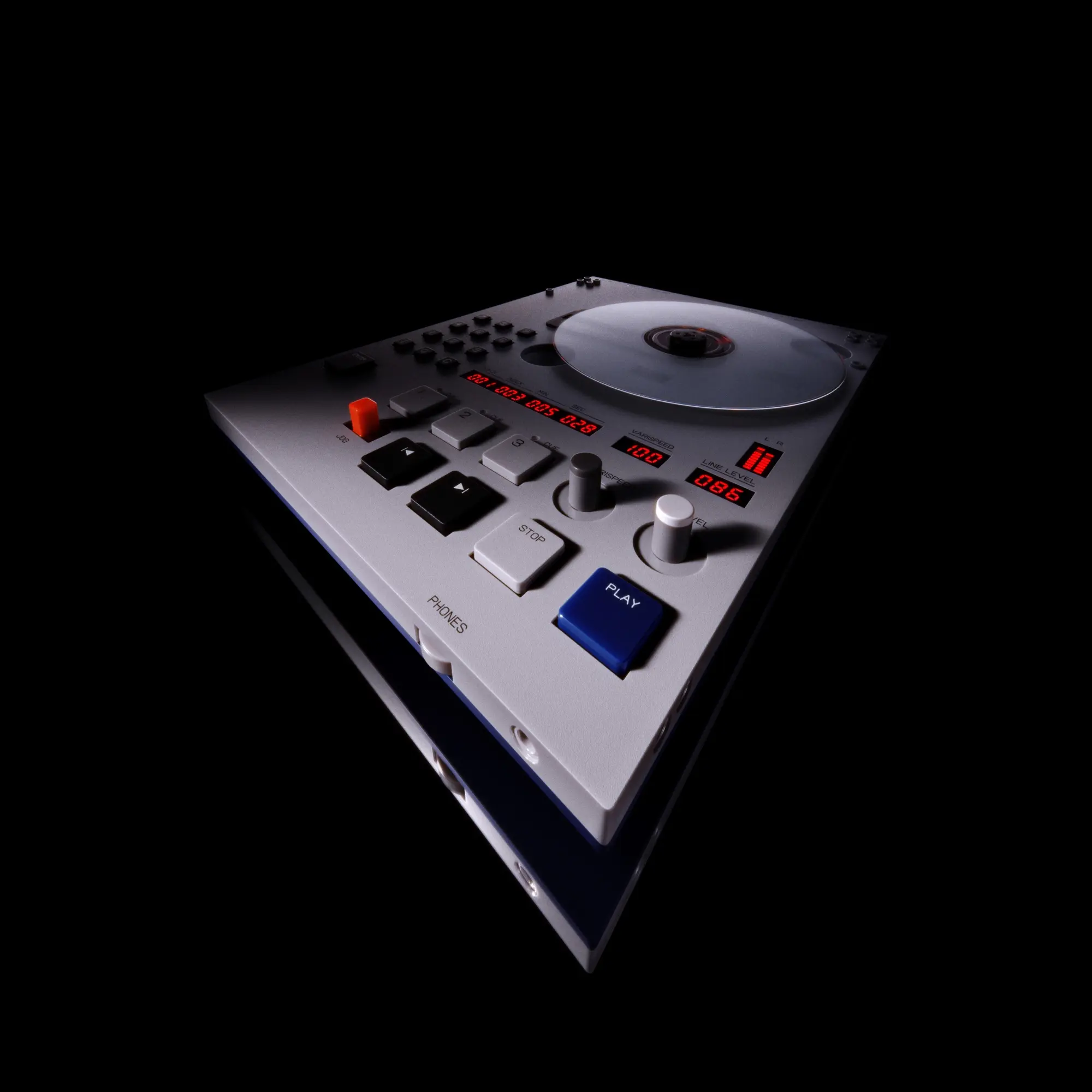
Teenage Engineering has introduced the EP/BC-1, a professional CD player and the first product in the Stockholm company’s Broadcast Series. Its control panel puts a numeric keypad, a jog stick and a speed dial within reach, giving listeners direct control over where a track starts and how fast it plays.
The keypad lets you enter a track number and a timestamp to jump straight to a particular passage. The jog stick moves backwards or forwards through the recording, while the varispeed dial adjusts playback from half speed to one and a half times the original. Three cue buttons let you mark passages and return to them. The player remembers those markers for the last 40 discs, so they are still there when you put an album back in.
Each of these controls works at a different scale. The keypad is useful if you already know the track and the minute you want. The jog stick is useful when you are still looking for a passage by ear. The manual describes three search speeds, from 2× to 8×, depending on how far the stick is moved. Moving it a little lets you search near the current position. Pushing it farther is useful when the point you want is several minutes away.
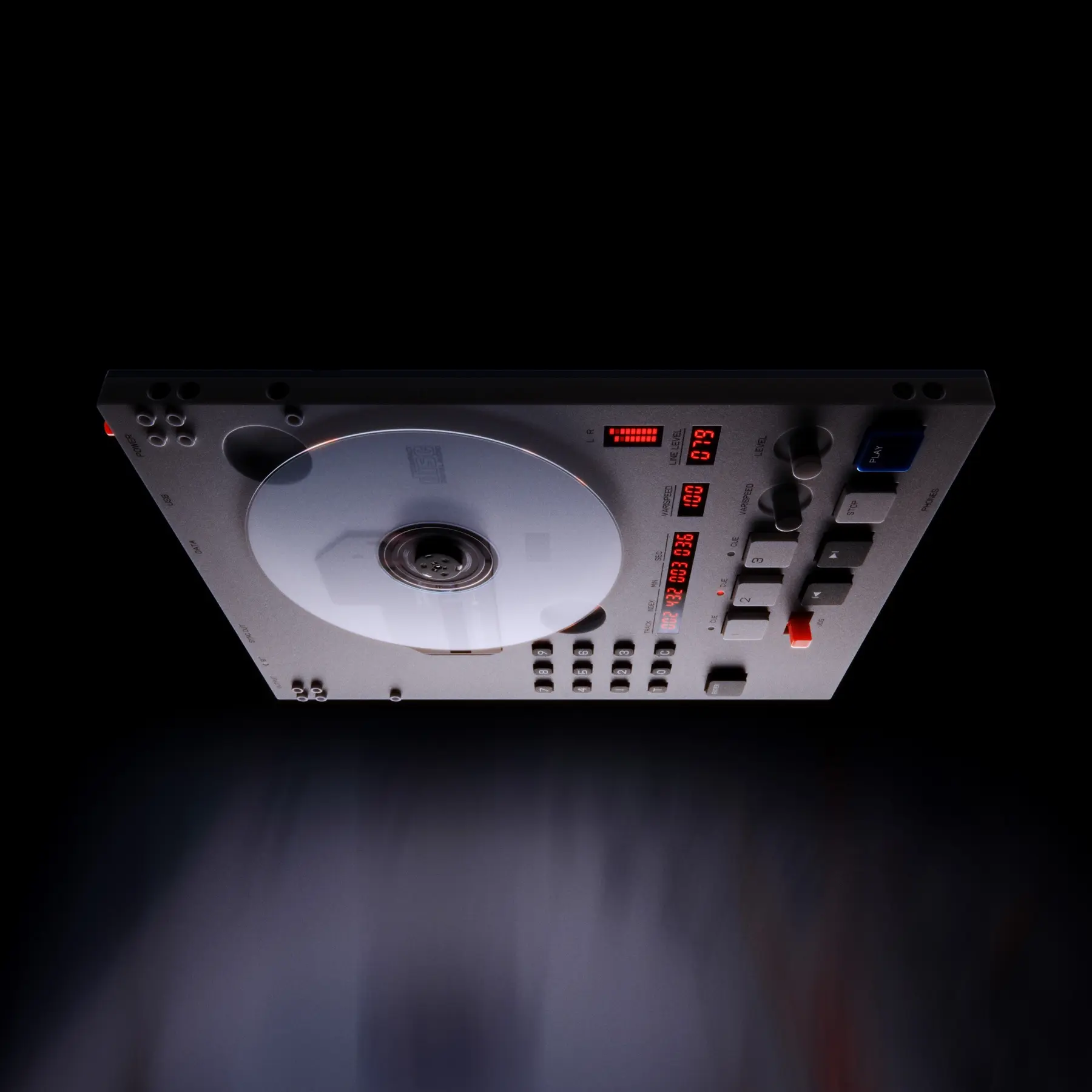
The three markers are useful when you return to the same few passages. A listener could mark the start of a long introduction, the entrance of a particular instrument or a transition between tracks. Each marker has a dedicated button, with an LED showing whether a position is stored. A press returns to that position after the mechanism has found it, so the cue controls are best understood as bookmarks for a disc.
The display gives the track, index and elapsed time a place beside the playback controls. Digital level meters show activity while the disc is playing. Those readouts help explain the layout of the panel. The keypad and jog stick let you move through a recording, and the display gives you a way to check where you landed. The dedicated speed dial keeps playback rate accessible while you listen.
The EP/BC-1 shares its dimensions with the K.O. II sampler and can attach to the K.O.–AMP 35 with a separate dock kit. It has a rechargeable battery, stereo line and headphone outputs, and Bluetooth streaming with support for Auracast. The physical connection to the amplifier makes for a compact listening system built around the disc player itself.
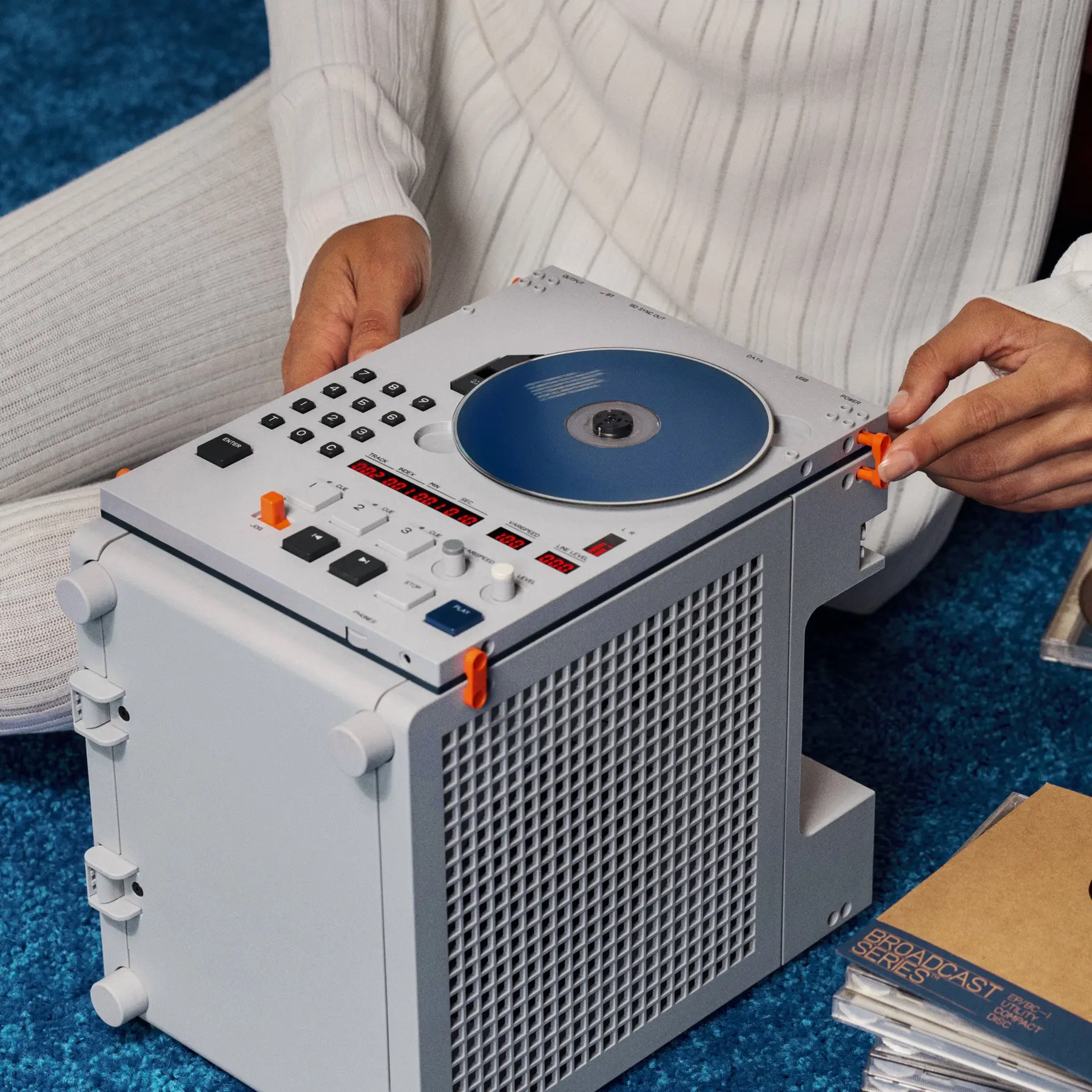
The outputs also let the player serve different listening arrangements. The headphone socket suits listening on the player itself, while the stereo line output can feed a separate system. The built-in battery makes it possible to move the player between those setups. When connected to a computer, USB can carry digital audio directly from the player.
The same controls have a use in the studio. The player can detect the beat of a recording and send a tempo sync signal to compatible gear. It can also rip CD tracks directly to a USB drive as 16-bit, 44.1 kHz WAV files.