Inside teamLab’s borderless vision of art, nature, and human experience
teamLab operates at the intersection of art, science, and technology, developing immersive environments that challenge how perception and space are understood. Founded in Tokyo as an interdisciplinary collective, the group has built a body of work that dissolves boundaries between physical and digital realities. Their installations function as dynamic systems evolving through interaction, time, and collective participation. Across projects such as teamLab Borderless and teamLab Planets, artworks respond to human behavior in real time, positioning the visitor not as a spectator but as an active element within the work.
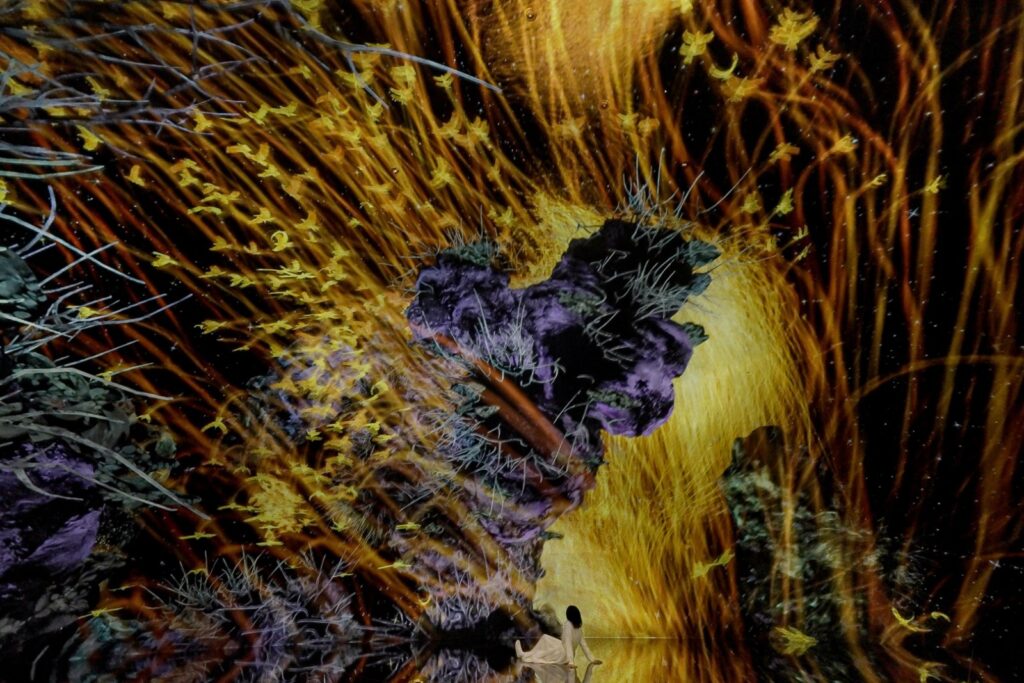
At the core of their practice lies an ongoing investigation into how humans perceive existence, how we relate to nature, and how continuity can be experienced. Natural elements such as water, flowers are translated into responsive environments that reveal processes of interconnection. Through digital tools, TeamLab articulates a spatial language that emphasizes fluidity over separation. In this conversation, the collective reflects on audience perception, the role of nature within digital space, and the evolving direction of immersive environments.
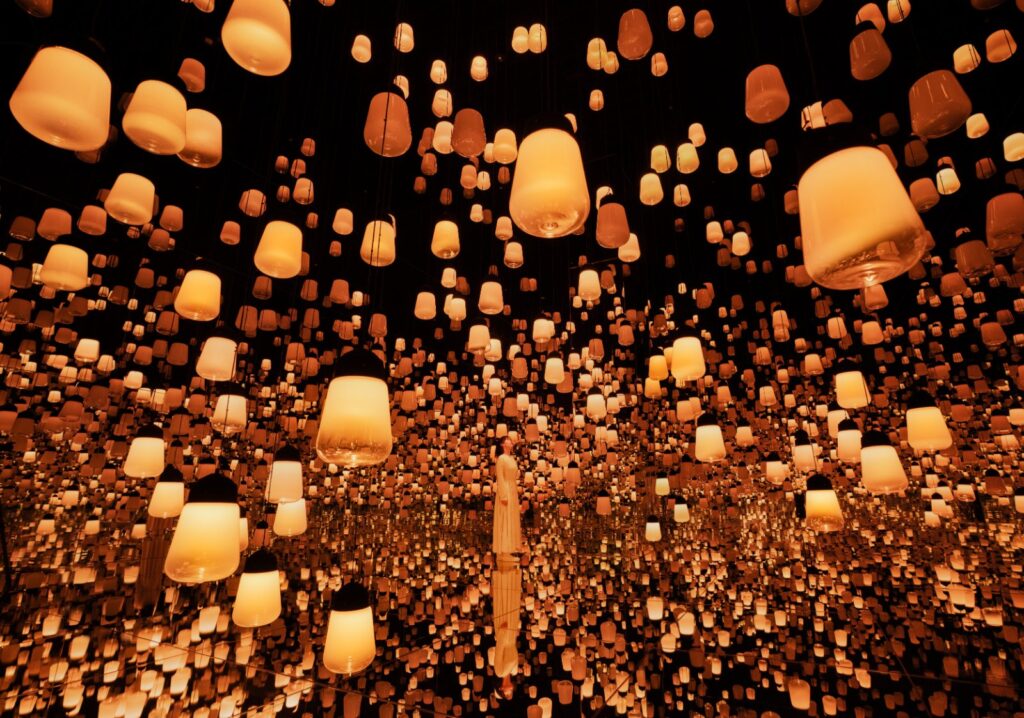
teamLab was founded with an interest in how people understand and relate to the world. Over the years, have you noticed a change in how audiences perceive your installations? Are people still surprised, or has the evolution of technology changed their reactions?
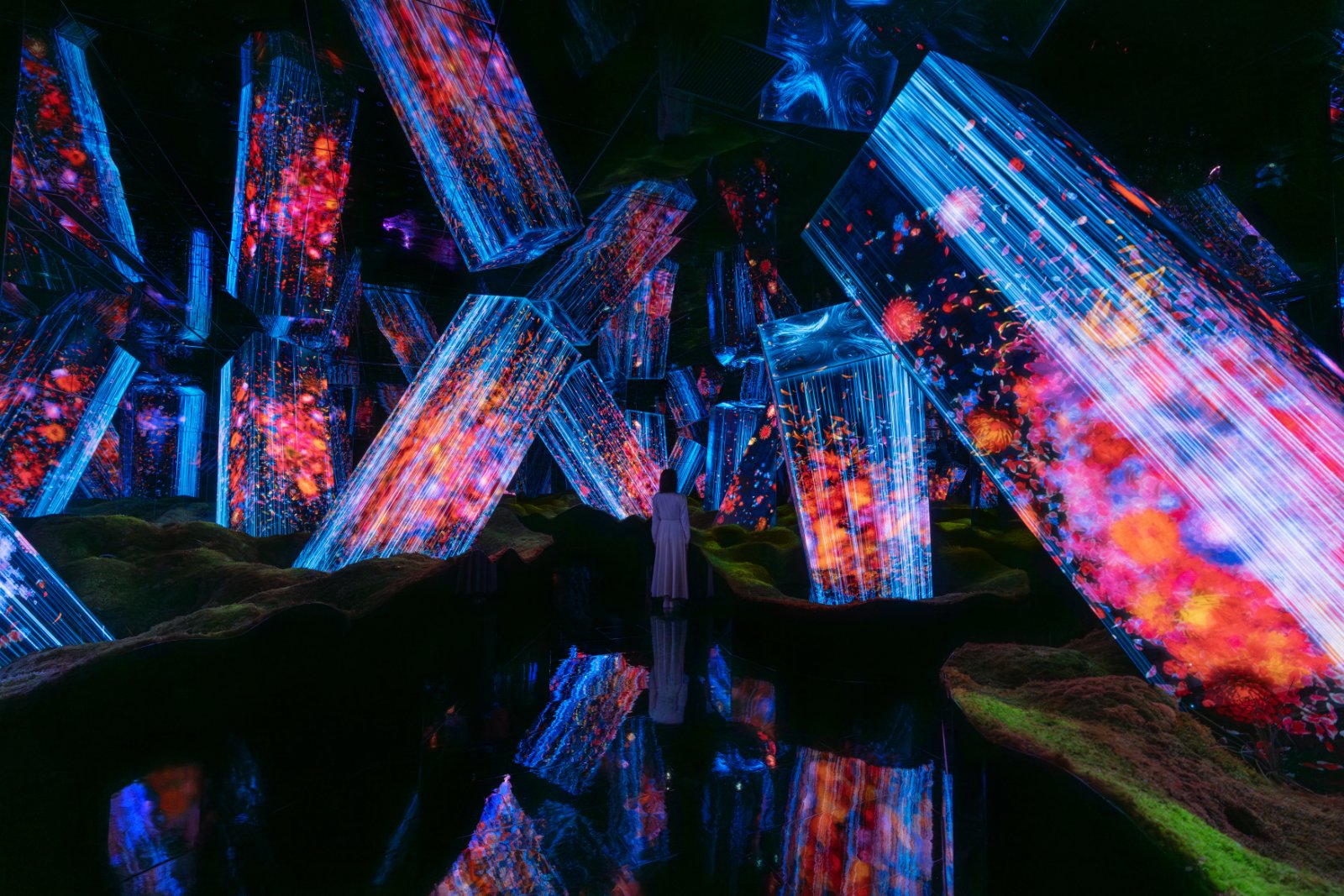
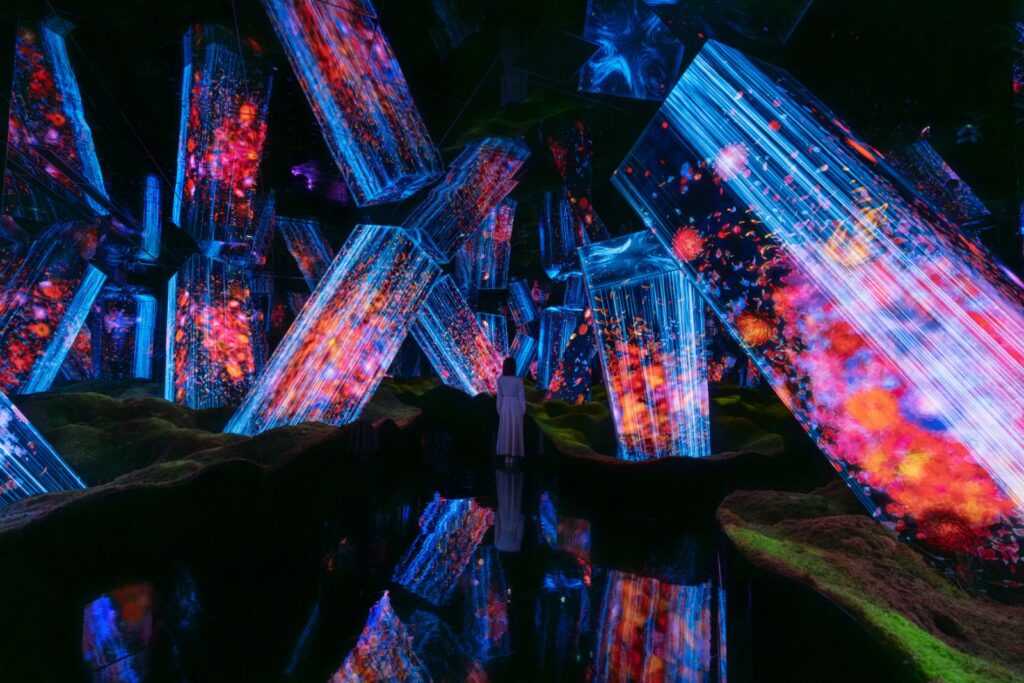
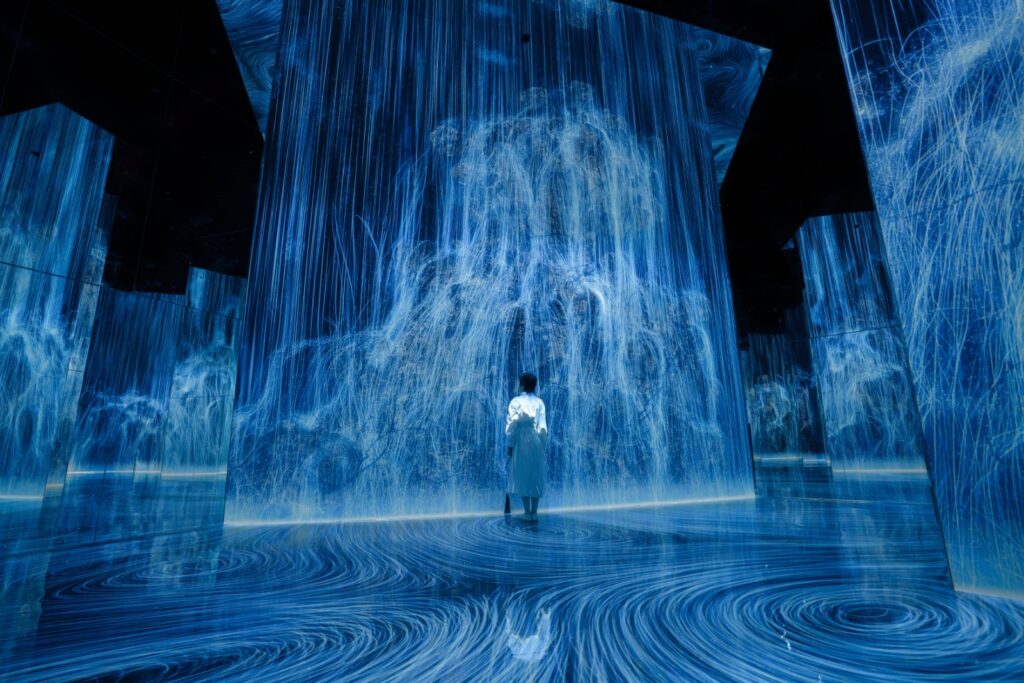
I am not sure that people perceive them so differently today. In many ways, people remain the same. It is similar to going into the mountains: even if you return many times, the experience can still feel different each time. At teamLab Borderless, everything exists as one continuous world. The artworks move in and out of rooms, overlap, intersect, and influence one another. They are also affected by the presence and behaviour of visitors. What someone sees can only exist in that specific moment, because it depends on which artworks are present, how each person moves, and how others are also behaving in the space.
This means that the same experience can never be repeated exactly. Even the time of day can change the way the museum feels. Some visitors stay for around an hour and a half, while others remain for several hours. The longer they stay, the more they begin to feel as if they are living inside a continuous world. For us, this is not only true of the artwork. It reflects the world itself. We cannot separate ourselves from the environment, from other people, or from the flow of time around us.
Do you think art can help people emotionally? Many people enter immersive experiences looking for a moment of distance from daily reality. Can your installations create a sense of calm or emotional connection?
Our interest is in human perception and in how people understand existence. Perhaps people feel calm in our works because they sense that they are not separate from the world around them. When someone is in a place where they feel connected to the environment, and also to other people, that can change how they feel. This is how the world exists: everything is part of an infinite continuity. Time also works in this way. We exist in a flow from yesterday to today and tomorrow.
For me, feeling that continuity can be more comforting than feeling separated from the world. No living thing can exist completely alone. If you place any form of life in a closed box without any connection to the outside, it cannot survive. We always exist as part of an environment. Perhaps that feeling of connection is related to why people experience calm inside the works.
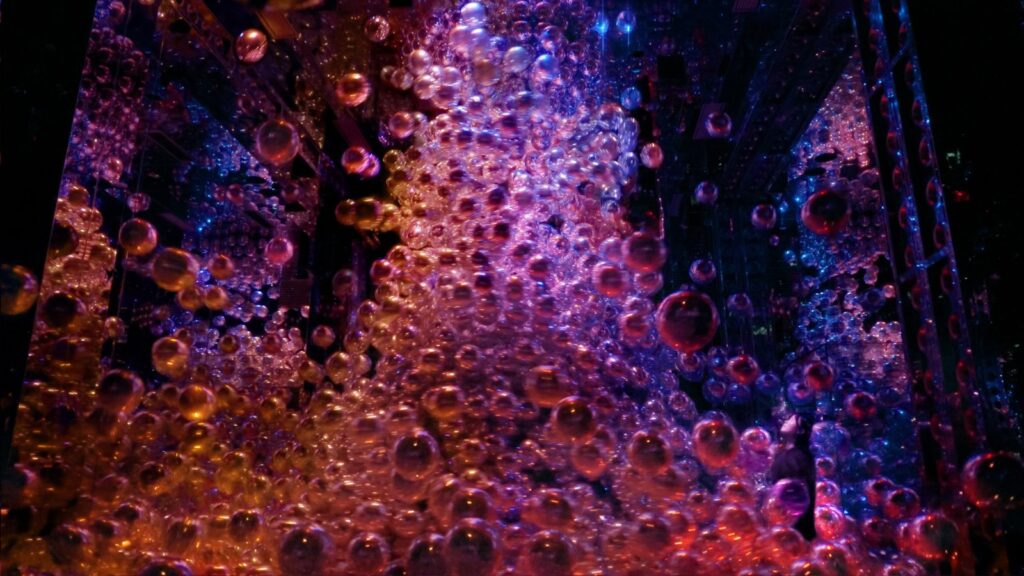
Nature has a strong presence in your installations, through water, flowers, light, and organic movement. What does nature mean in your work, and how difficult is it to translate nature into a digital environment?
We are not trying to replicate nature. What interests us is continuity, and nature is one of the clearest ways to think about that. To truly understand the time of nature, it would be easiest to live inside it for a very long time. If you could live in a forest for one hundred years, you might see a tree grow, stand, and eventually fall. Through that experience, you could understand time in a different way. But of course, most people cannot live inside nature for one hundred years.
Nature exists as part of an environment. It cannot really be separated into isolated parts. This is what we try to express. Language and logic are useful ways to understand the world, but they also create boundaries. For example, we say “finger,” “wrist,” and “arm,” but in reality they are all connected. We separate them with words, even though they exist as one continuous body. Nature allows us to think about existence as a whole. It helps us understand that we are part of a larger flow, even if that is sometimes difficult to grasp through language alone.
In many of your works, nature is brought inside an enclosed space. Have you also thought about creating installations outside, directly within natural environments?
Yes, we have created several outdoor projects. We recently opened another one, and for more than ten years we have worked on outdoor night museums that exist from summer to autumn. Some of these projects take place in forests, among rocks, caves, and landscapes that have existed for hundreds or thousands of years. We use forms that have been shaped by nature over a very long period of time, and the artworks respond to those existing conditions.
We have also worked in a botanical garden. During the day, it functions as a botanical garden, but after sunset our artworks appear. In one work, for example, visitors see traces that are actually based on the movement of birds during the daytime. At night, those traces become visible. You can also sense the movement of the wind, and when birds come close to the installation, you can hear them. In this way, the nature of the garden becomes part of the artwork. Outdoor projects are difficult because nature is unpredictable. The wind can be too strong, the leaves can move too much, and many things cannot be controlled. But that unpredictability is also part of the work.
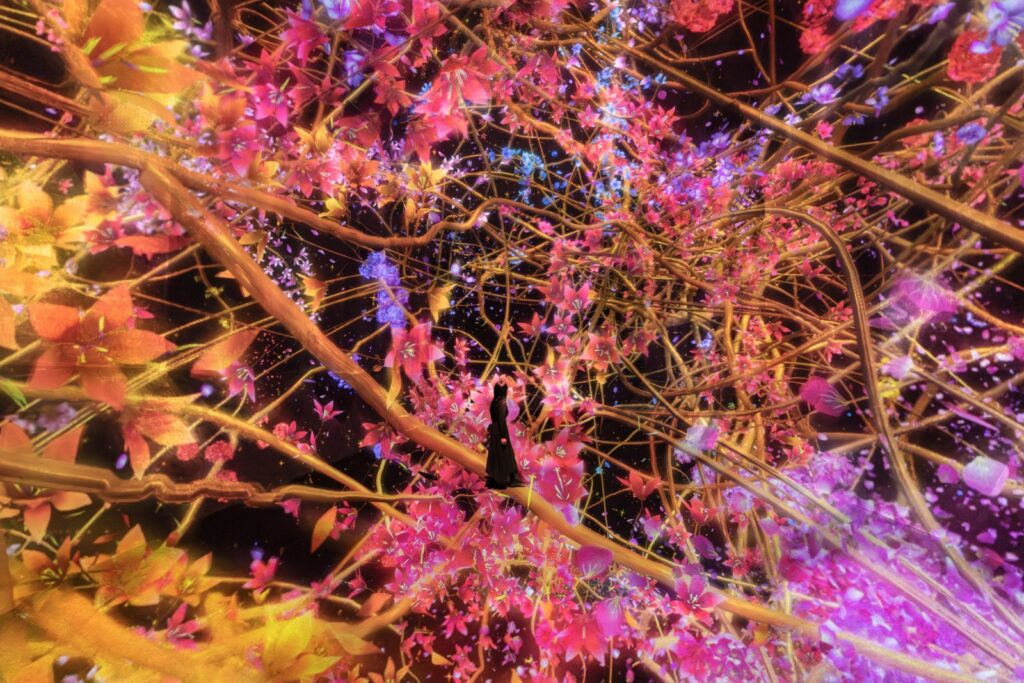
TeamLab is based in Tokyo, but works internationally. Is there any aspect of Japanese culture, landscape, or philosophy that has influenced the way you think about your installations?
Many people may not know this, but teamLab is an international art collective. We are based in Tokyo, but our team includes people from many different countries. For that reason, we do not describe ourselves simply as a Japanese art collective, but as an international one. At the same time, of course, personal experience matters. Toshiyuki Inoko, the founder of teamLab, grew up in Japan, and some of the things he saw there influenced the way he thought about existence.
One example is the Naruto whirlpools, which are among the largest whirlpools in the world. When you look at a whirlpool in the ocean, its boundaries are ambiguous. You cannot clearly say where it begins or where it ends. It is made of the same water as the surrounding sea, yet you perceive it as something that exists. That experience led to questions about how we perceive something as existing. So the work is not about saying, “This is Japan.” Our interest is in human perception, which is not specific to one culture. But naturally, the places and phenomena someone encounters while growing up can become part of the questions they carry into their work.
Your installations often bring people together inside a shared environment. When you create a work, how much do you think about the community of visitors and the way people behave together inside the space?
It depends on the artwork, but in many cases people are part of the work itself. At teamLab Planets in Tokyo, for example, visitors enter large artwork spaces with their whole bodies. They remove their shoes and socks, and physically move through the installations. In that sense, people are not only observing the artwork. They are inside it, and they become part of what is happening.
For us, digital technology is a tool. It is not the final goal. It allows us to create works that change in real time. A person’s presence can influence an artwork, and that change can also affect the experience of another visitor. The relationship is not only between one person and one artwork, it also extends to other people in the space. What I see can be affected by what you do, and what you see can be affected by what others do. In that sense, people are part of the artwork.
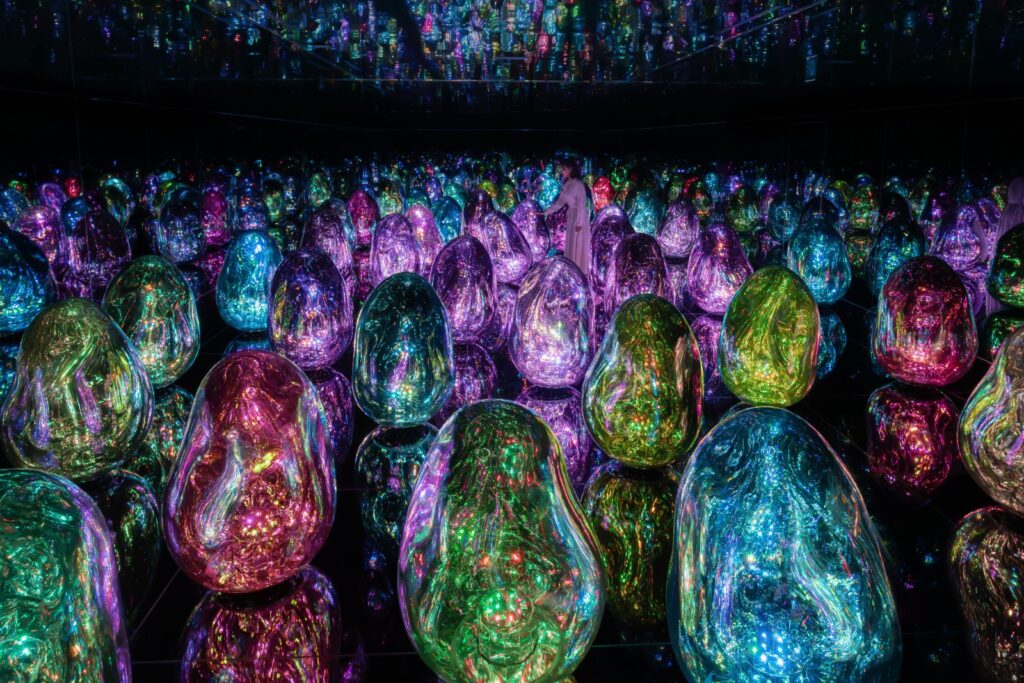
Your installations are known for their visual impact, but they also involve sound, touch, movement, and spatial perception. How do you think about inclusivity in your immersive works, especially for people with visual or hearing impairments?
This is very interesting. At teamLab Planets, for example, visitors take off their shoes and socks, and in some parts they walk barefoot. This is because we believe people do not understand the world only through their eyes. When you go into nature, you see it, but you also understand it through your whole body. You feel the ground under your feet, the air, the temperature, the surface you are walking on. In cities, the ground is usually flat and paved, so we often stop thinking about what is beneath our feet. But if you climb a mountain, you immediately become aware of the ground because your body needs to understand it in order to move.
There are many ways to perceive the world. Some people may not see or hear in the same way, but they can understand through touch, sound, vibration, or the body. At teamLab Borderless, the artworks move in and out of rooms, and the sound also moves with them. Each artwork has its own sound, and as the works overlap or enter another space, the sound changes too. Even though the visual experience is important, the works are not only visual. They can also be experienced through the body, through sound, and through spatial movement.
Artificial intelligence is now a major topic across creative fields. How do you see AI in relation to teamLab’s work? Is it something you use as a creative tool?
AI is not my area of specialty, so I can only speak personally. But when it comes to teamLab, the way we create is very human. A lot of our process involves making things by hand, experimenting, and discovering ideas through that process. It is also very important that we work as a team. The conversations between people, and the way we develop ideas together, are essential to how we make things. AI may be useful in some parts of the process, especially around communication, translation, or practical tasks that make collaboration easier. But the core of how we create is still based on human interaction, discussion, and shared discovery.
How do you imagine immersive experiences evolving in the future? Do you think elements such as scent, touch, or other sensory details will become more important?
I do not usually think about immersion as the main goal. For us, the intention was not simply to create something immersive. We wanted people to experience spatial art and feel that their physical body is connected to what they are seeing. When people feel that they are inside the work, and that their presence creates change, they may describe that as immersive. But immersion itself was not the only intention.
I think people want to feel connected to the world. This is why being in nature can feel powerful, and why being in a space where your actions create change can feel beautiful. Other people also create change, and together those changes become part of the same environment. We already use scent in some spaces, so sensory elements are part of the experience. But the main question remains the same: how do we see the world, and how do we understand something as existing? What we perceive cannot be separated from the mind that perceives it. That is what continues to interest us.
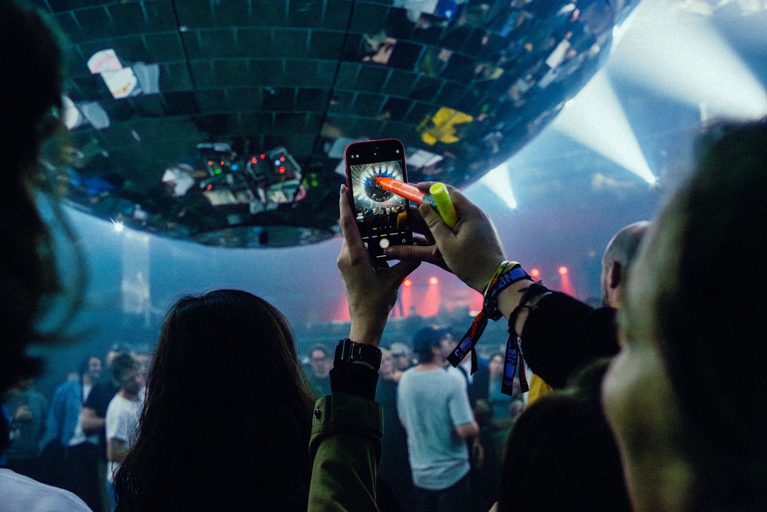
What did it mean for teamLab to present your work at OFFF Barcelona, and what did you want to share with the audience here?
This time at OFFF, I wanted to introduce people to what teamLab has been doing through our museums, exhibitions, and recent concepts. I did not know how many people in the audience had already experienced our work, so it was important to share our philosophy and the ideas behind it. I spoke about some of our recent interests, including environmental phenomena and cognitive sculpture. I also had the chance to speak with people at the festival and hear what they were interested in. Different people may take different things from the presentation, but for me the most important part was sharing our work, our experience, and why we create it.
Interested in publishing your work?
If you are interested in having your work featured on Visual Atelier 8, please visit our Submission page. Once approved, your work will be presented to our global audience of professionals and enthusiasts.