Anna Wang examines how the self takes shape through films OROBORO and Starry Night
Anna Wang’s animation practice begins with a question that has no fixed answer: does the world shape the self, or does the self shape the world? Across OROBORO and Starry Night, the Los Angeles-based animator and motion designer turns that question into movement, using cel, 2D and 3D animation as shifting states of identity. Her films do not treat style as decoration, but as a way to show how a person can form, fracture and become something else, visualizing existential shifts that reflect the celestial rebirth explored in Liberty Cap: metamorphosis.
Anna Wang is currently a motion designer at BUCK, where she has worked on animation for clients including Google and Apple. Her independent practice, however, moves into more existential territory. After studying Film at New York University’s Tisch School of the Arts and completing an MFA in Animation at the University of Southern California, she developed a language that sits between cinema, motion graphics and procedural animation, resonating with progressive CGI pioneers like Antoni Tudisco who blends 3D digital art and dynamic movement.
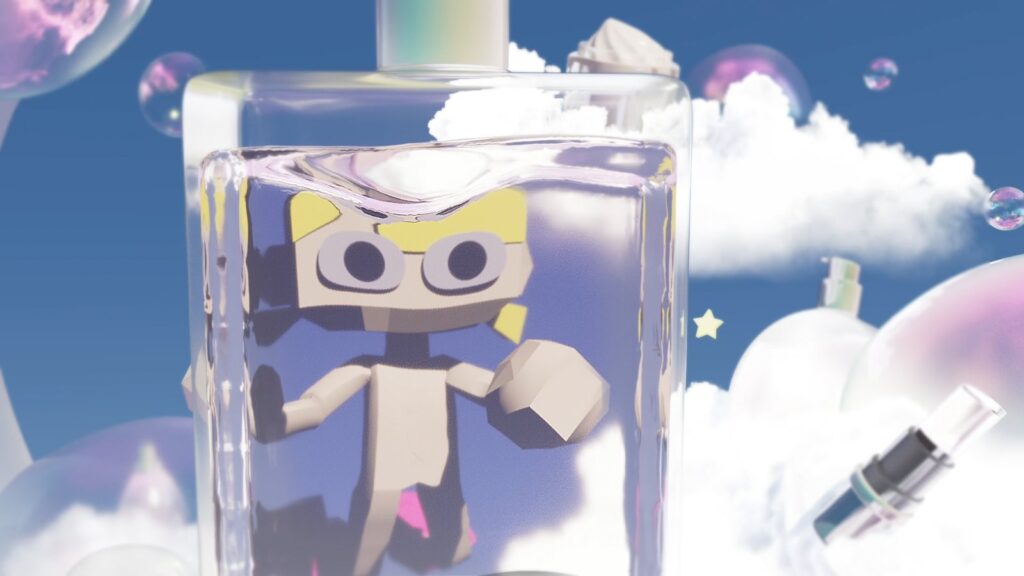
In OROBORO, a three-minute film, identity is shown as something built through accumulation. A single eye appears first through cel animation, then begins to twist, expand and morph into 2D motion graphics. As information accelerates around it, the figure becomes a 3D human form caught inside a system of social media, products and digital consumption. The more dimensions it gains, the more weight it carries.
The film’s collapse is as important as its construction. Overwhelmed by the speed of the contemporary world, the figure glitches and begins to shed its layers. It falls back through 3D and 2D, losing form until it returns to the eye that opened the film. For Anna Wang, this movement is not only a visual transition between techniques. It becomes a portrait of ego, overload and release, where identity is made visible through the pressure of everything it absorbs. OROBORO won Gold at the Collision Awards, received a Bronze Telly, and was named Video of the Day by the Motion Design Awards.
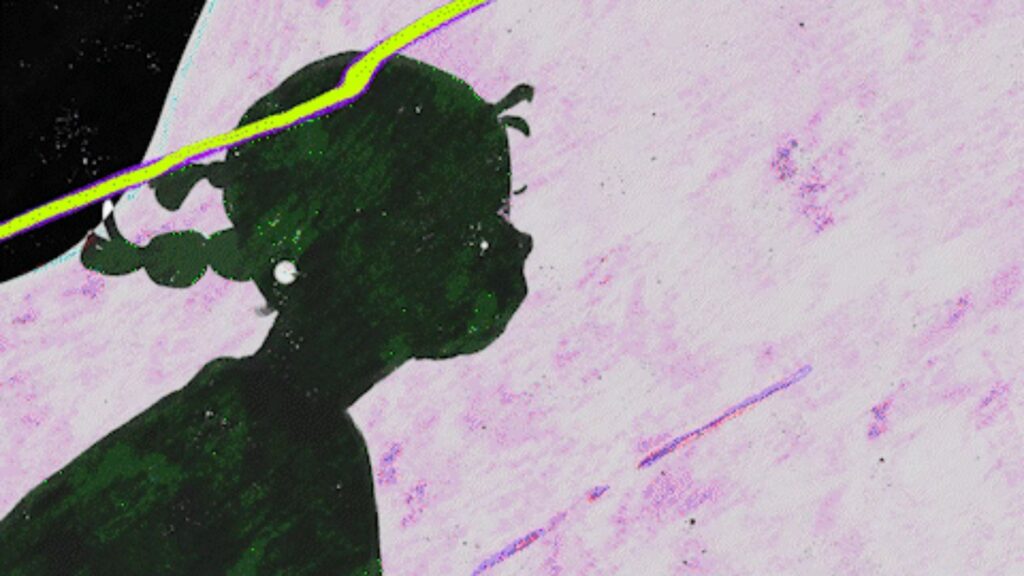
If OROBORO moves inward, Starry Night moves outward. The 36-second film works like a mirror image of the first. In a fever dream, a girl melts into the night sky and quietly begins to alter the world around her. A meadow rises and rearranges itself into a city, while the figure crosses the darkness and pulls the landscape behind her. Here, the self is not shaped by external forces; it becomes the force that reshapes its surroundings. This poetic exploration of subconscious states and emotive digital illustration also resonates throughout the interview with Lulu Lin on emotional illustration and dreamlike worlds.
Selected for OFFF Barcelona 2026’s The Screen public projection programme from 735 submissions across 63 countries, Starry Night condenses Anna Wang’s ideas into a shorter and more atmospheric form. The film does not explain transformation through narrative. It lets transformation happen as a visual event, where body, landscape and sky move as part of the same unstable system. Its brevity gives it the quality of a vision glimpsed before waking.
Seen together, OROBORO and Starry Night form two sides of the same artistic inquiry. One describes the world entering the self; the other imagines the self entering the world. Wang’s use of different animation methods becomes central to that exchange. Cel animation, 2D motion graphics and 3D procedural form are not separate categories in her work, but ways of measuring change, pressure and perception.
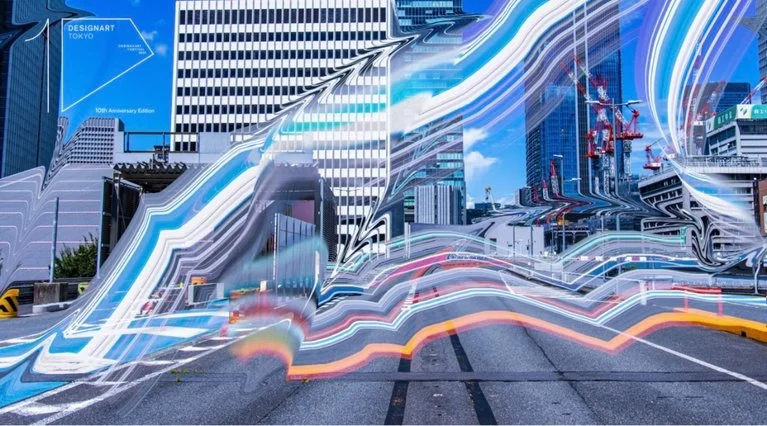
This is what gives Anna Wang’s films their quiet force. They are technically fluent, but not driven by technique alone. They ask what a body becomes when it is made of images, memories, information and desire. In her work, identity is never a fixed shape. It is temporary, moving, and constantly rewritten by the forces that pass through it, exploring kinetic intensity on par with how the Digital Design Days 2026 main titles ‘The Chase’ for the 10th anniversary edition translates tension into cinematic motion.
All images courtesy of Anna Wang