Felipe Pantone and Etai present kinetic surfaces in Los Angeles exhibition
albertz benda presents Parallel Practices: Tailored Structures & Kinetic Surfaces, a collaborative art and design exhibition by Felipe Pantone and Etai at the gallery’s Los Angeles house. Open from July 17 to August 8, the exhibition places Pantone’s kinetic wall works beside transformed mid-century furniture inside a domestic modernist setting. The project marks the first exhibition bringing the two practices together and uses the architecture of the residence to examine how art, furniture and surface can operate as parts of one visual system.
Parallel Practices develops from the distinct methods of Felipe Pantone and Etai. Pantone is known for optical compositions built through colour, rhythm, repetition and movement—an investigation into chromatic gradients that also resonates with Sho Shibuya’s meditative sunrise paintings—while Etai works between fashion, furniture and object design. Their collaboration does not erase these differences. It is organised as an exchange between image-making, tailoring, construction and material production. Across the rooms, each contribution remains identifiable, yet the works are connected through recurring chromatic codes, printed surfaces and carefully adjusted proportions.
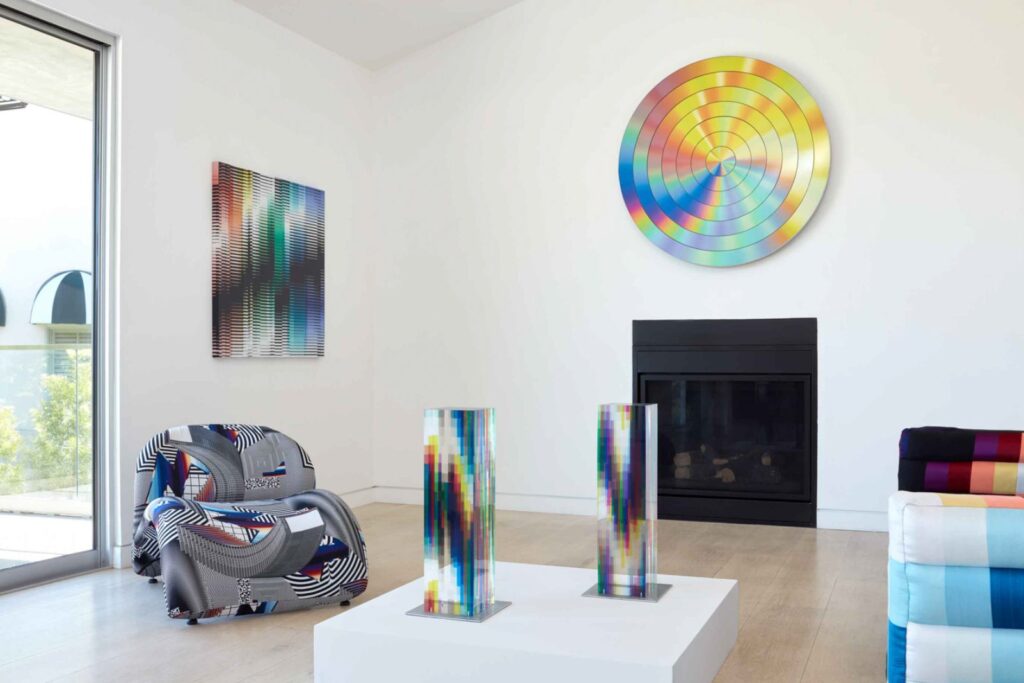
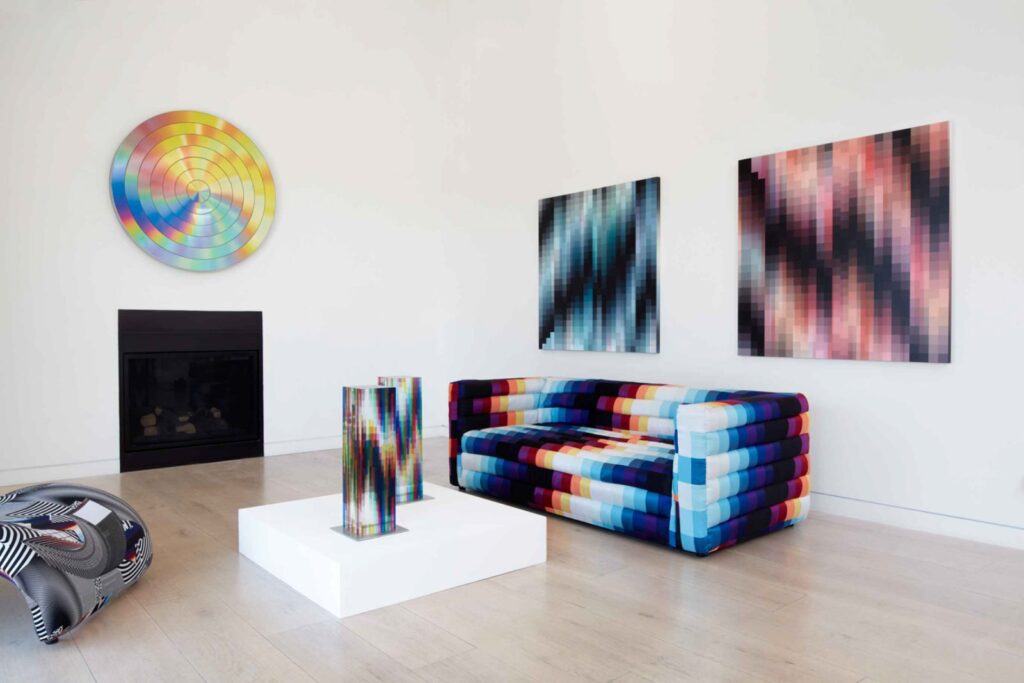
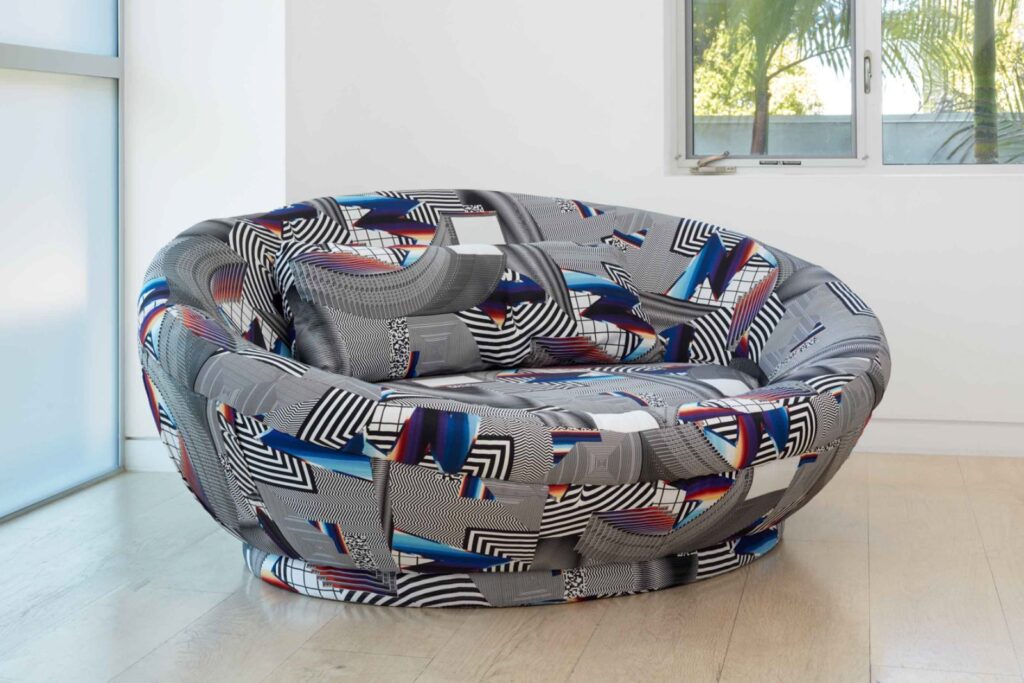
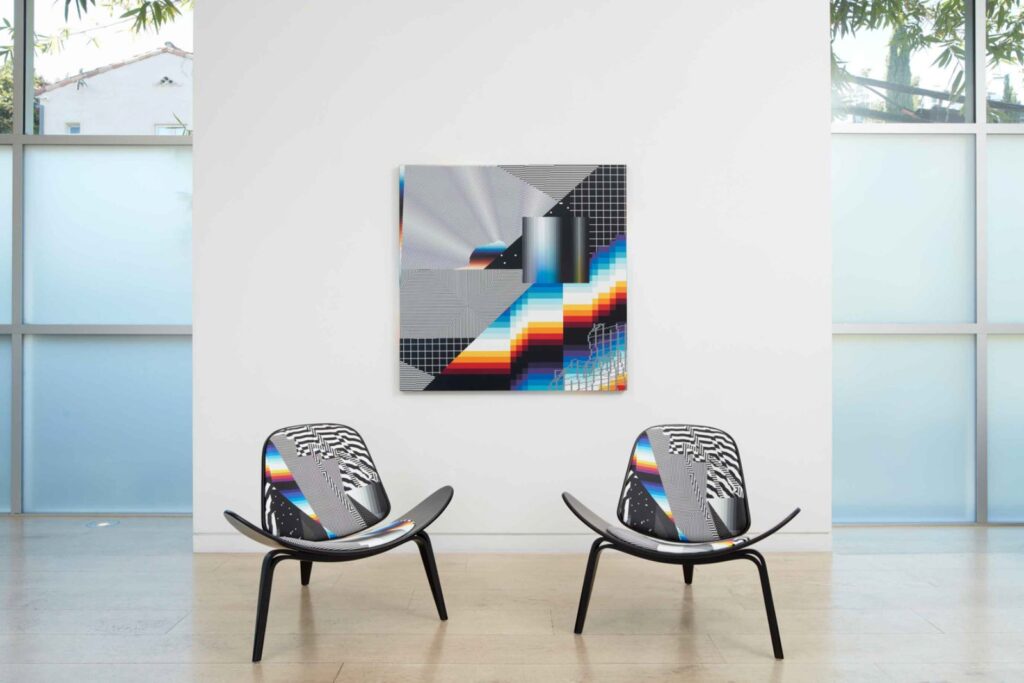
The collaborative furniture series begins with mid-century pieces sourced across Los Angeles. Etai digitally maps each object before deconstructing and rebuilding selected sections, treating the existing frame as both a technical limit and a design resource. Felipe Pantone then develops custom textile graphics for the altered structures. Produced by Italian textile manufacturer Limonta, the fabrics introduce gradients, geometric sequences and high-frequency colour transitions associated with Pantone’s wider practice. Upholstery becomes an active surface, changing how familiar furniture types are read without removing the logic of their original construction.
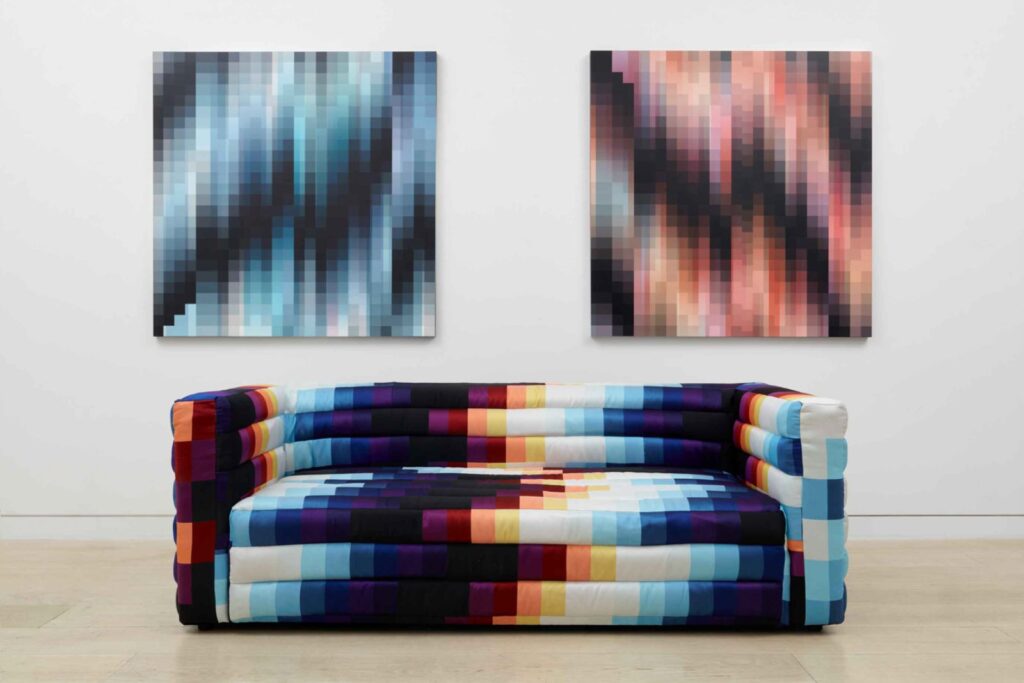
Felipe Pantone’s wall-based kinetic artworks extend this visual language throughout the exhibition. Their shifting optical effects depend on the movement and position of the viewer, producing changes in colour, depth and perceived velocity. These works operate as visual anchors while also referring to data flow, screen culture and the accelerated circulation of images. Their patterns continue across the Limonta textiles, allowing the walls, furniture and printed elements to establish a continuous relationship. The domestic scale of albertz benda Los Angeles reinforces this connection by placing the objects in spaces associated with daily use, proximity and physical contact.
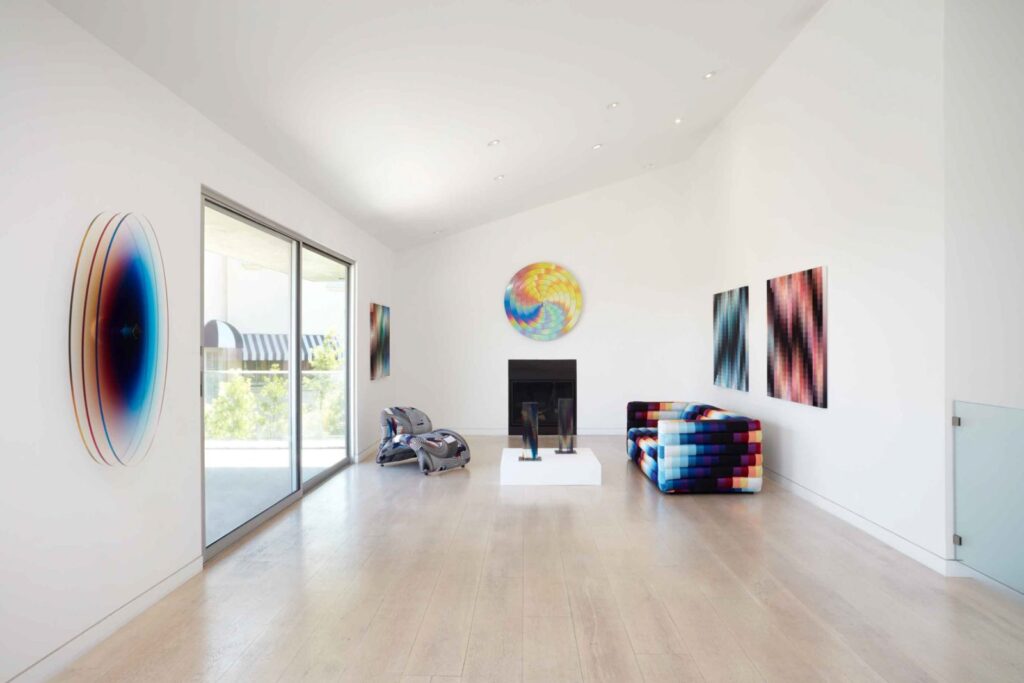
The installation is arranged as an interconnected environment, not a sequence of isolated works. Furniture occupies the rooms as functional forms with sculptural presence, while Pantone’s kinetic surfaces control sightlines and movement through the gallery. The mid-century house adds another historical layer, bringing contemporary digital imagery into contact with modernist architecture and classic design structures. Visitors encounter the exhibition through changes in scale, texture and viewing distance, moving from wall-mounted optical systems to upholstered objects that carry the same visual information into three dimensions. A complementary dialogue between monumental sculpture, urban visual culture, and spatial intervention is captured when the PichiAvo installation at Fallas Valencia combines classical temple architecture with graffiti.
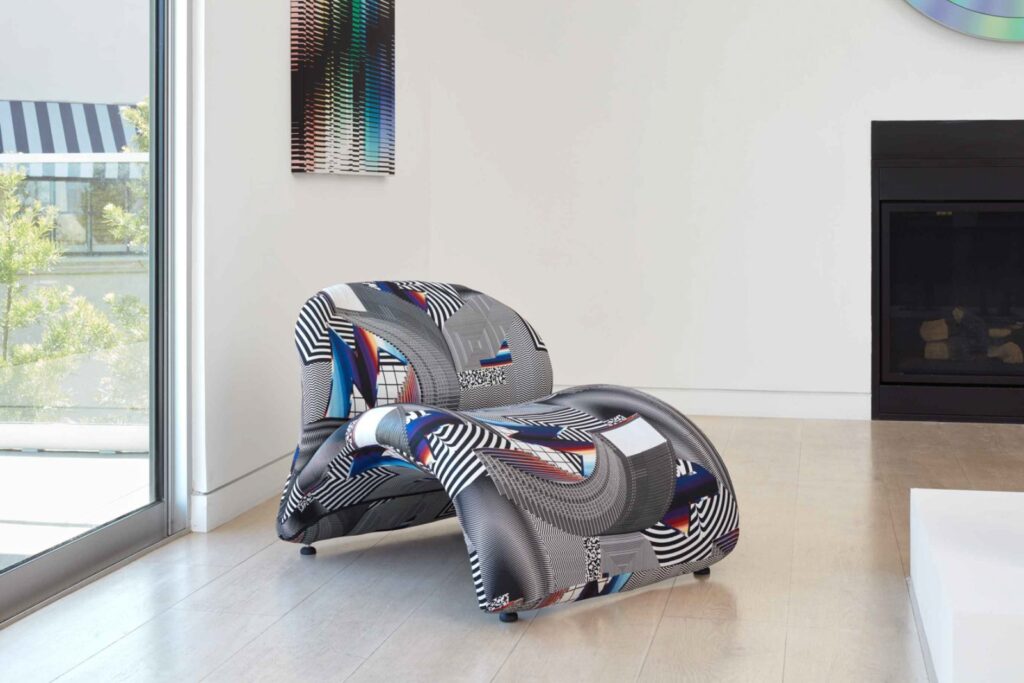
Parallel Practices: Tailored Structures & Kinetic Surfaces presents collaboration as a process of testing, translation and recalibration. Felipe Pantone and Etai retain the precision of their respective disciplines while creating a shared framework across kinetic art, collectible design and textile production. The exhibition demonstrates how an existing object can be transformed through digital mapping, tailoring and surface intervention without losing its structural identity, a creative transformation also seen when World Chess x Taras Yoom turn championship set into collectible design, while Haydn von Werp transforms ancient architecture into collectible furniture by translating classical Roman antiquity into sculpted functional pieces.
All images courtesy of albertz benda, shared with permission