Picky Eden by Rui Yang uses AI apples to question desire and image culture
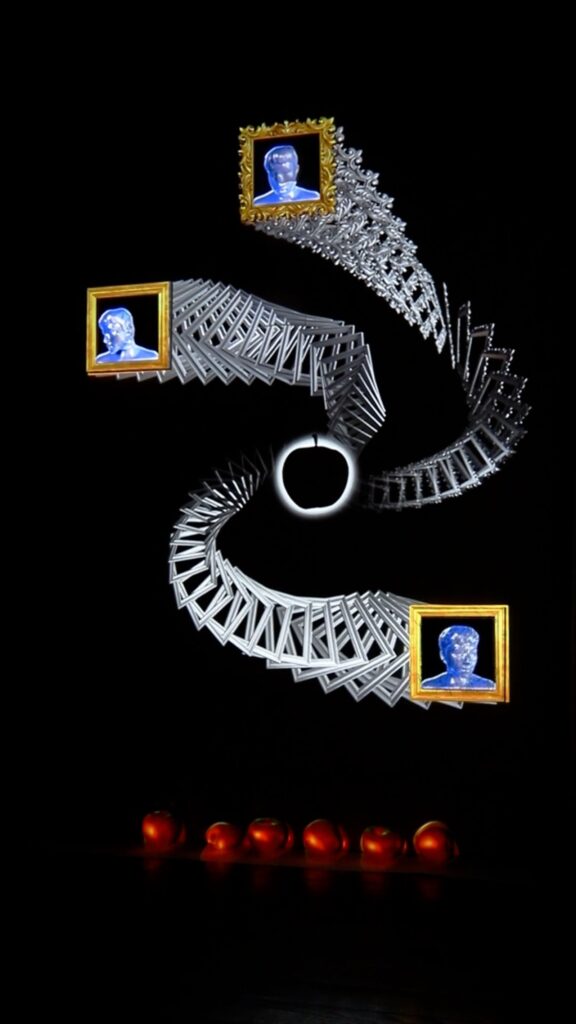
Picky Eden Genesis I and II is an AI installation series by the Brooklyn-based artist Rui Yang. The project combines CGI, 3D printing, projection mapping, animation and digital image systems to examine how visual culture is produced. Across the two-part project, Yang uses the apple as a commercial object, biblical symbol and data token. Moving between sculpture and moving image, the work studies how images lose their specificity as they pass through markets, archives and machine-learning systems.
In Picky Eden: Genesis I, Rui Yang begins with the apple as a product image. He collects commodity apple photographs from grocery and market websites, including Whole Foods and Instacart. He then uses them to train a custom AI workflow through a LoRA adaptation of the Flux diffusion model. The result is a morphing AI apple sequence that no longer points to one exact fruit. It becomes a general image of “appleness”, shaped by repetition, commercial lighting, algorithmic prediction and the visual language of online retail.
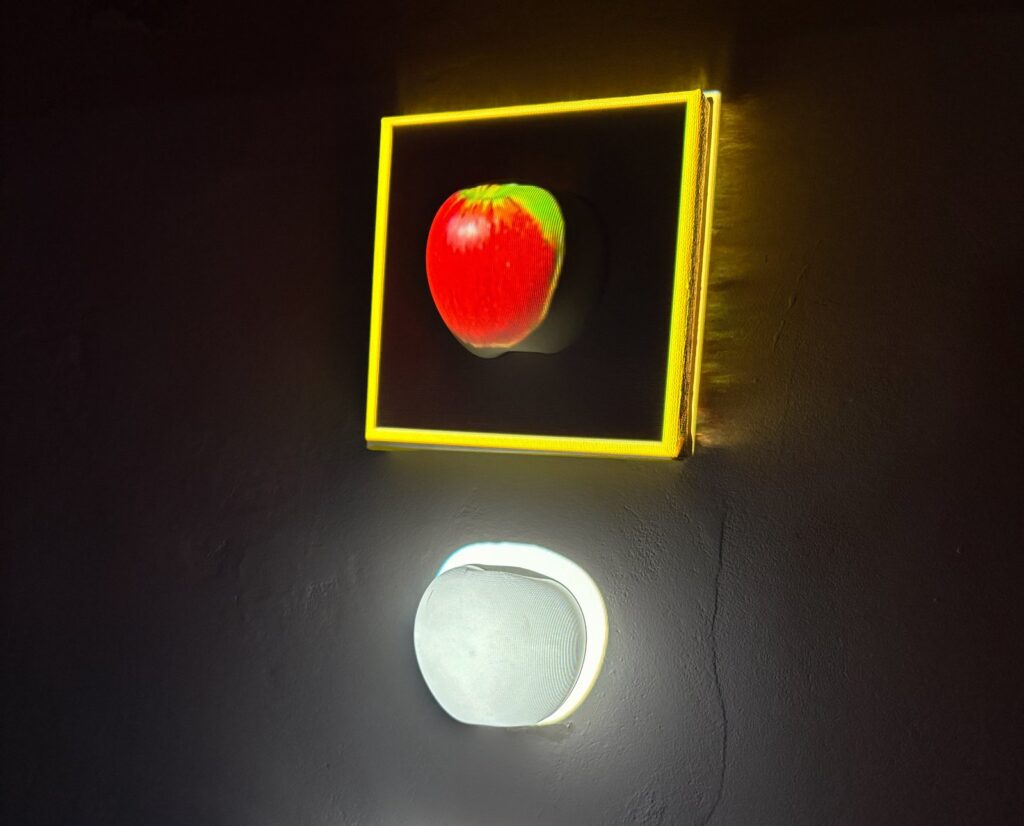
The physical part of Genesis I extends this artificial image logic into space. Rui Yang 3D-prints apples and spray-paints real apples in a gradual sequence of grey tones, matching the neutral surface of the printed objects. The distinction between organic fruit and fabricated form becomes unstable. What looks natural may be processed; what looks artificial may still carry the memory of a real object. Through this controlled progression, the AI installation makes the commercial image pipeline tangible, giving viewers a way to read digital recursion through material form.
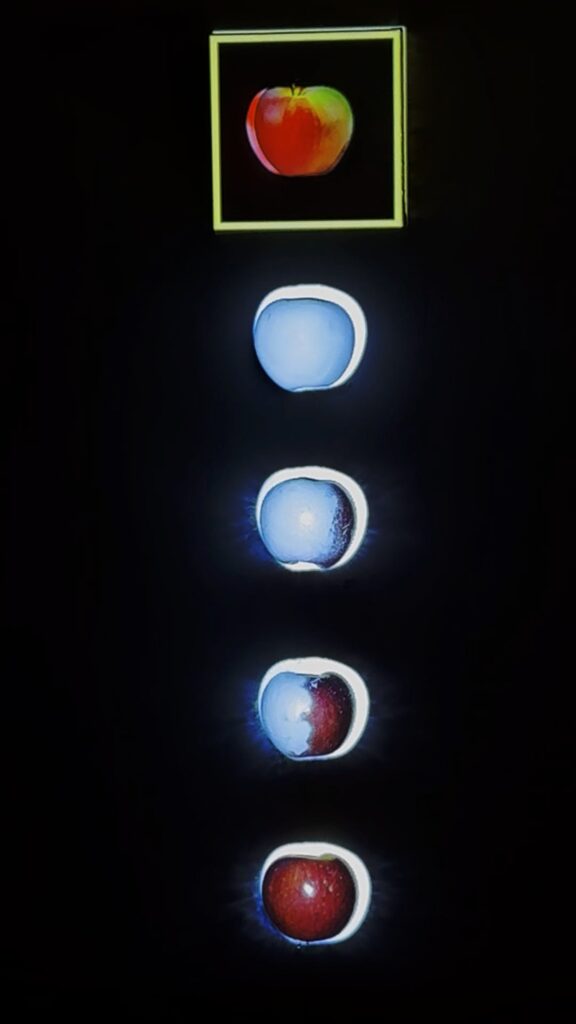
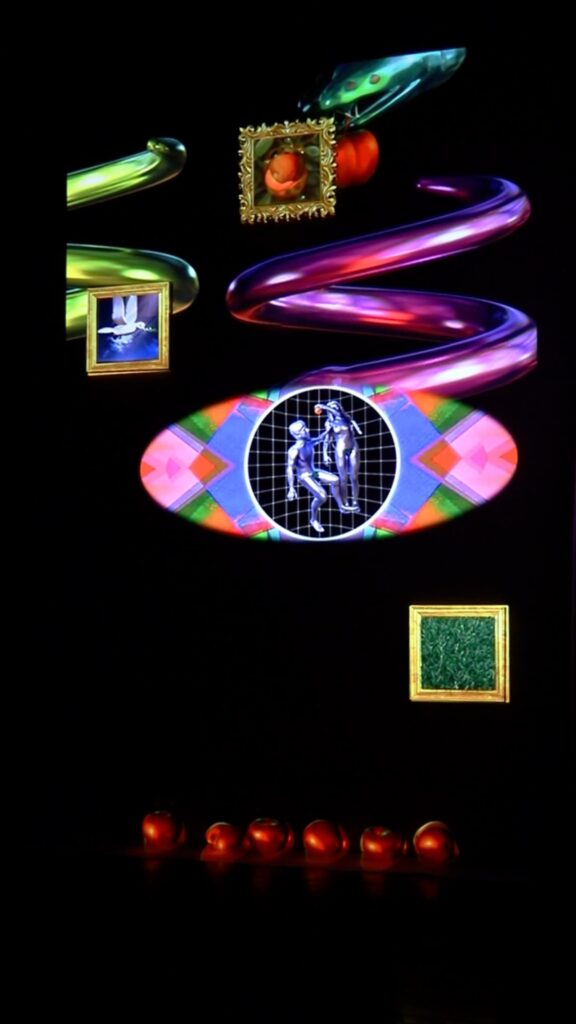
Picky Eden: Genesis II shifts the series toward mythology, using the Garden of Eden as a framework for thinking about images, desire and indecision. Rui Yang reimagines Adam and Eve through avatars built from his own facial 3D scan, placing his identity inside a story often treated as universal. In this version, the figures are not seduced by the forbidden fruit. They remain uncertain, almost passive, facing an object that has become too familiar, too abundant and too mediated to hold its original force.
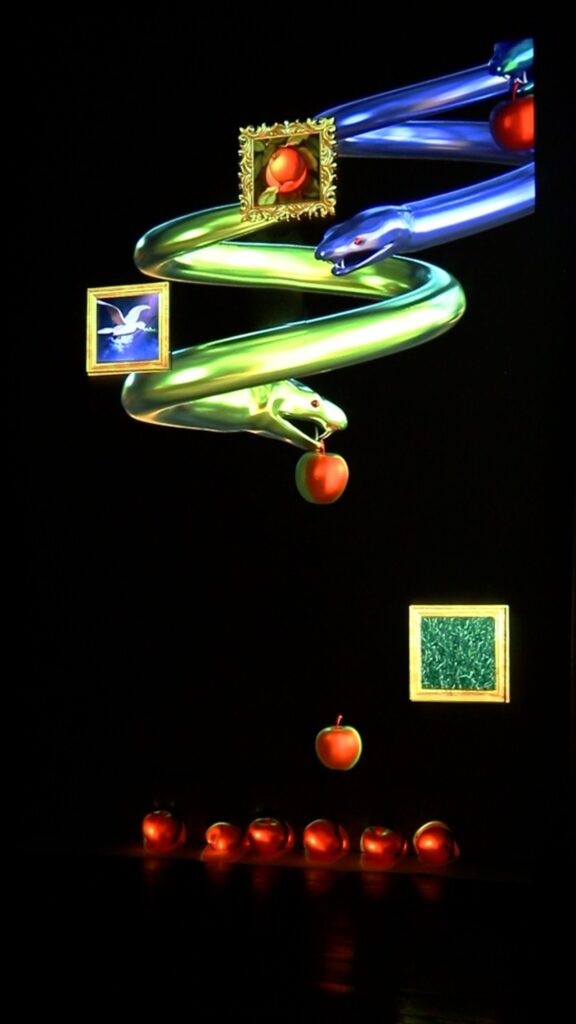
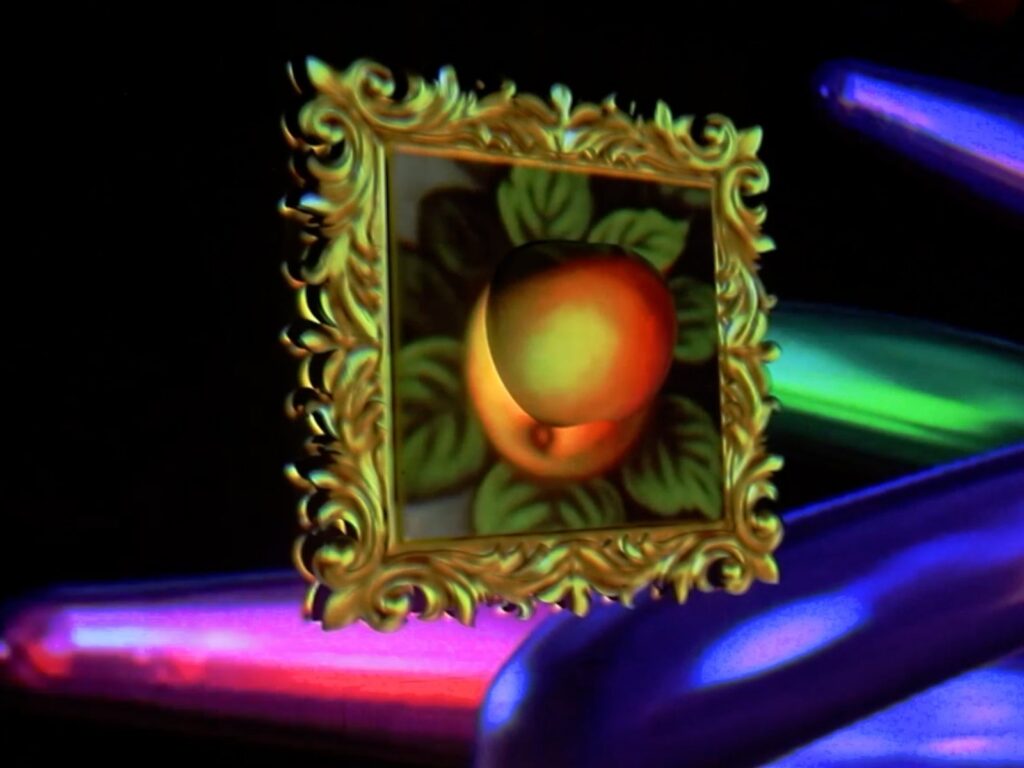
For Genesis II, Rui Yang trains another custom AI model using historic depictions of forbidden fruit from oil paintings and public museum archives, including sources connected to the National Gallery of Art, The Met and the Cranach Digital Archive. The generated fruit sequence is projected onto a 3D-printed apple placed on the wall above Adam’s head. Projection mapping allows the sculpture to behave like a screen, while the AI-generated imagery moves through centuries of art history as a restless, unstable surface.