A touch-responsive chair by Aaron Preyer
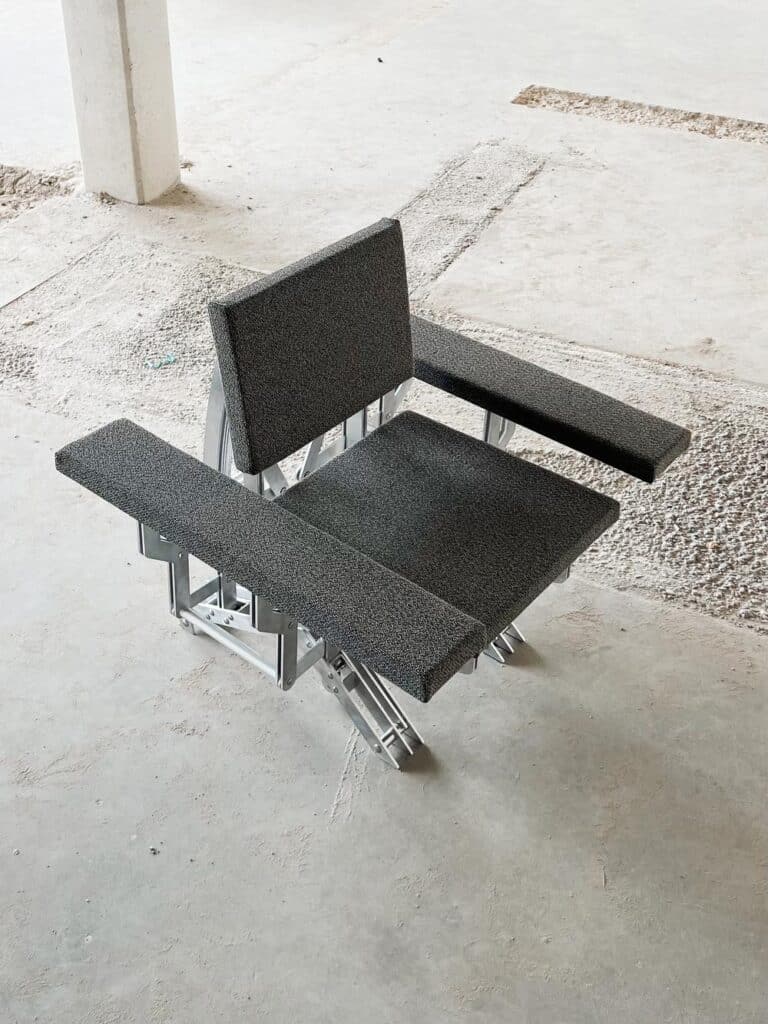
Blooming Furniture by Aaron Preyer presents a transforming chair defined by its capacity to react directly to touch and shifts in weight. The piece moves between an upholstered table or ottoman and a comfortable armchair, guided by an internal mechanism that activates as pressure circulates across its surface. This mechanism is not concealed; instead, its aluminum components form an essential part of the chair’s visual identity, shaping both its behavior and aesthetic presence.
The aluminum base carries the complete kinetic system, engineered to respond with precision rather than force. As the user sits or leans, the chair adjusts through a calibrated movement that transitions the structure into a supportive seated form. When weight is removed, the mechanism releases and the chair returns to its first position. This reliable, repeatable motion stems from extensive experimentation in Preyer’s studio, where the mechanics were tested in multiple iterations before being refined into a functional element suitable for everyday use.
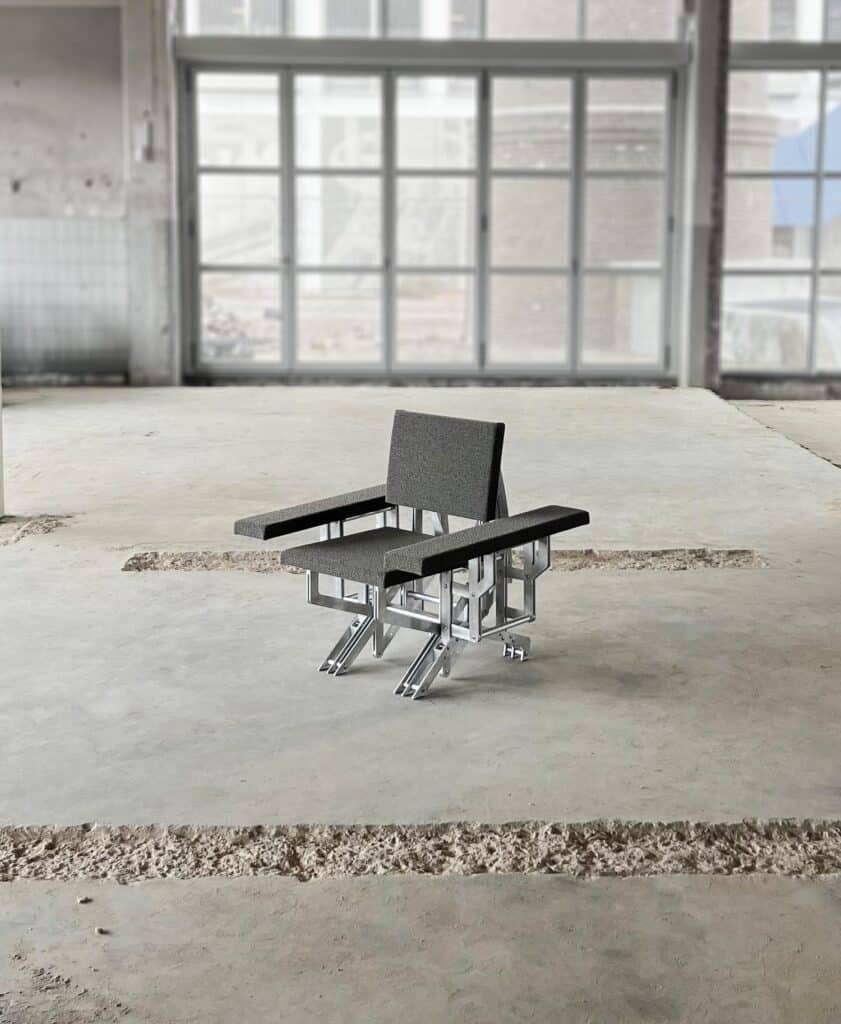
Above this base, the upholstered surface introduces softness and physical warmth. It is designed to shift smoothly during transformation, allowing the movement to feel integrated rather than abrupt. Fabric options can be fully customized, as can the anodized finish of the aluminum, enabling the chair to adapt to different material palettes. The duality between technical structure and upholstered volume creates a clear dialogue between function and comfort.
The chair’s transformation is rooted in Aaron Preyer’s fascination with movement and the way plants and trees adjust, grow, and open. Instead of mimicking natural forms, the design translates the principle of gradual change into mechanical action. The chair reacts only when needed, forming a momentary configuration before returning to rest, echoing the quiet adjustments found in natural systems. This concept of slow, purposeful change forms the foundation of the broader Blooming Furniture collection.
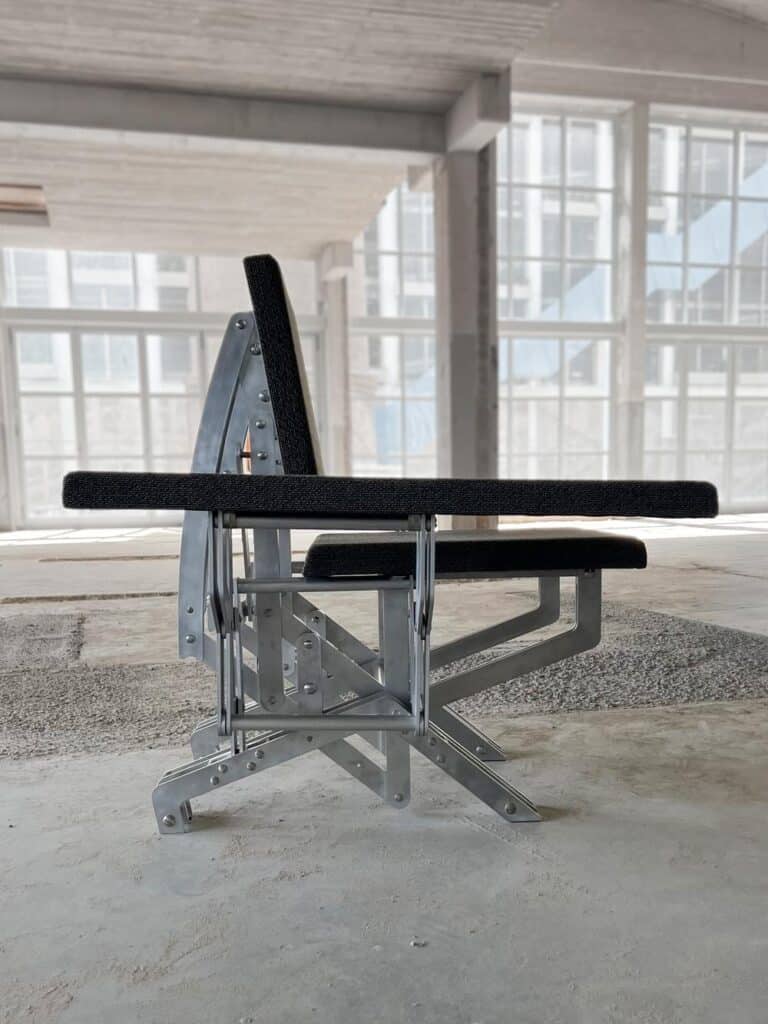
The chair became the first mature application of the mechanism developed during Aaron Preyer’s research. Over time, the mechanism was adapted into additional test models, including coffee tables, a candlestick, a wall shelf, and a fruit bowl. Each object demonstrates how movement can serve function in distinct ways, yet the chair remains the anchor of the series due to its direct contact with the body and its clear demonstration of transformation.
Aaron Preyer, who graduated from the Design Academy Eindhoven in 2025 and previously studied composition and experience design at Nimeto Utrecht, works from his studio in Utrecht. His practice centers on mechanics and the ambition to give objects a narrative dimension. Through prototypes, material studies, and ongoing experimentation, he advances the idea that furniture can hold an active role rather than remain a fixed element in a space.
All images courtesy of Aaron Preyer