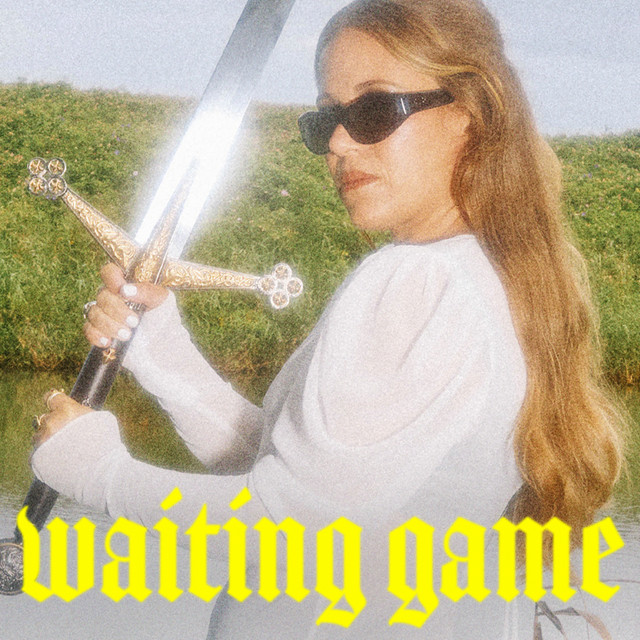
Aleesha Dibbs’ “Waiting Game” treats delay as something heavier than indecision. The song approaches waiting as a condition people slip into while life keeps moving around them, those “sliding doors moments” where consequence is postponed just long enough to become its own form of existence. Dibbs does not frame waiting as passivity alone. The language around the upcoming album, “fighting back,” “big feelings,” “self-agency,” keeps pushing against emotional numbness and digital overload, turning the song into an argument for staying present inside uncertainty instead of anesthetizing it away. Even the title sounds less playful than resigned, as if the rules were already written before the game began.
The three year recording process across different studio setups leaves a trace on the song’s identity. “Waiting Game” emerges from accumulation, from time passing through changing rooms and changing emotional states rather than a single concentrated session. That matters because the track’s existential concerns stay grounded in lived duration instead of abstraction. Dibbs talks about “delaying consequence, whether good or bad,” and the phrasing captures the strange suspension modern life can produce, where constant distraction stretches moments out without resolving them. The record’s stated refusal of emotional suppression gives the song its backbone. “Big Mood” does not sound interested in composure. It sounds interested in allowing feeling to occupy space again.
The strongest line in the surrounding statement may be “remembering we’re human.” Simple words, almost obvious, yet they land differently beside references to overwhelm, distraction, and suppression. “Waiting Game” seems to understand that endless digital motion often creates another kind of stillness underneath it, people scrolling, delaying, avoiding impact. Dibbs pushes the opposite direction. Toward consequence. Toward feeling passing through without apology.