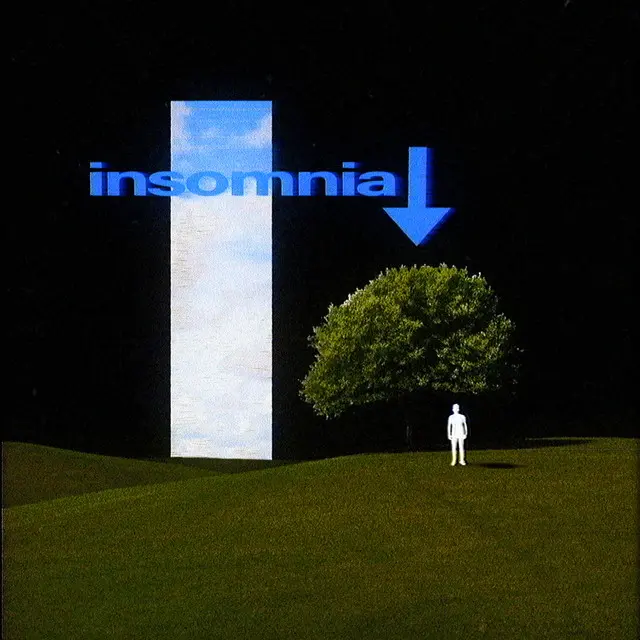
Fede Micioni’s “SYNTEZI” treats techno as a material to reshape rather than a structure to fill, using a deep pulse as the fixed point while synthetic textures and resonances keep changing around it. Across more than seven minutes, the track holds onto the physical pull of a dancefloor without giving up the sense of space that comes from Micioni’s work with electronic sound. The pulse stays steady; the sound around it does not.
Those changes happen at a small scale. Rhythmic details shift, resonances emerge and recede, and synthetic layers alter the character of the same underlying movement. Nothing needs to announce itself as a major transition. The piece gains its shape through accumulation and adjustment, allowing the listener to notice the sound itself as it changes. That approach also connects “SYNTEZI” to the acousmatic side of Micioni’s practice, where timbre becomes something to examine rather than simply support a beat.
The result is music that can work physically without reducing itself to function. “SYNTEZI” keeps its techno pulse intact while leaving enough space for the textures to become the subject. Following “Nebula Notes” and “Universal Control,” it continues Micioni’s interest in sound as something that can be moved, reshaped and experienced from different distances.
For those who might not know you yet, how would you introduce yourself?
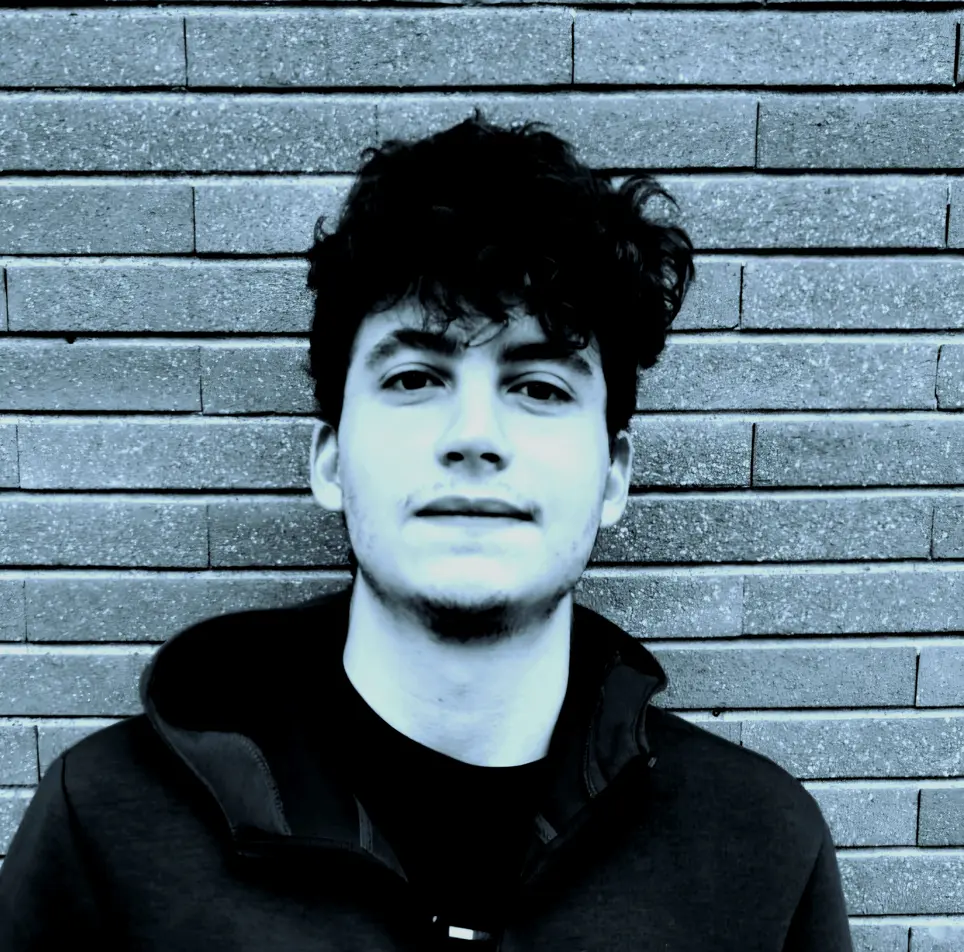
My name is Federico, I’m 22 years old and I was born in Rome. I’m currently continuing my studies at the Santa Cecilia Conservatory of Music, where I’m attending the second-level degree programme in Electronic Music.
I got into music very early thanks to my family, starting with drums. From there, my curiosity naturally expanded into DJing, composition and electronic music production, and eventually into sound research and experimentation.
I’ve always been passionate about music in a very broad sense, and I think that openness to different genres, languages and worlds has played a big role in shaping the way I listen to and create music.
If you had to bottle up your sound into just three words, which ones would you choose?
I’d say: textural, hypnotic and immersive. “Textural” because, for me, sound is not only the organisation of silence and periodic or aperiodic components over time. It is also matter, texture, grain, density and weight, to the point where it can almost feel physically present. “Hypnotic” because I’m interested in repetition, gradual transformations and those small changes that, almost without you noticing, draw the listener deeper and deeper into the track. “Immersive” because in my studies I’m exploring the relationship between compositional sound, its diffusion and the space around us. As part of my studies, I also built my own acusmonium, specifically to experiment with the way sound can move through space and alter the perception of listening.
Which artists — not only music-related — or moments have left the biggest mark on your music?
I grew up listening to a huge amount of music and many very different genres. When it comes to drums, one of my biggest references has definitely been Jeff Porcaro, while an album that had a strong impact on me was “Brother to Brother” by Gino Vannelli.
In the world of keyboards, George Duke was an important reference, while when it comes to my first encounters with synthesizer sounds, I was deeply struck by Tangerine Dream.
I think being exposed to such different musical languages really helped shape the way I listen to music and, later on, my approach to composition and electronic production.
When you hit play on your own songs, what kind of feeling takes over?
When I listen back to my tracks, my first instinct is almost always to start changing things again! [laughs]
I think that comes from the fact that the way I work is constantly evolving. Every time I go back to a track, I feel that something could have been changed, developed further or taken in a different direction.
At the same time, though, I also like to accept the moment in which a track was created, because it represents exactly where I was, both musically and personally, at that specific point in time.
If you could collaborate with anyone in the world, with no limits, who would be your dream collaborator?
I’d say Brian Eno, because of his versatility, his constant research and his ability to move between music, sound, technology and art without ever being confined to a single language.
What are you working on now, and what are your plans for the future? Anything exciting you can tell us about?
Right now I’m working on an electronic music EP that I’m also planning to release on vinyl. The project comes from an exploration of acoustic sound and its transformation. I’m experimenting with recordings made with panoramic microphones and different filter chains, using instruments such as drums and percussion as raw material to explore new timbral and sonic possibilities. I’m very interested in the boundary between acoustic gesture and electronic processing, and I think that will be one of the central ideas behind the project.
Can you walk us through the story, idea or emotion behind “Syntezi”?
“Syntezi” comes from the idea of sound as something that is constantly evolving. I wanted to build a track in which the elements never remain completely static, but gradually change in shape, density and function as the piece develops.
The idea was to work with continuous transformation, allowing small timbral and rhythmic changes to slowly reshape the listener’s perception of the track.
Rather than telling a specific story, “Syntezi” is meant to create a sonic journey — something that develops, transforms and takes the listener from one starting point into a different space.