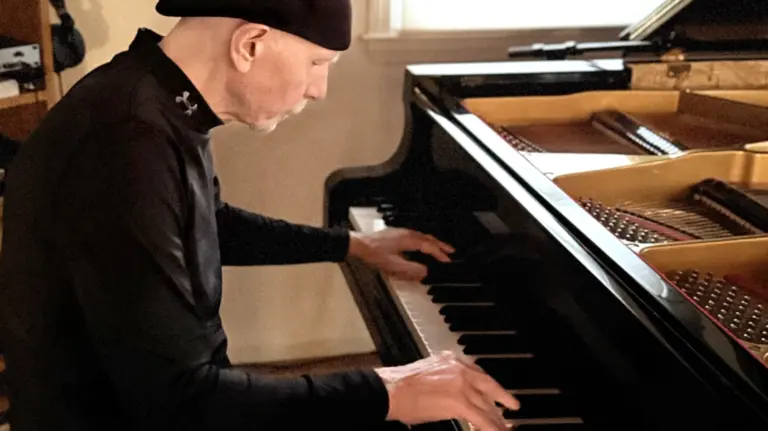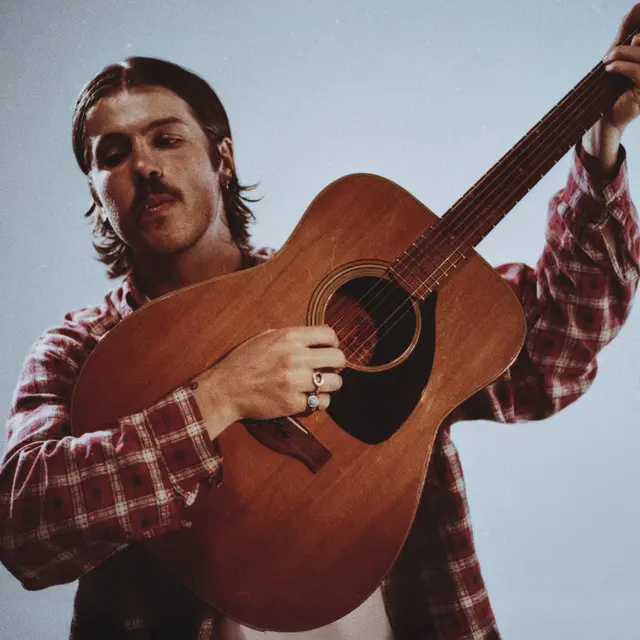
Because I believe that creativity lies in the creative and not in the tool, we introduce you Robbien.
Robbien is the name behind Rewired, an album of AI-generated reconstructions of songs originally recorded in 2007 under the title Hibernatic. The project runs on a specific admission: the AI vocal persona, trained on Robbien’s own voice recordings, performs the material better than Robbien ever did, and the album does not pretend otherwise. Each track was rebuilt from scratch using Suno AI, shaped through detailed prompts broken down by section and line, a process that sits somewhere between composition and negotiation.
Empty
“Empty” holds its argument in repetition: waiting, still waiting, the phrase turning over until the act of waiting becomes the only available action. Sparse piano and a slow drum machine keep the arrangement from filling the space the lyric describes, and the baritone vocal sits close in the mix, a voice that does not reach for the absent person so much as report on the distance. Home without steps, air without breath, eyes tired of tears; the images are plain, and the plainness is the point.
What the trip-hop and neo-soul framework gives the track is a rhythm that moves without going anywhere, a groove built for sitting inside a feeling rather than escaping it. The original was recorded in 2007, rebuilt in 2026, and the gap between those two moments is not incidental. Waiting long enough eventually becomes its own kind of presence.
Ambush
Robbien’s “Ambush” is a fable about possession, told from outside the rose’s logic until the logic becomes visible and the fable stops being a comfort. The gardener speaks to roots and petals at dawn; they answer in colour; one red rose counts every touch he gives the others. The story moves with the calm precision of something that has already happened, the narrator’s “listen closely, shh” establishing a distance that the ending collapses.
The rose reaches for the gardener the only way she knows, he falls among her thorns, and she believes she has solved the problem of love by making him stay. The lyric does not pause there. “She was wrong. Wrong. Wrong. Wrong.” arrives without ceremony, and by dusk her petals are already letting go. No gardener means no water means no reason to bloom; the logic of possession consumes the thing possession was meant to protect.
They are found still and cold together on the ground, and the lyric offers this as closeness: “They’ve never been closer when alive.” What follows is not tragedy in the operatic sense. It is decay, described as “quite un-love,” a phrase that refuses the gravity the story has earned and lands harder for refusing it.