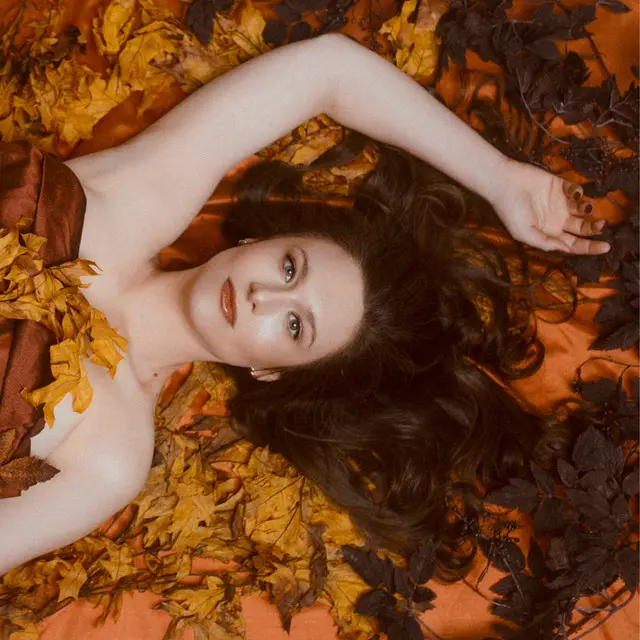
LIANZI’s “I Want What They Have” dresses dissatisfaction in the pulse of a dance floor instead of hiding it. House rhythms keep the body in motion while the song’s satirical premise refuses the fantasy that another person’s life offers an escape. The result does not mock comparison culture from a distance. It places the listener inside it.
The song keeps returning to the desire for someone else’s circumstances, exposing the habit before offering any cure. Club production gives the impulse momentum rather than relief, turning each beat into another step through the same cycle of projection—echoing the cynical examination of commercial comparison and curated hype in Make Believe Love: Organic Growth. That pairing of movement and self-awareness keeps the satire from becoming detached. Every wish for another life carries the suspicion that the problem would survive the exchange.
LIANZI builds this perspective without abandoning the melancholic language that defines her broader practice. Her blend of art-pop and electronic production leaves enough space for the song’s irony to coexist with genuine unease, making the dance floor resemble a room lined with mirrors instead of an exit, contrasting with the minimalist club-ready focus of NickyNonstop: Ghetto Blastaaa.
For those who might not know you yet, how would you introduce yourself?
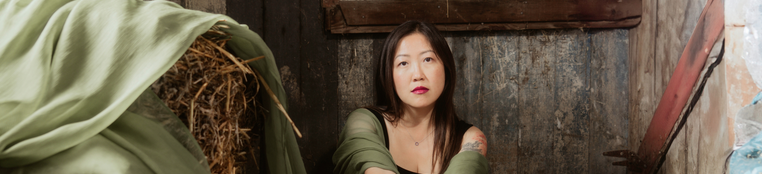
I am LIANZI. I’m an artist, songwriter, and producer based in the San Francisco Bay Area. I grew up with a lot of music around me, both my parents were traditional Chinese musicians in the National Orchestra back in China, but as I grew up i decided to take a different path and studied visual arts and fashion design instead. It took me many years away to come around to it again, and as soon as I found my way back, I knew that music has always meant to be my path.
If you had to bottle up your sound into just three words, which ones would you choose?
intimate, longing, cheeky
Which artists (not only music-related) or moments have left the biggest mark on your music?
So many! Because I studied fashion, Alexander McQueen has been a big influence for me. His commitment to details, his brazen approach to the industry, his immersive world building, and privately, his struggles with mental health, left deep impressions on me. Fiona Apple has been a huge inspiration for my approach to lyrics, especially early on. For years she would be the top artist on my Spotify Wrapped. Marina Abramovich’s The Artist is Present has been on my mind lately as I prepare and do more live performances. The idea of sitting across from just one single person and being able to transmit your humanities back and forth is a feeling that I aspire to in my music. Chinese Filmmaker Zhang Yimou’s early works in the 90’s were seminal to my understanding of film and my own culture.
When you hit play on your songs, what kind of feeling takes over?
In the later stages of production, my objective is to get the song to feel truthful. Once I get to a point where I feel like there’s nothing else to add or take away, and that the song flows from beginning to end without snags, I know the song is finished. Once it’s released though, I don’t tend to listen to my music out in the world. I read somewhere that Joni Mitchel doesn’t listen to her finished records because she would find little things that she still wants to change and I can relate to that fear. And honestly, the vulnerability of having my work out there is overwhelming.
If you could team up with anyone in the world—no limits—who would be that dream collaborator?
Wong Kar Wai
What are you working on now, and what are your plans for the future? Anything exciting you can tell us about, like winning the award?
I’m in constant balance between working on new songs, homeschooling my two children, getting out there to perform, and marketing my released music so they can be heard. If you listen to any music marketer, they will tell you how necessary it is to grind it out on social media, but I think for me, I’m craving deeper and more meaningful connections that social media cannot provide, so I’m looking forward to getting out there and performing in the community. I’m craving slower and deeper art, and I aspire to create the kind of art that I want to see out in the world.
As for award, I just found out that I won Song the Year for the John Lennon Songwriting contest for my song “Big Gulp”! It was an honor to be chosen and I’m trying not to give myself extra pressures and expectations because of it, especially during the creative and writing process, but it is very hard not to.
Can you walk us through the story or emotion behind “I WANT WHAT THEY HAVE ”? If you can, tell us about the storytelling of the video and the musical approach to it.
The song started with a very simple arpeggiated synth line that you can hear in the first chorus, from there, it just felt like it could use a four-on-the-floor kick drum. As those two elements came together, the line “I want what they have” came to mind and it felt so simple yet so truthful and universal to the uglier side of human experience that we try not to express. Once I tapped into something that feels raw and unacceptable and honestly kind of funny, I was able to bring forth my own cyclical experience of envy, brashness, and just things I don’t say out loud because it would be ridiculous to! For me, as a listener and as a maker, the most necessary songs expose the id, the unconscious part of our psyche. We did not do a full video for the song, just short reels, and I knew I wanted them to feel geometric and industrial to compliment the electronic sonic elements, so me and my collaborator Shawn shot at an abandoned military bunker just North of Golden Gate Bridge. It’s meant to portray the id that pops up to say what we can’t admit.