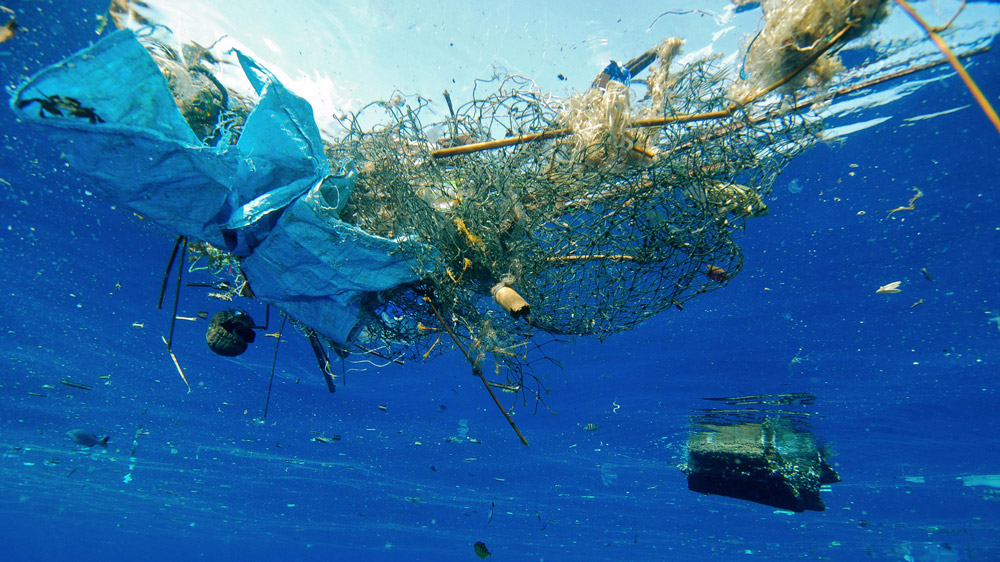
Nowadays the world is increasingly affected by the problem of plastic. A huge part of plastic is not recycled and it ends up in the ocean by damaging seriously its ecosystem. Through different industries an important percentage of plastic is used for production of bottles and clothing. PET is a strong component which is used for packaging purpose and it employs long time to decompose in the environment.
A team of scientists at the University of Portsmouth and from the US Department of Energy has found almost accidentally a potential solution to the plastic issue. The answer is PETase, an engineered enzyme able to break down plastic. In Japan has been recently discovered a bacterium which proliferates in plastic wastes. The scientists had focused upon the enzyme these bacterium are employing to decompose and assume plastic. The natural enzyme can be optimised into the laboratory and turned into a more efficient version.
Image: PA