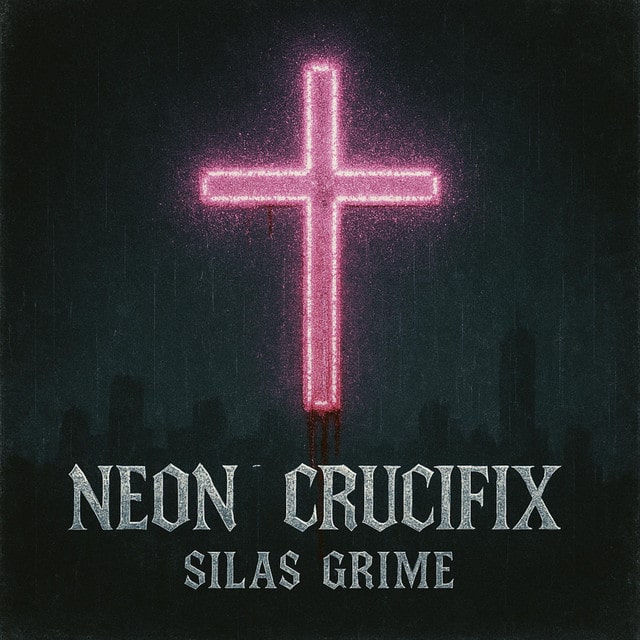
Neon Crucifix reads like a late-night confession scrawled under flickering motel lights—part prayer, part indictment. Silas Grime fuses biblical imagery with roadside decay, turning faith into something bruised, transactional, and desperate. The writing is visceral and cinematic: mirrors dusted with childhood, veins flashing SOS, church bells ringing debts instead of salvation.
The track moves through addiction, guilt, and bargaining with the divine, but never from a safe distance. God isn’t abstract here—He’s addressed directly, argued with, blamed, begged. Neon crosses replace stained glass, sirens laugh like old friends, and time burns down to its last cigarette. It’s spiritual imagery dragged through asphalt and neon, sacred language repurposed for survival.