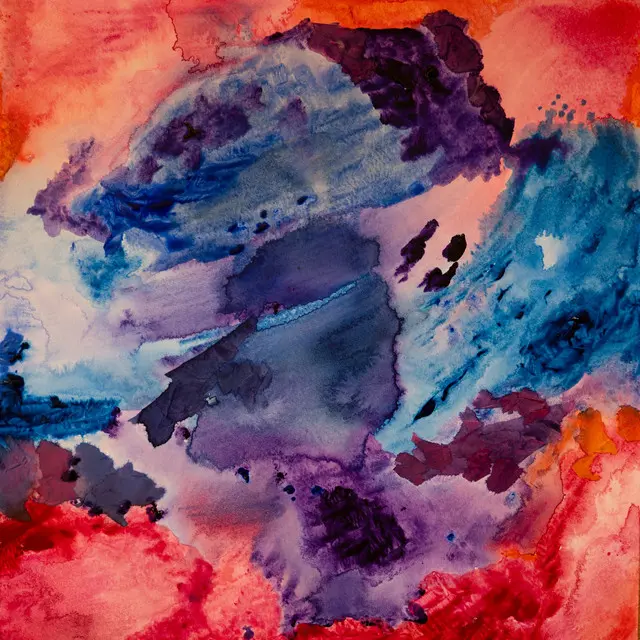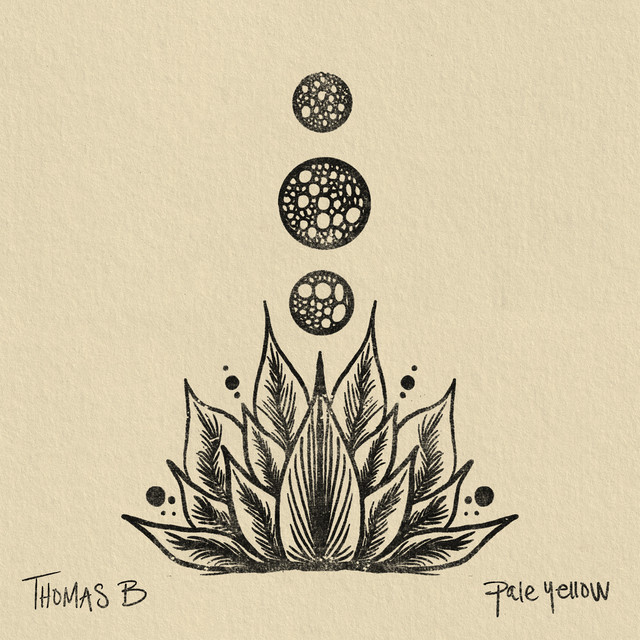
Thomas B builds “Pale Yellow” as a continuous, undivided piece of music that pushes quiet melodies against active, shifting rhythms to resist the rapid consumption of modern single-track releases. The album functions as a single physical object, a choice visualised in the limited run of twenty screen-printed posters created by artist Mica Brinson. Rather than splitting the ten tracks into isolated products, the record holds its quiet melodies in place while the underlying tempo shifts.
The vocal shift occurs through the guest vocal of David A. Gonzalez on the track “Mirage,” where the human voice enters to interrupt the instrumental patterns. This vocal contribution is a sudden anchor, grounding the shifting rhythmic base in a specific, physical presence. The music does not adjust its pace to accommodate the guest; instead, the vocals rest on top of the moving elements, letting the contrast remain visible.
Jack Haigh mastered the ten tracks to keep the acoustic and electronic dynamics intact without blending them into a uniform, clean texture. Thomas B said: “Pale Yellow feels like it was written as a whole.” The record ends on the final transition, leaving the last rhythm to stop without a clean resolution.