Casa Plaj by Extrastudio designed as a light filled holiday house in Portugal
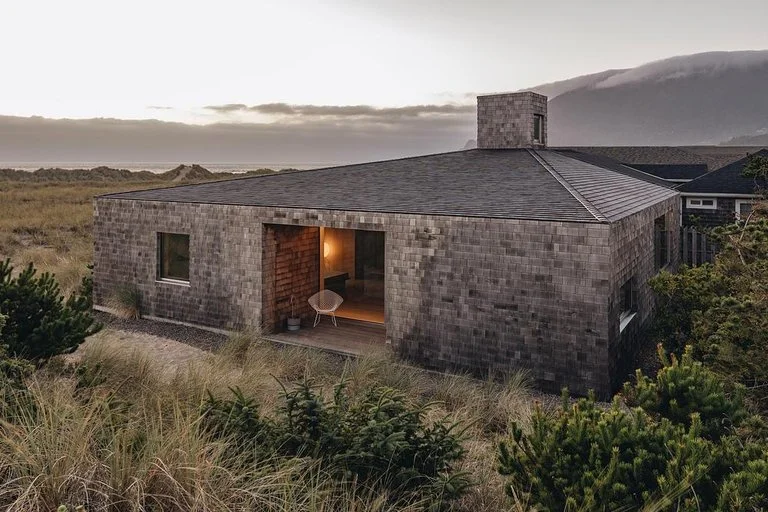
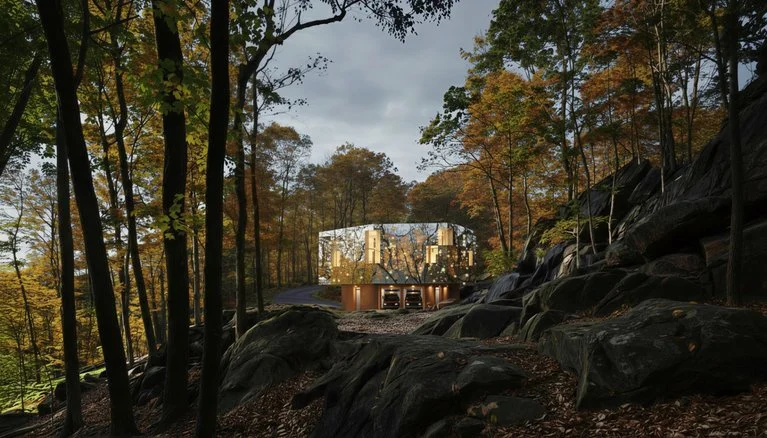
Casa Plaj by Extrastudio is a seaside holiday residence in Lourinhã, Portugal, shaped by the rhythms of its rural setting and the ocean beyond.
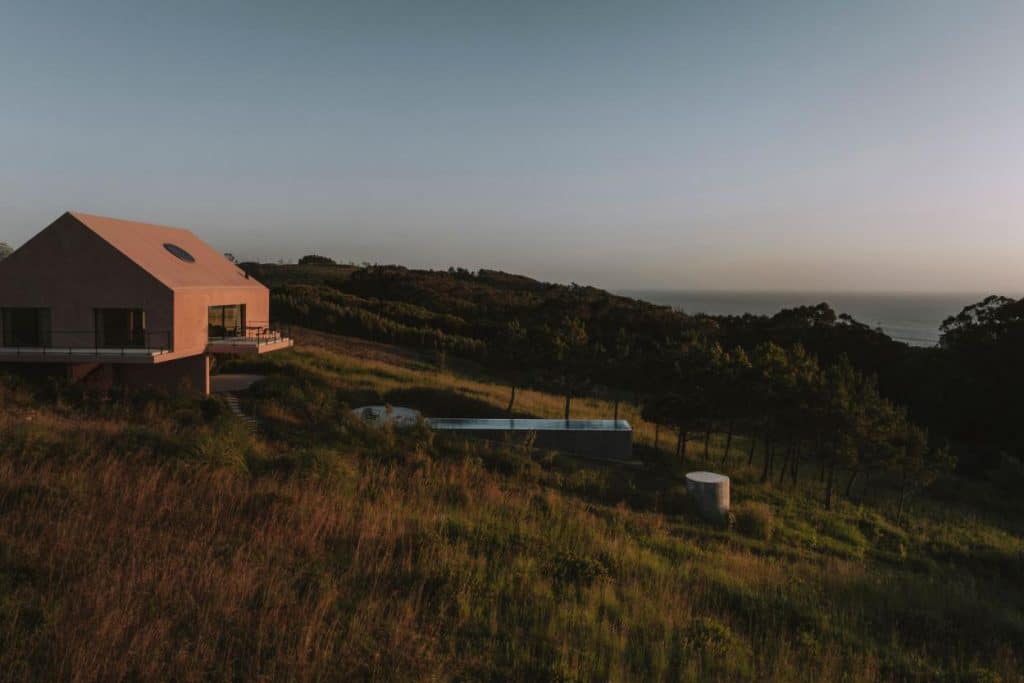
Positioned on a steep, narrow plot just a short walk from the beach, the house embraces the surrounding landscape while standing as an architectural form rooted in clarity and restraint.
The design reflects both the agricultural heritage of the region and the contemporary freedoms afforded by a retreat from daily obligations.
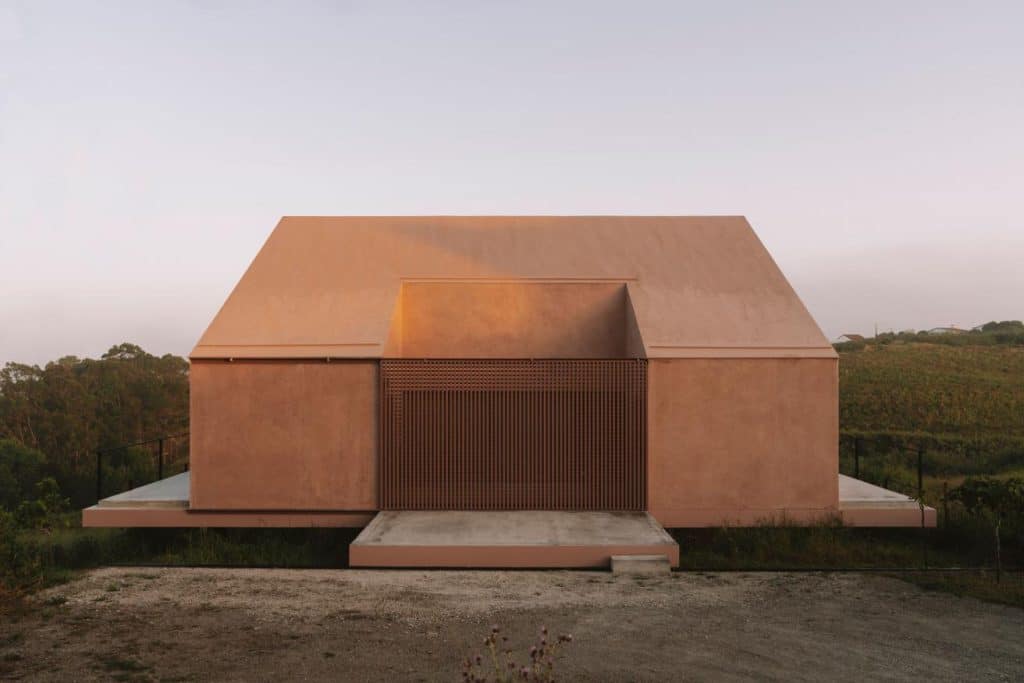
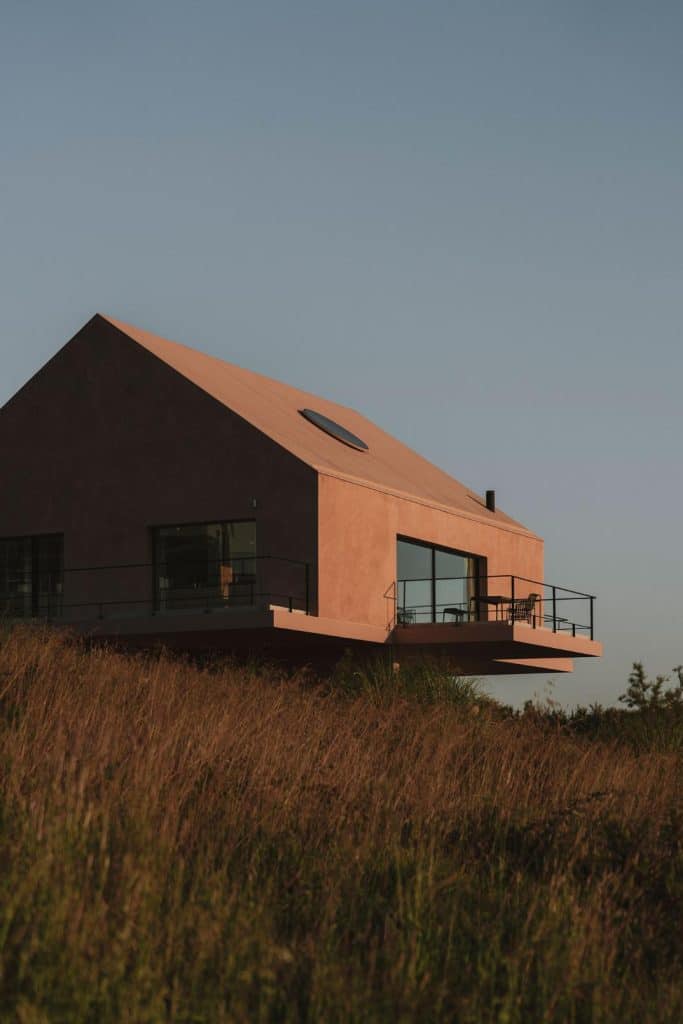
The building rests on four load-bearing walls that support a cruciform podium, lifting the house above the sloping terrain. This raised platform creates terraces on all sides, extending the interior into private outdoor areas that frame views of the sea, the valley, and the distant village.
Casa Plaj appears to hover lightly above the ground, touching the landscape only once to allow entry. This approach gives a sense of suspension, while reinforcing a direct relationship between built form and natural contours.
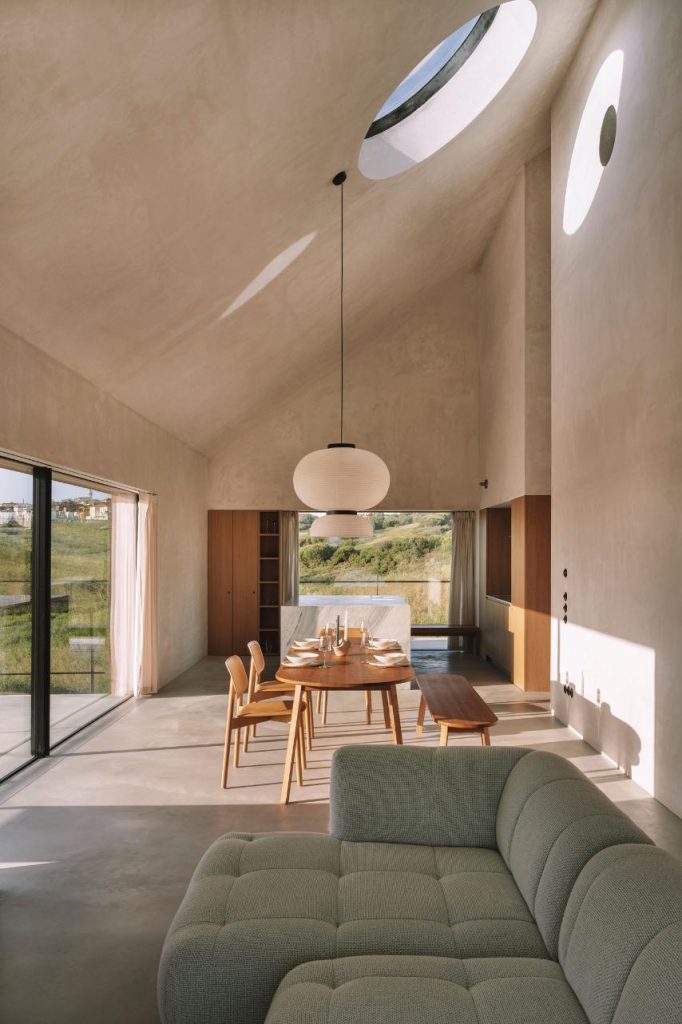
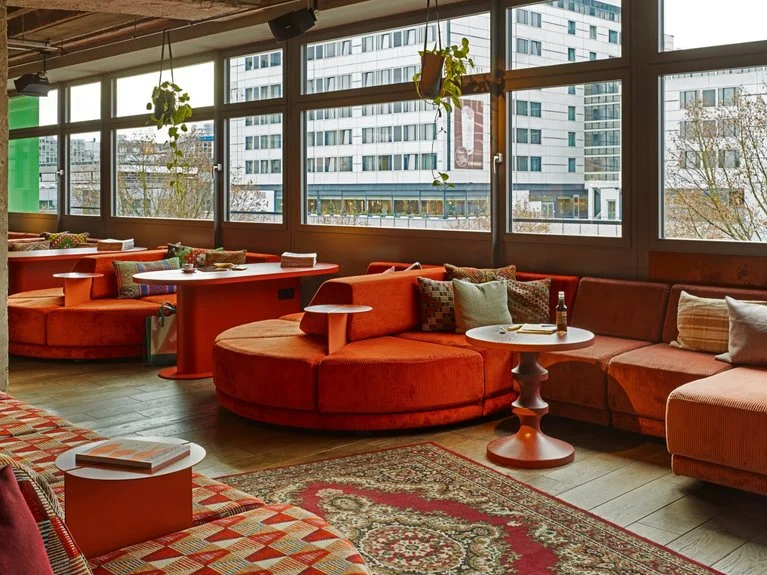
Inside Casa Plaj, the 120-square-metre footprint is organized across a single level. The living, dining, and kitchen share an open central space that connects to three bedrooms oriented to the south.
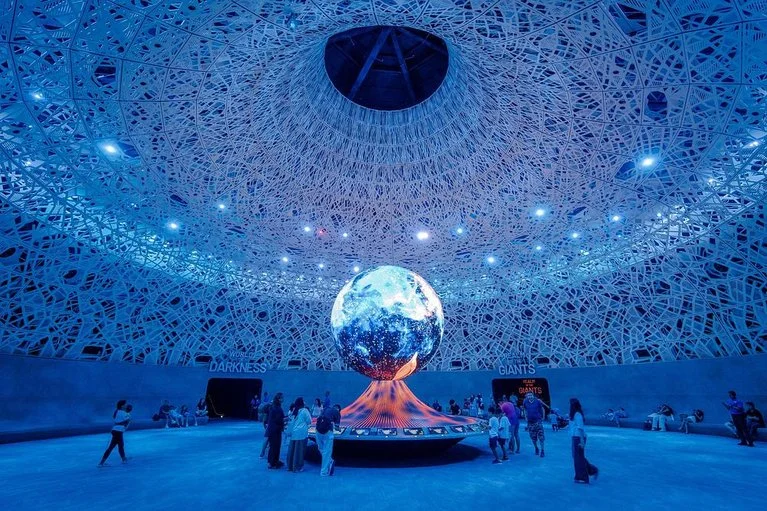
To counterbalance the compact plan, the architects emphasized verticality. Double-height ceilings and carefully placed skylights introduce natural light and enhance the perception of scale.
A sequence of circular openings, precisely positioned using 3D modelling, filters sunlight deep into the structure.
For several months each year, beams of light pass through the house in alignment with the solstices, creating a seasonal connection to time and movement.
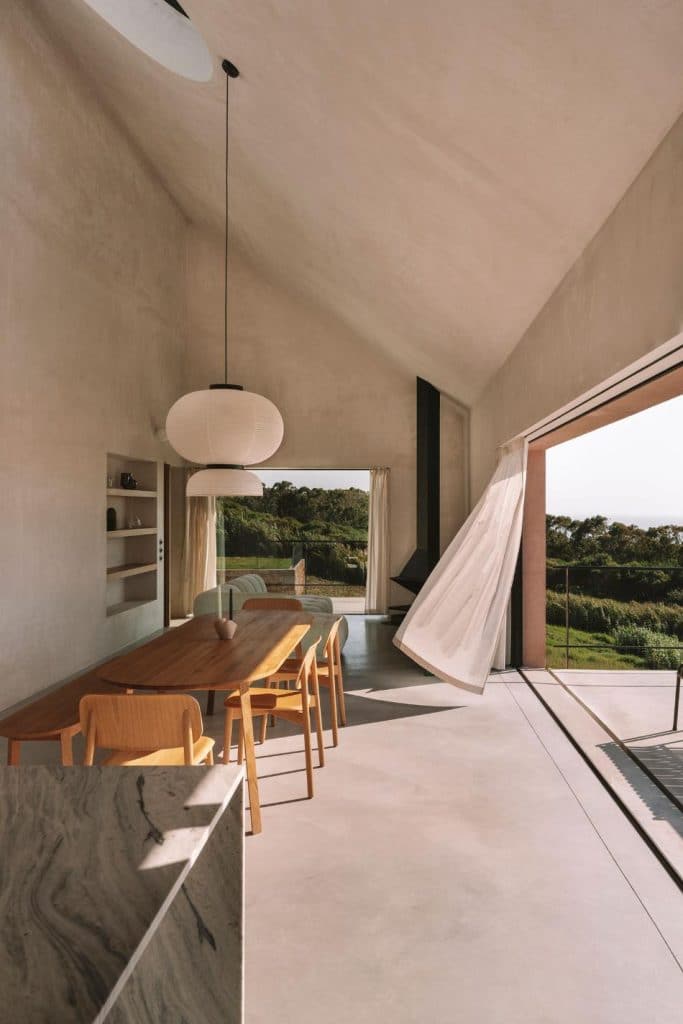
The entrance is defined by an open-air courtyard carved from the house’s solid volume. A large sliding gate closes this space, providing both privacy and a sense of threshold.
Flexibility is embedded into the architecture through devices such as windows that fully retract into the walls, transforming the interior into a fluid, semi-outdoor environment. Even private rituals such as bathing can extend into open air, reinforcing the informality of the retreat.
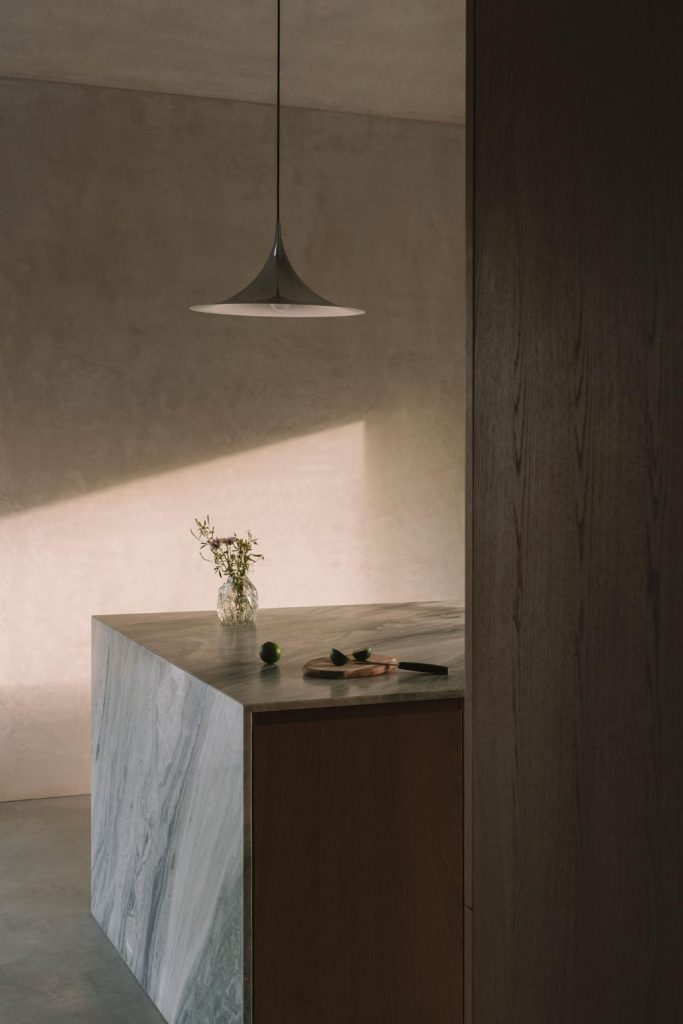
Material decisions emerged during construction through a close dialogue between clients, builders, and architects. Surfaces were kept raw, with grey plastered walls forming a monochrome backdrop.
Subtle interventions layered onto this foundation: niches cut into walls, a steel door swapped for red glass, and stone finishes chosen for their tonal relationship to the existing palette.
The final exterior of Casa Plaj, originally intended to remain muted, gained additional colour, revealing a process shaped as much by chance and collaboration as by planning.
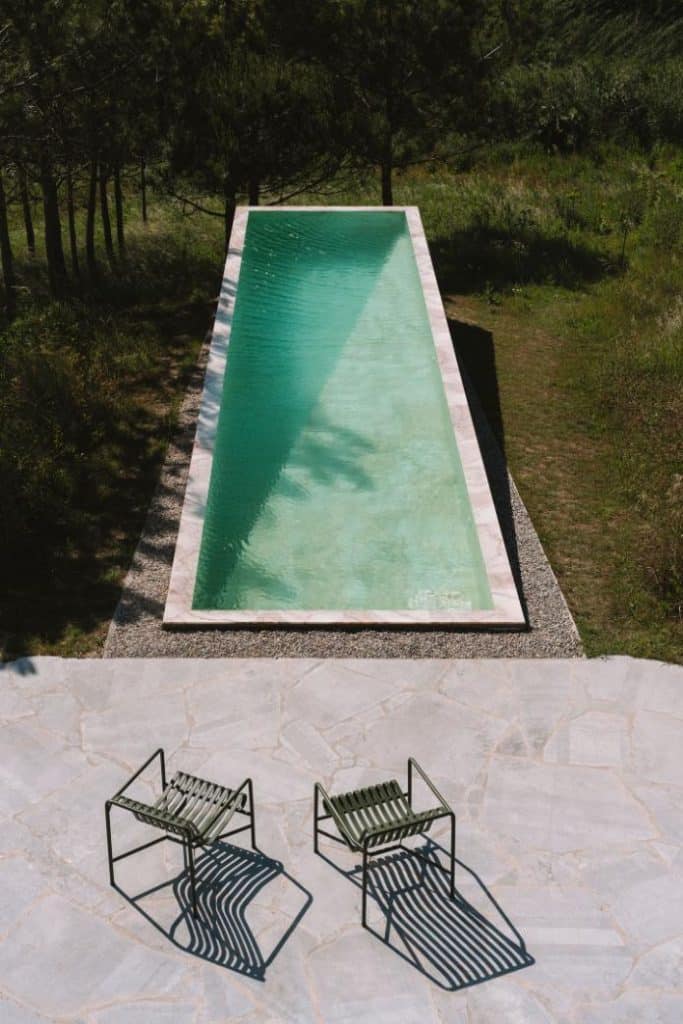
Beyond the house, the surrounding land was minimally altered. A swimming pool stretches parallel to the sea among pine trees, while fruit trees planted on the slopes recall the agricultural traditions of Lourinhã.
All existing trees were preserved, reinforcing continuity between architecture and place. The completed project is both a home and a landscape experience, where natural sounds—the ocean, distant voices, birds, and frogs—define an atmosphere of retreat.
Casa Plaj stands as a contemporary holiday house that reflects a balance between rigorous design and lived informality, deeply tied to its coastal setting.
Photography: Clemens Poloczek // Model photos: José Pedro Marques, with courtesy of Extrastudio, shared with persmission