A timber and stone lakeside residence by ACDF Architecture in Quebec
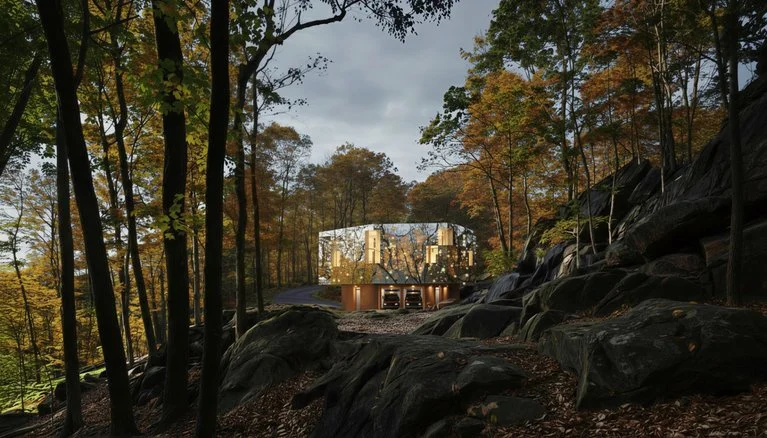
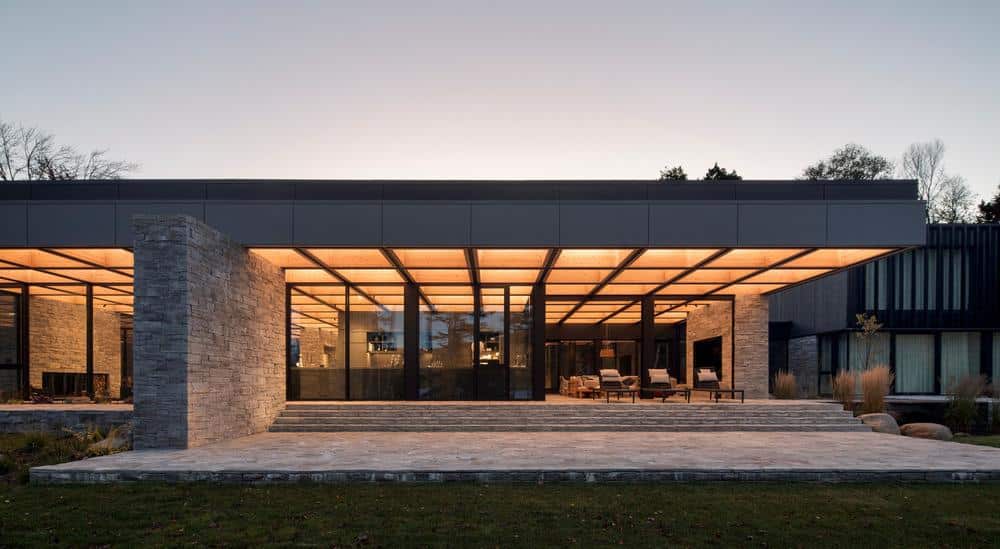
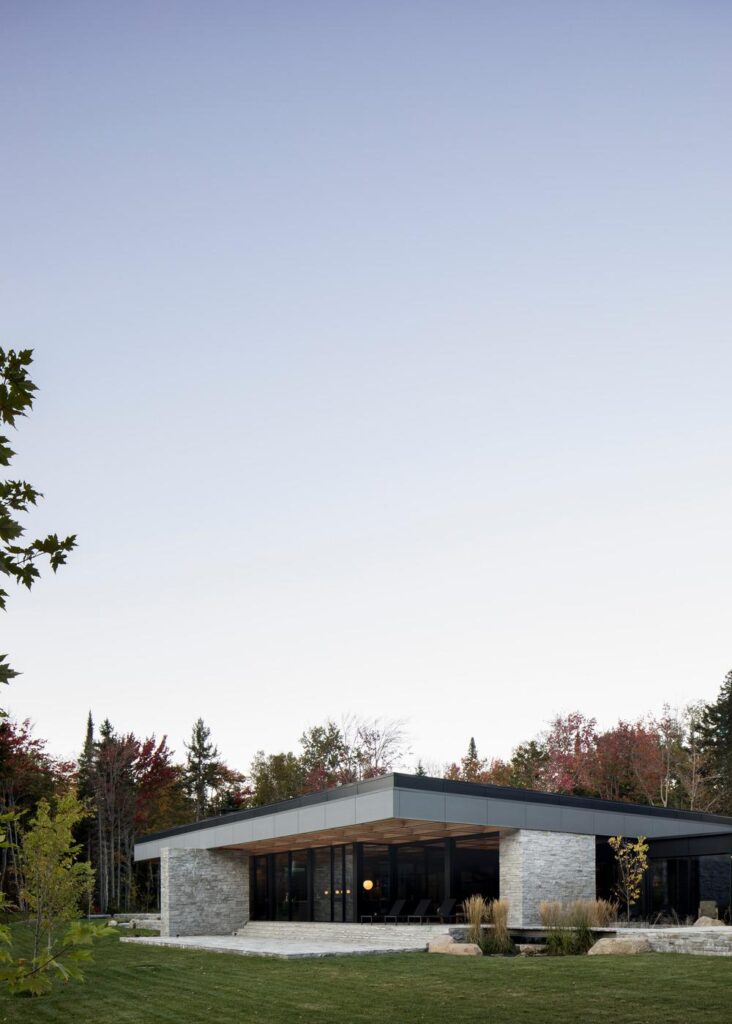
La Maison de la Baie de l’Ours by ACDF Architecture establishes a clear dialogue between land, water, and human presence. Positioned along Lac Archambault on a site once occupied by an abandoned summer camp, the house respects existing clearings and topography, selecting a gentle plateau to limit intervention on the rocky slopes. From the lake, the residence maintains a discreet profile, giving the impression of a refuge harmonized with the forested shoreline of Saint-Donat-de-Montcalm in the Lanaudière region.
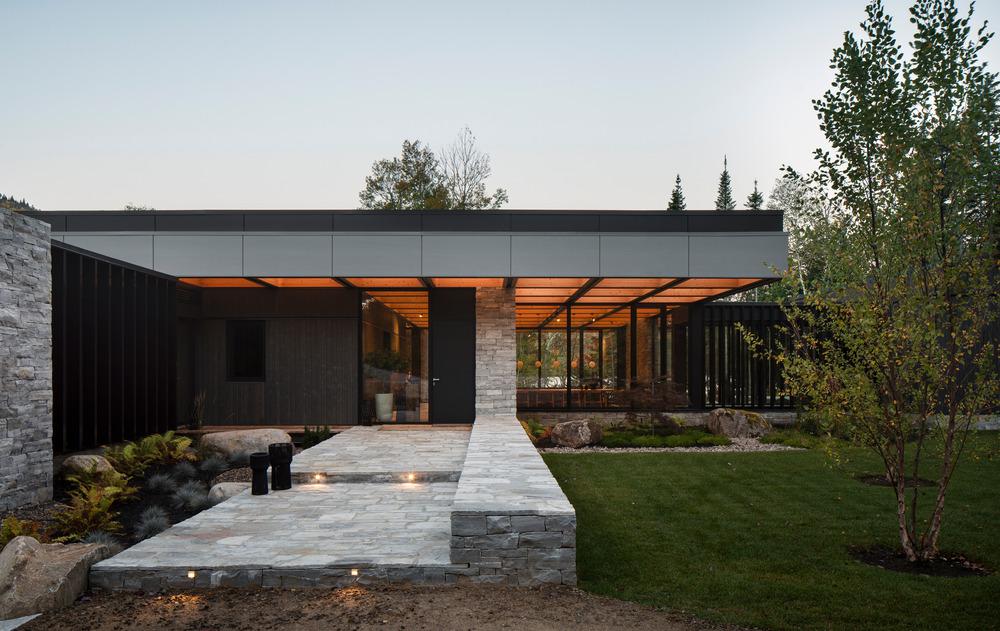
The residence focuses on a living experience that is enveloping yet outward-looking. Transparency and careful framing allow inhabitants to observe the landscape while maintaining a sense of privacy. The design encourages contemplation without spectacle, supporting a daily rhythm where nature remains present but never overwhelming.
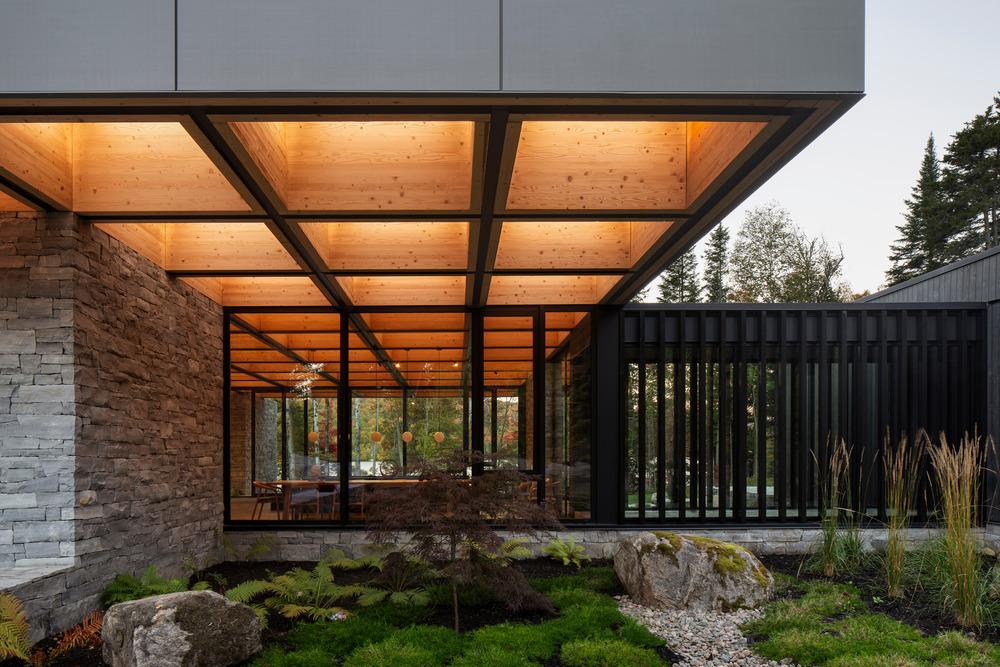
The residence architecture unfolds through three complementary elements. The first is a vast coffered timber roof composed of glulam beams. This roof cantilevers generously beyond the perimeter of the interior, forming sheltered outdoor zones and extending sightlines toward the horizon. It appears to hover above the ground, softening the division between indoor comfort and the broader landscape.
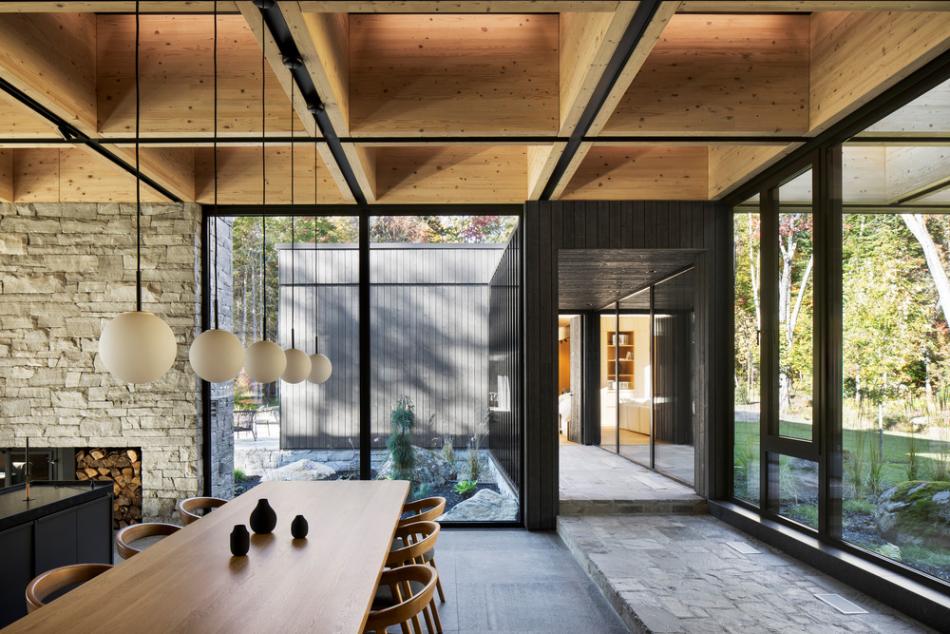
The second element is a collection of stone walls that double as structure and sculpture. These walls anchor the house into the terrain like extensions of the bedrock, enhancing permanence and tectonic clarity. Their placement also organizes circulation and creates subtle thresholds within the plan.
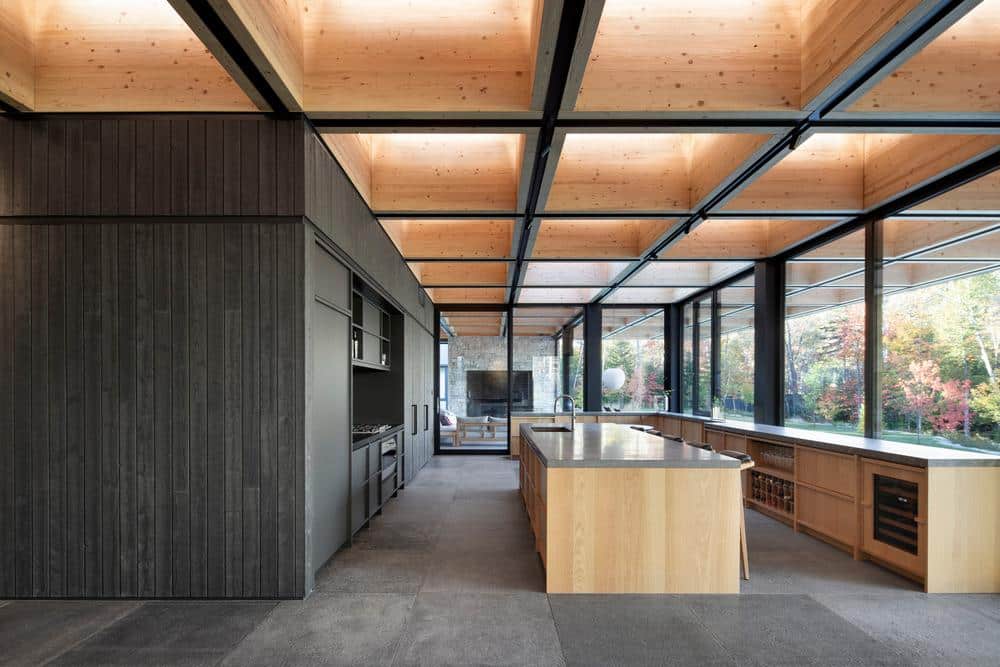
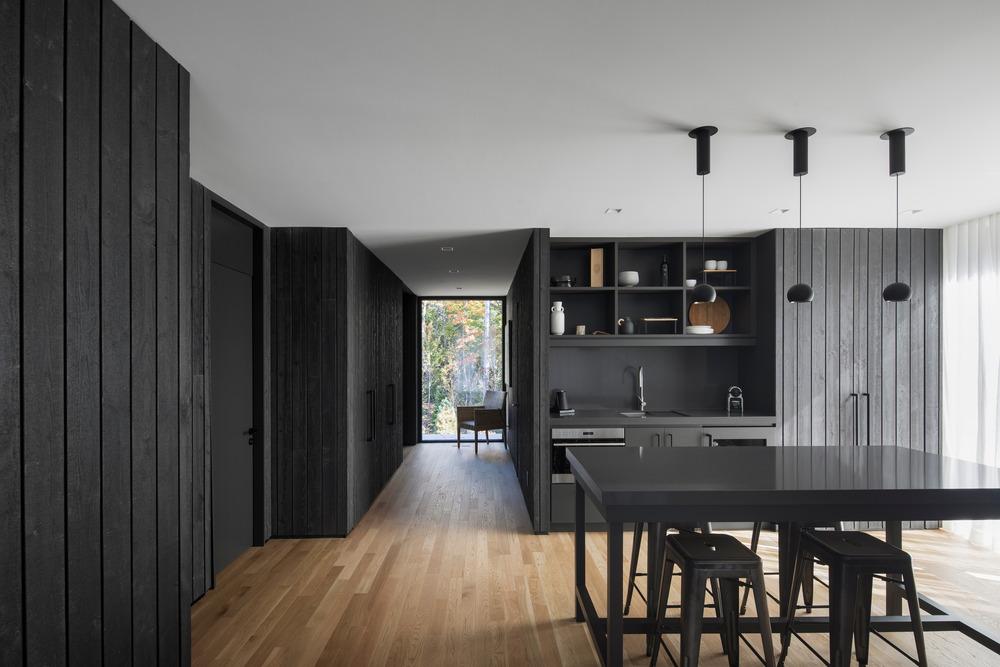
The third element introduces darker timber volumes containing bedrooms and service areas. More introspective than the central living spaces, these compartments recede beneath the roof to provide privacy and retreat. Together, these layers create architecture that is protective and permeable, with each component strengthening the home’s connection to its natural setting.
Within the central portion, a 5’x5’ coffered timber structure shelters the main living areas and rests on stone monoliths positioned away from the corners. This strategy amplifies the cantilevers and creates broad exterior terraces protected from weather. Acoustic panels, integrated lighting, and skylights enhance comfort and rhythm, allowing daylight to move freely across wood surfaces.
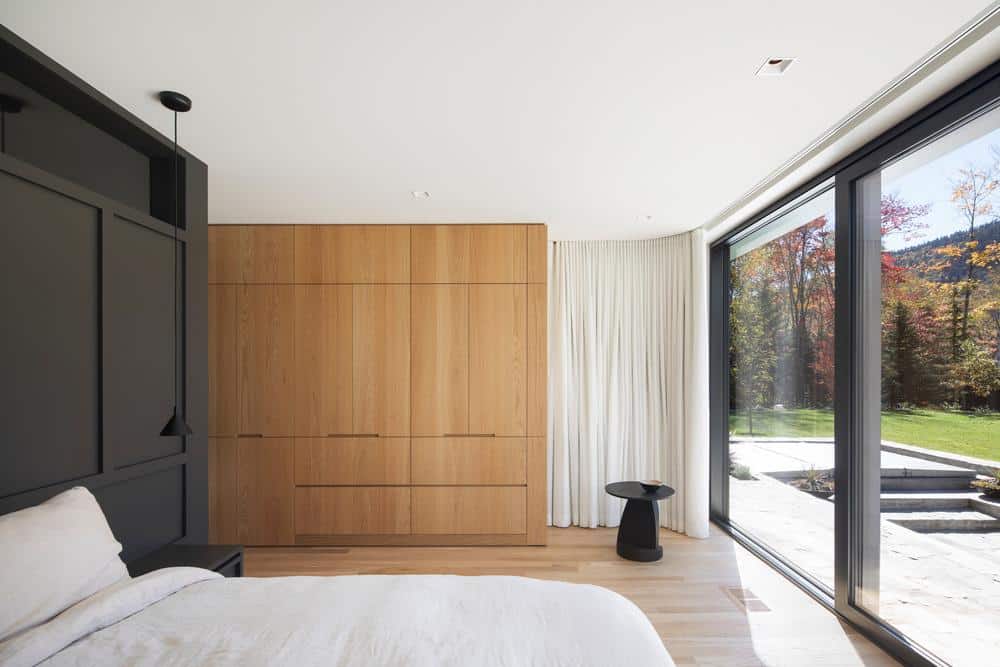
Interior life flows between kitchen, dining room, and sunken living area, with a fireplace serving as a focal anchor. A screened terrace further extends social spaces outward, complete with an exterior hearth aligned precisely with the interior one. Flanking wings house the parents on one side and children on the other, with a partial upper level for guests and workspaces. Bedrooms open to terraces and sitting areas, reinforcing a gentle continuity between domestic life and the forest. The residence demonstrates how architectural precision, material clarity, and spatial sequencing can heighten attention to place. Rather than imposing an autonomous figure, the house supports a way of living attuned to water, rock, and light.
Photography by Adrien Williams, with courtesy of v2com