Visitor Center by Arkis Architects integrates turf roof and BREEAM standards at Vatnajökull National Park
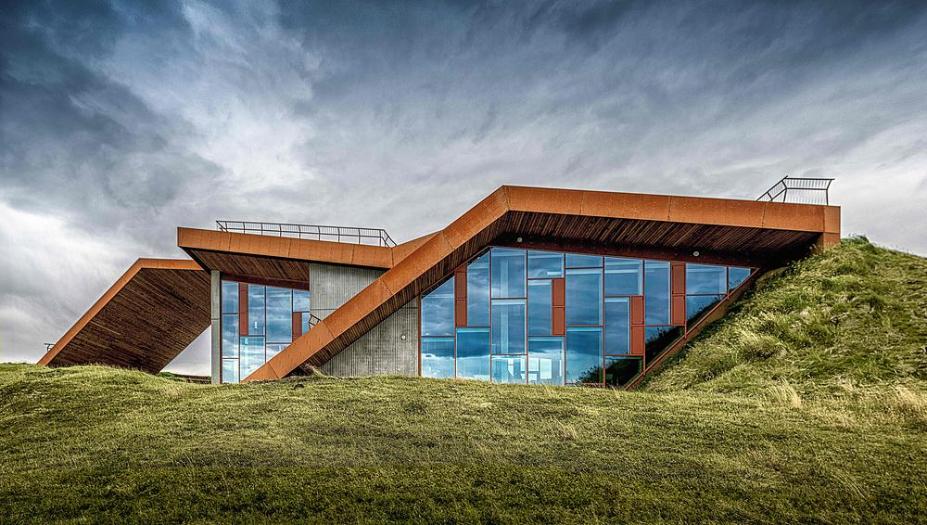
The Visitor Center for Vatnajökull National Park by Arkís Architects introduces a contemporary cultural facility shaped by the geological context of South Iceland.
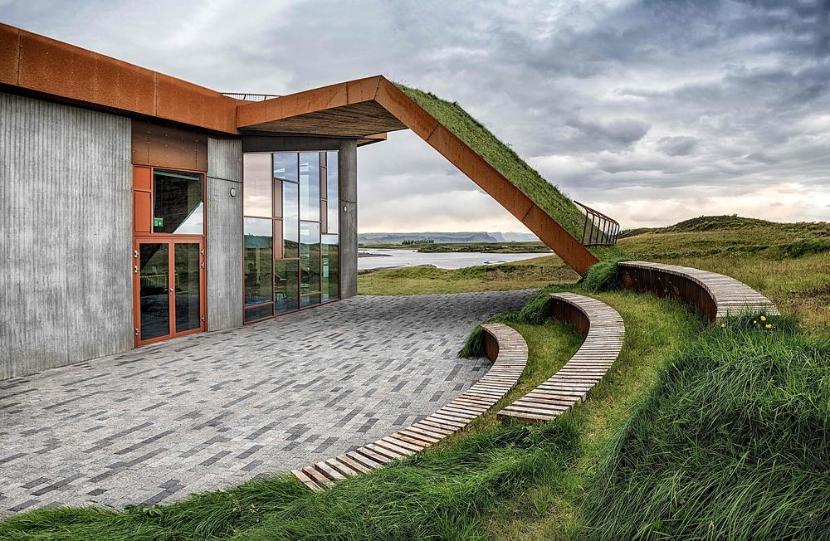
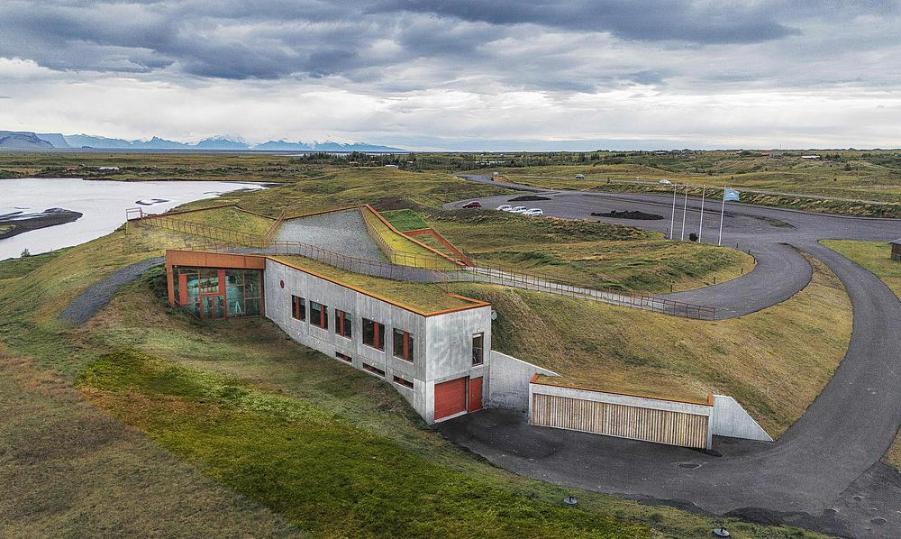
Situated near the village of Kirkjubæjarklaustur, the single-story building settles into a natural rise at Sönghóll, where architectural form and terrain share a continuous silhouette.
This approach draws from the heritage of the Skaftárhreppur region, where land was historically shaped into utilitarian structures, creating a unified spatial condition between artificial and natural elements.
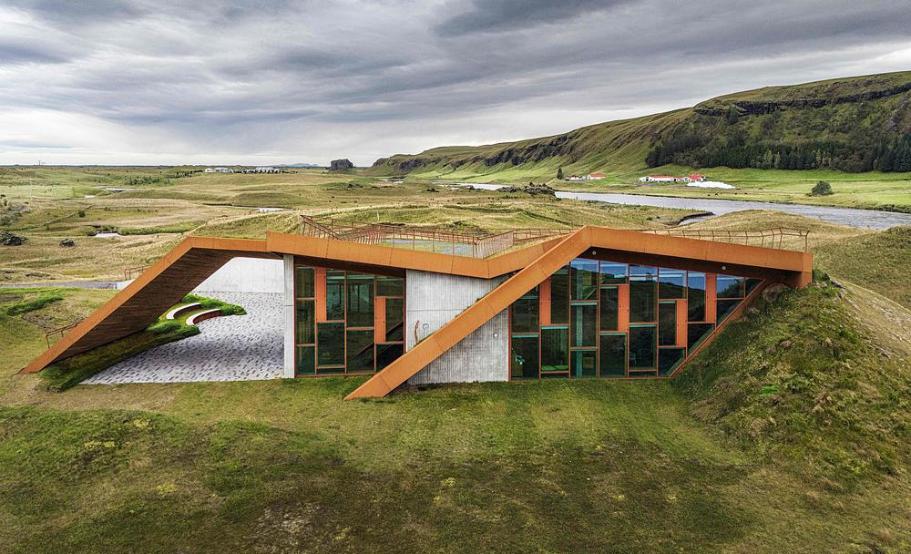
Completed and opened to the public in early 2024, the center serves multiple functions for the national park, welcoming travelers, supporting educational programs, and operating as an information hub for the wider Skaftárhreppur district. Circulation connects directly to a rooftop walkway that rises gradually to a viewing platform.
From there, visitors engage with geological features while taking in unobstructed views toward Öræfajökull glacier and Hvannadalshnúkur, the country’s highest peak. Exterior pathways extend toward existing park trails, binding the building into the surrounding ecological network.
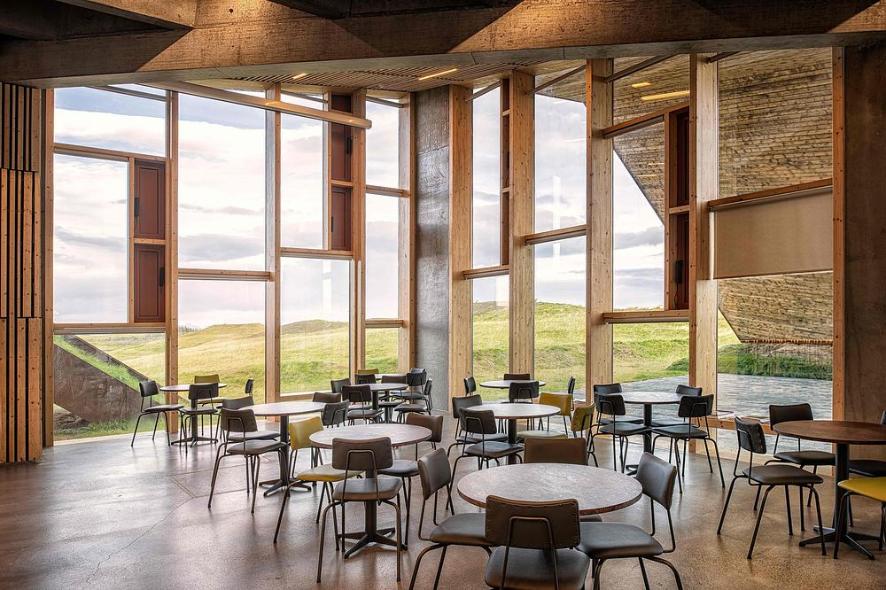
Environmental performance guided the project from early concept through construction. The facility was designed and built to BREEAM standards, which demand a rigorous assessment process covering material sourcing, waste reduction, transport, ecology, and occupant well-being.
Timber cladding is entirely Icelandic, harvested from nearby forests with traceable supply chains. Contractors adhered to strict environmental requirements during construction, achieving careful measurement and minimization of waste. BREEAM considerations also shaped mobility infrastructure, adding walking and cycling connections that integrate the center with the larger park environment.
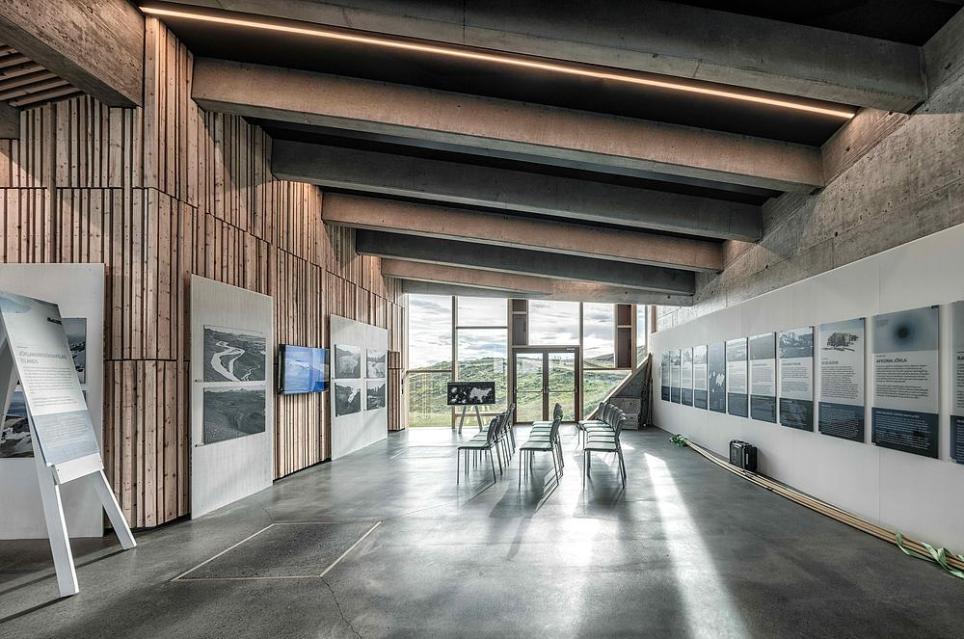
The structure rests on precast concrete panels featuring a corrugated surface that references tectonic forms. Concrete exhibition floors incorporate aggregates gathered from major glacial rivers of the western Vatnajökull region, extending the interpretive program into the architecture itself.
The roof is layered with turf taken from the site during excavation, enabling vegetation continuity and supporting stormwater management through shallow landscape ponds. Access paths and parking areas are recessed within the landform, reducing visual impact on nearby settlements and farms.
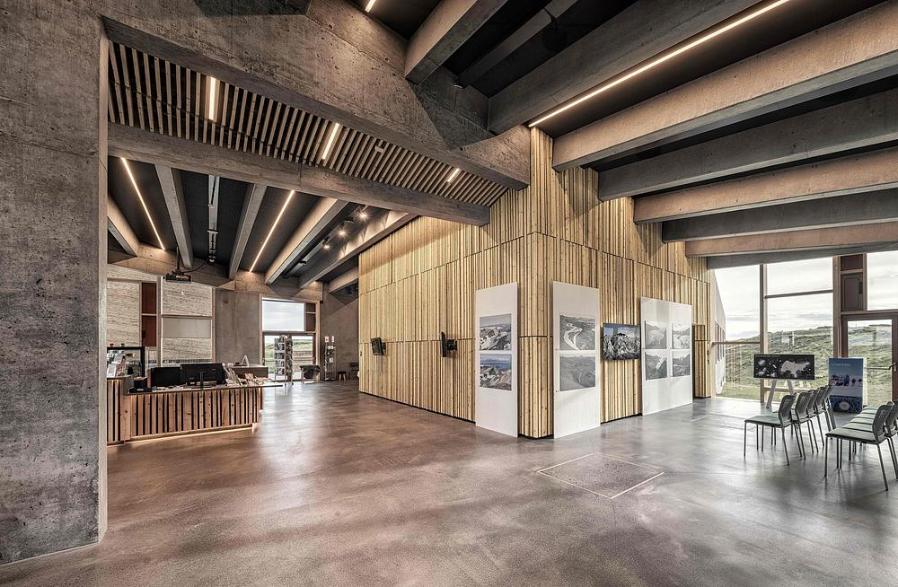
Interior functions include staff workspaces, exhibition areas, storage, and a covered outdoor terrace for dining overlooking the Skaftá river and toward Öræfajökull. The ability for visitors to circulate across the accessible roof further reinforces the experiential relationship between cultural programming and the national park’s expansive terrain.
Material selections uphold durability with minimal maintenance, allowing timber and corten steel to weather under Icelandic conditions without coatings or frequent replacement.
Through these strategies, the Visitor Center positions ecological sensitivity as an architectural driver, establishing a public facility where culture, geology, and environmental responsibility are presented as interconnected layers.
Photography by Karl Vilhjálmsson, with courtesy of v2com
Arkis Architects: https://www.ark.is