Interior design shapes the hybrid identity of Bistro Siège Social and Café Social
blanchette archi.design has completed the interior design of Bistro Siège Social and Café Social, a hybrid hospitality and social venue located on the ground floor of 1111 Saint-Charles Street West in Longueuil. Commissioned by Groupe Mercille and carried out by PR Desjardins, the project transforms and extends the experience of the office tower’s existing lobby by reinterpreting architectural references rooted in corporate environments from the 1960s and 1970s. The intervention positions design as a mediator between workplace routines and collective urban life, contributing to the building’s evolving relationship with its surroundings.
Developed as a continuation of the postmodern lobby, the design revisits the rational spatial language and formal discipline associated with mid-century corporate interiors. These characteristics are translated into a contemporary environment that prioritizes comfort, accessibility, and sociability. Combining the functions of café, bistro, and informal meeting place, the project establishes a programmatic framework that supports daily professional interactions while encouraging broader community engagement. The approach reinforces the relevance of adaptable interior architecture in redefining the cultural role of office buildings.
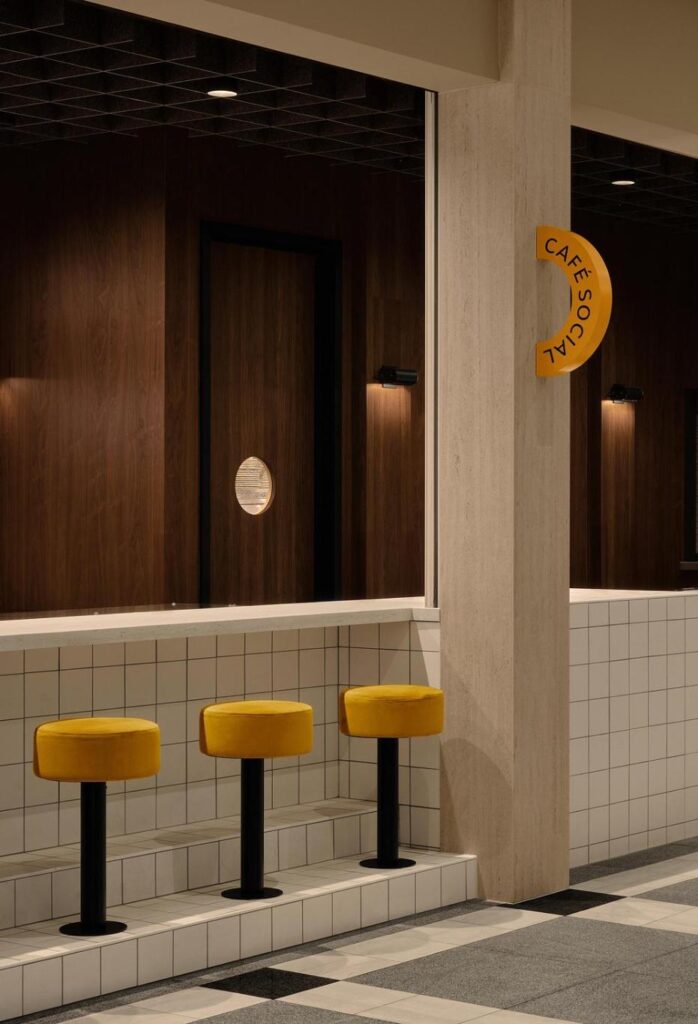
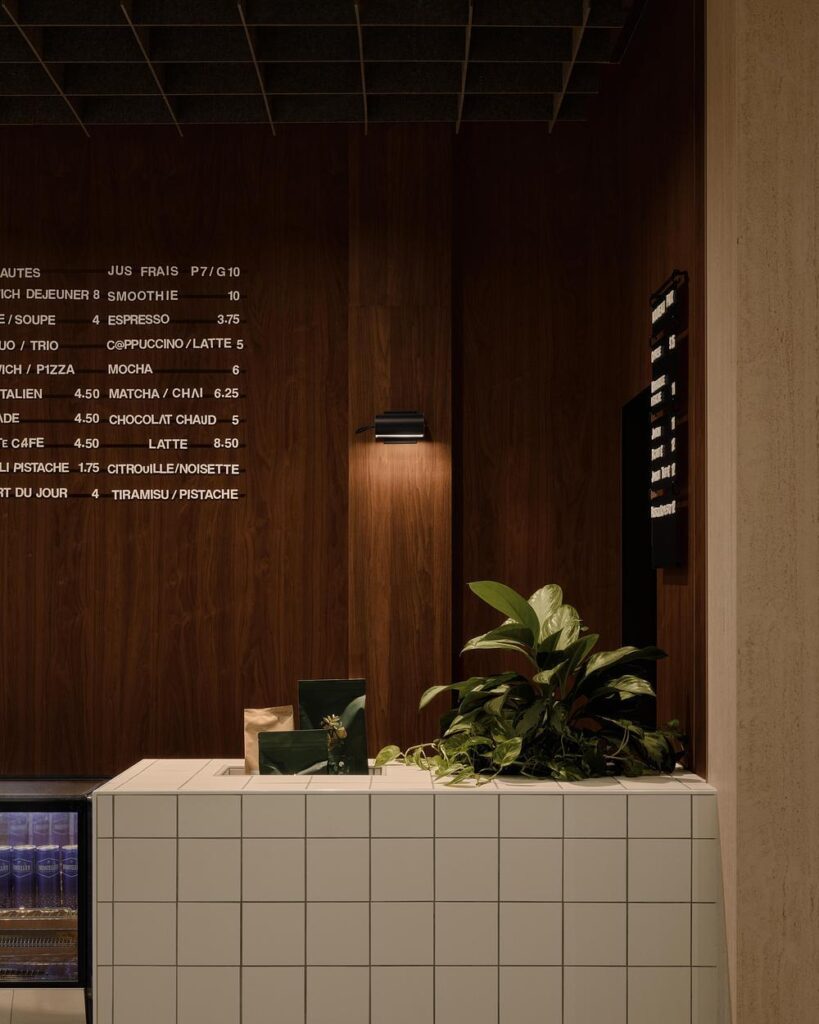
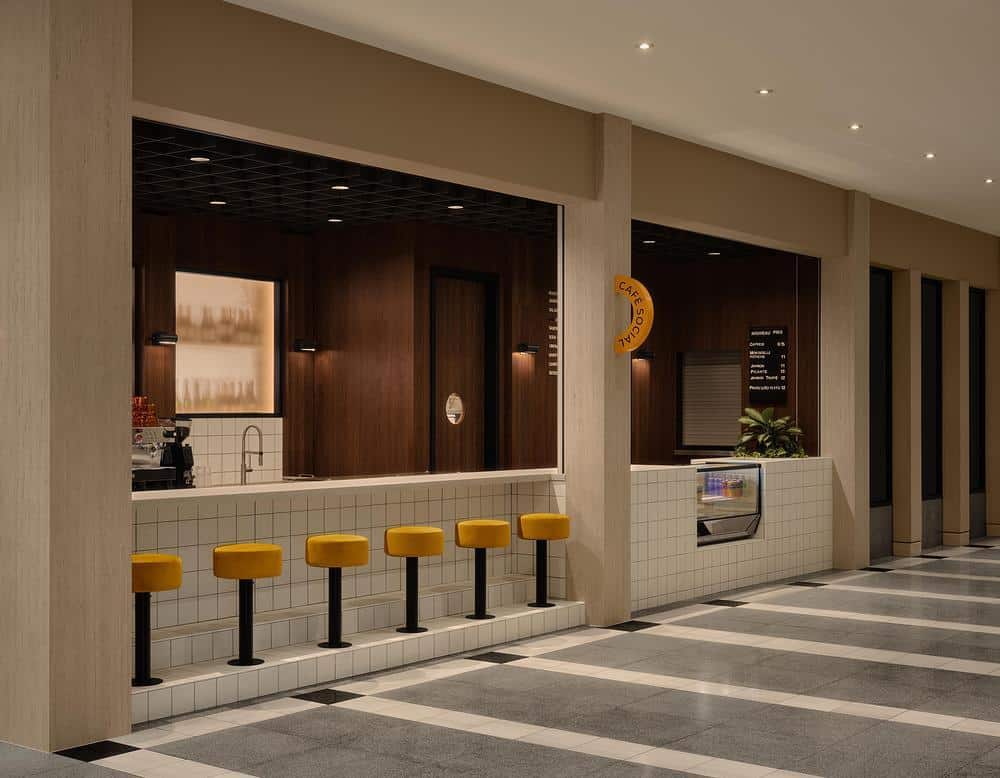
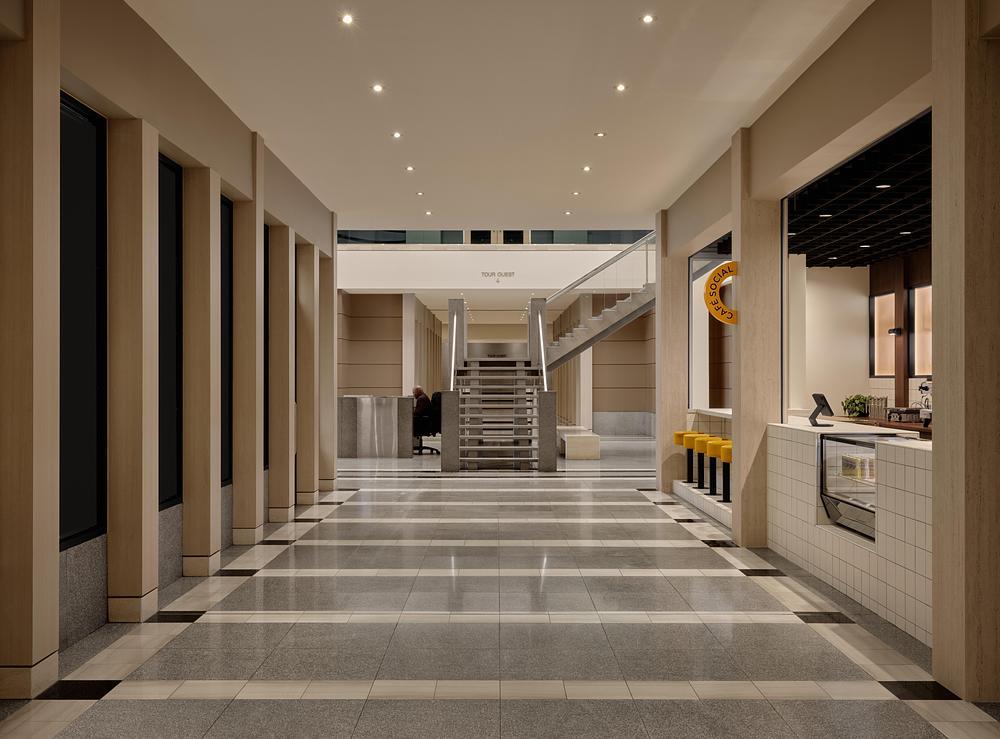
Occupying approximately 2,300 square feet, the layout is structured around two complementary zones that address different rhythms of use. Café Social operates in direct continuity with the building’s common corridor, acting as a transitional and animated gathering point throughout the day. Siège Social, described as an informal “head office” for the neighbourhood, opens towards the terrace and forecourt, providing a setting for meals, discussions, and shared activities. This dual configuration supports spatial flexibility and reinforces connections between interior circulation and exterior public areas.
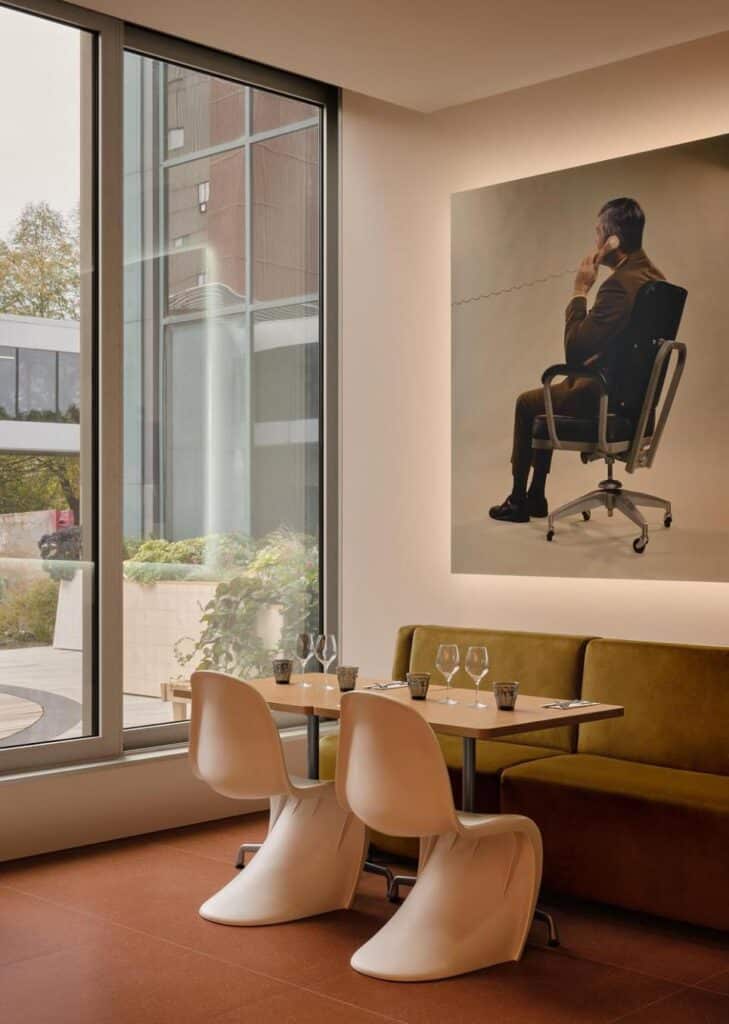
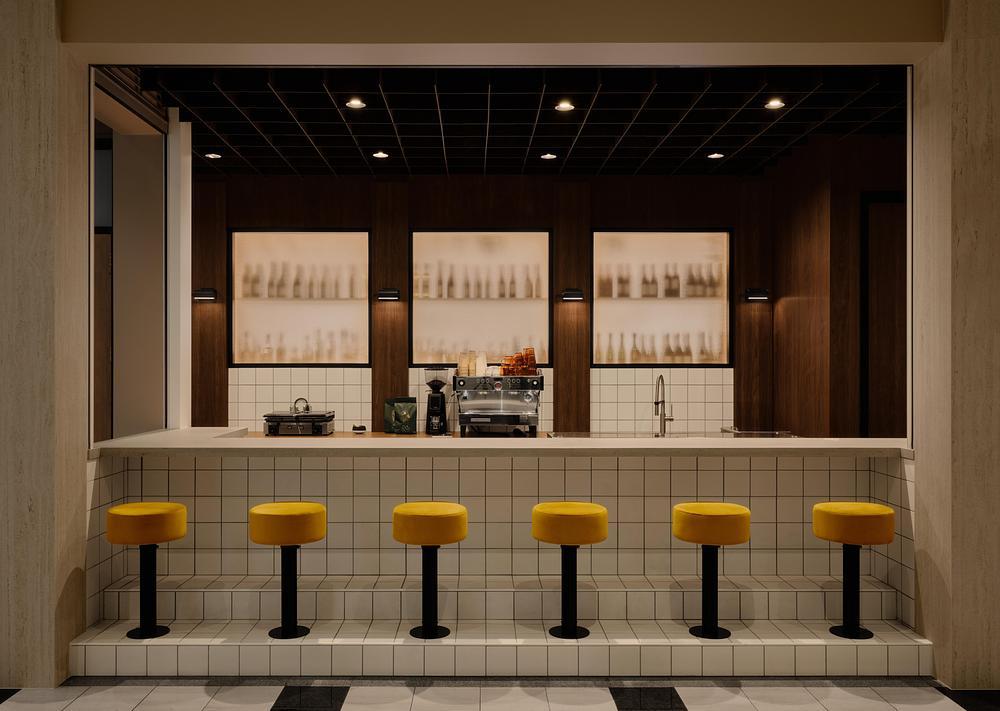
Material consistency establishes visual coherence across the venue. Matte white square ceramic tiles appear on vertical surfaces and integrated furniture, referencing patterns present in the original lobby while providing a defining identity for the intervention. A walnut partition articulated with glass openings filters natural light between the café and bistro areas, allowing transparency and visual continuity while maintaining distinct spatial atmospheres. The interplay of surface treatment and permeability reflects an approach that balances functional clarity with sensory comfort.
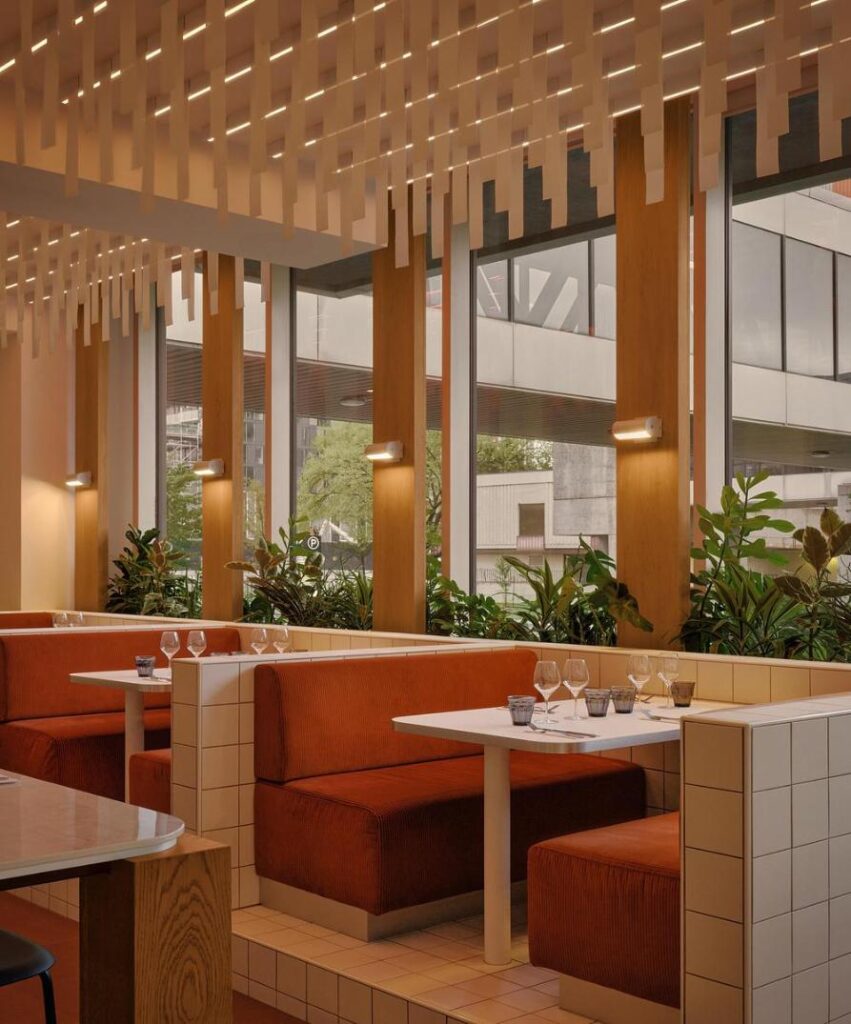
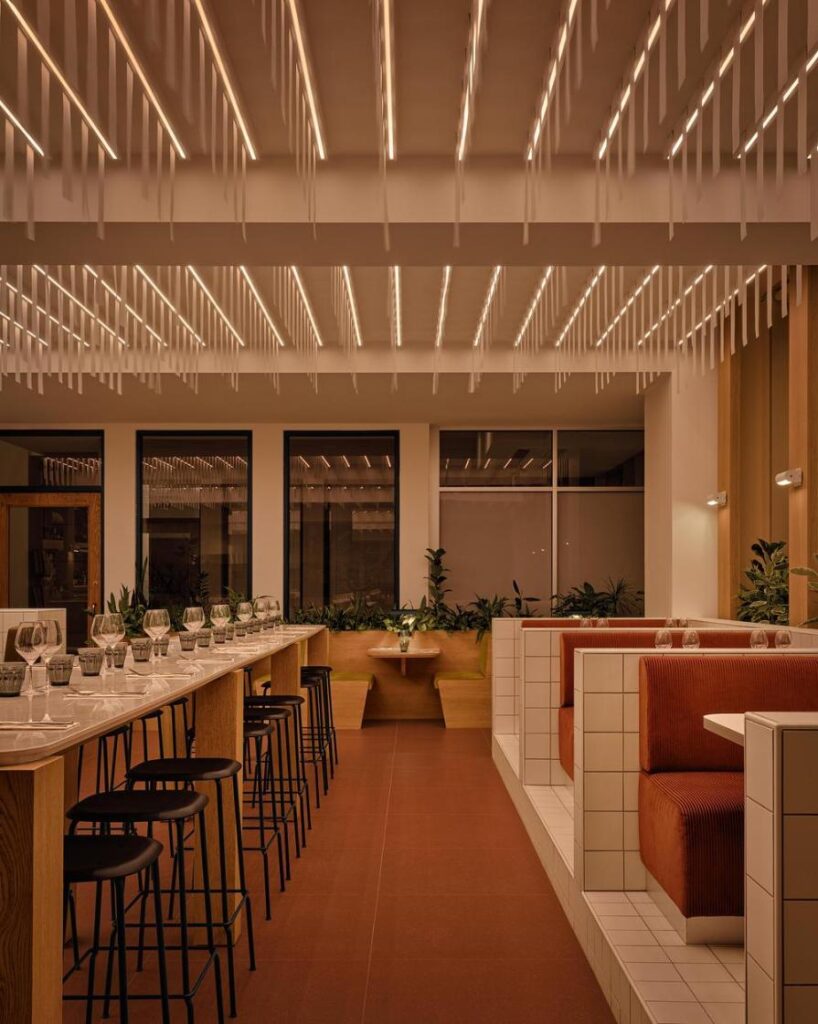
Sarah Arsenault, interior design project manager at blanchette archi.design, notes that the project aimed to translate codified office references into a human-centred spatial experience. Materials, pattern articulation, and light modulation were considered instruments of continuity that reinforce familiarity while enabling distinction. Within this framework, the café introduces travertine surfaces, mustard hues, and dark wood elements, while the bistro presents terracotta tones, deep greens, pale timber, and integrated vegetation informed by modernist precedents from the late twentieth century.
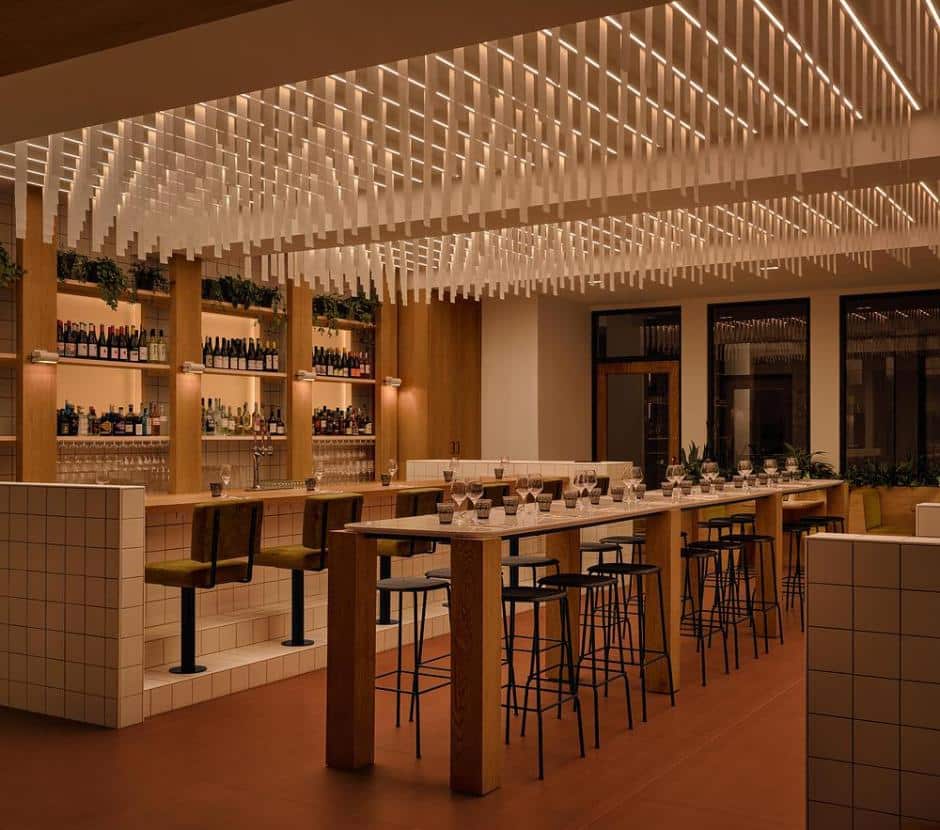
Lighting strategies reinforce the temporal identity of the venue. A dim-to-warm system integrated into the bistro ceiling adjusts ambience throughout the day, supporting transitions between professional and social activities. The suspended ceiling references the vertical rhythm of office blinds, introducing depth and movement while transforming an administrative motif into spatial articulation. This technical intervention enhances atmospheric adaptability without compromising functional performance.
For Groupe Mercille, the development aligns with broader ambitions to contribute to neighbourhood revitalization beyond the office tower. The venue acts as a publicly accessible destination that engages nearby users and the university community, reinforcing urban vitality through architectural hospitality. As noted by president Hélène Mercille, the Bistro Siège Social represents more than a building amenity; it establishes a unifying environment that supports wellbeing at work and strengthens local interaction. Through careful reinterpretation of corporate typologies, the project demonstrates how interior design can encourage sociability and expand the civic relevance of contemporary workplaces.
Photography by Alex Lesage, with courtesy of v2com