Cielo: Residential architecture shaped by climate in Nagpur
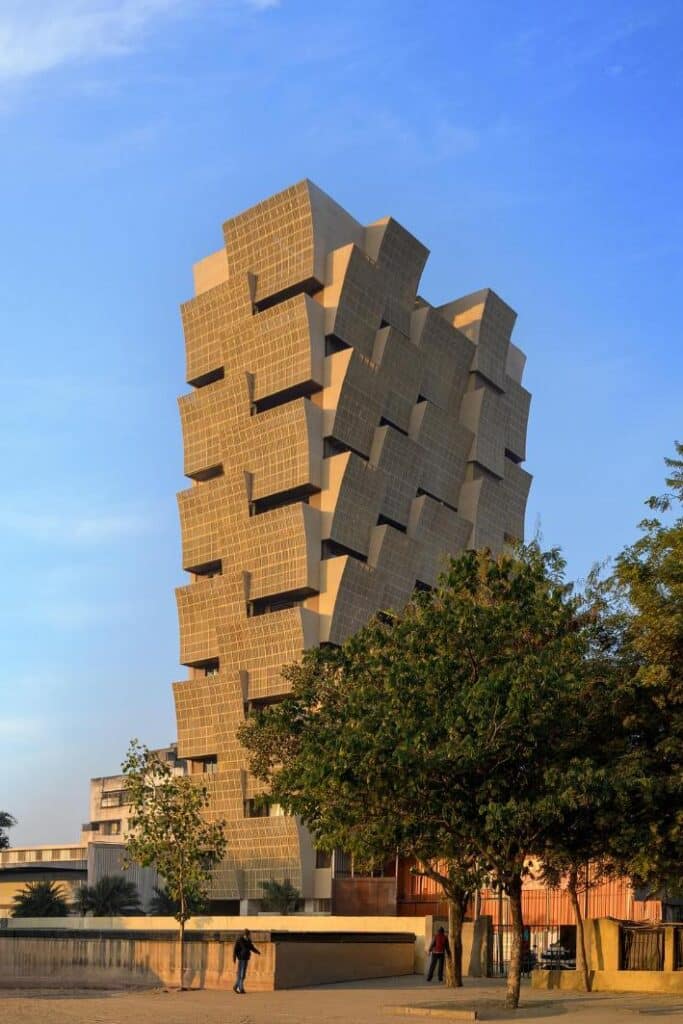
Cielo is a compact residential building designed by Sanjay Puri Architects in Nagpur, located at the geographical center of India. The project responds to both regulatory constraints and an extreme climate, translating a dense urban brief into a climate-responsive housing model. Developed on a relatively small plot of 900 square metres, the building achieves a total constructed area of 3,600 square metres in accordance with local development rules and client requirements.
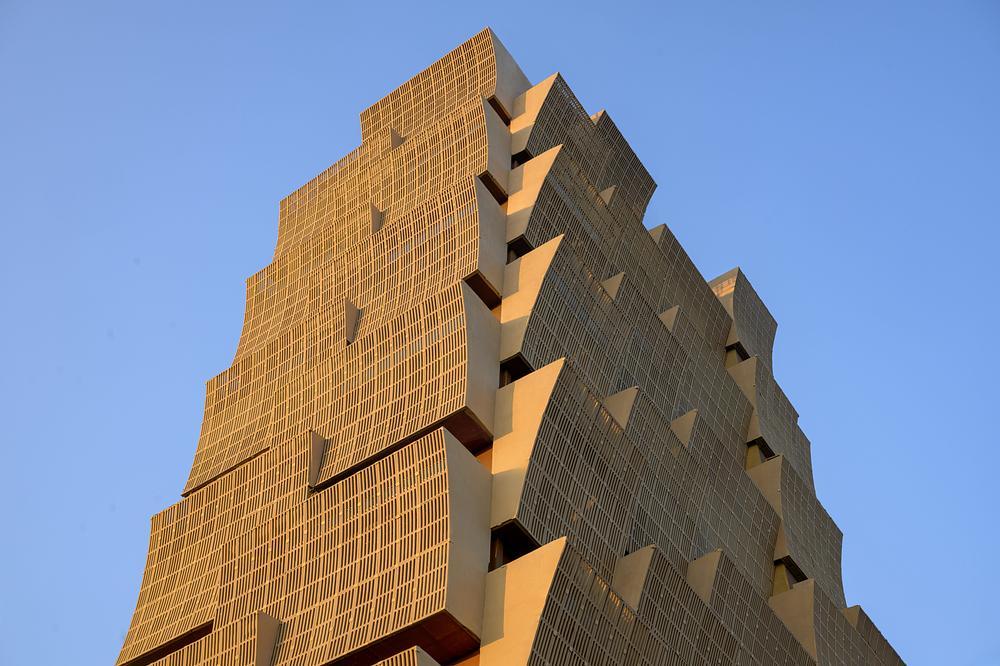
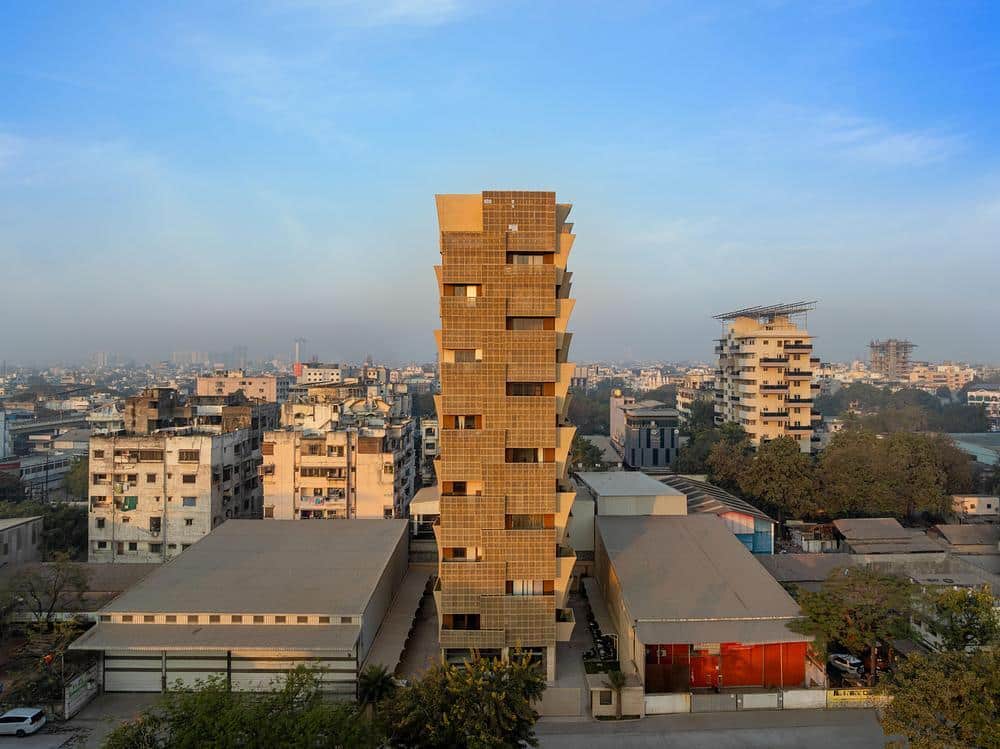
Mandatory open spaces on all sides significantly limit the buildable footprint, resulting in only 270 square metres of buildable area per floor. Within these constraints, the architects organized a twelve-storey structure that accommodates a single four-bedroom apartment on each level. This low-density vertical configuration prioritizes spatial quality and environmental performance over numerical maximization of units.
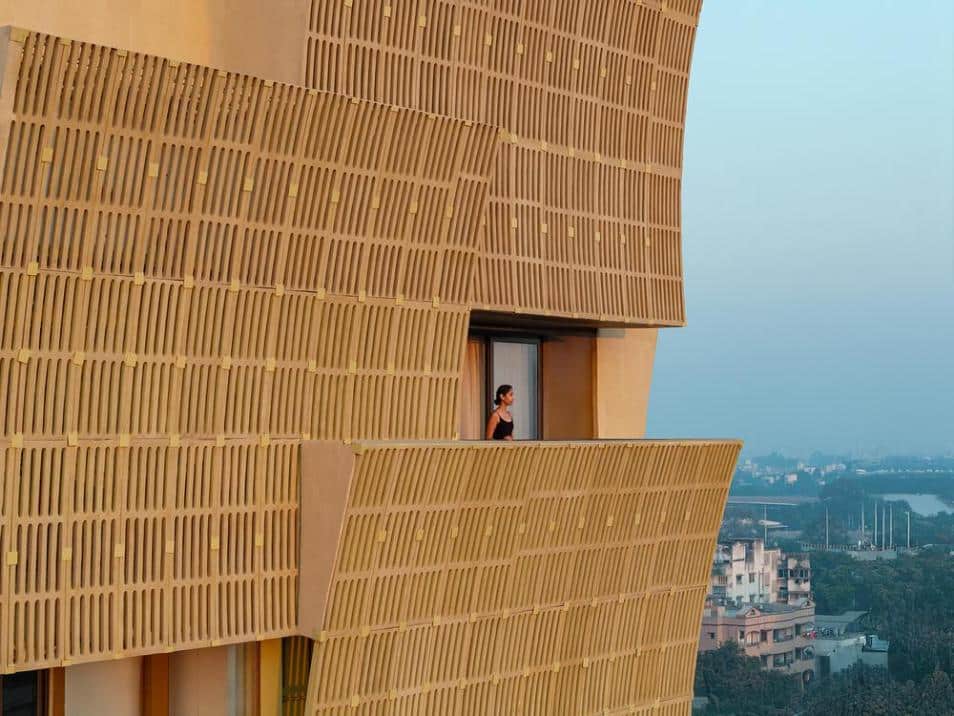
Each apartment is planned to optimize natural ventilation and daylight. Three bedrooms occupy three corners of the floor plate, while the kitchen forms the fourth corner, allowing every primary room to benefit from cross ventilation. The living and dining areas are positioned centrally, operating as the social core of the apartment and connecting the private rooms through a clear and efficient circulation layout.
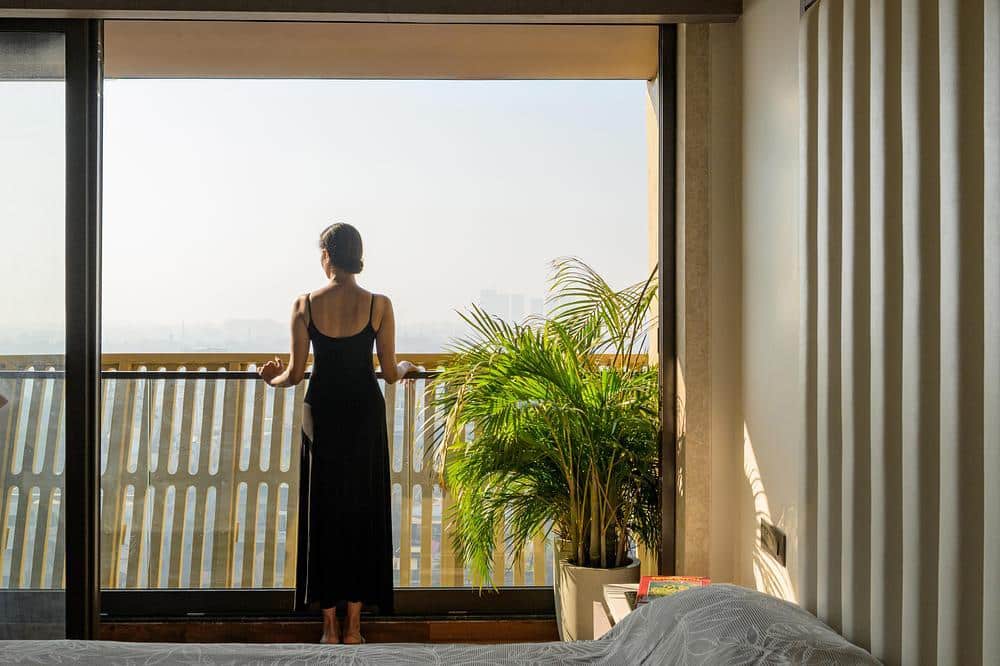
Nagpur experiences prolonged and intense summers, with temperatures exceeding 40 degrees Celsius for nearly eight months of the year. In direct response to these conditions, every main room opens onto two distinct balcony spaces: one fully open and one screened. This dual-balcony system reduces direct heat gain while offering shaded outdoor areas that remain usable throughout the year.
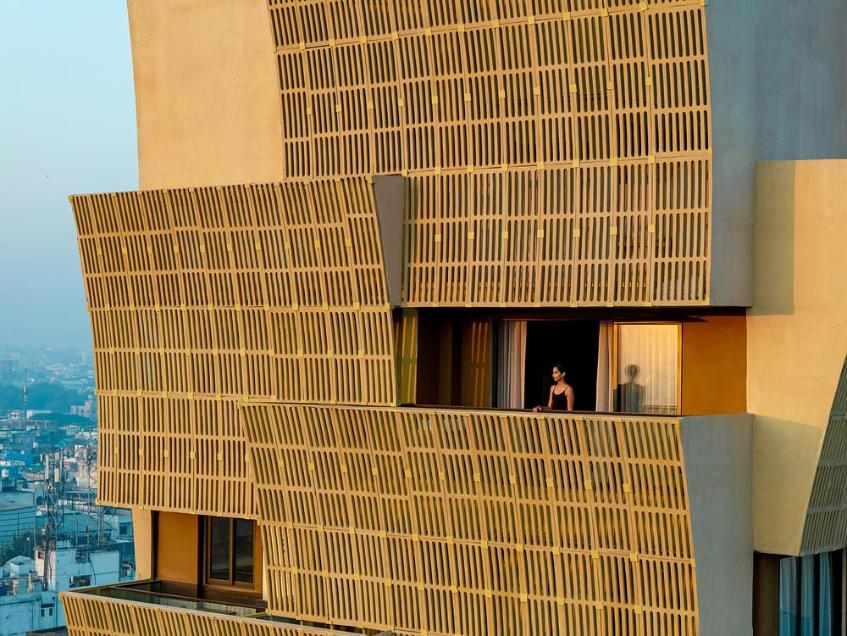
The Cielo screened balconies are articulated through sectional curves that function as environmental buffers. At the lower level, these elements act as protective screens, while at the upper level they extend outward to form balconies. These curved screens alternate both horizontally and vertically across the façade, generating a layered envelope that moderates solar exposure and creates semi-private green pockets for each room.
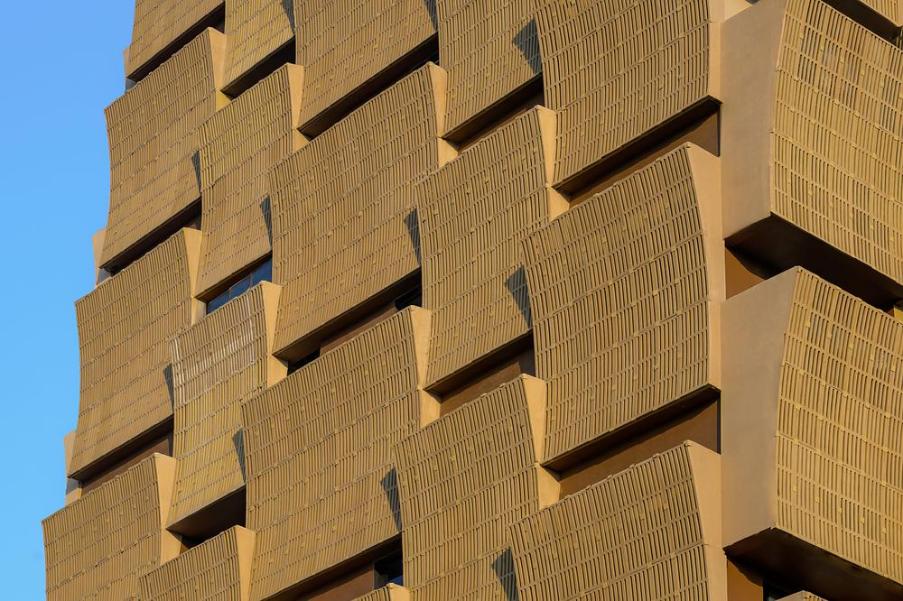
Beyond their climatic role, the screens reference the architectural heritage of the region, where perforated and layered façades have been used since the seventeenth century to address heat and privacy. This historical continuity is reinterpreted through a contemporary geometric language, giving the building a dynamic and sculptural presence within the urban context.
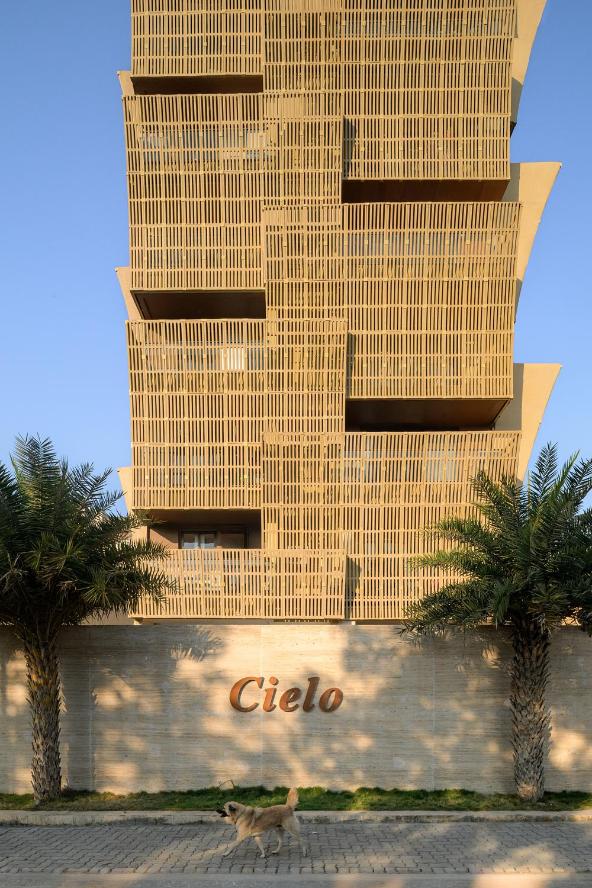
Cielo is designed as a naturally ventilated residential building with reduced dependence on mechanical cooling. An integrated solar-panel roof supports on-site energy generation, while water harvesting and recycling systems contribute to lower resource consumption. Together with the screened façade, these strategies substantially reduce the building’s lifecycle carbon footprint and long-term operational costs, positioning Cielo as a climate-responsive model for high-density housing in central India.
Photography by Mr. Vinay Panjawani, with courtesy of v2com