Duri Baek turns light and shadow into a language of resilience
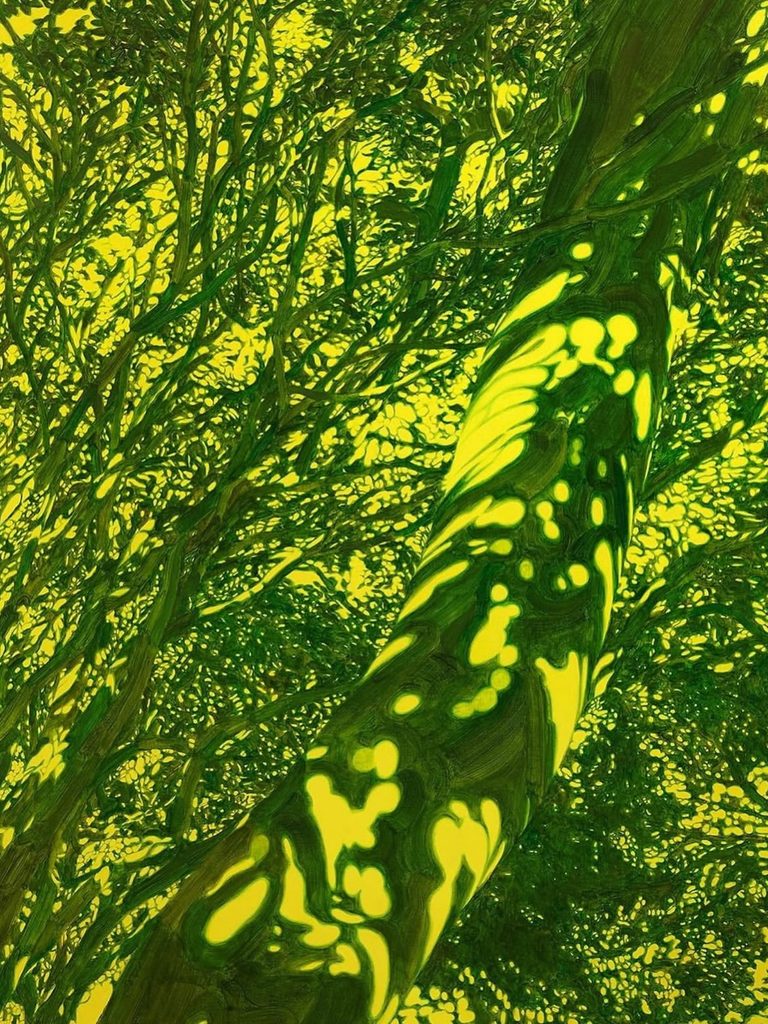
Duri Baek has developed a painting language in which light, vegetation and shadow become tools for examining adaptation and endurance. Born in Seoul in 1984, she studied visual communication design at Hongik University. She later worked extensively in illustration and publishing, experiences that informed her precise approach to composition and image-making. Exploring figurative narratives much like Deville’s playful perspectives on realism, her practice moved increasingly toward painting where forests, leaves, rocks and branches became recurring subjects through which she could study how living forms respond to pressure, change and available light.
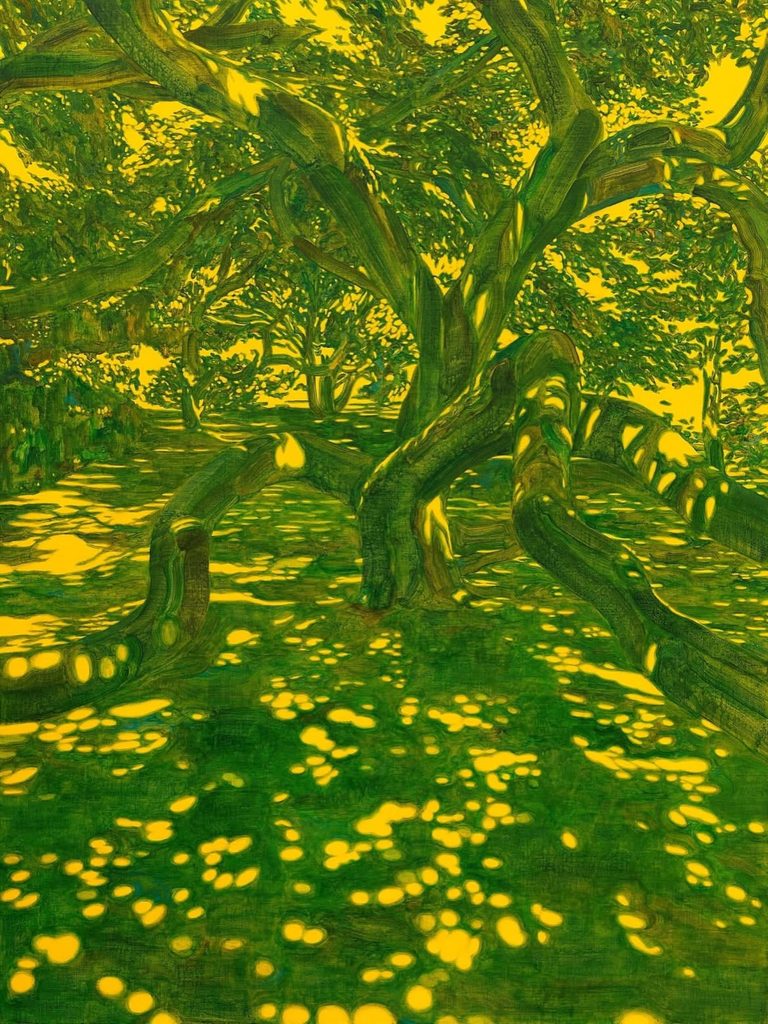
Duri Baek’s landscapes are carefully reduced, yet they never feel minimal in meaning. Light appears as an active force that cuts through dense vegetation, catches on trunks and settles across uneven ground, while darker green passages create weight and depth without fully obscuring what lies beneath. Her process often begins with a luminous yellow base that is gradually covered by thin layers of green acrylic, allowing brightness to remain visible through the surface. This technical structure gives the paintings their internal tension, making shadow feel permeable and light feel physically embedded in the image—a tactile immersion into medium and color that parallels how CJ Hendry’s solo exhibition Pastel at Salon 94 Design exploring monumental hyperrealistic smudges.
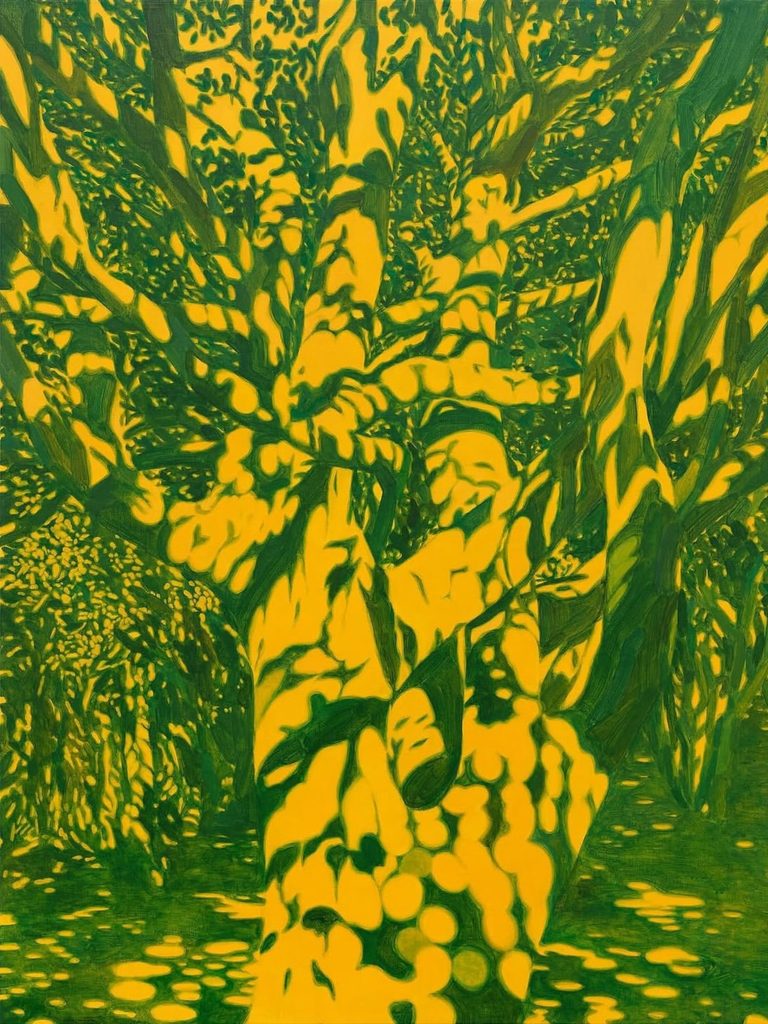
The natural forms Baek selects are closely tied to the way living organisms respond to their surroundings. Her interest in phototropism, the tendency of plants to grow toward light, offers a useful key to the work, where branches lean, leaves open and vegetation appears to adjust itself in relation to what is available. Rather than presenting resilience as a heroic gesture, Baek approaches it as a quiet process of continuous modification, where survival depends on sensitivity, flexibility and the ability to change form—a poignant contemplation of living resilience in the natural world that echoes the wildlife defense of Starlight: The Last Wolf.
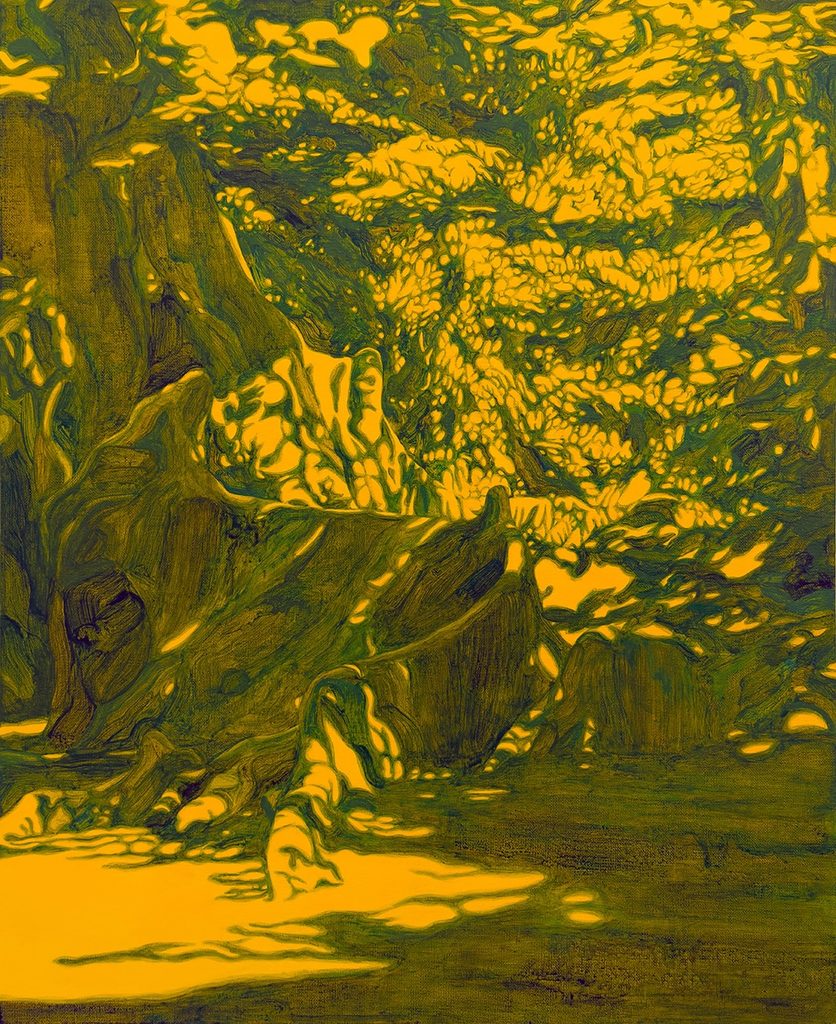
This idea also appears in her attention to damaged, perforated or irregular surfaces, including the openings found in Monstera leaves and the traces left by environmental pressure. Duri Baek does not treat these marks as flaws, but as evidence of how a living structure has developed in response to its conditions. Across different bodies of work, she repeatedly returns to pairs that seem contradictory but remain interdependent, including exposure and concealment, damage and recovery, intention and chance—a dialogue between intuitive mark-making and structured form that also characterizes TACTUS’s debut ‘The Art of Assembly’ with Jon Pilkington. Creating paintings where opposing states are allowed to coexist instead of being resolved.
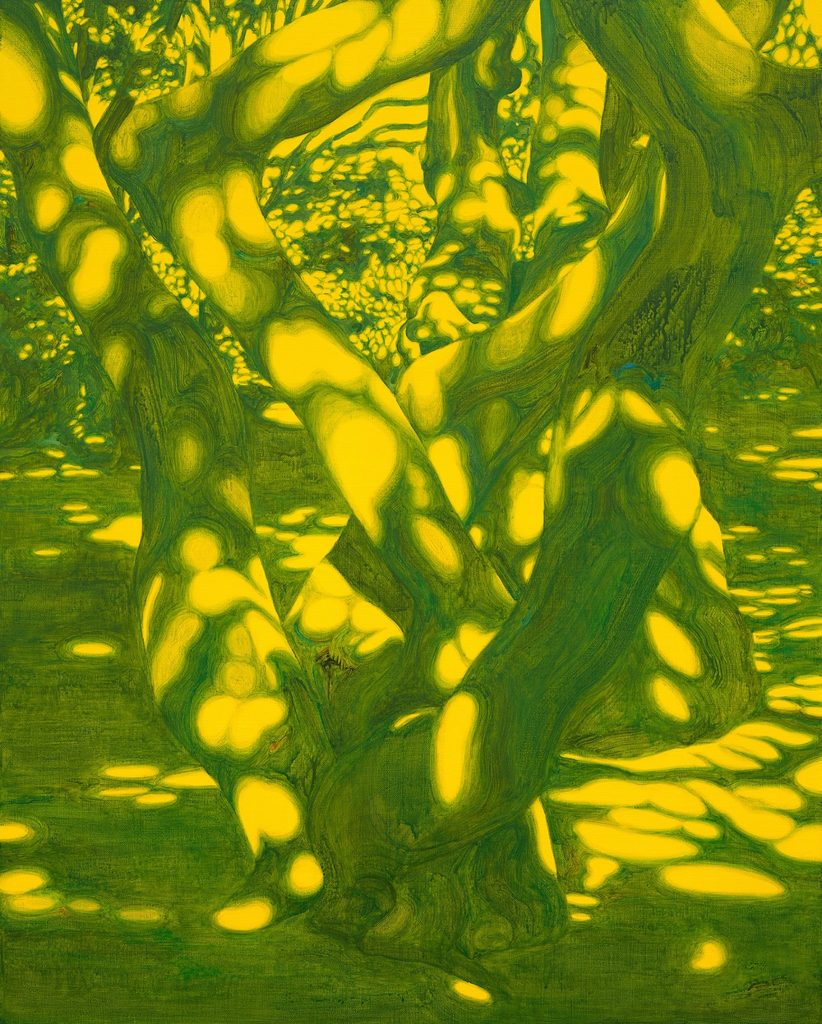
Baek’s practice has increasingly reached audiences beyond South Korea through exhibitions in Singapore, Hong Kong, Japan and the United States, while her 2025 publication JARI OF THE LIGHT brought together several major series in a single volume. What distinguishes her work is not simply the recognizable green-and-yellow palette, but the consistency with which she turns natural observation into a broader visual structure for thinking about endurance. In Duri Baek’s paintings, light is never decorative and shadow is never empty; both operate as conditions through which life adjusts, persists and continues, exploring psychological vulnerability in a contemplative register akin to the Interview with Zhiyu You on illustrating the quiet tensions of modern life.
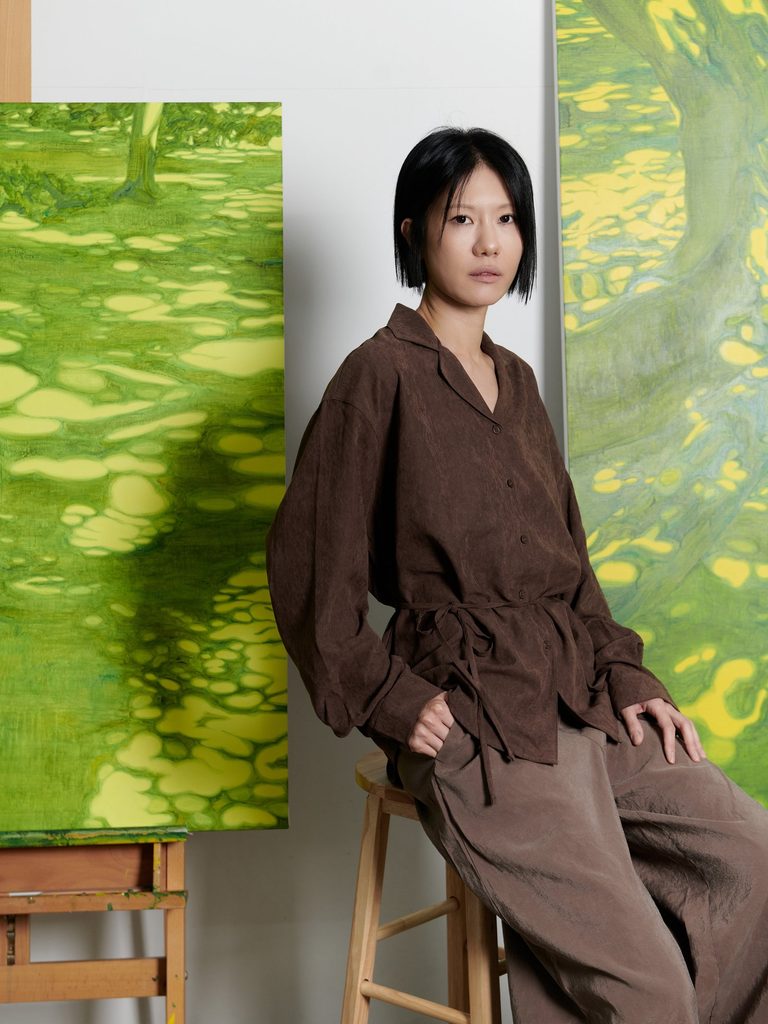
All images courtsey of Duri Baek, shared with permission