GSM Studios creates five immersive worlds for Exploria in Singapore
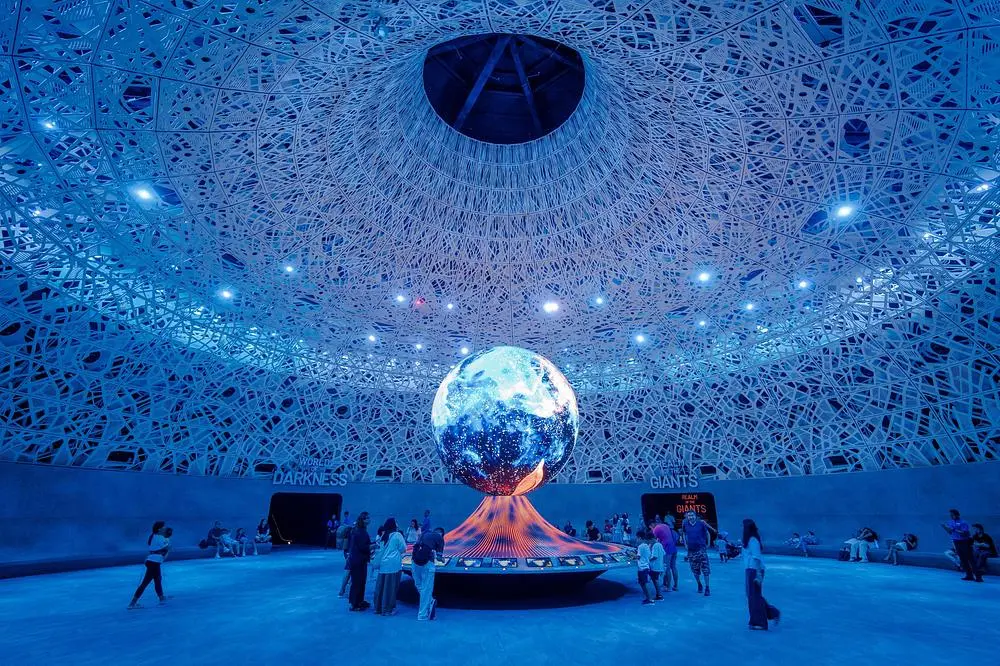
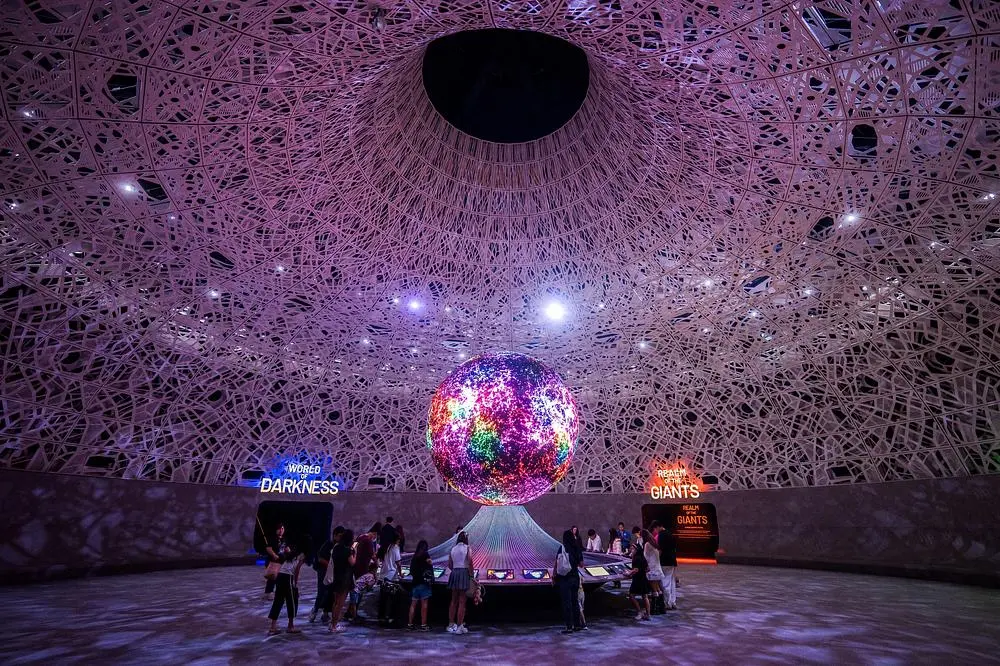
The journey is organized around Our Interconnected World, a central hub that links five distinct thematic realms and introduces the idea that apparently separate ecosystems remain dependent on one another. A monumental digital sphere anchors the space through the multimedia sequence Our Planet Awakens, before visitors move outward into environments that deliberately avoid literal reconstruction. Each world uses scale, abstraction and sensory effects to interpret scientific content, allowing the experience to move between education and spectacle without presenting itself as a conventional natural-history display.
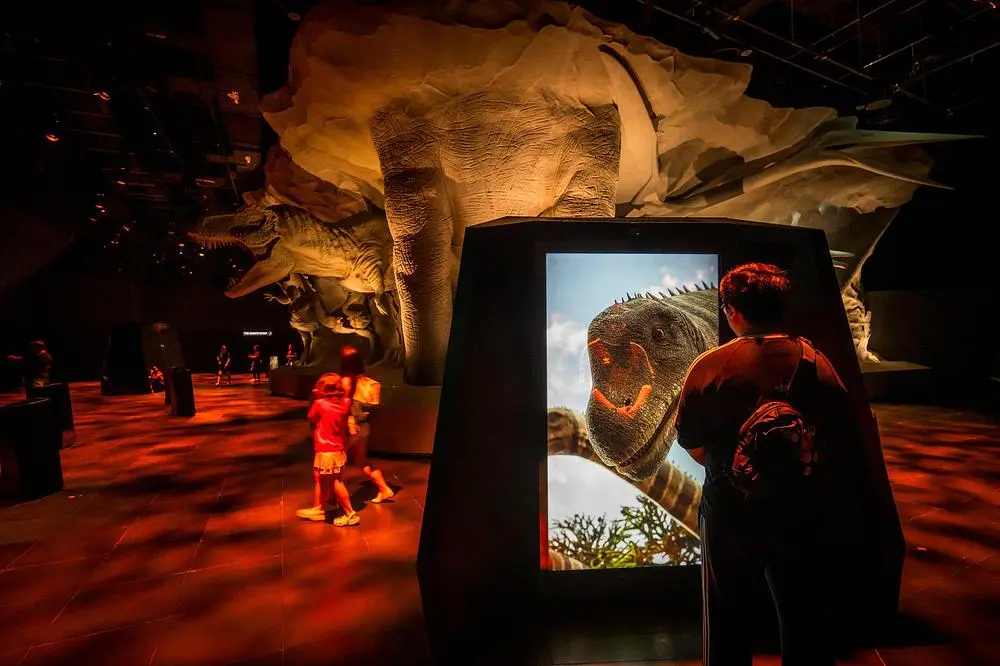
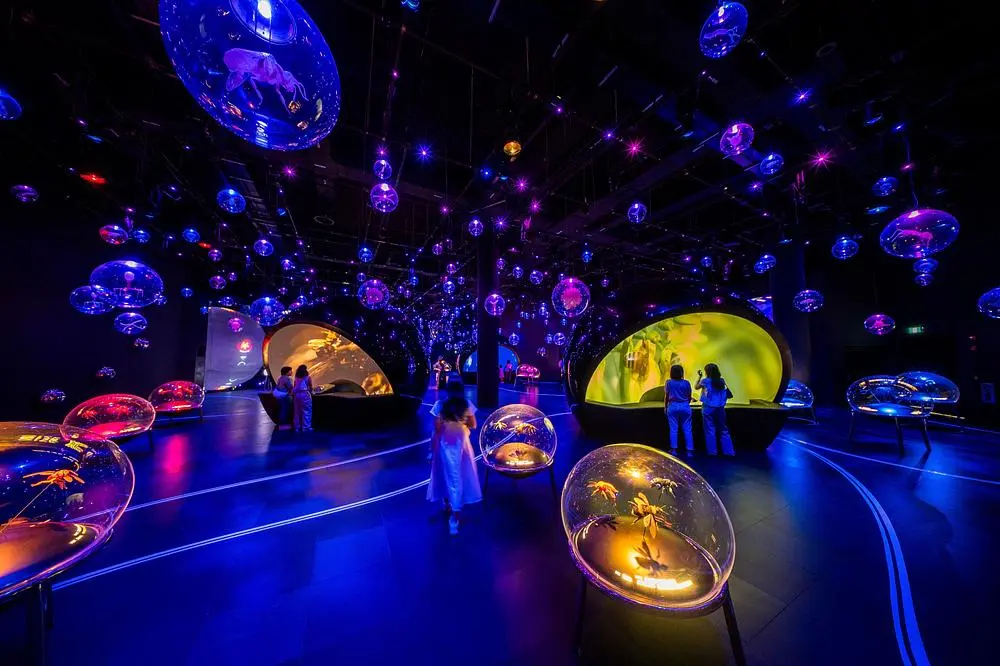
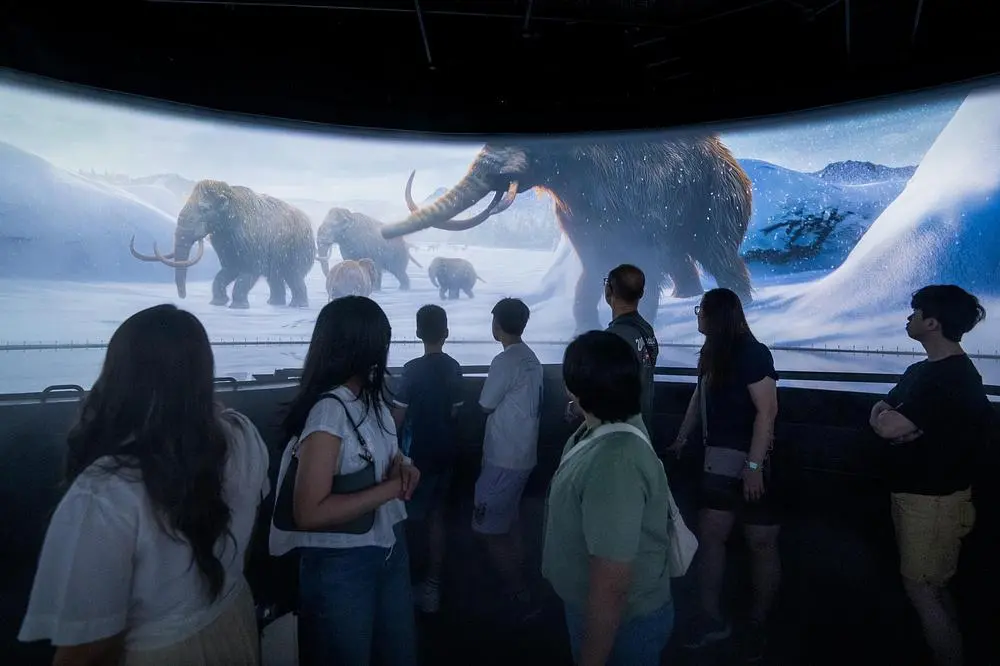
Realm of the Giants expands extinct species to architectural scale through sculptural forms, augmented reality and a 360-degree multisensory show that traces the evolution of life and the recurring threat of mass extinction. Micro Worlds moves in the opposite direction, enlarging organisms that normally remain beyond human perception through illuminated spheres, models and interactive media focused on plankton, fungi, bacteria and insect colonies. World of Darkness then shifts the spatial experience again through labyrinthine environments inspired by caves and deep oceans, where reduced light and changing orientation introduce the sensory adaptations developed by species that live without daylight.
Infinite Wonderland concentrates on biodiversity across rainforests and coral reefs, structuring the visitor journey as a vertical movement from sky and canopy toward the ocean floor, while Bitdeer AI Extreme Frontiers examines survival under environmental pressure. Deserts, polar regions, high-altitude ecosystems and urban habitats are interpreted through mixed-media simulations, including spaces that introduce temperature and wind as part of the experience. Together, the five worlds avoid a single visual language, allowing each environment to respond differently to the scientific conditions it represents.
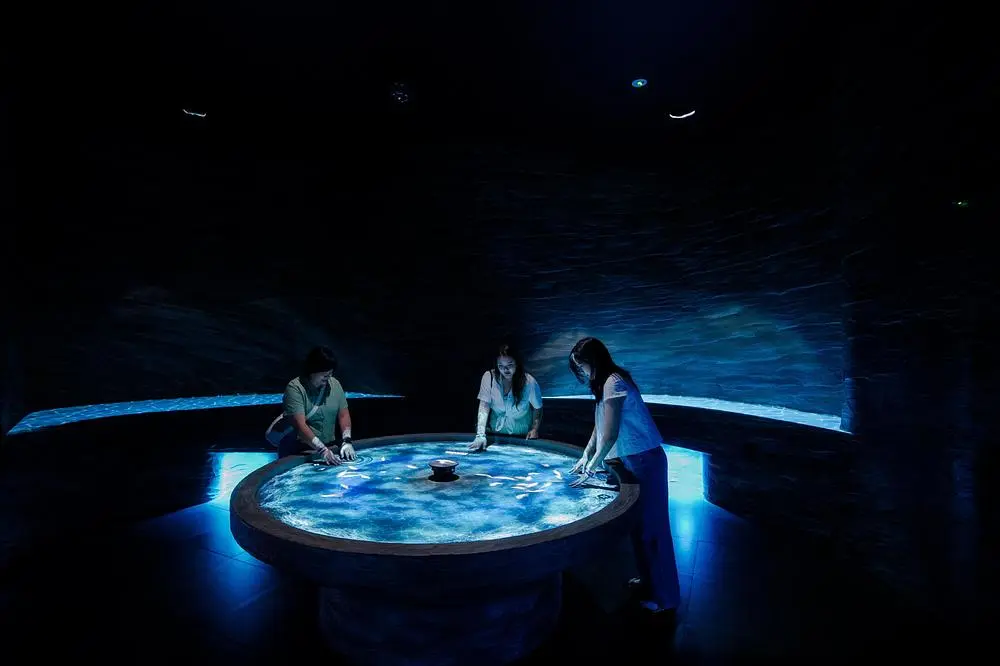
Interaction continues throughout the attraction through an RFID-based system that turns observation into an ongoing personal journey. Visitors activate an Explorer profile, discover species, collect badges, complete challenges and follow their progress across the five worlds, while the central Biopool connects these individual interactions into the broader narrative of interconnected ecosystems. Mandai confirms that RFID wristbands are used throughout Exploria to unlock interactive experiences and gamification rewards, making participation part of the spatial design rather than an additional digital layer.
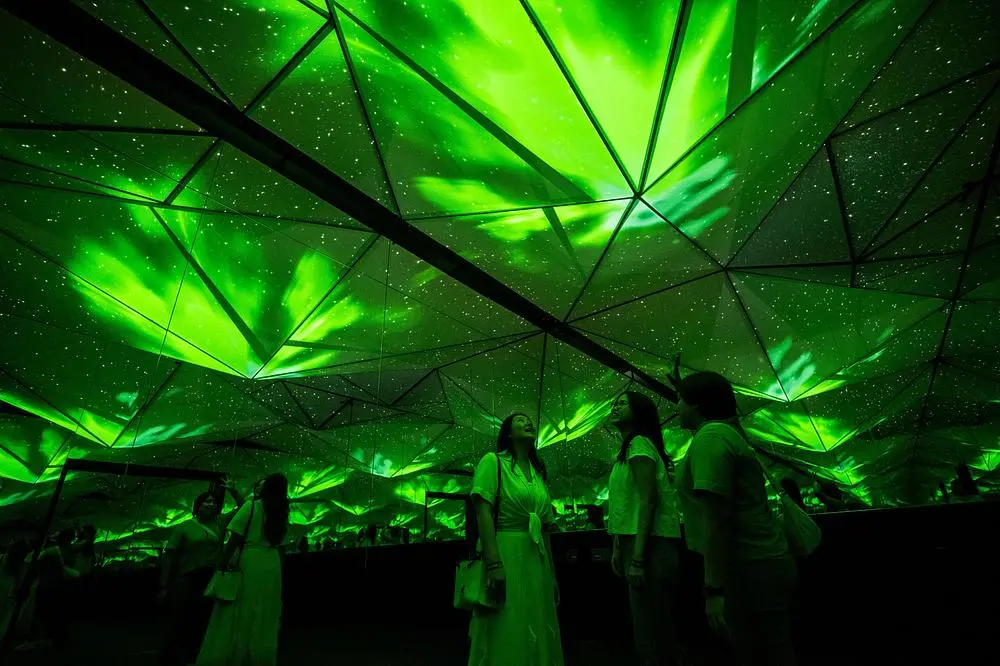
Across Exploria, technology functions as a means of translating distance, scale and scientific complexity into physical experience. The attraction brings visitors into contact with more than 250 species through digital and multimedia interpretation, while recurring conservation messages link discovery with the vulnerability of the ecosystems being represented. By moving between prehistoric life, microscopic organisms, darkness, biodiversity and environmental extremes, Exploria builds a form of immersive storytelling in which nature is not reproduced literally, but reconstructed through perception, movement and interaction.
All images credit: Mandai Wildlife Group