Fernanda Canales designs residence shaped by climate and landscape in Mexico
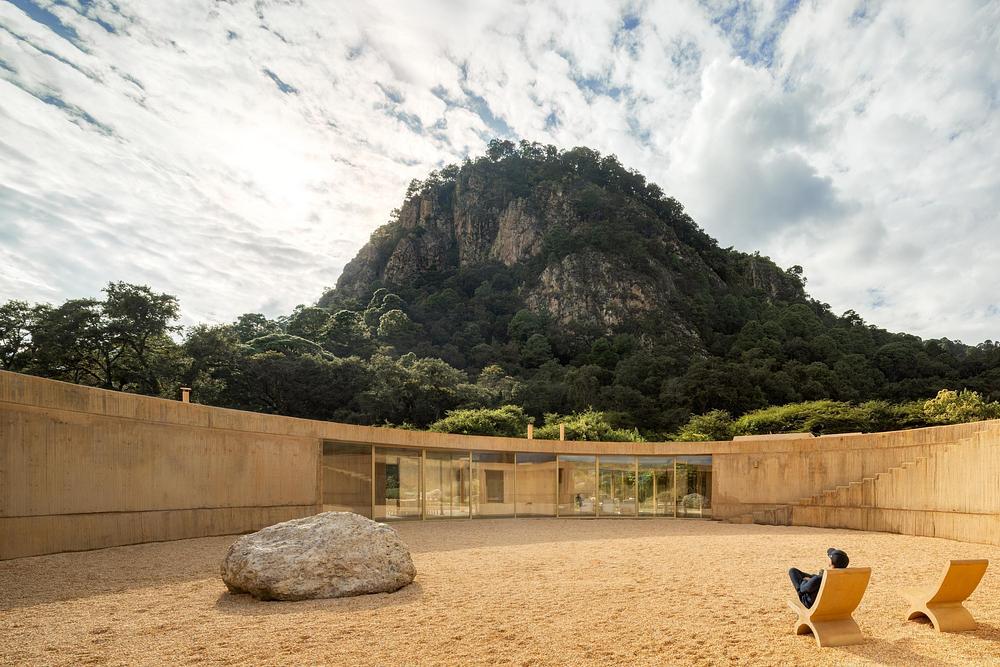
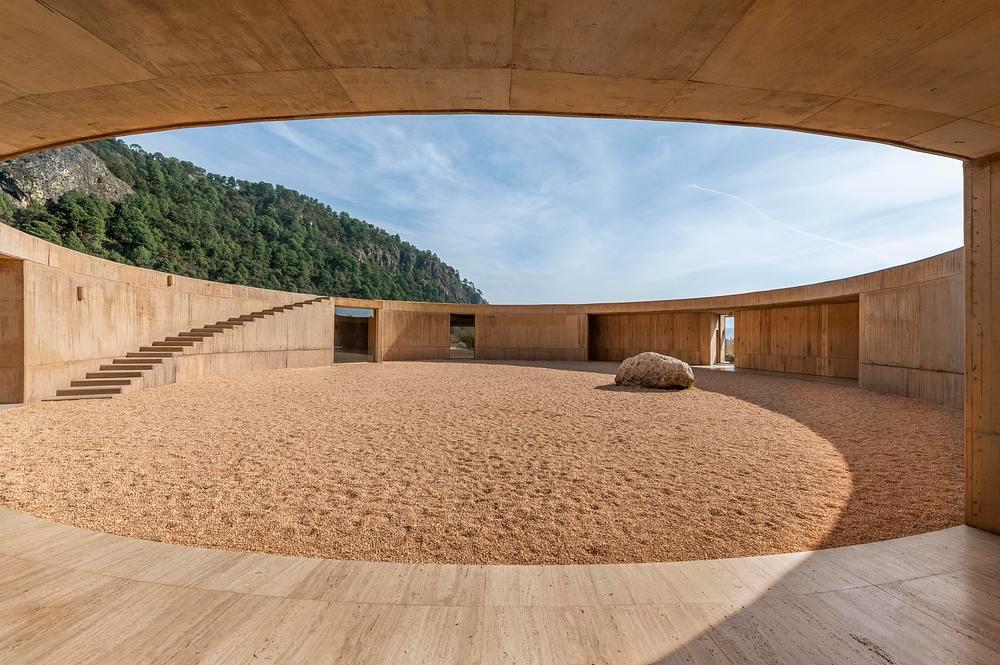
House 720 Degrees by Fernanda Canales functions as a geometric instrument that doubles conventional visual range and organizes domestic life around the passage of time. Its circular form registers the movement of light and shadow throughout the day while at night it centers activity inward toward a courtyard that acts as an observational arena for climate and sound. Designed as an autonomous residence, it responds to seasonal cycles as much as to daily routines and visitor patterns.
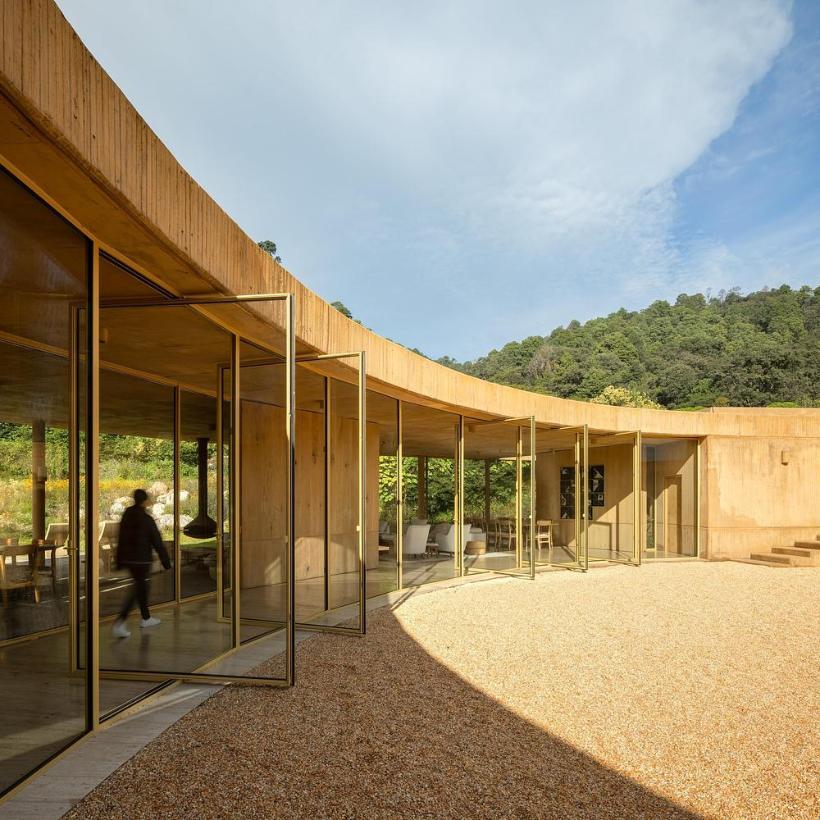
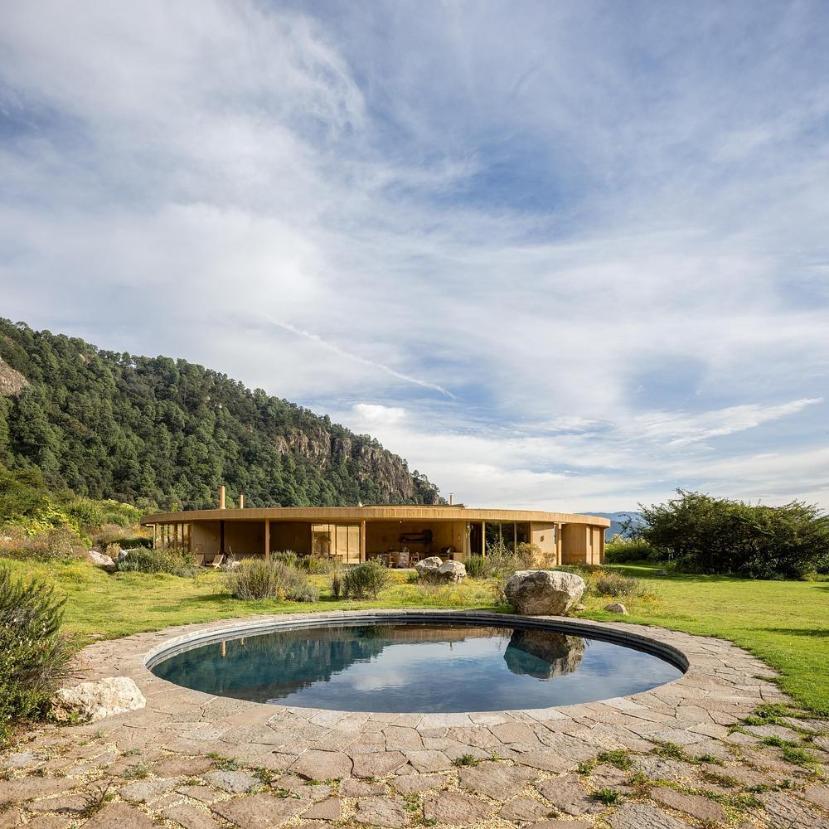
From a spatial standpoint, the residence by Fernanda Canales is composed of three distinct volumes set across an uneven valley. The main circular building contains primary social spaces and private rooms. A detached studio serves as guest accommodations, enabling independence without isolation.
A third rectangular wing positioned along the slope contains bedrooms, storage, and service areas arranged around a secondary patio. The fragmentation follows the topography and retains vegetation, supporting occupation by two related families and extended visitors.
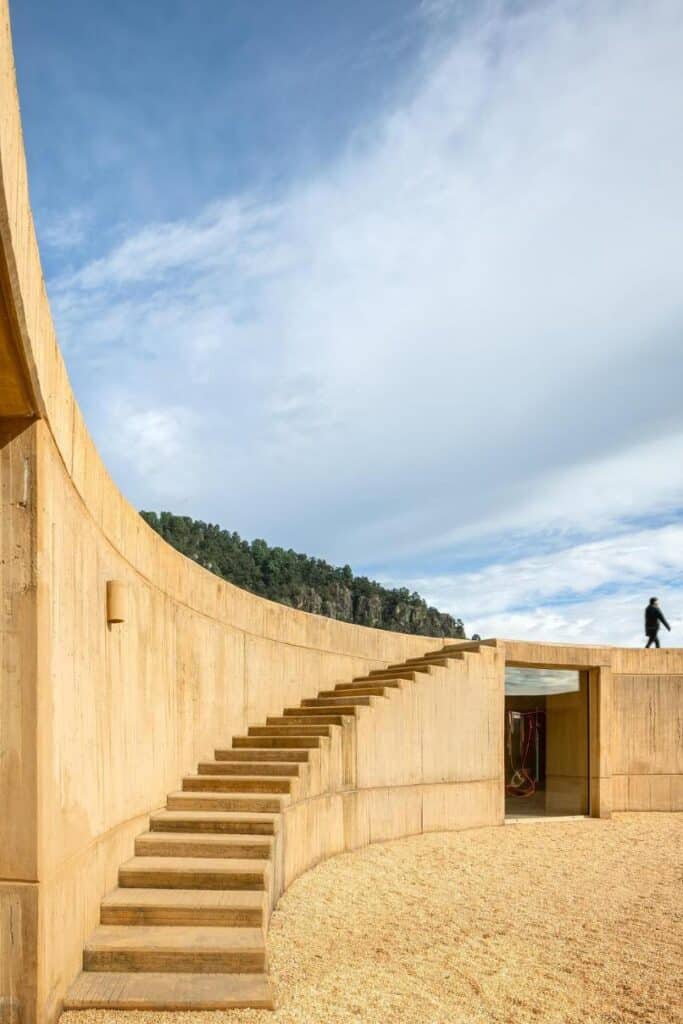
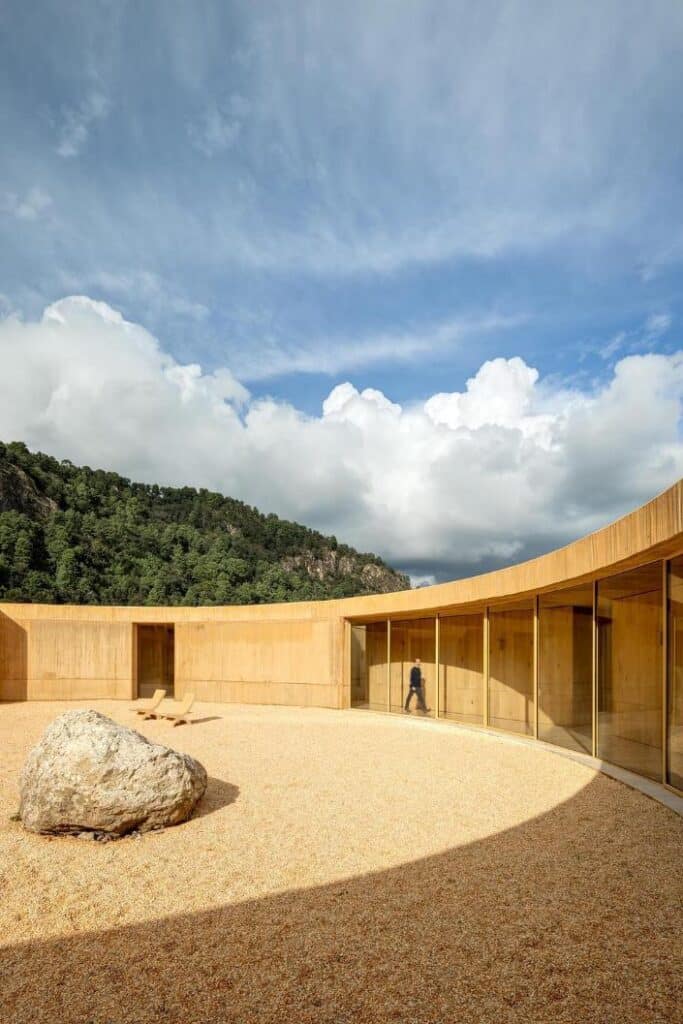
Internally, the circular plan houses rectangular rooms for bedrooms, bathrooms, closets, and kitchen programs. Curved surfaces form a circulation ring that extends as terraces toward the courtyard and outward into the surrounding terrain.
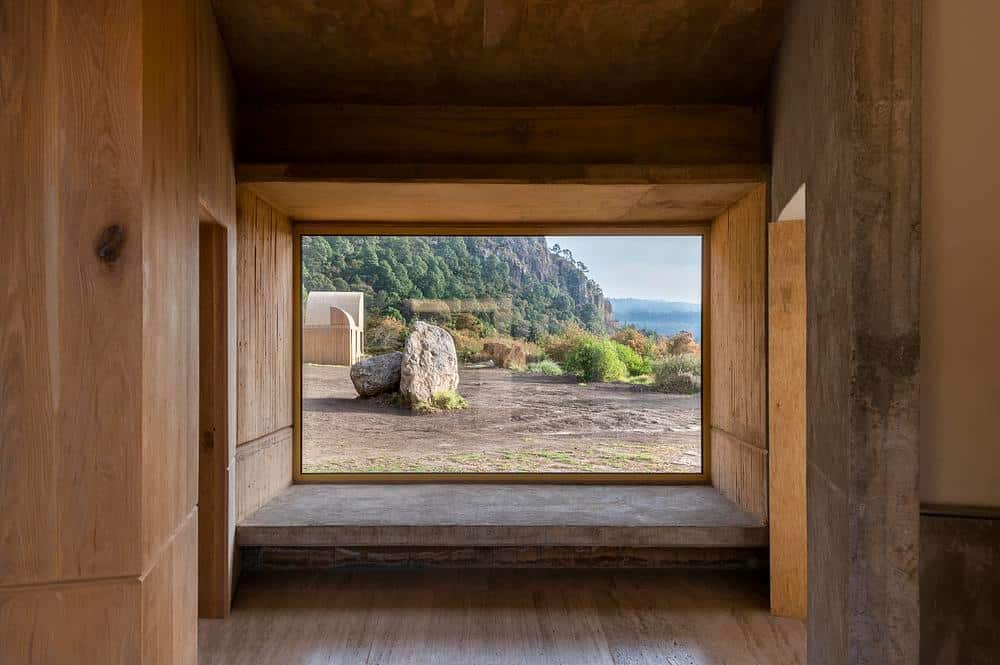
Adjustable openings, privacy screens, and folding panels allow each area to calibrate airflow, daylight, and views. This operability is essential in a location where temperature can vary by 30°C in a single day and rainfall dominates half the year.
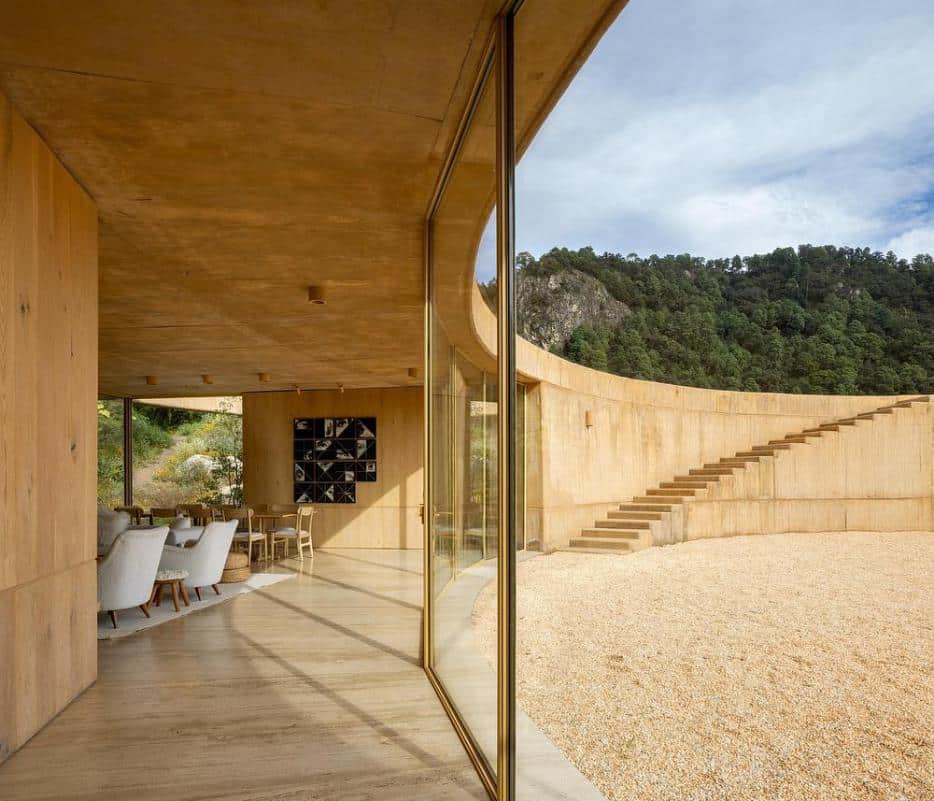
The house sits three hours from Mexico City within a secluded valley where forest and prairie converge. The Fernanda Canales architectural strategy addresses two simultaneous conditions: protection from sudden storms and temperature shifts, and openness toward the broader landscape. The enclosure acts as a membrane that mediates between dry and wet seasons and between the circular center and the exposed perimeter.
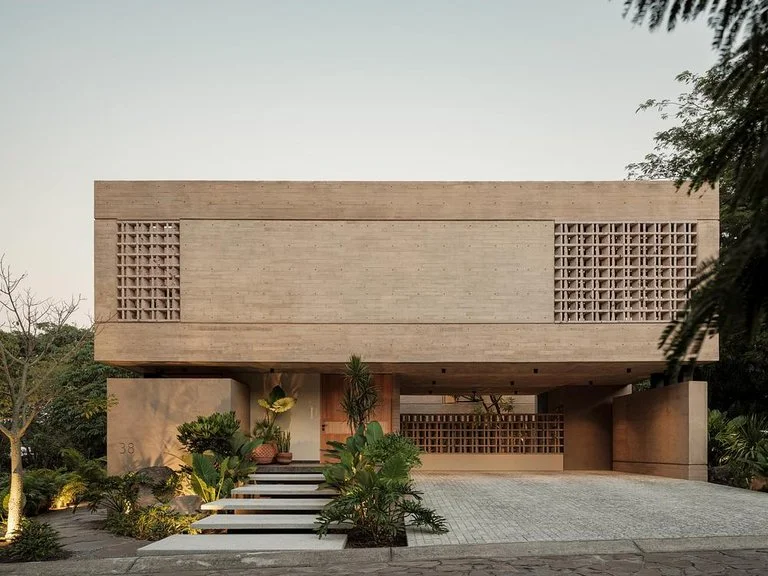
Material and construction decisions reinforce that environmental logic. The building sinks into the terrain and uses soil mixed with concrete to produce a chromatic continuity with the ground. Furniture and lighting were crafted locally, aligning the project with regional labor and resources.
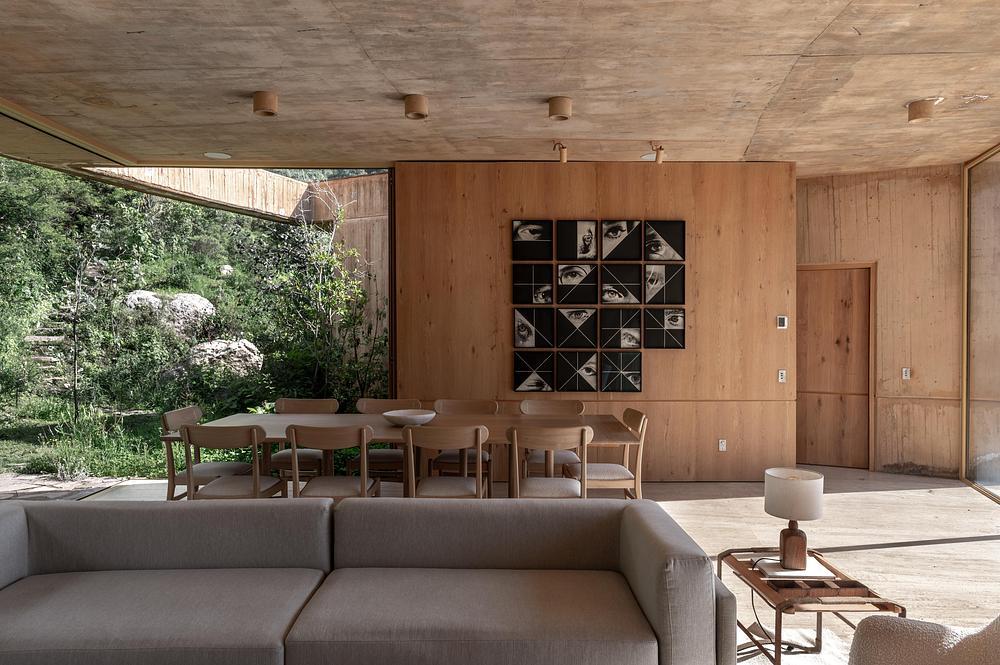
Autonomy defines the infrastructure. Rainwater harvesting, photovoltaic power, and hydronic radiant floors support off-grid operation. Solar energy heats water used throughout the home while cross-ventilation reduces energy dependency.
Durable finishes limit maintenance and replace decorative coverings. As weather patterns shift, surface tones evolve, registering time in a manner consistent with the initial design concept.
Photography by Rafael Gamo, with courtesy of v2com
Fernanda Canales: https://fernandacanales.com/?lang=en