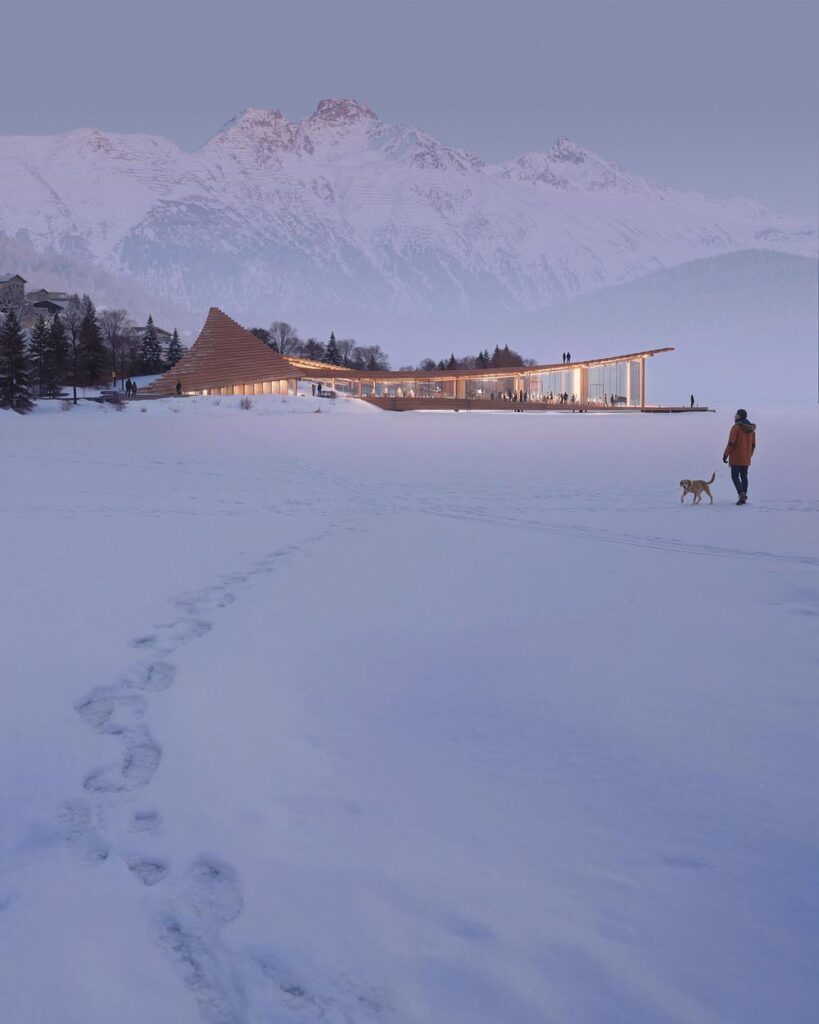
A timber pavilion in St Moritz connects public life and alpine scenery through sensitive design and sustainable construction
The Lake Pavilion “. lacum respira” by .ket bureau gives architectural form to this long-standing relationship without imposing dominance over it. The project approaches the territory through restraint, allowing the structure to read as an extension of the St. Moritz lakeside topography.
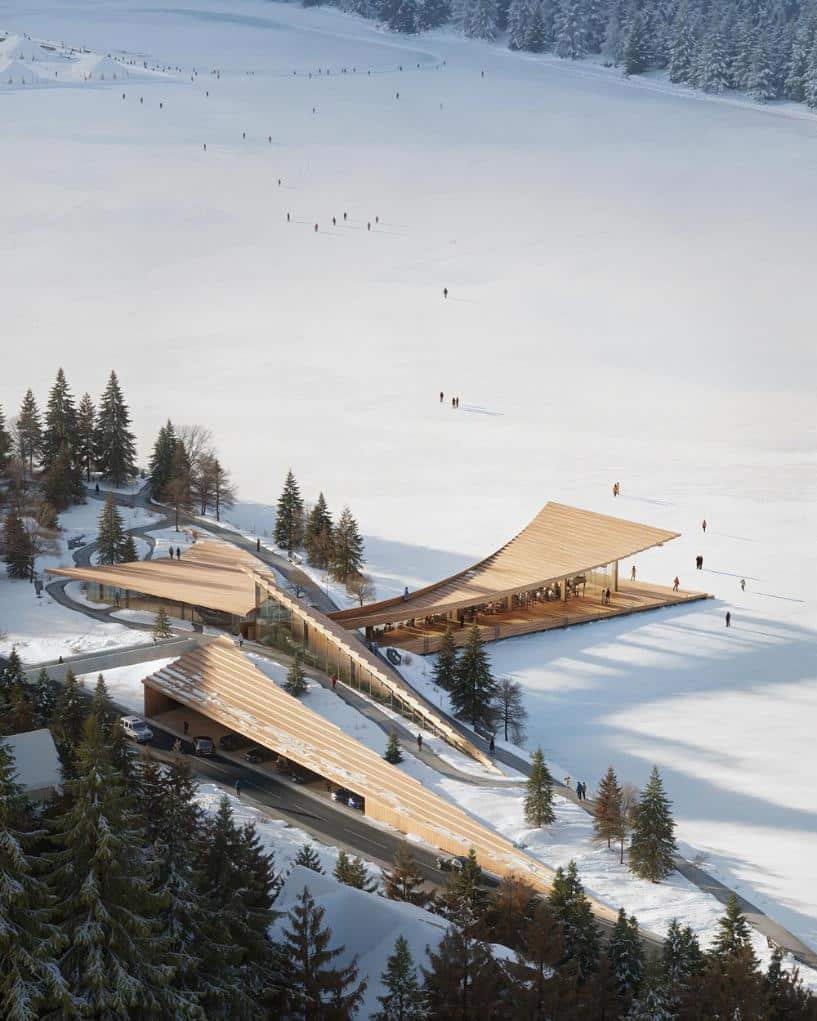
Rather than presenting a singular gesture, it adopts a broken, terraced outline that follows the relief with measured precision. The pavilion built volume leans into the alpine cadence: sloping roofs, horizontal layers, and subtle shifts in elevation recall traditional Swiss construction while introducing contemporary fluidity and technical refinement.
Research into regional typologies became a central instrument in the design process. Historic Engadin buildings provided cues on proportion, use of wood, and the manner in which structures maintain dialogue with snow, shadow, and wind.
Instead of imitation, these cues informed a modern interpretation where natural materials, soft silhouettes, and open spatial sequences maintain cultural continuity. The result is an architecture that participates in the scenery rather than competing with it, allowing mountain lines, tree masses, and the reflective lake to remain the protagonists.
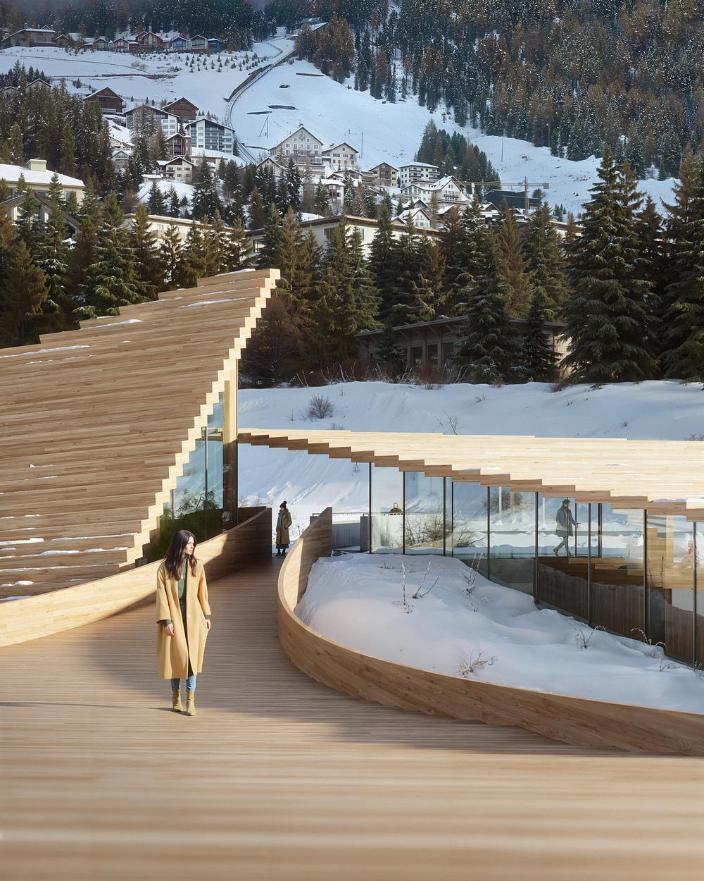
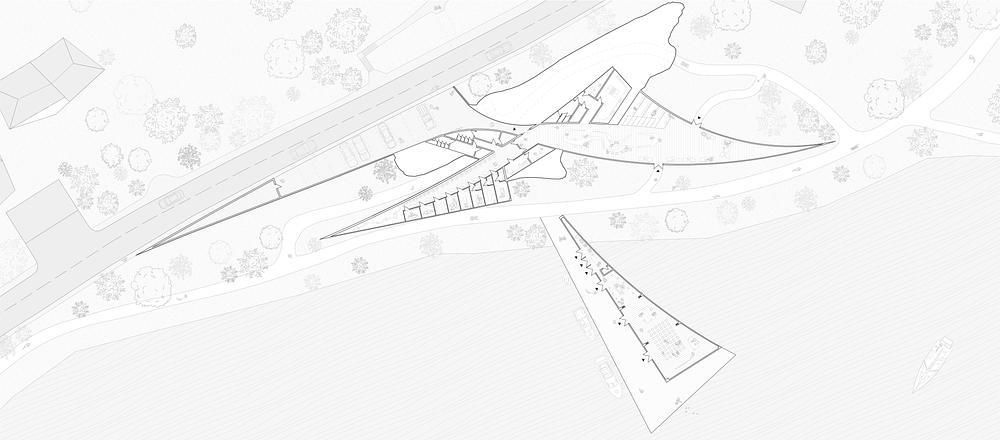
Programmatically, the pavilion serves as a year-round platform for public life. A parking zone transitions into service areas and a restaurant, which opens toward the water through expansive glazed panels that admit daylight and panoramic views. The spa wing introduces a more introspective atmosphere, buffered by carefully controlled light and protected vantage points.
The pier extends outward to accommodate a conference volume and rooftop terraces, creating a point of encounter between the city and the lake where movement, humidity, and open sky converge. Circulations are conceived to dissolve thresholds so that indoor and outdoor zones maintain constant visual and sensory continuity.
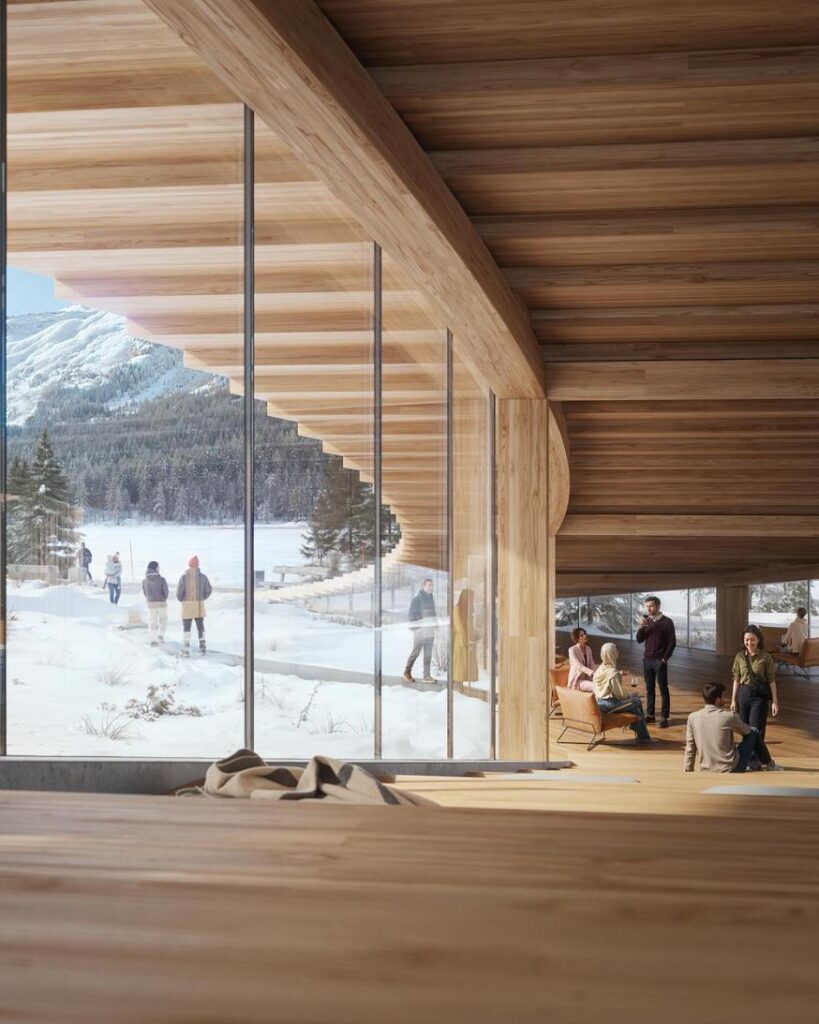
Locally sourced timber defines the structural and tactile identity of the project. Glued ash provides resistant frames and thermal efficiency, while larch columns and pier components ensure longevity against moisture. Concrete foundations supply static stability as a minimal counterweight to the organic surfaces above.
Natural oils and environmentally conscious treatments preserve color and grain, allowing the architecture to recede into seasonal chromatic variations. Cross ventilation, solar gains, and optimized openings reduce energy demands, supporting a sustainable footprint consistent with the alpine environment. The pavilion ultimately acts as a measured gesture, listening to the terrain and translating the quiet pulse of the lake into built space.
All images by .ket bureau via v2com