Stanton Williams and Asif Khan Studio transform Smithfield Market into London Museum
The new London Museum in Smithfield will open on 28 November 2026, occupying one of the British capital’s most significant Victorian market buildings. Architecture practice Stanton Williams, working alongside Asif Khan Studio and conservation architects Julian Harrap Architects, has spent a decade adapting the historic General Market into a museum of urban history and contemporary culture. The £437 million redevelopment returns a building that had remained largely inaccessible for more than three decades to public use.
Originally designed by Sir Horace Jones and opened in 1883, the General Market operated for over a century before closing in the 1990s. Its restoration preserves the architectural character of the Victorian structure, from the original iron columns and decorative metalwork to the historic shopfronts surrounding its perimeter. More than 70 trades contributed to the redevelopment, including specialist coppersmiths, stonemasons and blacksmiths. Original signage and surviving fireplaces introduce traces of the building’s former occupation throughout the museum, while the expansive glazed roof allows daylight to reach the former trading floor.
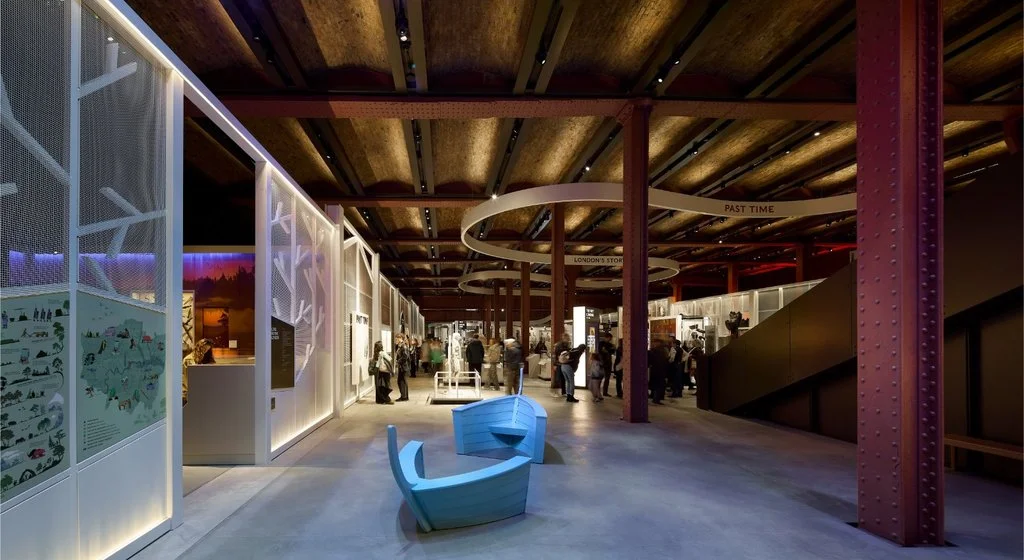
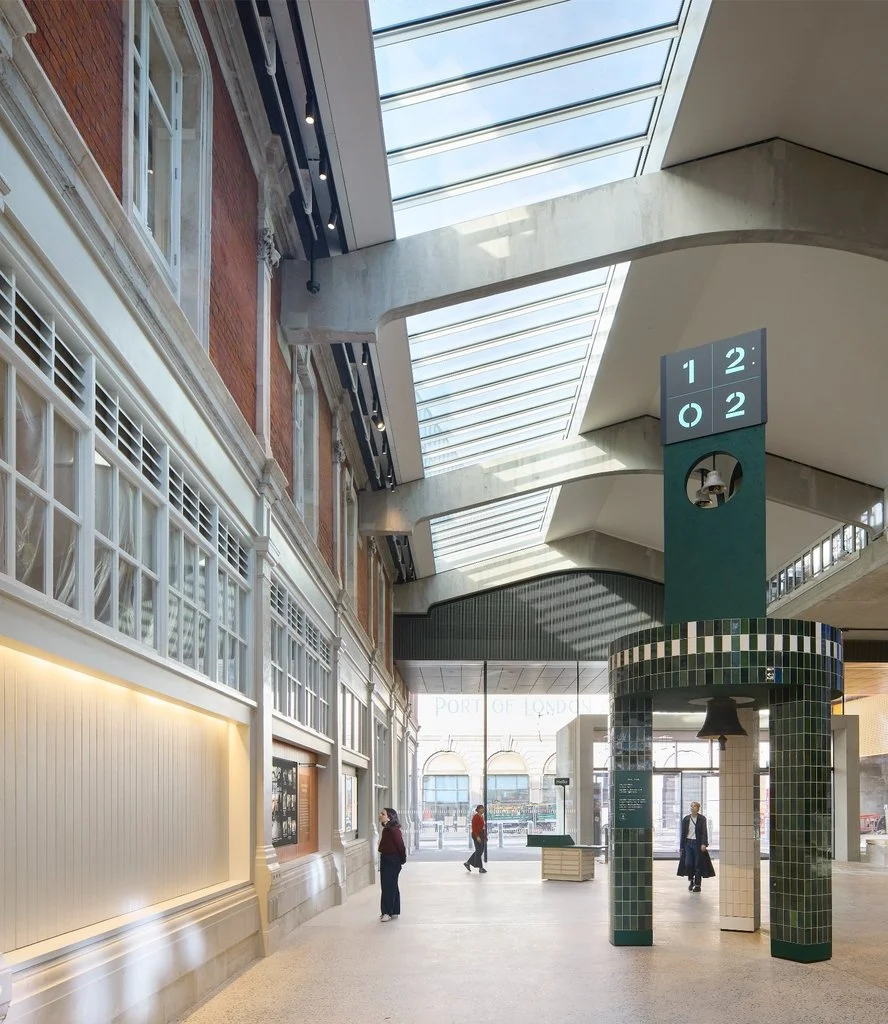
The architectural programme of London Museum is organised around three distinct spaces: Real Time, Our Time and Past Time. Visitors enter through West Poultry Avenue, a former street adapted into a covered entrance where digital displays respond to the changing rhythms of London. Fragments of pottery and Victorian clay pipes incorporated into the flooring provide a physical record of earlier generations. A clock tower houses the final bell produced at the historic Whitechapel Bell Foundry, which will mark the museum’s opening each morning.
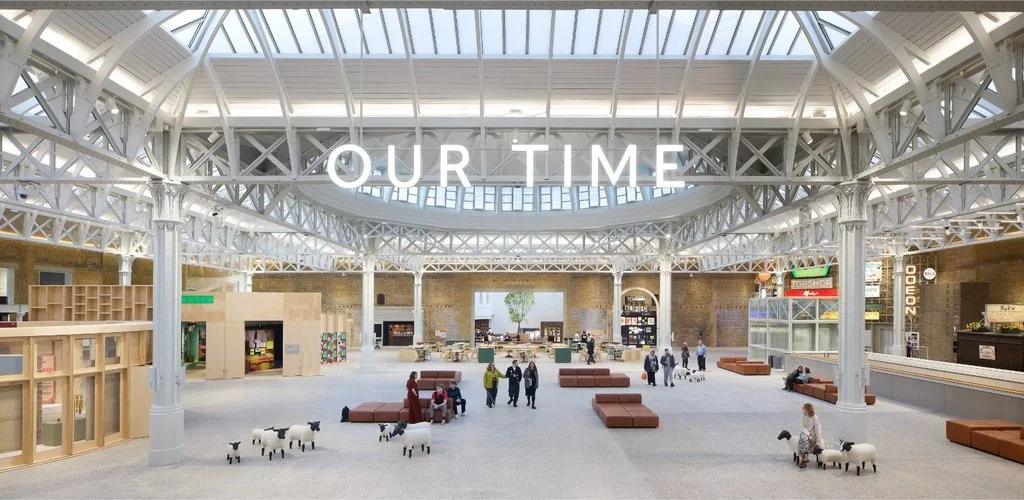
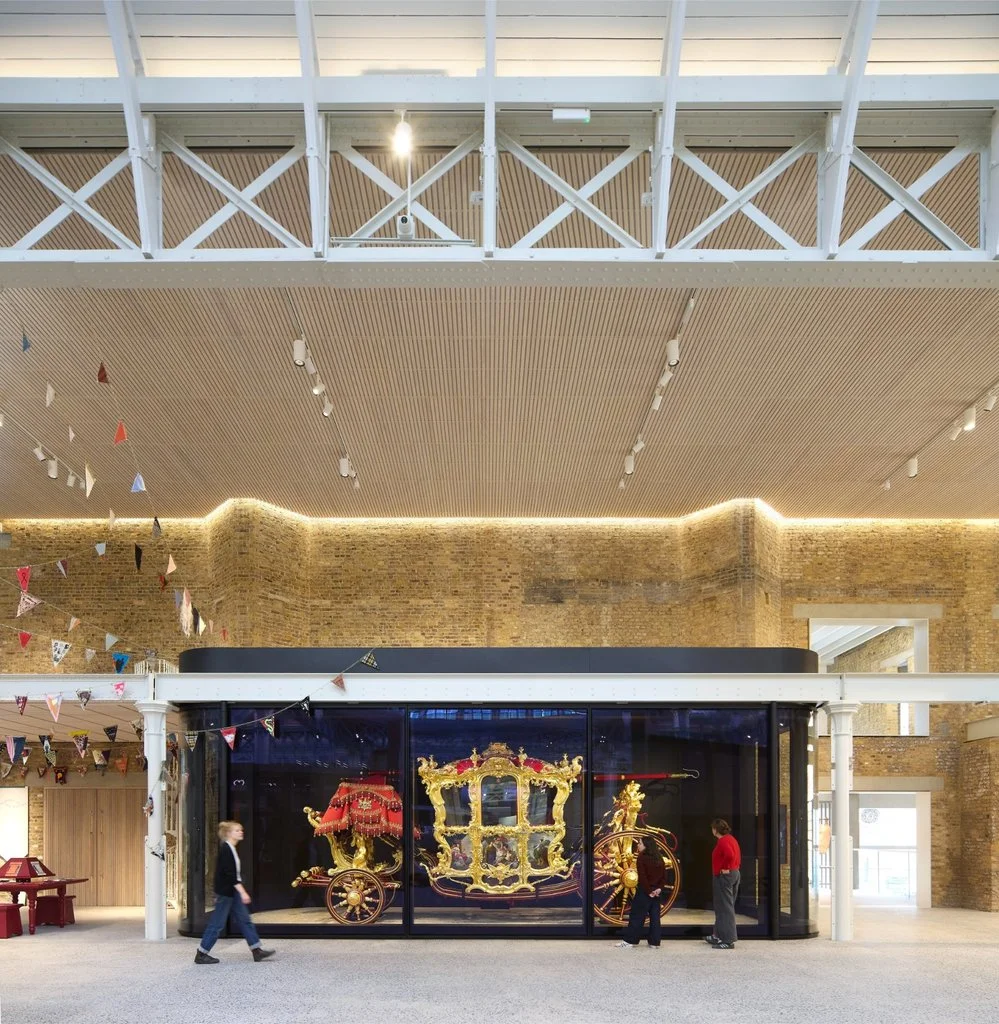
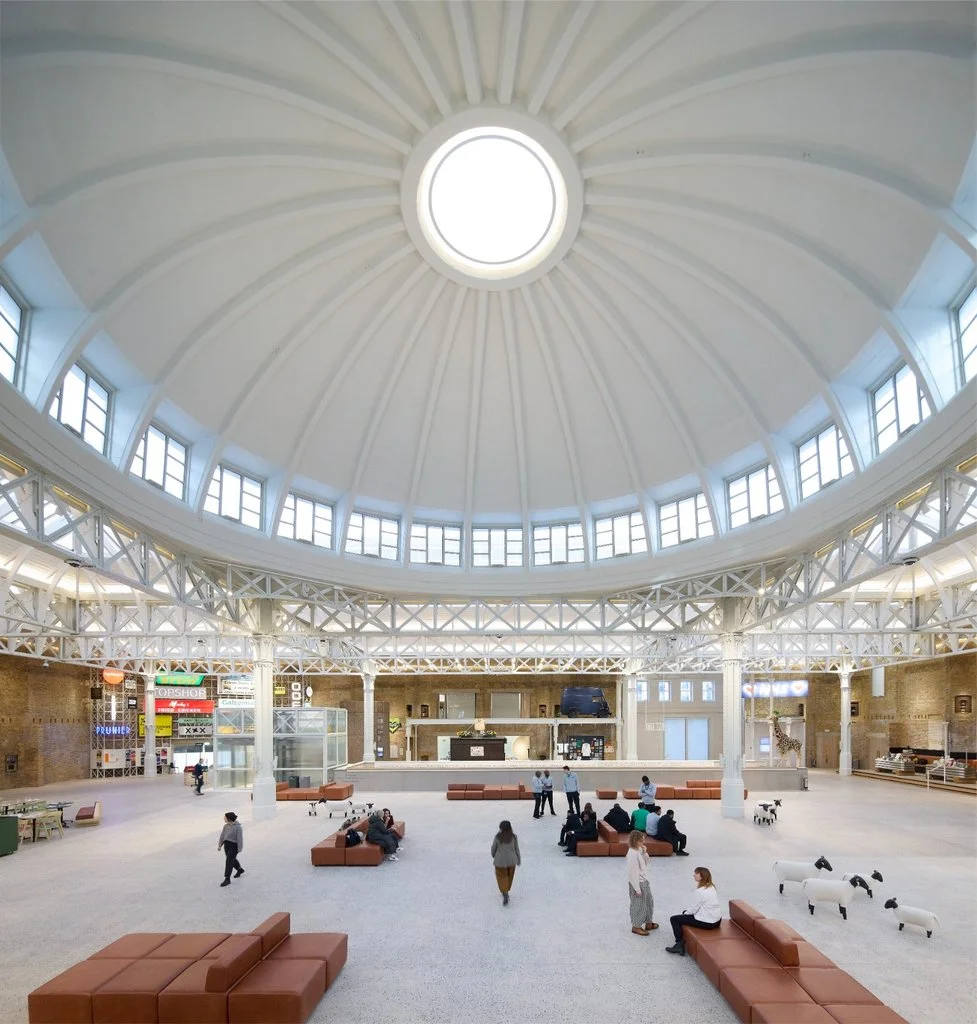
The former trading floor accommodates Our Time, a generous public hall where the scale and openness of the market remain largely intact. Exhibition installations are positioned alongside a restaurant, retail spaces and facilities for educational and cultural activities. Among the objects on display are the Lord Mayor’s State Coach, dating from 1757, and Syd’s Coffee Stall, a familiar feature of East End life for more than a century. The hall will also accommodate performances, communal dinners and social gatherings, extending its function beyond that of a traditional museum gallery.
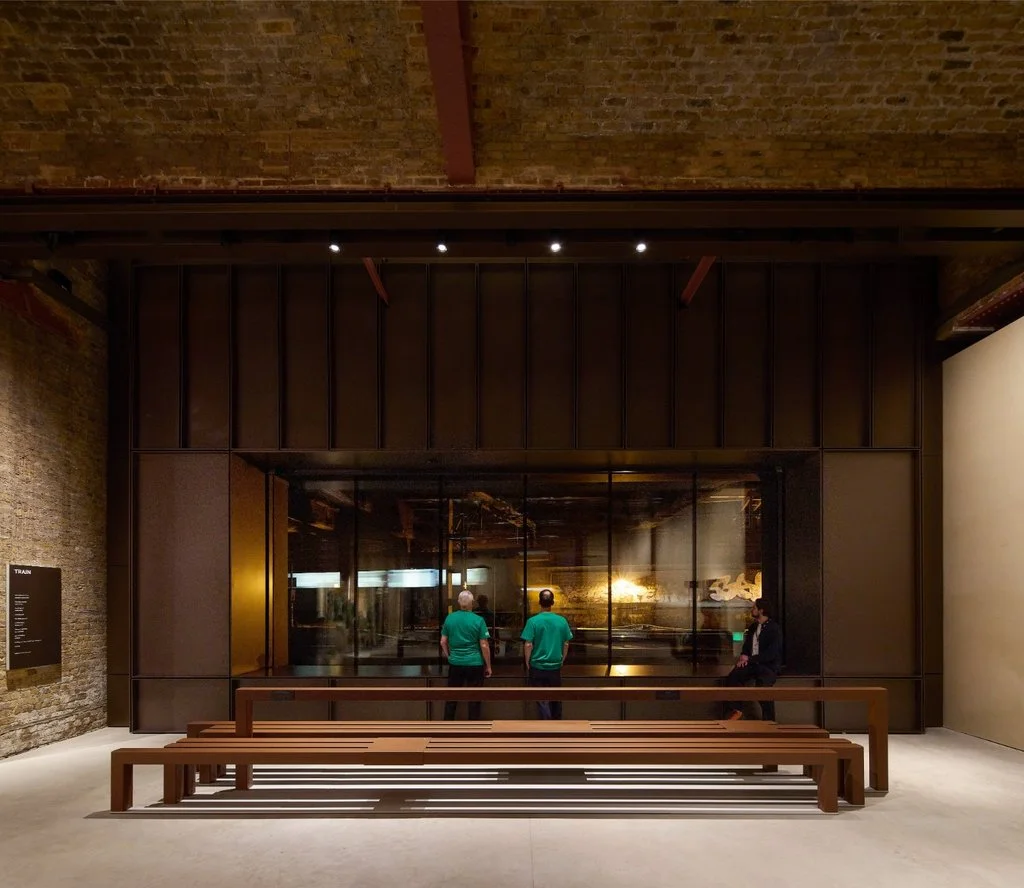
Below ground, the architecture reveals another dimension of London’s history. A six-metre-wide viewing window allows visitors to watch Thameslink trains passing beside the exhibition galleries. This direct encounter with the city’s operating railway infrastructure distinguishes the project from more conventional approaches to museum design. Like the conversion of Cape Town’s former grain silos into the Zeitz MOCAA by Heatherwick Studio, the Smithfield redevelopment uses the existing building and its infrastructure to inform the museum experience.
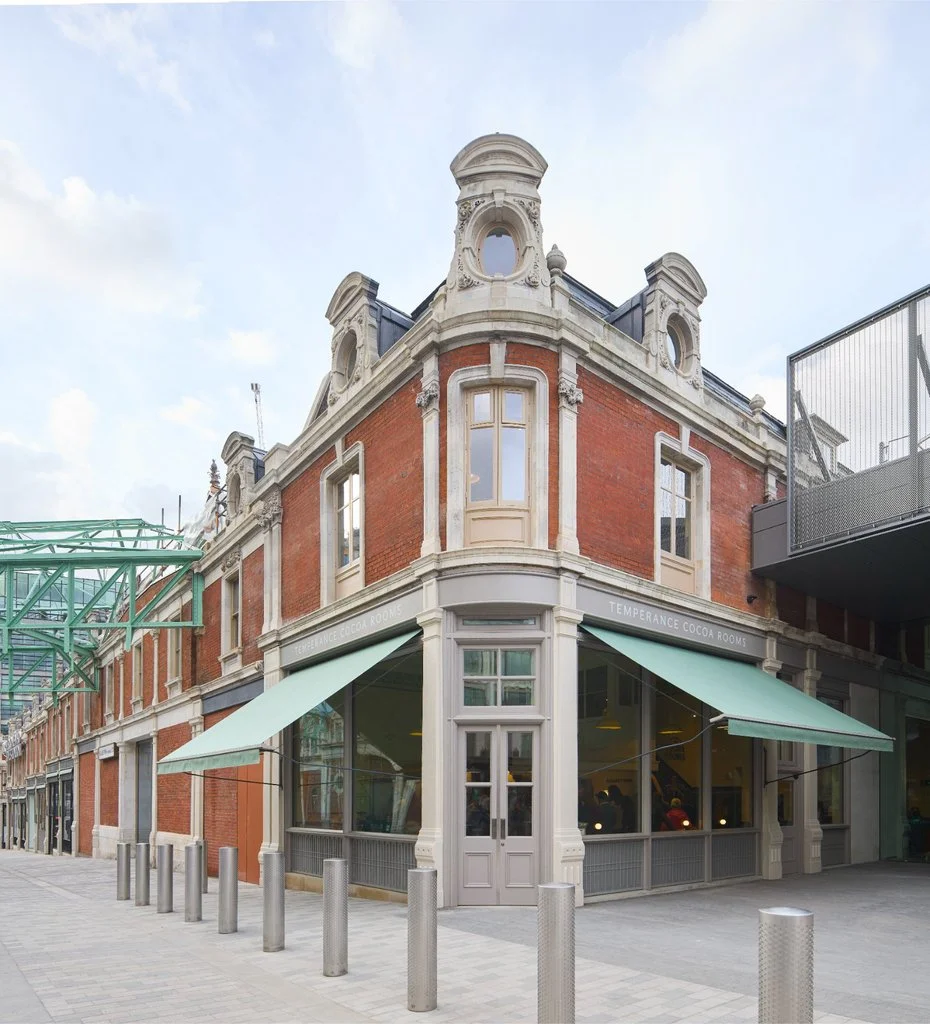
The opening of the General Market represents the first stage of a wider cultural redevelopment. An 800-square-metre network of underground vaults, rediscovered during construction in 2019, will welcome visitors in spring 2027 with an exhibition dedicated to Roman London, incorporating spatial sound and digital projections. The adjacent Poultry Market is scheduled to open in 2028, providing two temporary exhibition galleries, a dedicated learning centre and collection storage. The historic shopfronts surrounding London Museum will also accommodate independent organisations, including a children’s arts charity and a pub, maintaining the building’s connection to everyday street life.
All images courtesy of London Museum