Lishui Airport opens in Zhejiang as a civic aviation gateway
MAD’s Lishui Airport in Zhejiang has officially opened, bringing the city into China’s national aviation network through its first direct air connection and completing a project that began in 2008. After 17 years of planning and construction, the airport introduces a major piece of public infrastructure to southwestern Zhejiang while responding to the geographic realities of a mountainous region long shaped by difficult access and layered terrain.
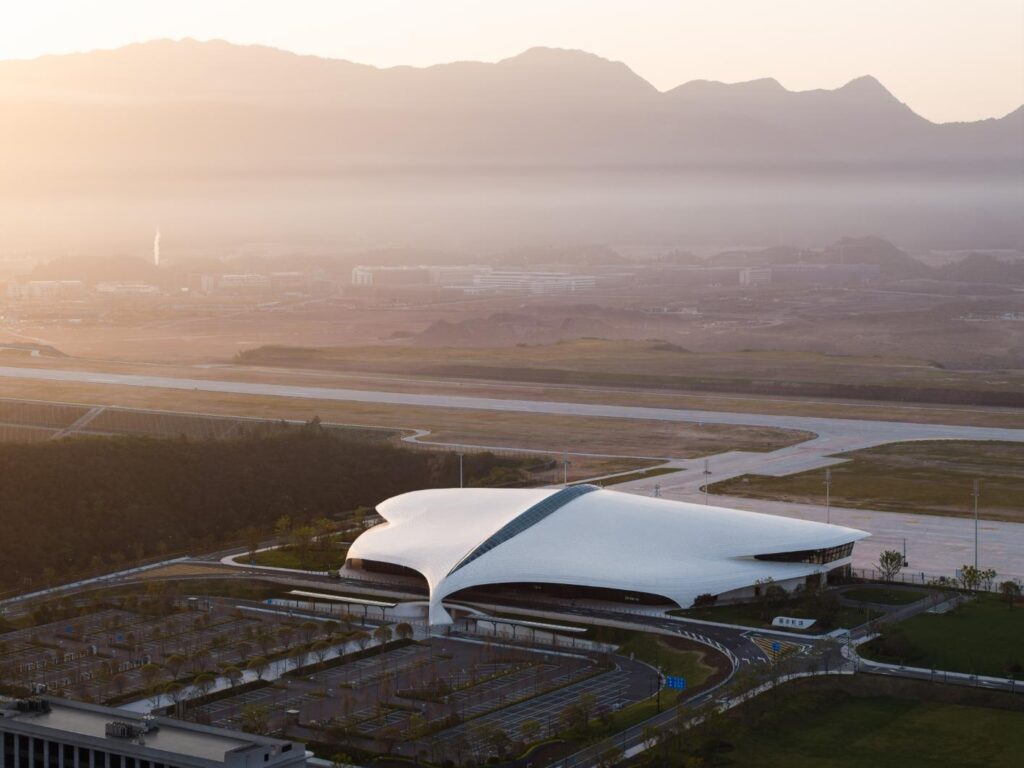
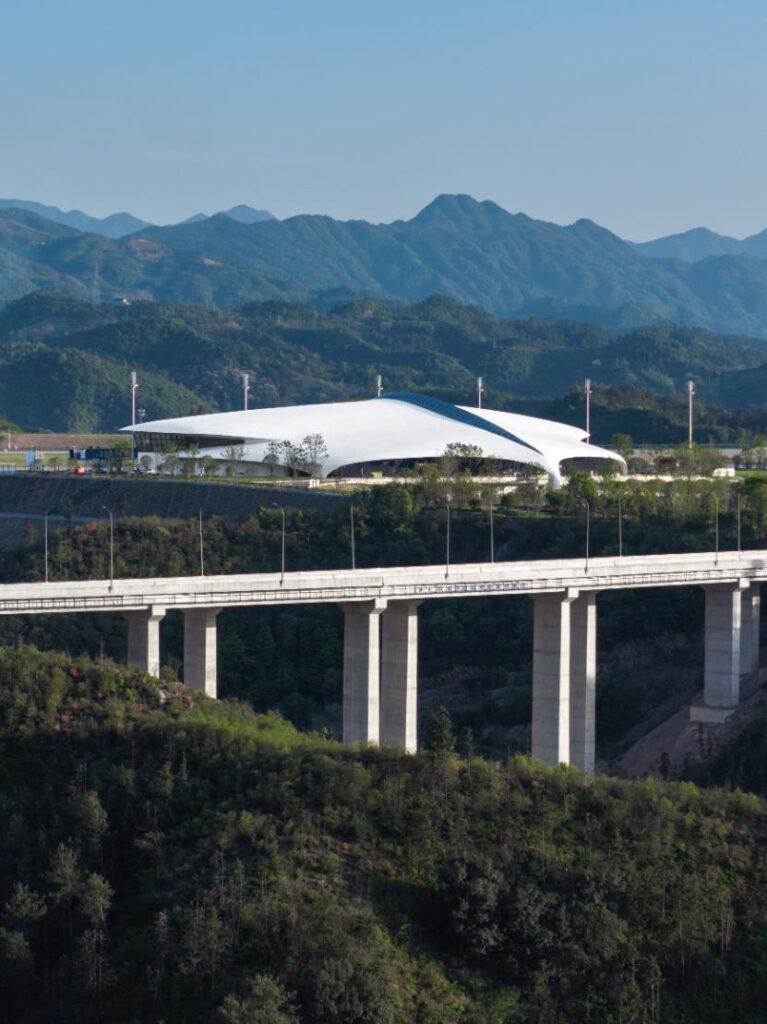
Located around 15 kilometres southwest of central Lishui, the airport occupies a low mountain and foothill valley that required extensive land reclamation and heavy earthworks. Cut and fill differences reportedly reached close to 100 metres in some zones, placing Lishui Airport among the most topographically demanding airport projects in East China. This engineering context is central to the project’s identity, as the architecture and site planning are directly informed by the land’s slope, elevation shifts, and valley structure.
The broader airport site covers 2,267 hectares, while the terminal building measures about 12,000 square metres and includes eight aircraft parking bays. In its first phase, Lishui Airport is planned to serve up to one million passengers per year, with cargo throughput capacity of 4,000 tons. These figures position the airport as a regional gateway with the ability to support both mobility and economic development as Lishui expands its links to domestic destinations.
Designed by MAD, the terminal proposes an airport model that extends beyond transport efficiency. Instead of treating the building as isolated infrastructure, the project frames the terminal as a civic space and ecological landmark, while also shaping a calmer psychological transition for passengers moving between city, landscape, and flight. This approach reflects MAD’s broader interest in architecture that mediates between urban systems and natural settings through fluid forms and human-centered spatial sequences.
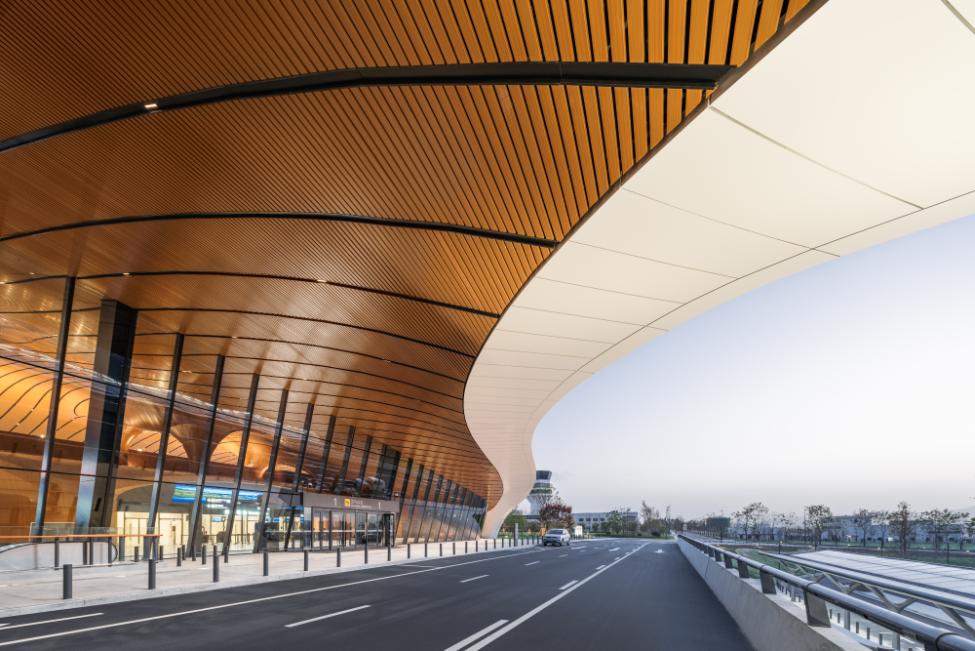
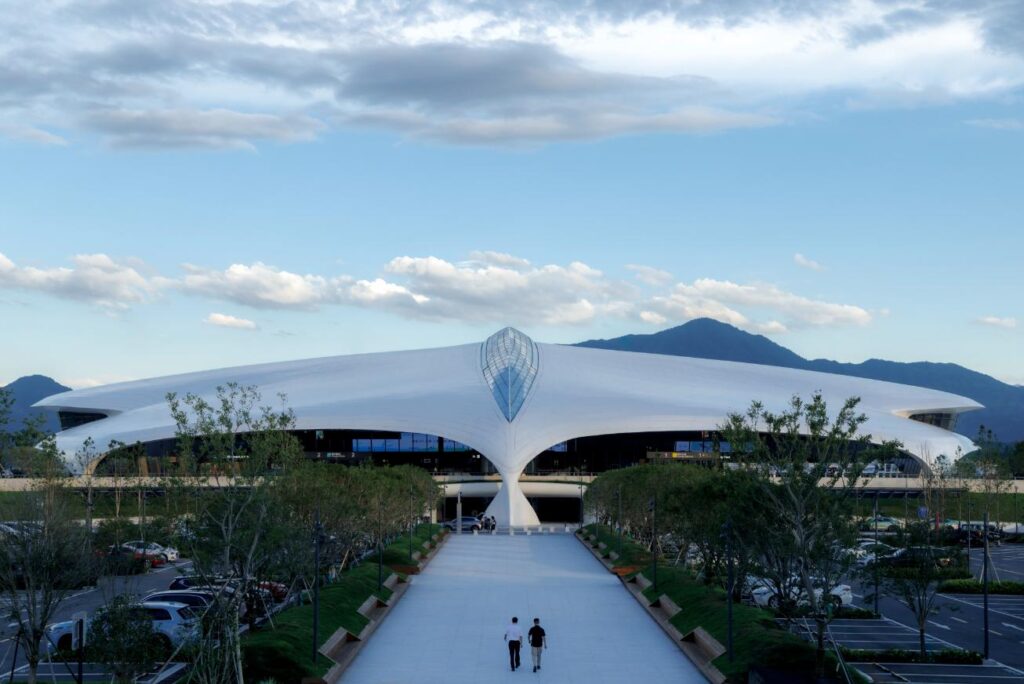
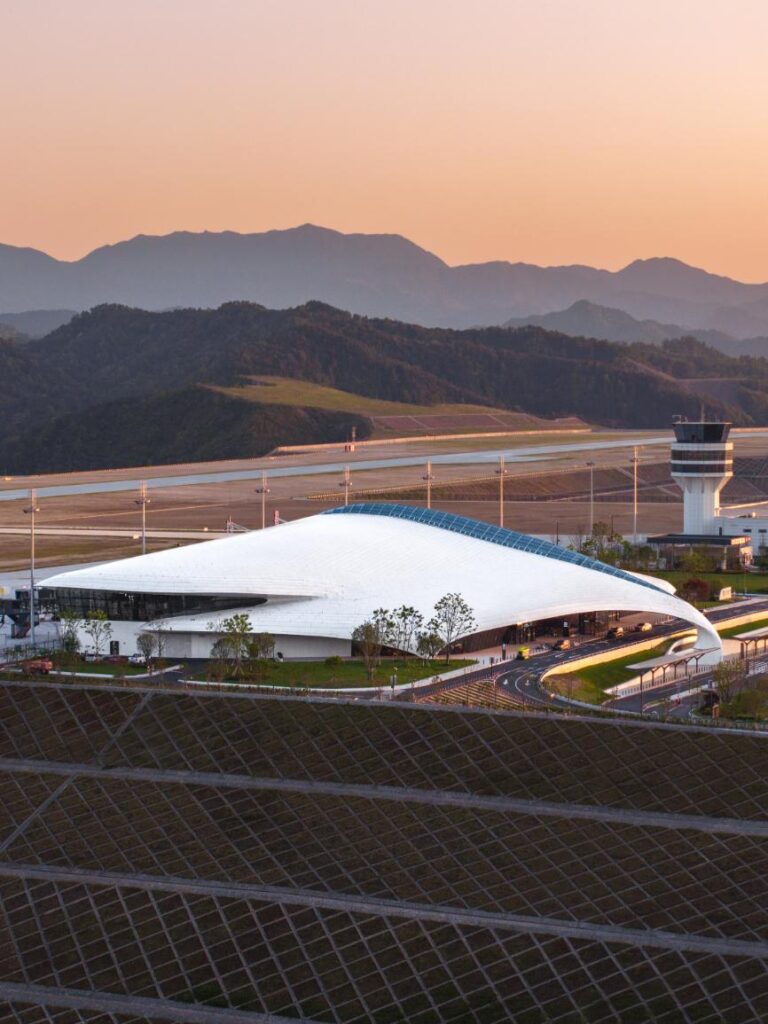
The terminal follows the site’s contours with a gently sloping form that visually integrates into the terrain. Soft, continuous volumes and fluid geometries give the building the character of a white bird resting among mountains and forests. Its double-layered roof, clad in silver-white aluminum panels, produces a compact silhouette that changes with light and weather, while referencing mist-covered hills and birds in motion.
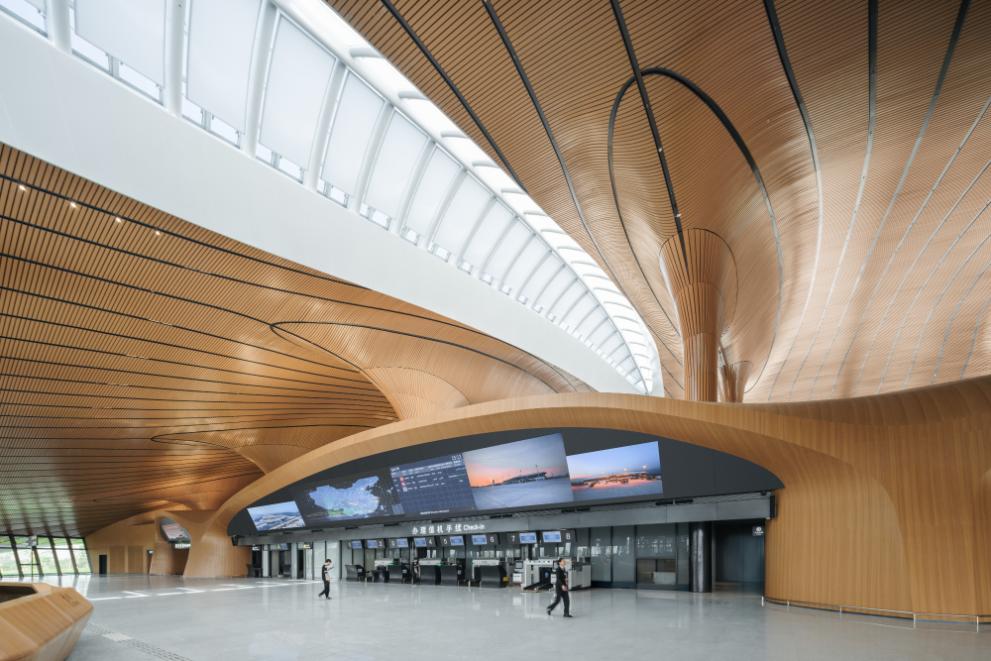
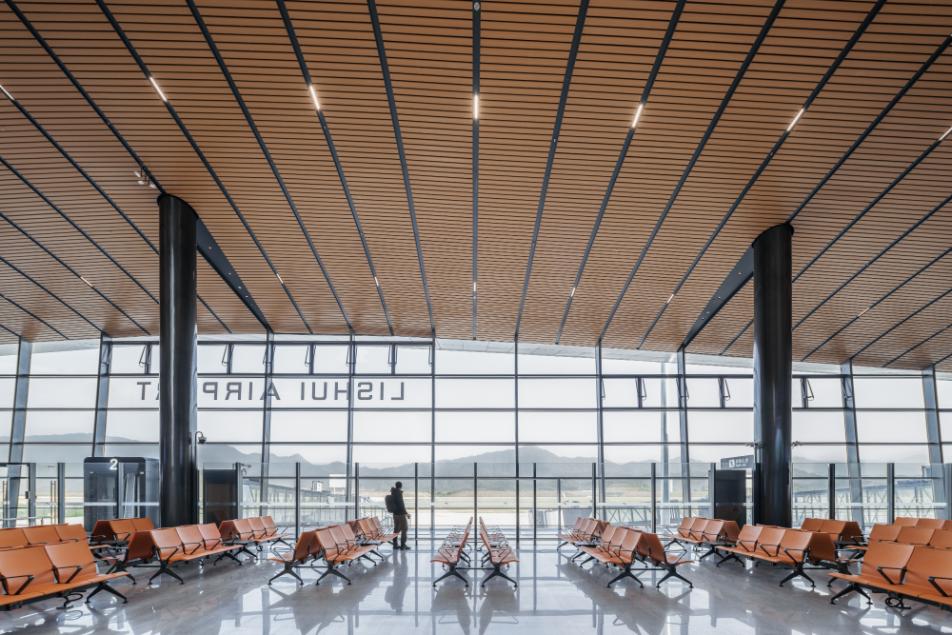
Inside, a one-and-a-half-story layout supports efficient circulation and a more comfortable scale. Fourteen umbrella-shaped columns carry the lightweight roof, wood-toned grilles add warmth, and a spindle-shaped skylight draws daylight deep into the terminal. Transparent curtain walls open views to surrounding mountains, while varied lobby heights and integrated acoustic slots improve comfort and reduce noise in waiting areas.
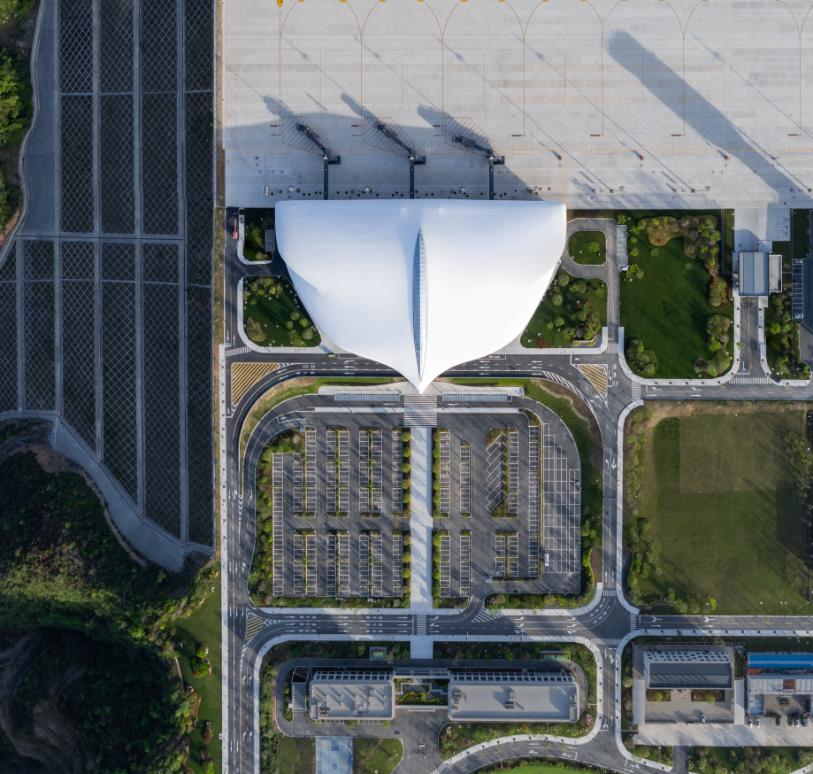
A sunken parking structure and landscaped central promenade continue the terrain-responsive strategy below the terminal, guiding passengers toward departures with clear movement lines. The long-term plan projects growth to 1.8 million passengers by 2030 and 5 million by 2050, with space reserved for a future international terminal, positioning Lishui Airport as both infrastructure and civic gateway.
Photography by Ding Junhao, CreatAR Images, blackstation, Arch Exist