Projet Paysage designs Espace citoyen des Confluents as living infrastructure
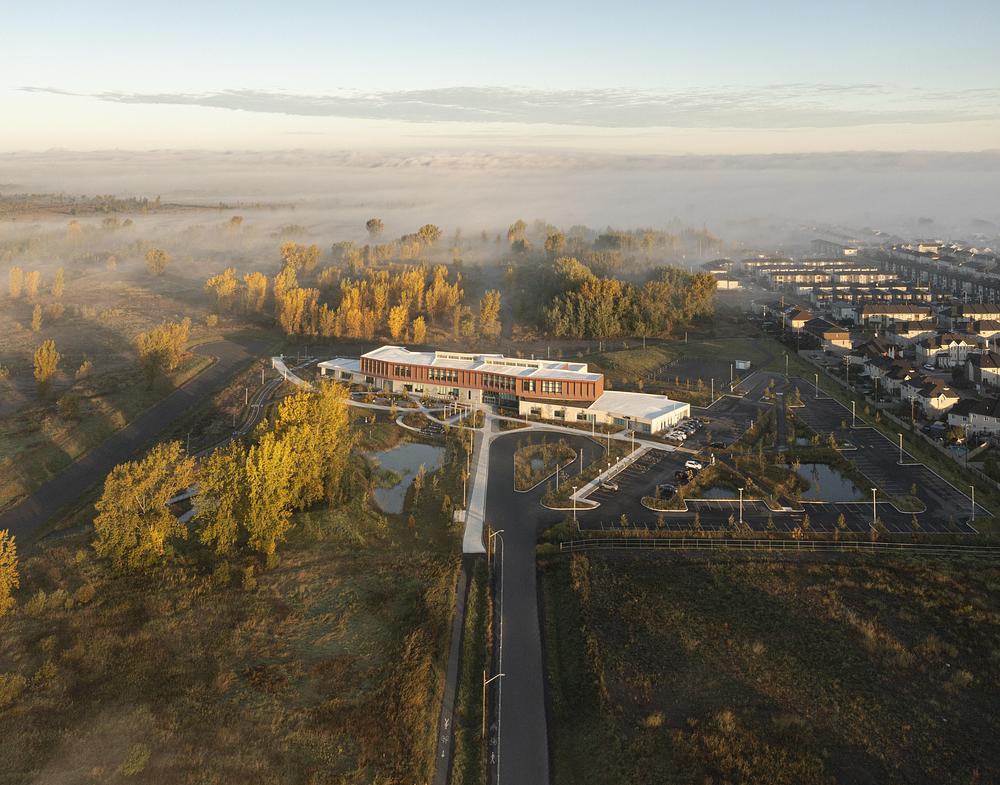
Espace citoyen des Confluents by Projet Paysage is a civic landscape project in Laval that redefines post-industrial land through ecological regeneration and public infrastructure. Developed in collaboration with Cardin Julien, the 13-acre site integrates a library, cultural spaces, and municipal services within a landscape framework that supports community life while restoring environmental systems. Located at the intersection of Saint-François and Duvernay-Est, the project addresses both the lack of local amenities and the need to rehabilitate a fragile territory shaped by industrial use.
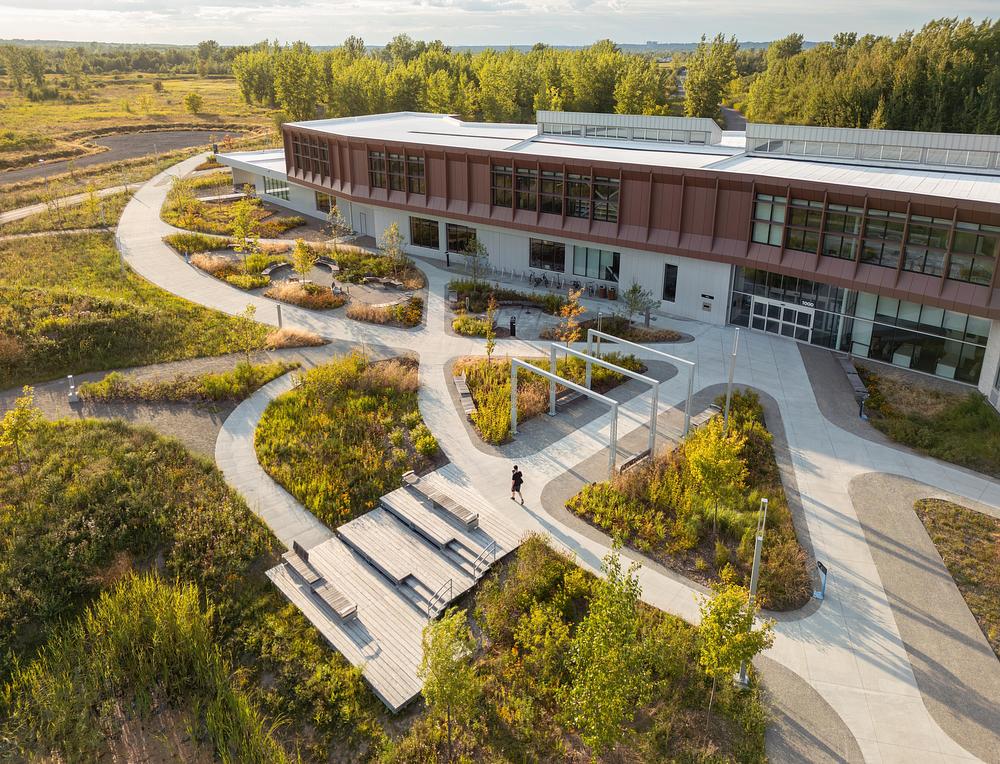
The Projet Paysage design is rooted in a comprehensive vision where architecture and landscape operate as a single system. Circulation paths, rest areas, and an active mobility network connect surrounding districts, establishing continuity between built form and open space. Since its opening in 2024, Espace citoyen des Confluents has developed as a dynamic environment where vegetation evolves over time, allowing biodiversity to progressively reestablish itself. This approach prioritizes long-term ecological processes over fixed visual outcomes.
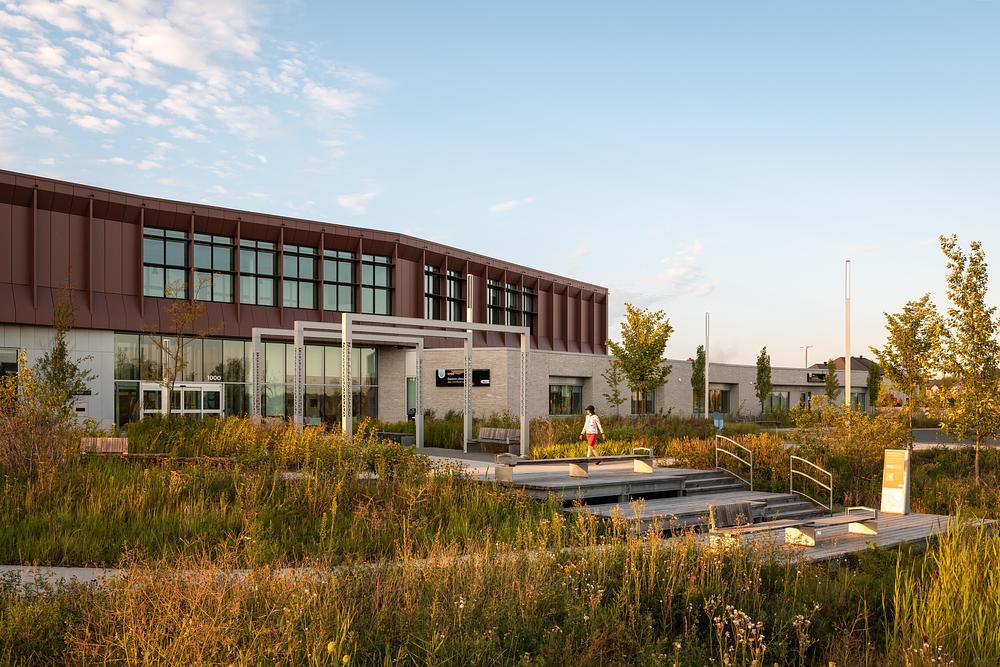
The site’s history informed its transformation. Originally forested, then used for agriculture, it later hosted a BASF petrochemical plant during the 1970s and 1980s. Despite decontamination efforts led by the City of Laval, the land remained a degraded brownfield. Projet Paysage responded by working with the site’s existing conditions, including clay-rich soils, proximity to wetlands, and natural water retention capacity, to guide a regeneration strategy focused on soil recovery, water management, and habitat creation.
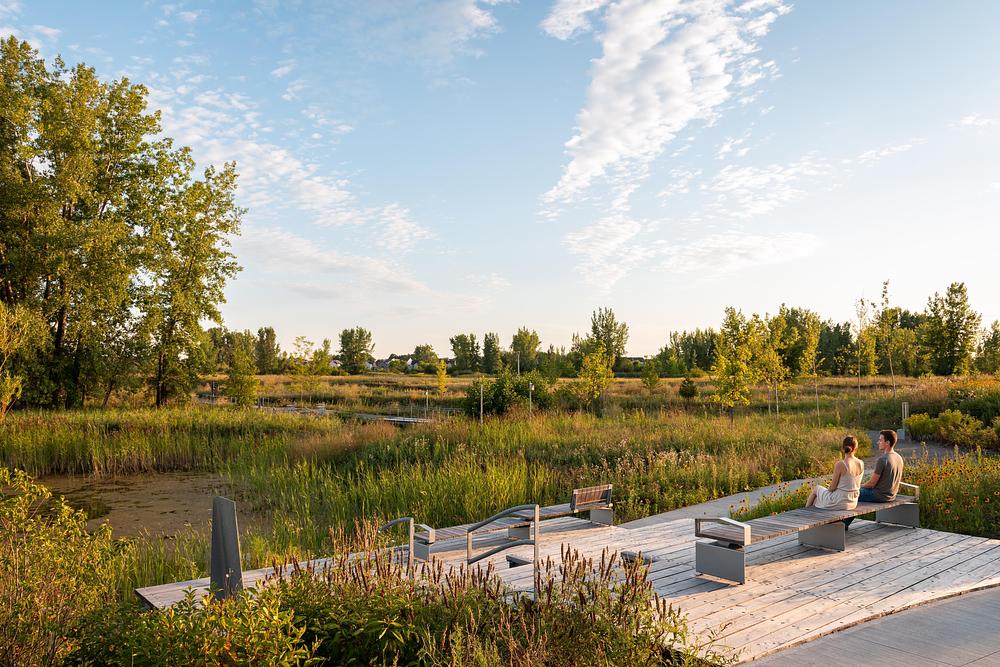
Hydrology plays a central role in structuring the landscape. A system of permeable pathways, drainage trenches, and interconnected basins captures all rainwater and surface runoff, directing it gradually across the site. These basins function as constructed wetlands, supporting wildlife habitats and enhancing biodiversity. During periods of heavy rainfall, overflow is directed into the municipal stormwater system to prevent flooding. Landforms created from excavated materials further reinforce this system, shaping water movement and contributing to spatial definition.
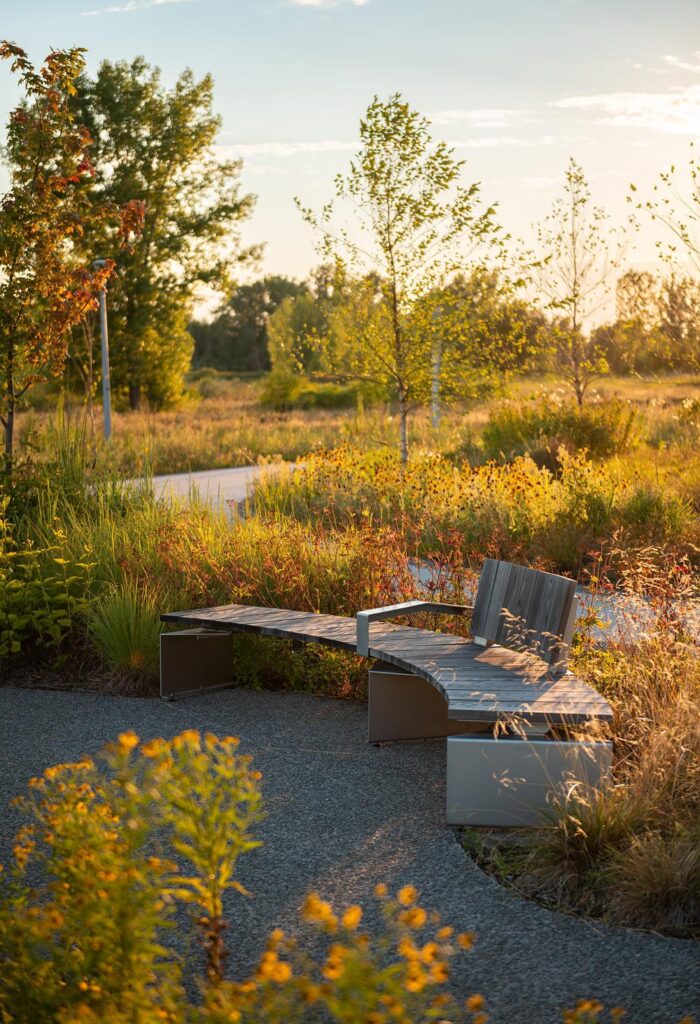
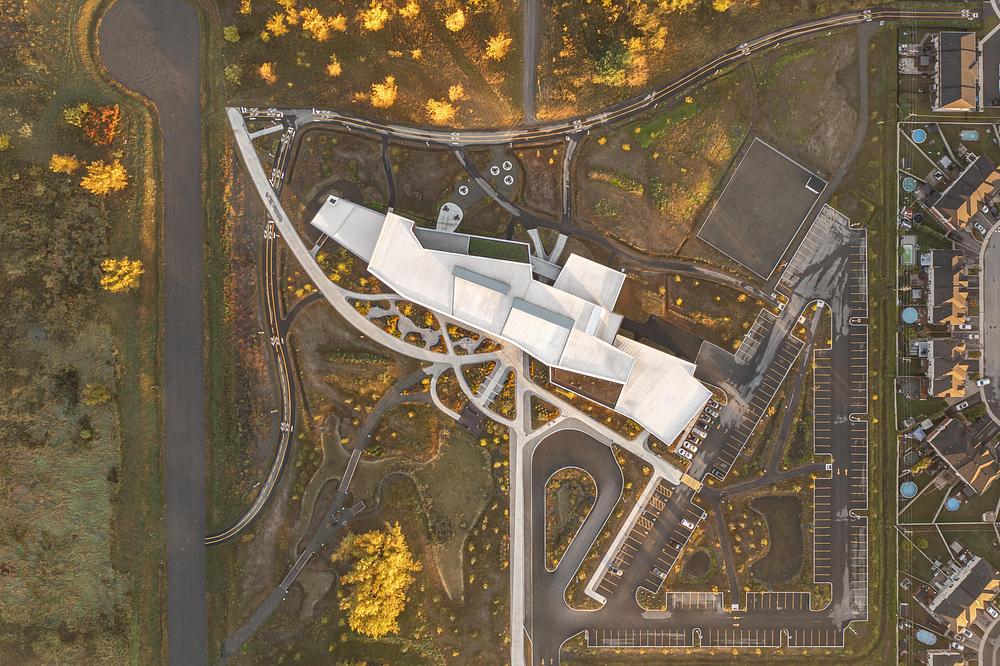
More than 300 trees across 25 species were introduced to support ecological diversity, complemented by spontaneous vegetation and biological corridors that strengthen habitat connectivity. Even the parking area participates in this strategy, with a triangular configuration that reduces impermeable surfaces. Sedimentation wells filter runoff before it enters the basin network, while future canopy growth will mitigate heat accumulation and integrate the parking area into the broader landscape.
The Projet Paysage work offers a layered spatial experience within an urban context. A footbridge and observation platforms provide access to water basins and preserved mature trees, while birdhouses encourage wildlife presence. Seasonal changes influence textures, light, and sound, creating an environment that shifts throughout the year and supports a slower, more attentive engagement with space.
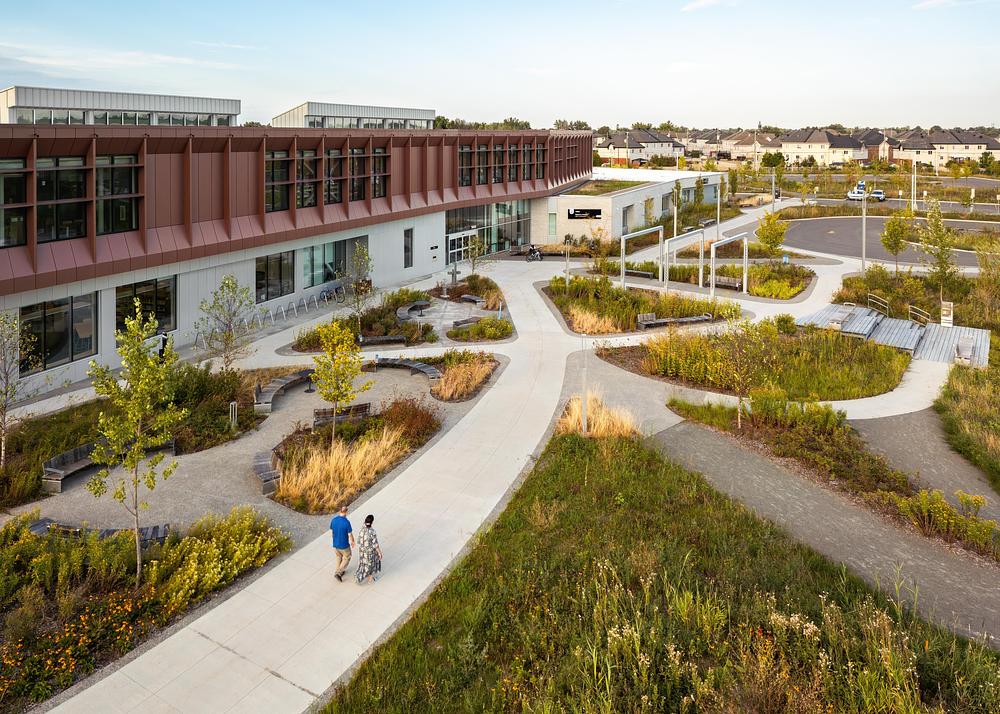
From the outset, Projet Paysage and Cardin Julien developed the project through a shared design process. The building acts as an anchor, while the landscape organizes movement and rhythm across the site. Its east–west orientation optimizes passive solar performance, aligning with pathways and hydrological systems to ensure continuity between interior and exterior spaces. Certified LEED v4 Gold, Espace citoyen des Confluents demonstrates how integrated design can produce civic environments that combine environmental performance with social and spatial coherence.
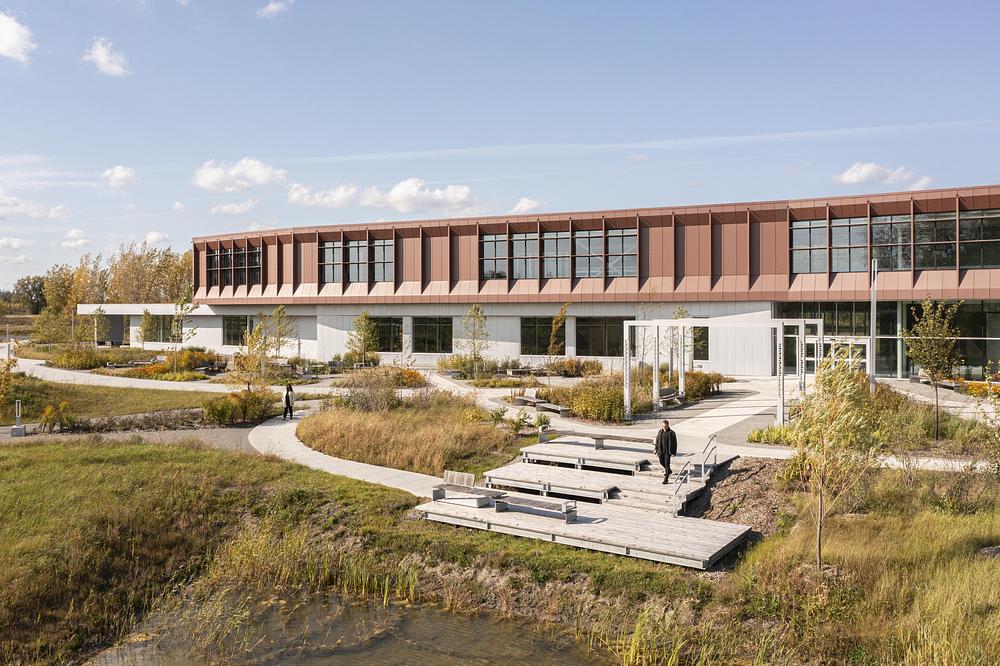
Beyond its immediate function, the project contributes to the broader redevelopment strategy of the City of Laval. As part of the 2035 vision, it reconnects previously isolated areas and establishes a model for landscape-led urban transformation. By positioning landscape as living infrastructure, the project supports ecological repair, social interaction, and long-term territorial resilience.
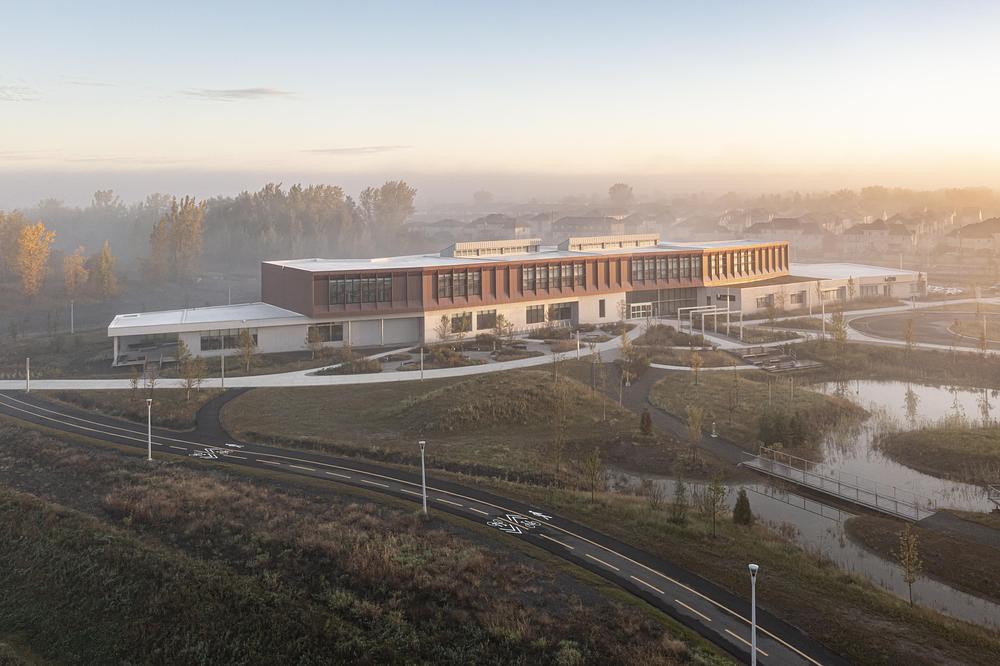
Photo credit: David Boyer and Vincent Brillant
Projet Paysage: https://projetpaysage.com/