Ridge House: Superkül create a low-impact home connected to its landscape in Ontario
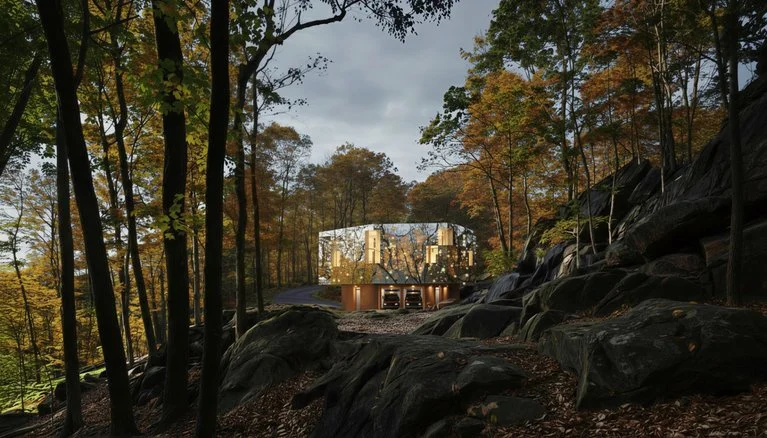
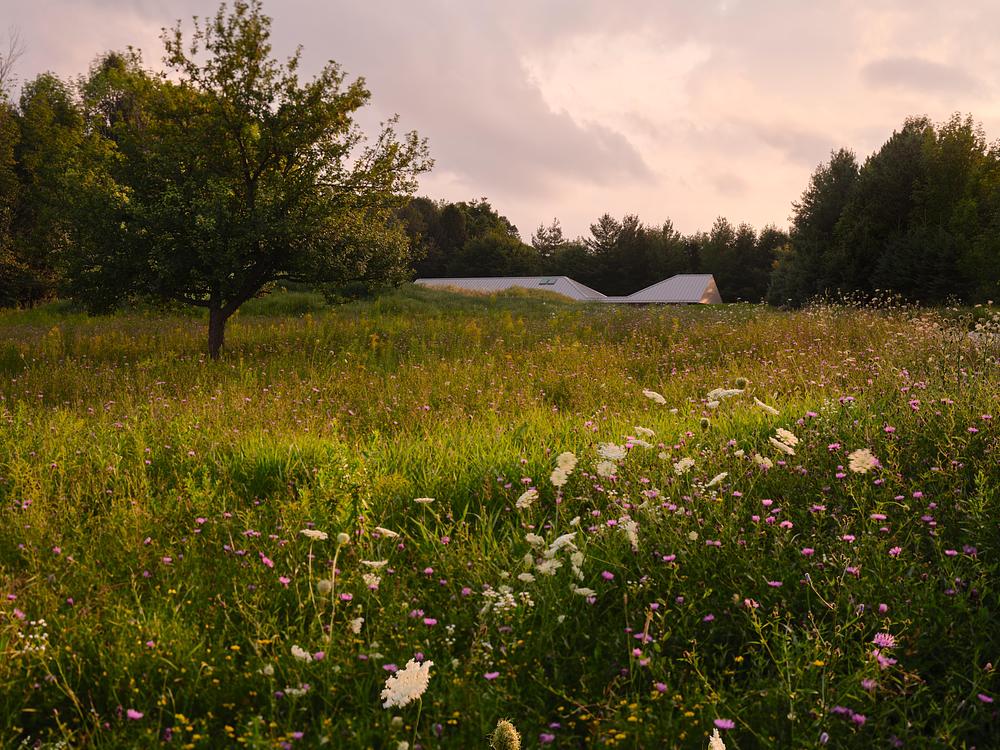
Ridge House by Superkül is a residential architecture project in rural Ontario positioned along a gentle slope between open field and forest edge. Designed by the Canadian studio, the house uses the site’s natural gradient to inform both its layout and profile, with a low, extended roof that traces the land and reduces the building’s visual impact. Oriented away from the road, Ridge House maintains privacy while opening toward views of the surrounding pine and ironwood landscape.
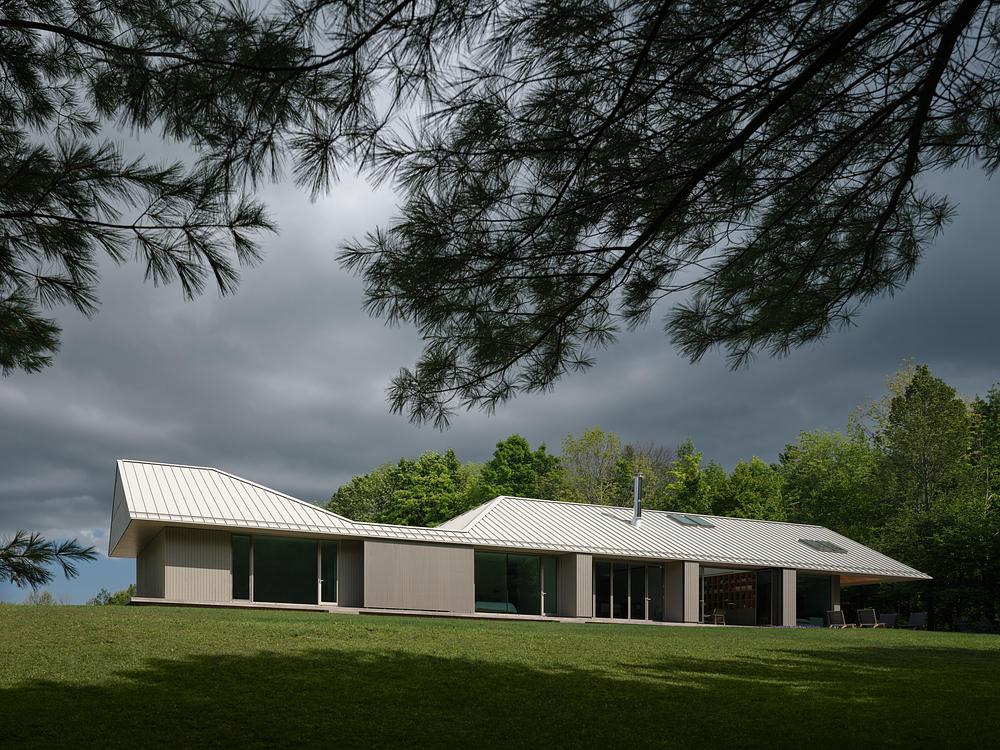
The project is shaped by existing site conditions, including a high water table, a gradual downslope, and the presence of a mature ironwood tree. Superkül developed a siting strategy that embeds the house into the terrain, allowing it to sit lower within the clearing while maintaining direct visual connections to the forest edge. The absence of a basement responds to hydrological constraints and reduces reliance on concrete, while the building’s positioning balances solar exposure with protection from prevailing winds.
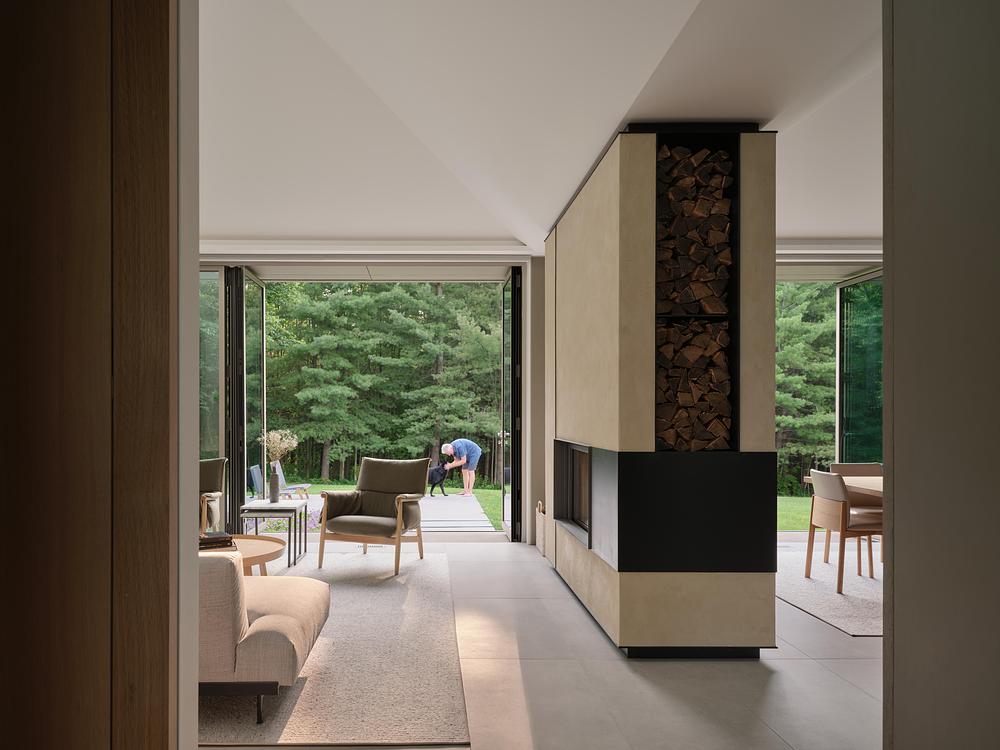
A defining sloping roof extends across the plan, creating deep overhangs that regulate light and temperature throughout the year. Floor-to-ceiling triple glazing on the east and west elevations is shaded during warmer months while allowing winter sunlight to penetrate deeper into the interior. On the west façade of Ridge House, full-height accordion doors open onto a cantilevered walkway, establishing a continuous threshold between interior and landscape. Retractable insect screens allow these openings to remain functional across seasons, supporting passive ventilation and reducing the need for mechanical cooling.
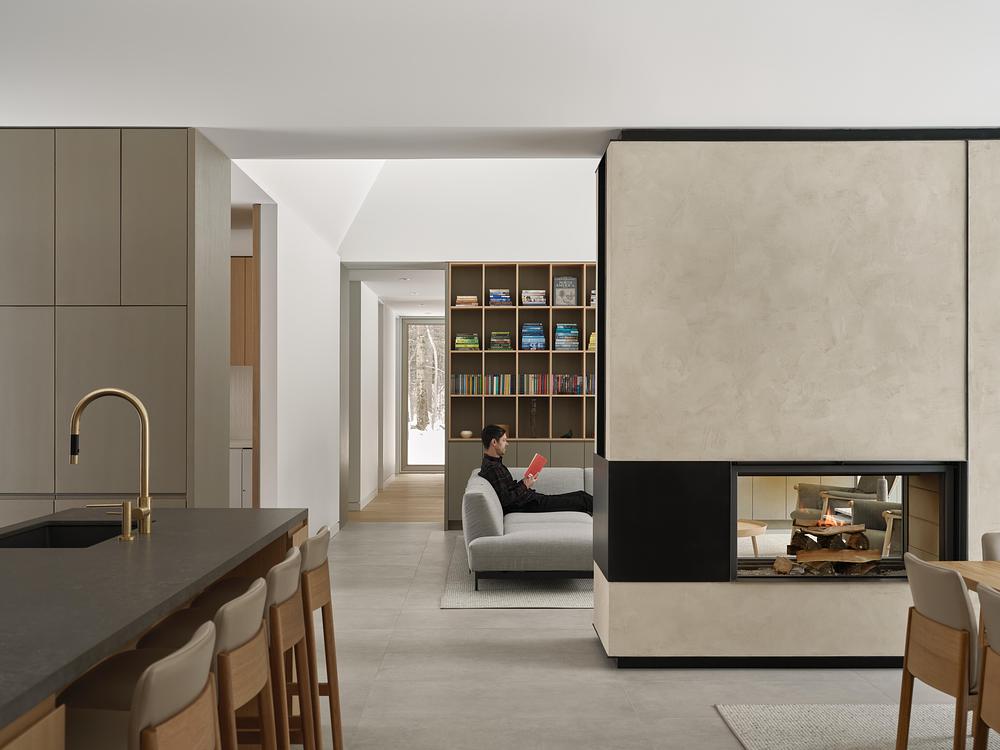
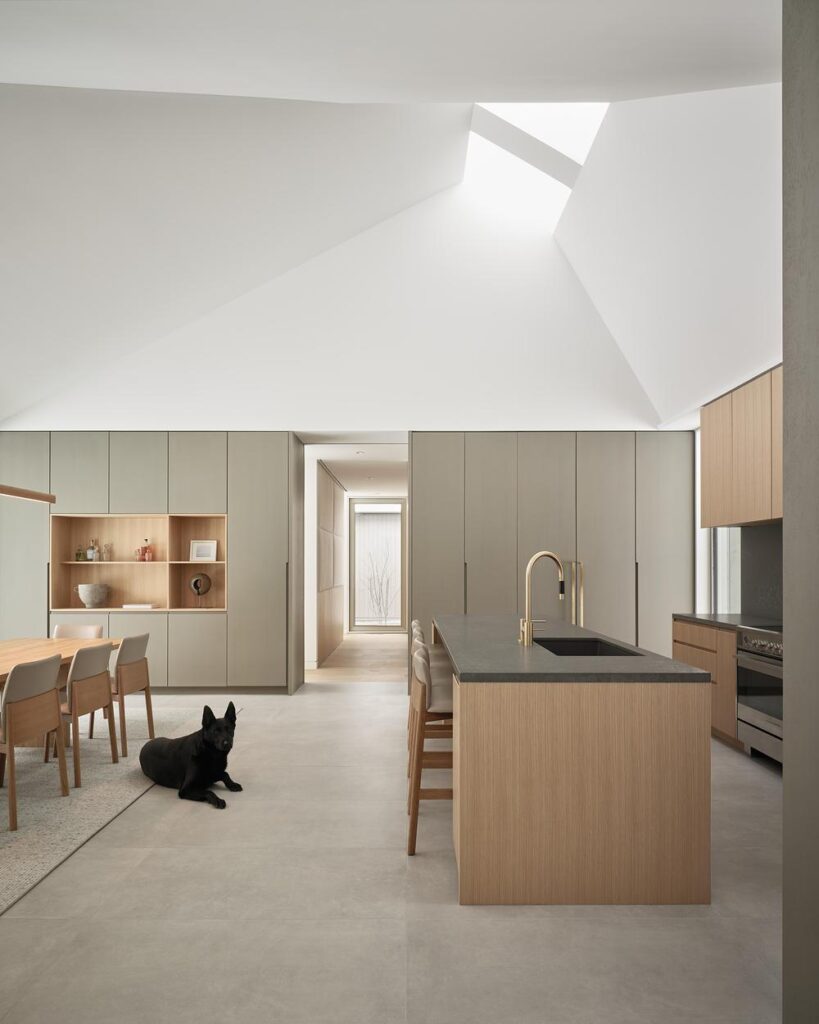
Internally, Ridge House is organised through a restrained material palette that reflects the clients’ preference for monochromatic tones and natural finishes. Grey surfaces extend from the exterior cladding into the kitchen and living areas, reinforcing continuity across the envelope. At the centre of the plan, an enclosed courtyard introduces a protected garden beneath a rectangular opening in the roof. This internal void brings daylight into the core of the house while maintaining privacy, with adjacent skylights directing soft, indirect light across vaulted ceilings and shared spaces.
Durability and long-term performance inform the selection of materials and systems throughout the project. The standing seam roof and exterior siding provide resilience against seasonal variation, while marine-grade plywood and prefabricated millwork are treated with low-VOC coatings to improve longevity and resistance to wear. A zoned radiant floor heating system ensures consistent thermal comfort, supported by a cold-climate heat pump that reduces energy demand. An energy recovery ventilation system maintains indoor air quality, reinforcing the house’s environmental performance while supporting everyday use. Similar principles of climate-resilient Canadian design and environmental performance can be seen in Long Lake Cottage by Dubbeldam Architecture Design, which rethinks sustainable off-grid living.
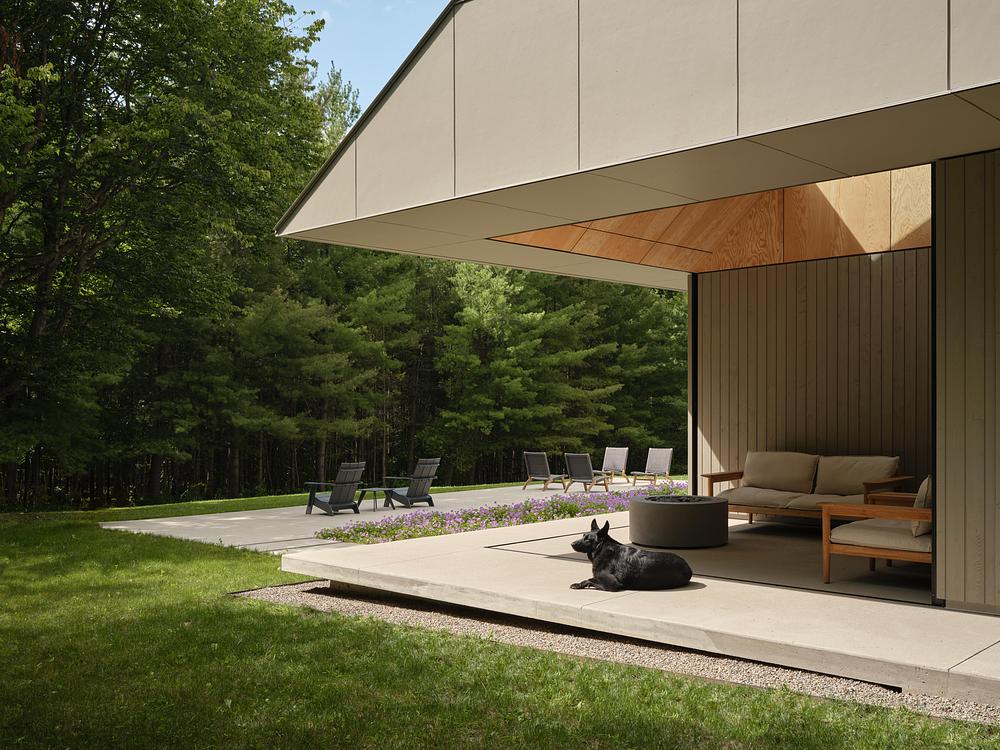
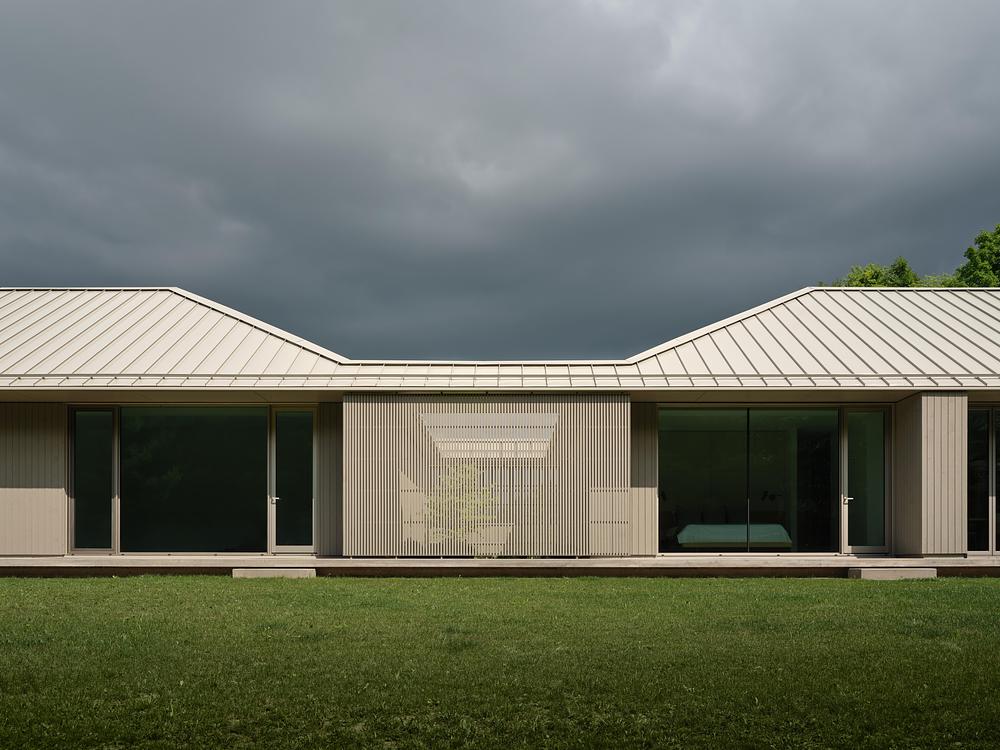
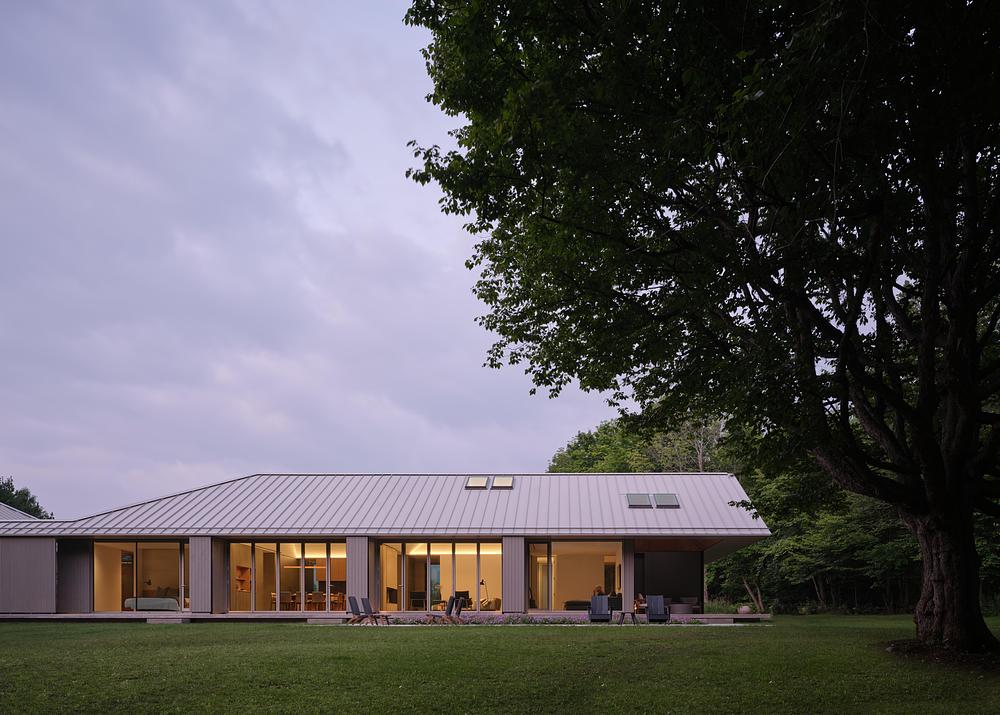
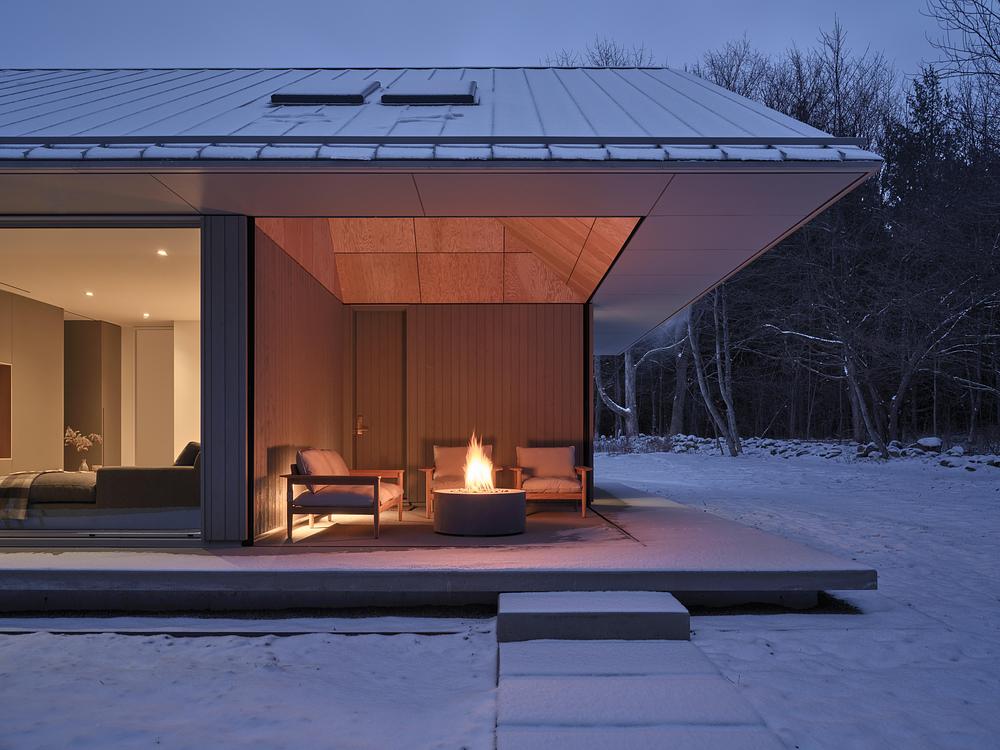
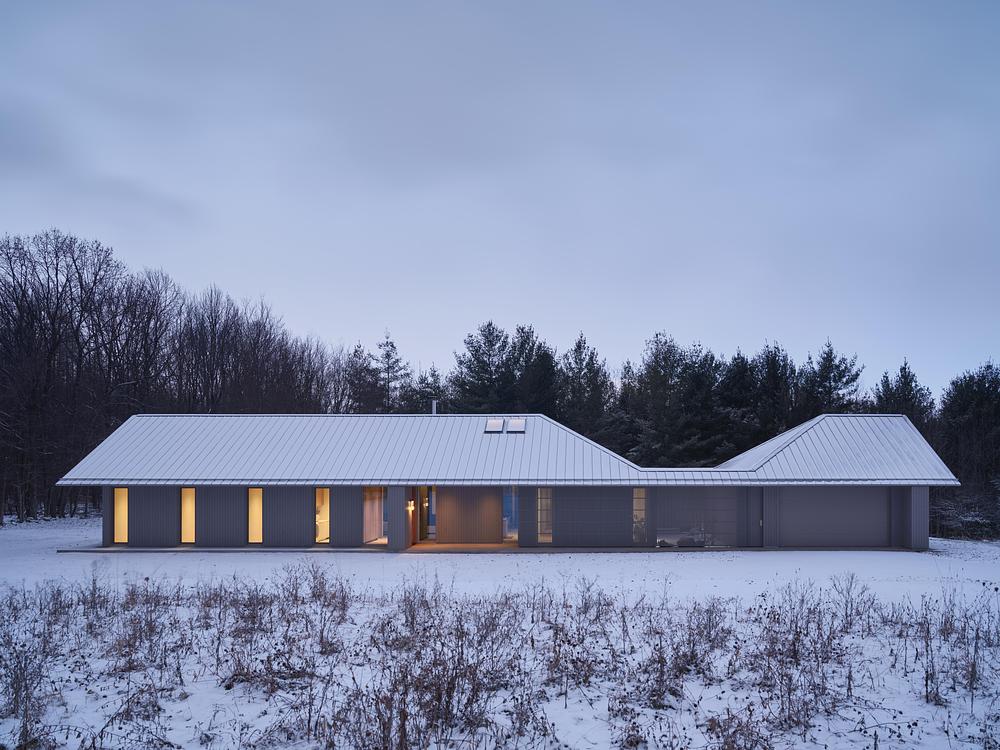
Photo credit: doublespace photography via v2com