SpY transforms Florence factory into kinetic light field
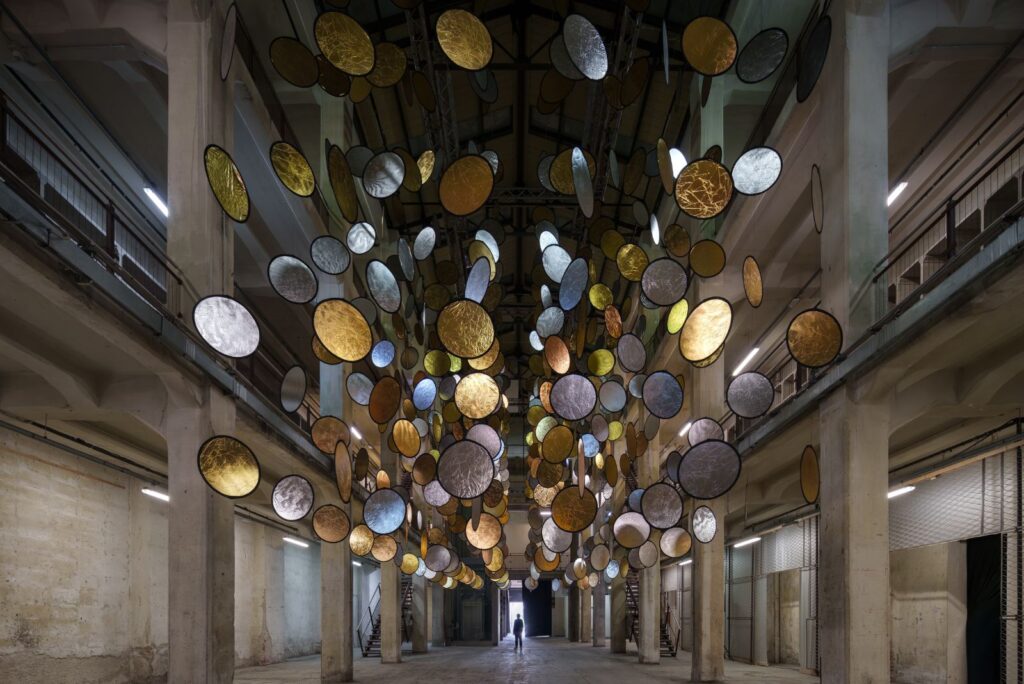
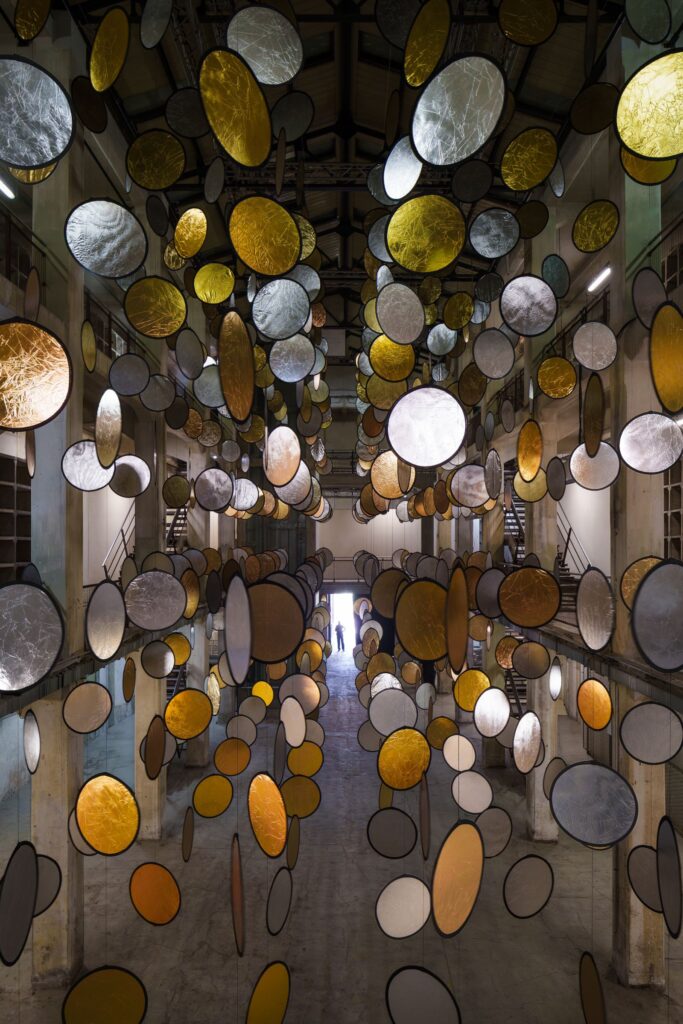
SpY presents HALOS, a large-scale kinetic installation located in Florence, transforming a former railway factory into a spatial composition of light, reflection, and motion. HALOS installation unfolds as a suspended matrix of reflective circular elements that operate collectively, establishing a dynamic system where geometry, movement, and perception are continuously redefined through interaction with the surrounding architecture and audience.
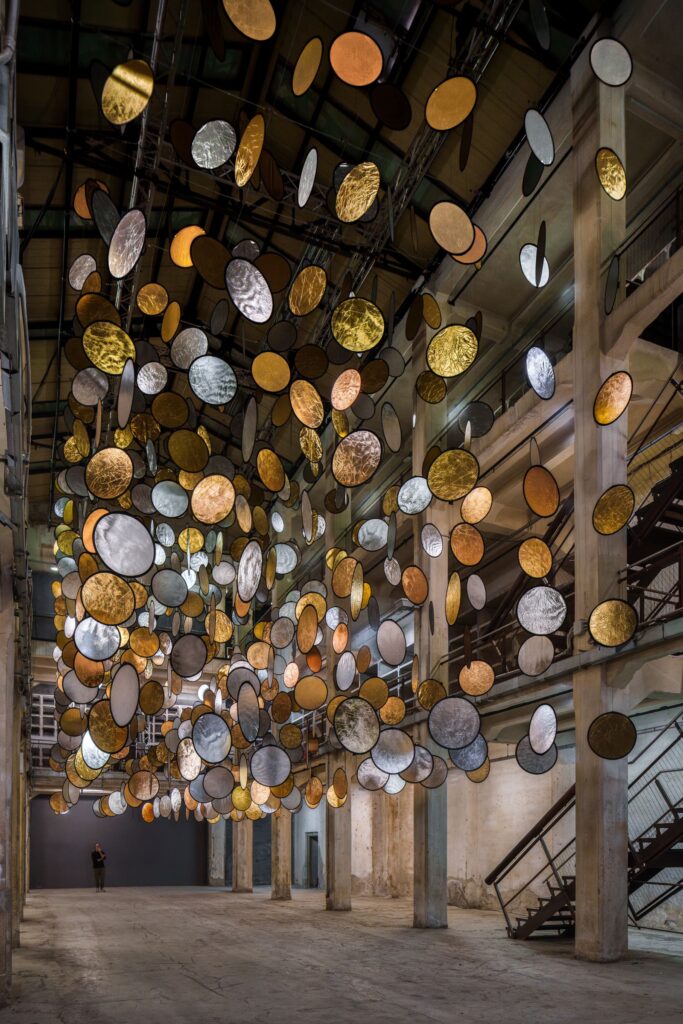
HALOS is composed of a grid of gold and silver reflective discs, each suspended in midair and programmed in continuous rotation. This kinetic installation operates through a precise mechanical system that orchestrates synchronized and asynchronous movement, allowing each element to respond subtly to light conditions and spatial positioning. The reflective surfaces amplify ambient light, producing shifting visual patterns that evolve throughout the day and in response to artificial illumination.
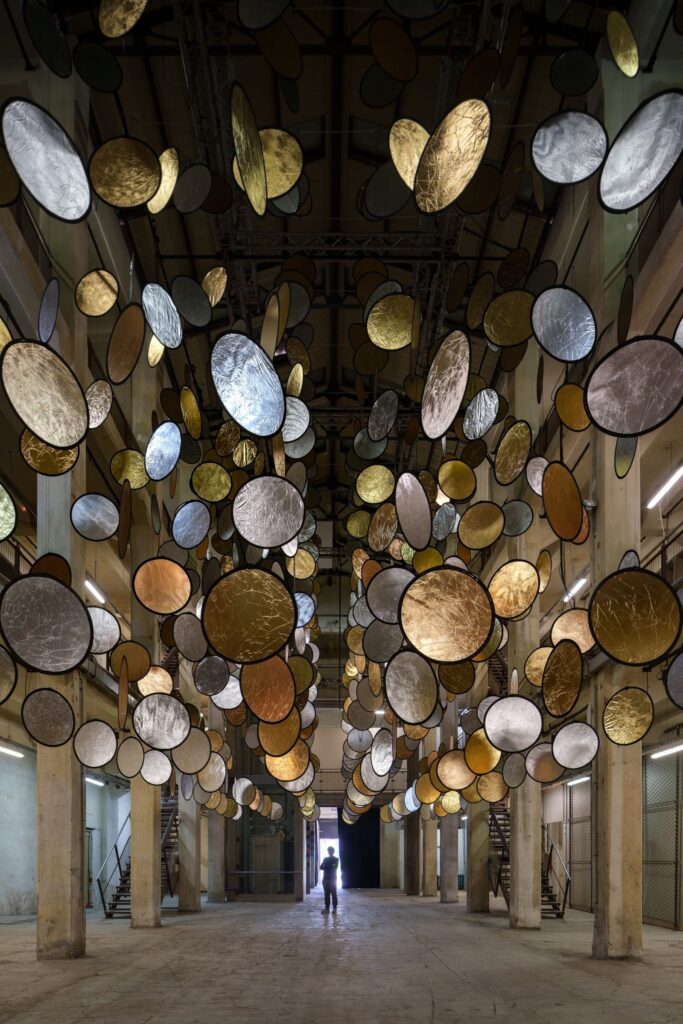
Positioned within the vertical volume of the former railway factory, the installation engages directly with the building’s industrial architecture. The atrium extends across three levels, introducing a layered spatial condition where HALOS kinetic installation can be experienced from multiple elevations. This configuration transforms the work into a form of temporary architecture, where perception is shaped by the viewer’s trajectory, distance, and angle of observation.
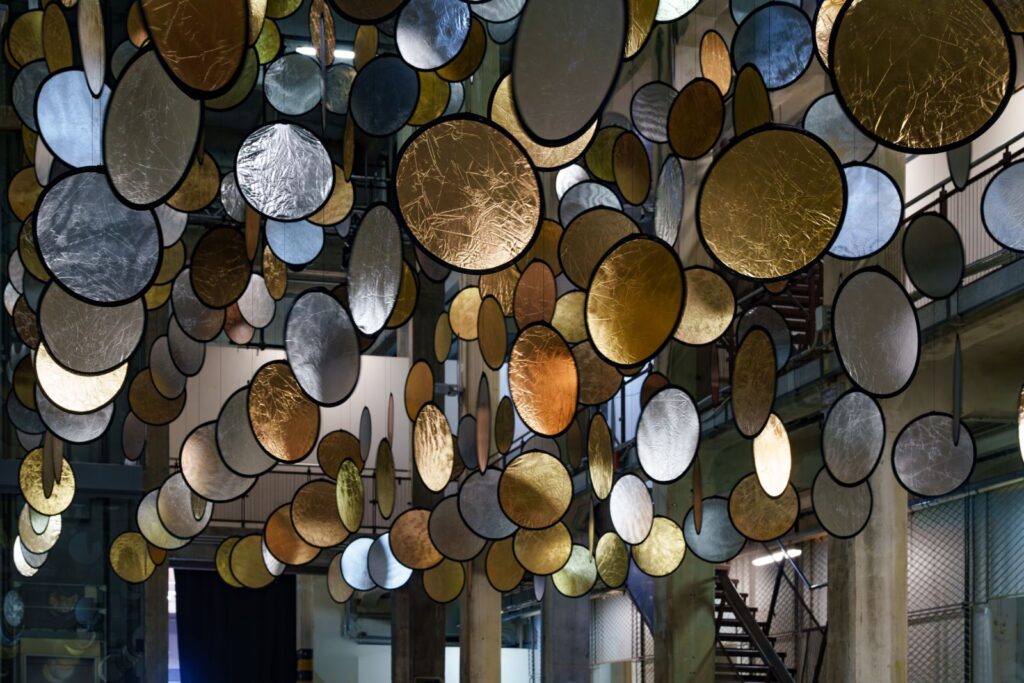
As visitors move through the space, the installation generates a continuous interplay between motion and reflection. The circular elements visually intersect and separate, forming transient constellations that expand and dissolve in real time. This interaction establishes a form of public art that is not static but dependent on both mechanical choreography and human presence, where each viewpoint produces a distinct visual reading.
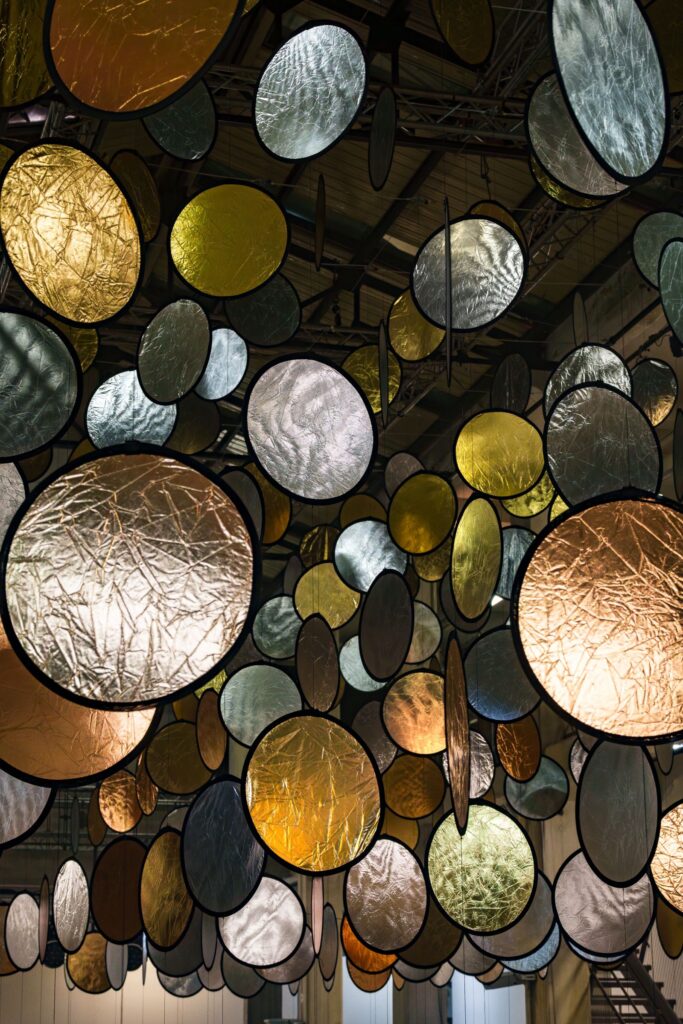
The material logic of HALOS is reduced to essential geometric forms, yet its impact relies on the precision of execution and the calibration of movement. SpY employs repetition and variation to construct a perceptual field where minimal elements generate complex visual outcomes. The reflective discs operate as both individual units and part of a collective system, reinforcing the relationship between structure and fluidity within the installation.

Photography by Ruben P. Bescos