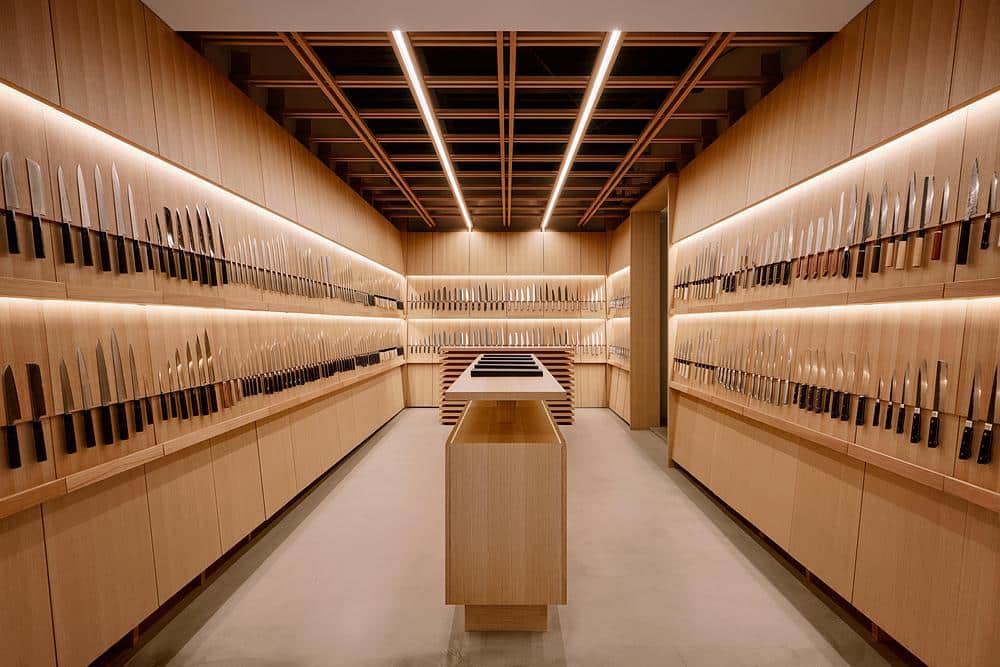
Tojiro Knife Gallery Osaka shows Japanese cutlery culture through retail, visible maintenance, and sustainable tool care
Located in Osaka’s historic kitchenware district, Tojiro Knife Gallery Osaka by KATATA YOSHIHITO DESIGN (L/O) presents a contemporary reading of Japanese cutlery culture through spatial precision and production-focused design.
The gallery combines a retail environment with an open maintenance room, allowing visitors to closely observe sharpening and repair techniques performed by trained craftsmen.
This direct visibility expresses a Japanese ethic of valuing tools, extending product life, and promoting sustainable use through care rather than replacement.
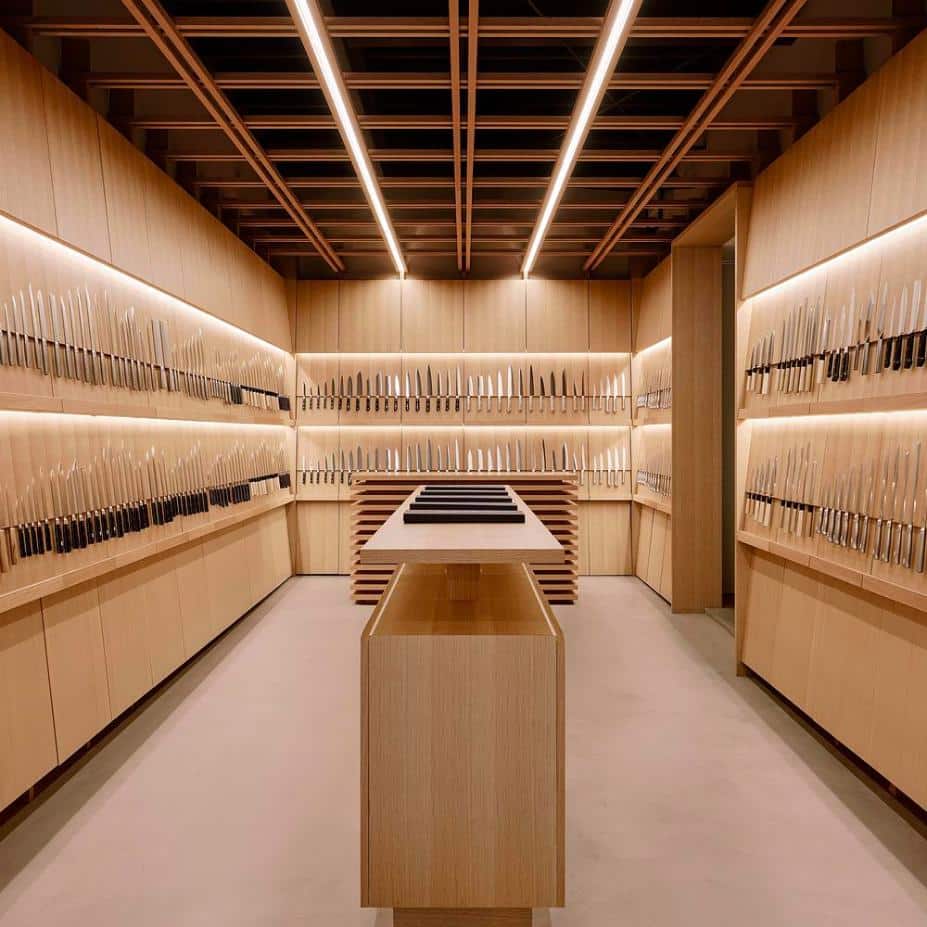
The project stresses the connection between manufacturing and retail activity. The maintenance room incorporates the same machines and specialized tools utilized at Tojiro’s primary factory in Tsubame-Sanjo, where the company’s industrial heritage continues to shape production standards.
Through this equipment, visitors witness routine maintenance as well as advanced repairs, making clear the brand’s perspective on longevity as a core aspect of quality.
Instead of hiding technical processes, the space elevates them to a defining feature, communicating a philosophy that craftsmanship persists beyond the point of purchase.
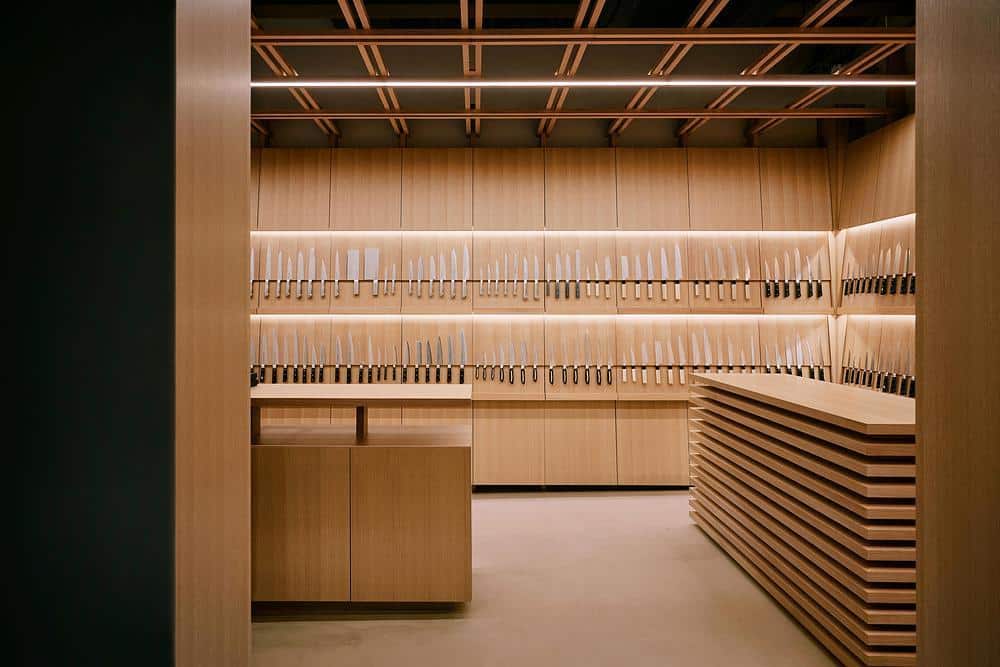
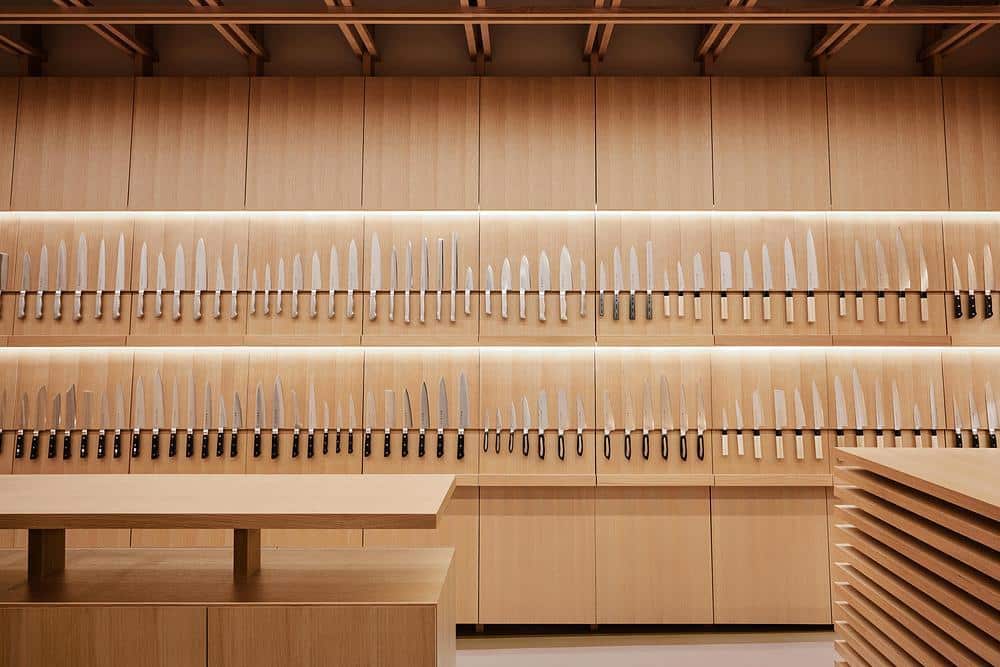
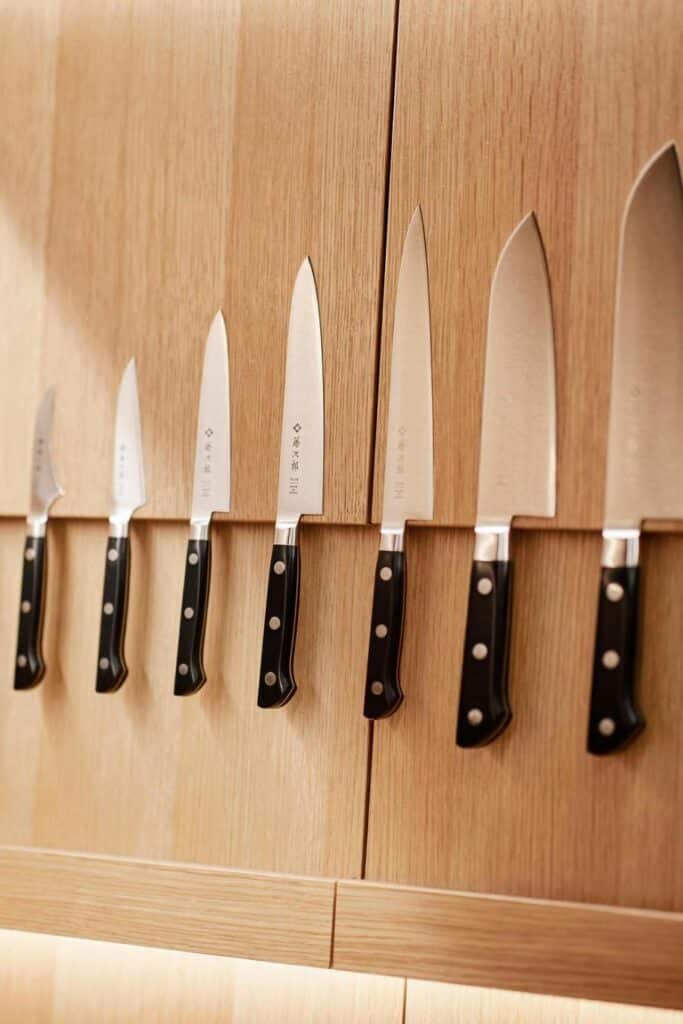
A notable architectural component of this knife gallery is the reinterpretation of yoroi-bari, a traditional Japanese construction technique adapted as a display structure for knives.
The system places the knives on wooden panels using concealed magnets and precision joints. This method provides security while maintaining functional accessibility, and introduces a measured visual tension through the impression of knives floating above the timber surface.
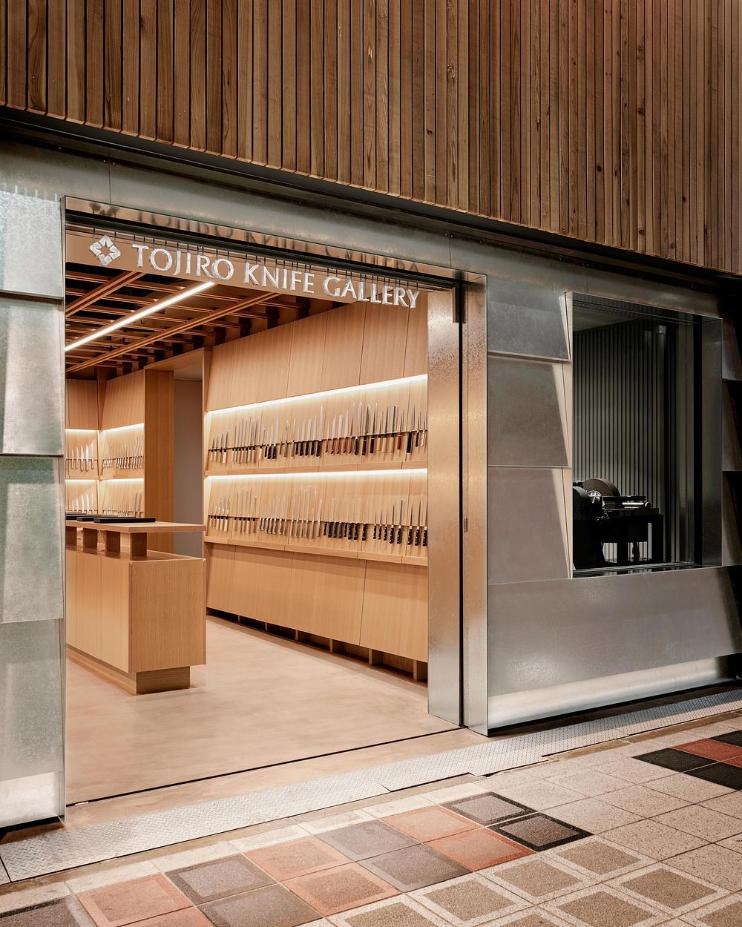
The gallery’s warm wooden interior is set in contrast with an armour-like stainless-steel exterior, establishing a continuous design language that distinguishes the public retail zone from the work-oriented maintenance area.
The creative process prioritized message over formal gesture. Rather than approaching the gallery as an independent spatial object, the designers began by defining what the project was required to convey. Only afterward were material strategy, circulation, and environmental qualities developed.
This reverse methodology allowed tradition, industrial know-how, and contemporary branding to operate as interconnected factors rather than separate layers, ultimately producing a retail environment in which cultural heritage and factory logic form a unified whole.
Through these decisions, Tojiro Knife Gallery Osaka positions Japanese knives not merely as consumer goods but as instruments shaped by history, maintained through skill, and preserved through proper care. It communicates that craftsmanship extends across the entire lifespan of the tool, from forging to daily upkeep.
The knife gallery becomes a medium through which visitors encounter the continuity between manufacturing culture and everyday use, reinforcing the idea that responsible product stewardship contributes to durability, value retention, and reduced material waste.
Photography by Masaaki Inoue, with courtesy of v2com