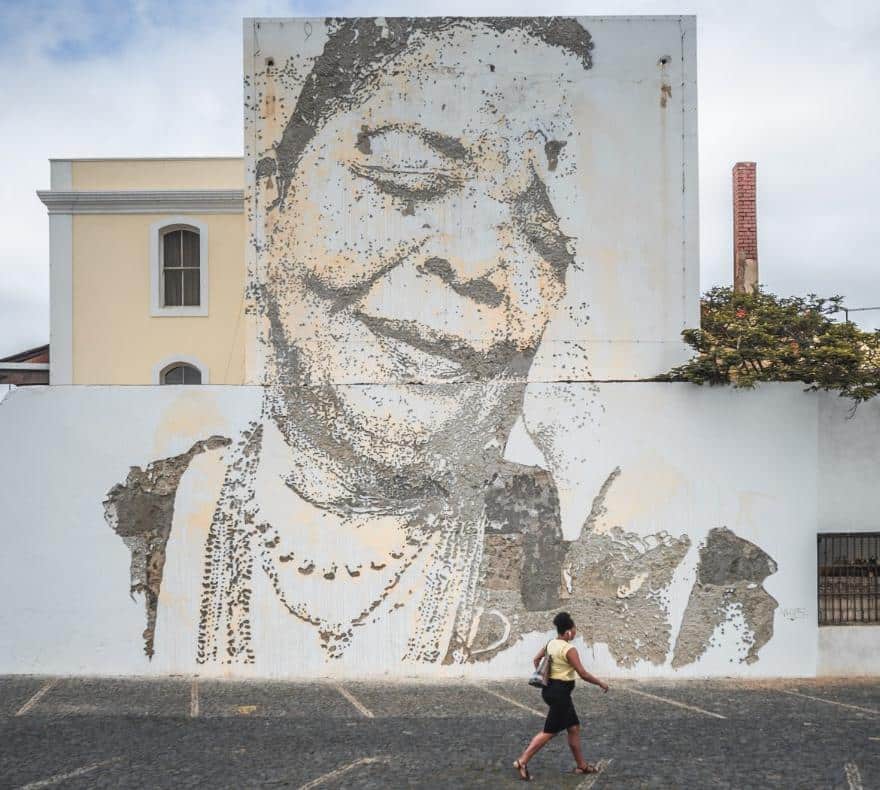
Portuguese artist Alexandre Farto, better known as Vhils, emerged in the early 2000s as a graffiti writer before developing the groundbreaking carving technique that would define his career. His practice, often described as urban archaeology, peels back the physical and metaphorical layers of contemporary cities to reveal hidden histories and forgotten identities. By carving, cutting, drilling, etching, and even blasting through walls and other materials, Vhils transforms the very fabric of the urban landscape into striking visual poetry. His Scratching the Surface project, first presented in Lisbon in 2007 and later in London at the Cans Festival, established him as one of the most innovative voices in public art of recent decades.
Deeply influenced by the rapid urban development he witnessed growing up in Seixal, an industrial suburb of Lisbon, Vhils reflects on the tension between individuality and globalization, cultural uniqueness and uniformity, memory and erasure. His works, presented worldwide across walls, installations, and diverse media such as metal, wood, video, and pyrotechnics, meditate on identity and the human condition within the overwhelming saturation of urban environments. Much like the psychological and anatomical dissections of Austrian street artist Nychos, his interventions reveal beauty where it is least expected—within the neglected surfaces of the city itself—while speaking to the resilience of human stories in the face of destruction, development, and change.
Artists often start with self-expression but end up revealing their worldviews, acting as both creators and communicators almost as if philosophers or critics that have chosen to make art instead of write long dialogues. If you can resonate with this, what does your work suggest about your approach to making the world a better place?
I’ve never seen art as separate from the world—it’s a reflection of it, shaped by it, and in some ways, a tool to question it. I started with graffiti, which is already a form of reclaiming space and making your voice heard in environments that often overlook you. Over time, my work evolved into something broader, but that core intention has always remained: to give visibility to what’s hidden or erased.
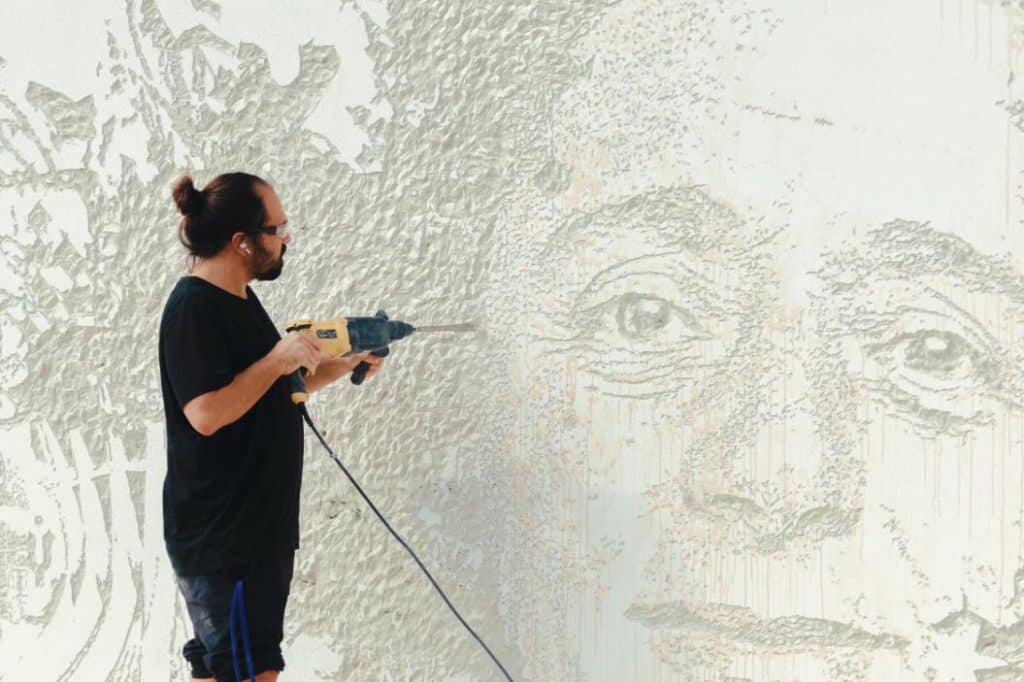
I don’t pretend that art alone can change the world, but I do believe it can shift perspectives. It can slow people down, make them look closer, reconsider what they thought they understood. My work often involves carving into surfaces—walls, metal, concrete—to reveal the layers beneath, and this approach is not just a technique, it serves as a metaphor. We live in systems that constantly cover things up: identities, histories, inequalities. By cutting through the surface, I try to expose these layers—not to offer answers, but to invite reflection.
So, if in any way my work contributes to making the world a better place, I hope it does so by creating moments of awareness, by confronting people with the forgotten, the discarded, the silenced. In that sense, I don’t see myself as a philosopher or a critic, but as someone trying to translate complex realities into a unique visual language. It’s less about transmitting a message and more about creating a space for dialogue—between the work, the environment, and whoever stands in front of it.
Your philosophy of destruction as creation is intelligent, as well as an inescapable aspect of reality. How did this unique view emerge for you and what do you hope it conveys to the viewer?
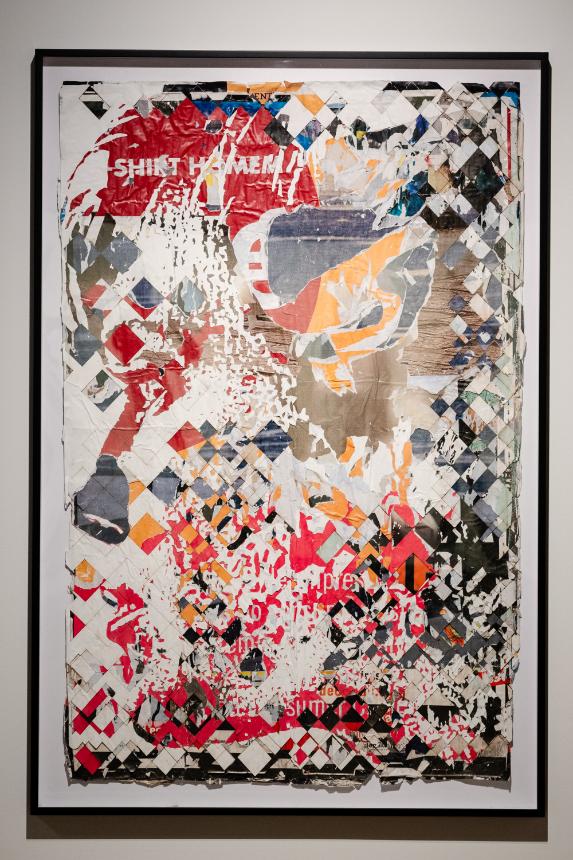
The idea of destruction as creation came to me quite naturally. It started with graffiti—when you write your name on a surface, you’re already interrupting something, claiming space through disruption. But I became fascinated by the layers that build up in cities: posters on top of posters, paint over old paint, history buried beneath urban development. At a certain point, I stopped only adding to surfaces and started removing from them. That shift revealed something deeper—not just physically, but symbolically.
I realised that to create something meaningful, sometimes you need to cut through what’s already there—the noise, the façade, the assumptions. The act of destruction became a way to expose hidden narratives, forgotten identities, overlooked existences. It’s not destruction for its own sake—it’s a deliberate, careful process of revelation.
What I hope it conveys is that there’s always more beneath the surface—in people, in cities, in history. That things we discard, ignore, or erase still hold meaning. And that the process of uncovering, of questioning what we see and what we think we know, can be just as creative and constructive as building something new.
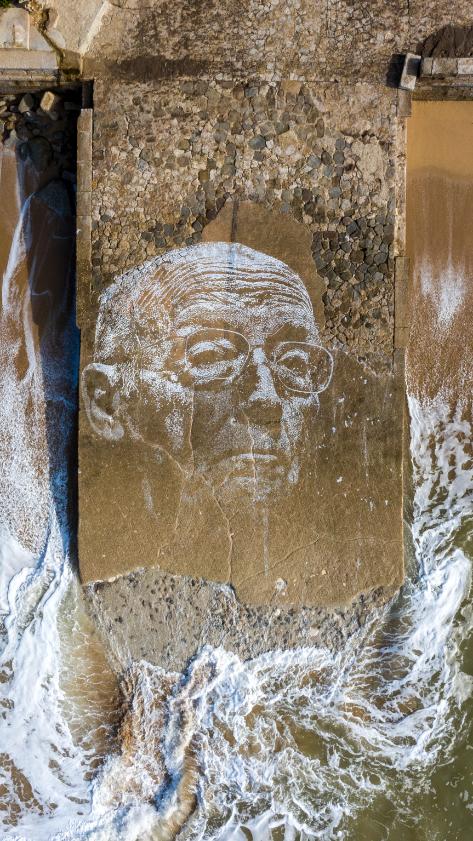
You turn everyday people into larger-than-life heroes on city walls, a legacy that could inspire their families for generations. How does this change their lives or communities? And do you create partly for the kid in you who yearned for similar acknowledgment? If yes, which artists from your past, maybe even through their work, made you feel seen in an important way?
There’s something incredibly powerful about seeing your story, or the story of someone close to you, reflected on a public wall. When I carve a portrait of someone who’s part of a community—someone who might otherwise go unnoticed—it’s not about turning them into a hero in the conventional sense. It’s about recognising their place in the fabric of that place. It’s about saying: you matter, we all matter. Your presence is part of the history and life of this place.
I’ve had families come up to me after a work was finished, emotional, telling me they never imagined seeing someone from their world honoured like that. I think it creates a sense of pride, belonging, and permanence, especially in places and circumstances where people may feel invisible.
And yes, in a way, I’m definitely creating for the kid I once was—the kid who grew up in the outskirts of Lisbon, surrounded by concrete and in-between spaces, trying to find his voice. I didn’t see myself in galleries or museums. But I did find a sense of identity in the streets—in graffiti, in the marks people left behind, in how the city spoke if you listened closely.
And sure, there are quite a few artists that have inspired me and still do to this day, but just as powerful were the writers, some of which I never met but whose tags I saw on walls—they made me feel like art didn’t have to be distant or elite. It could be raw, urgent, and alive, and it could speak directly to people like me. That changed everything.
So yes, every piece is for someone—someone out there now, and someone I used to be.
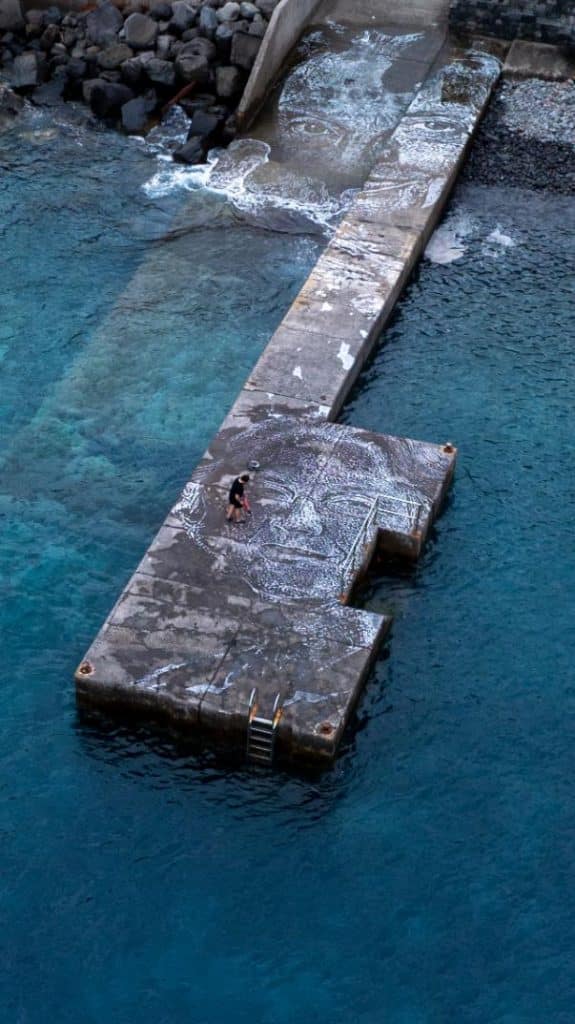
On your originality, every city has a distinct way of producing culture and engaging with global pop culture. How did Lisboa’s cultural shifts from 70s political murals to hip-hop, 90s graffiti, and then the advent of internet culture shape your artistic identity in ways that have set you apart from artists even today?
Lisbon has always been a place of contrasts—a city shaped by layers of history, but also by its constant state of transformation. I grew up on the outskirts during a time when Portugal was still figuring out who it was after the 25th of April “Carnation” Revolution. The remnants of the 1970s political murals were still visible when I was a kid—bold, visual messages painted by people who believed in the power of walls to communicate, to resist, to inspire. That idea stayed with me: that walls could speak.
Then came the 1990s, and with it hip-hop and graffiti culture, which hit Lisbon with a great force. For a generation of us growing up in the suburbs, this was more than a style—it was a form of identity, of rebellion, of visibility. We didn’t have a very facilitated access to galleries or art institutions, but we had the streets. We had walls, trains, rooftops. That became our platform. Graffiti gave me the tools to claim space, to experiment, and to express myself directly in the urban environment.
At the same time, global pop culture was arriving faster than ever, and with it, the early wave of internet culture. That exposure—first through zines, then forums, videos, blogs—opened up a whole new visual language. Suddenly I was readily seeing what artists were doing in São Paulo, New York, Tokyo. It showed me that I didn’t need to choose between being local or global—I could be rooted in Lisbon and still speak to the world.
All of this influenced my approach. I absorbed the language of graffiti, but I also understood the power of subtraction from the political murals. I combined street techniques with more traditional ones like acid etching or bas-relief, and pushed them into new territory. I think that’s where some of my approach comes from—not just technique, but from being shaped by a very particular moment in Lisbon’s cultural evolution, where tradition, resistance, and experimentation all collided. It gave me a language that’s grounded, but constantly evolving.
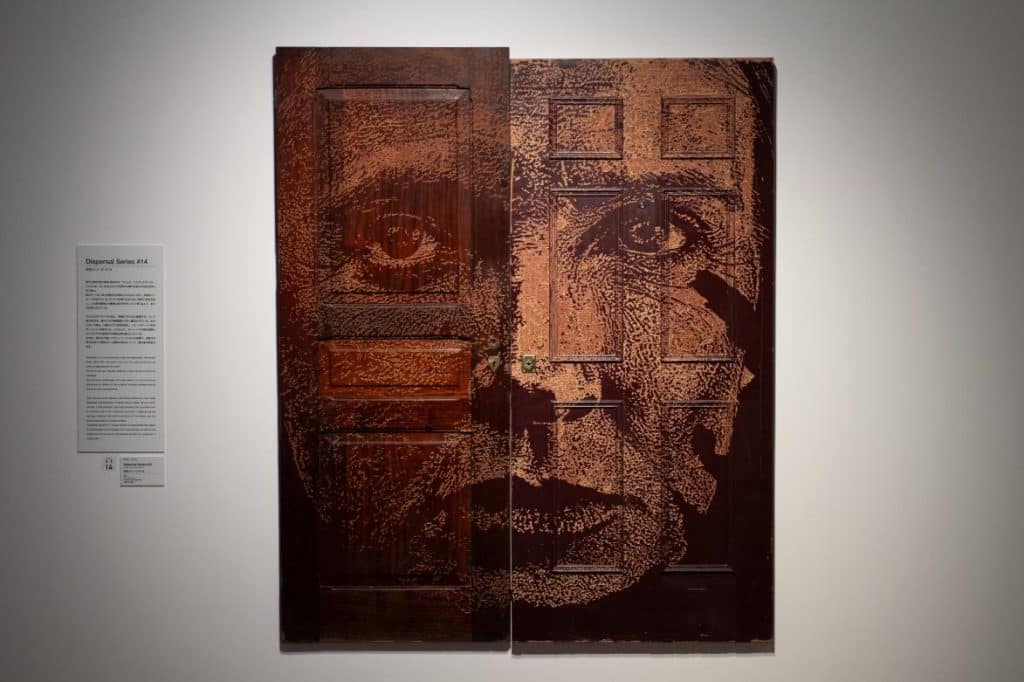
On your process, is it curiosity or an urge to experiment that moves you to wield your diverse arsenal of methods: carving with drills and chisels, blasting with explosives, etching with acid, etc? When collaborating with artists like Shepard Fairey or musicians like U2, which of your techniques have posed the greatest challenge but yielded the most reward?
For me, it always starts with curiosity. I’ve never felt comfortable sticking to one technique or medium for too long. It’s not about novelty for the sake of it, but about finding the right language for each idea. Sometimes a wall needs to be carved with a chisel. Other times, only an explosion can bring out what I’m trying to say. Each method comes with its own voice—and I’m always chasing the one that feels most honest in the moment.
There’s also a deep drive to experiment. Growing up with graffiti, I learned that the city is a lab—full of surfaces, textures, conditions you can’t control. That mindset stayed with me. I started cutting through posters, concrete, metal, using acid, fire, even light. The materials and tools became part of the message. And with each one, I learned something new about process, failure, and transformation.
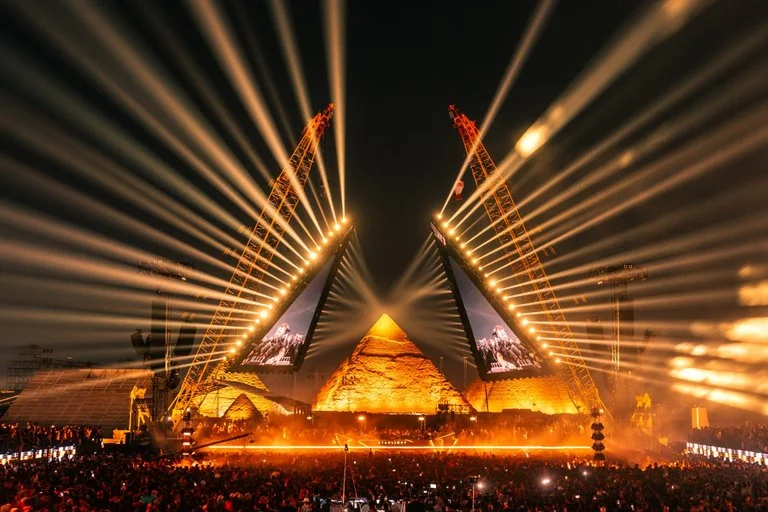
When it comes to collaborations, especially with people I admire like Shepard Fairey or U2, the biggest challenge is also the most rewarding: translating shared visions, emotion and energy through the coming together of different creative languages. With U2, we used explosives—something very physical and visceral—to respond to the themes of the music. It was technically complex and logistically intense, but the result carried that raw energy we were aiming for. Working with Shepard was different—his work is more layered and graphic, mine is more about erosion and depth. We had to find balance, letting both voices coexist on the same surface without overpowering each other.
In the end, it’s the tension between risk and control that keeps me going. I don’t want to get comfortable. I want to keep listening to what the materials—and the moment—are asking for.
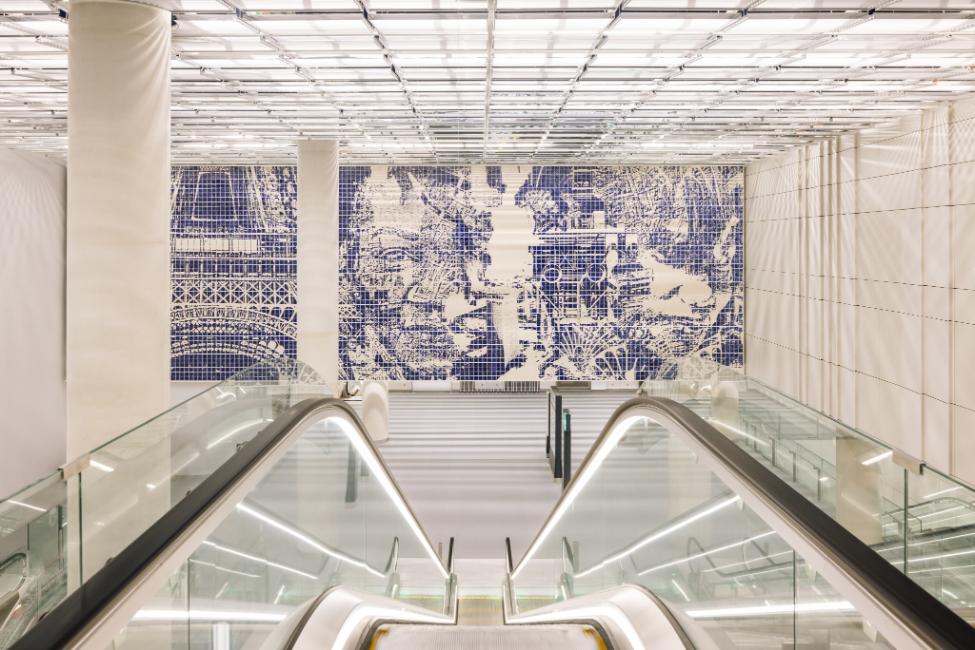
Your style also blends mural art’s storytelling, ancient friezes’ carved depth, and collage’s material layering methods, as seen in part by pieces like the ‘Calçada’ portrait and Hong Kong Debris Festival murals. How aware are you of combining these traditions? And do you see your style as a continuation of art historical processes or a progressive disruption of it?
I’m very aware that my work exists in dialogue with different traditions—even if that awareness came more through intuition at first than through theory. The streets taught me how to look closely at surfaces, at layers of time and history. Over time, I started to understand that what I was doing wasn’t entirely new—it was connected to much older ways of working, like carving friezes, mural storytelling, and even collage techniques found across different cultures.
When I’m carving into a wall or assembling found materials, I’m pulling from these visual languages—sometimes unconsciously, sometimes with intent. The Calçada portrait, for example, speaks to Lisbon’s own history, referencing the craftsmanship and patterns of the traditional stone pavements that shaped the city. In Hong Kong, during the Debris series, it was about collecting what the city was shedding—the layers that had built up through capitalism, migration, resistance—and trying to make sense of that accumulation through form.
I don’t see myself as disrupting art history—I see myself as adding to it, from the outside in. My tools might be unconventional—drills, acid, explosives—but the intention is still about telling human stories, much like artists have always done. If there’s a disruption, maybe it’s in the fact that the work lives beyond white cubes and museums, out in the open, for all to see, despite context or circumstance.
So yes, my practice is layered—technically and historically. It’s informed by the past but also very much about the present moment, with all its fragmentation, overload, and complexity. I guess I’m just carving out my place in that continuum.
Journal articles suggest that art in urban spaces enhance well-being and cohesion, yet your carved interventions could be viewed by some as disruptive beauty which may clash with traditional tastes. How do you reconcile your visually aggressive yet captivating approach with varying perceptions of aesthetic value?
I’ve always believed that public space should reflect the complexity of the people who inhabit it. Urban-inspired art doesn’t need to please everyone—it needs to start conversations. My work can be “aggressive” in its technique—drilling, carving, blasting—but I see that as part of its honesty. Cities themselves are aggressive in how they expand, how they erase, how they build over memory. My process mirrors that reality.
At the same time, I do think there’s beauty in what’s revealed. The goal isn’t to destroy—it’s to cut through surfaces that hide history, identity, and emotion. Some people connect to the rawness of that; others may find it confronting. And that’s okay. Public art isn’t about conformity—it’s about presence, about claiming space in ways that reflect diverse experiences.
When I carve a portrait into a wall, I’m trying to elevate everyday people, not just decorate a façade. And even if the method is rough, the outcome often evokes vulnerability, dignity, and strength. That’s the balance I try to strike—intensity in process, humanity in the result.
I think urban interventions can absolutely enhance well-being, but not only by being visually pleasing. They can do it by making people feel seen, by breaking routine, by sparking reflection. That, to me, is where their true value lies.
Like your work, contemporary conflicts leave cities marked not just by physical destruction, but also by stories and images that spread globally, shaping collective memory. With this unexpected similarity could art also be called a form of warfare? And if so, against what?
I wouldn’t call art warfare in the literal sense, but it definitely has the power to confront, to resist, to expose. In that way, it can feel like a form of battle—not against people, but against silence, invisibility, and forgetfulness.
Just like conflict leaves scars on a city’s surface, I work with scars—scraping, cutting, exploding—to make stories visible. But while war destroys to erase, I destroy to create, to reveal. That’s a fundamental difference. The marks I leave aren’t meant to divide or dominate, they’re meant to make space for memory, for identity, for reflection.
In a world overloaded with images and noise, art can be a form of resistance against indifference. It can push back against systems that erase certain voices, certain communities. So, if it’s a kind of warfare, it’s a quiet one. A war against amnesia, against the polished surface, against the idea that beauty must always be clean or comfortable.
What I hope is that these interventions leave a mark not just on surfaces, but on the people who pass by. Not to wound, but to awaken.
All images courtesy of Vhils, shared with permission