In conversation with FOREAL
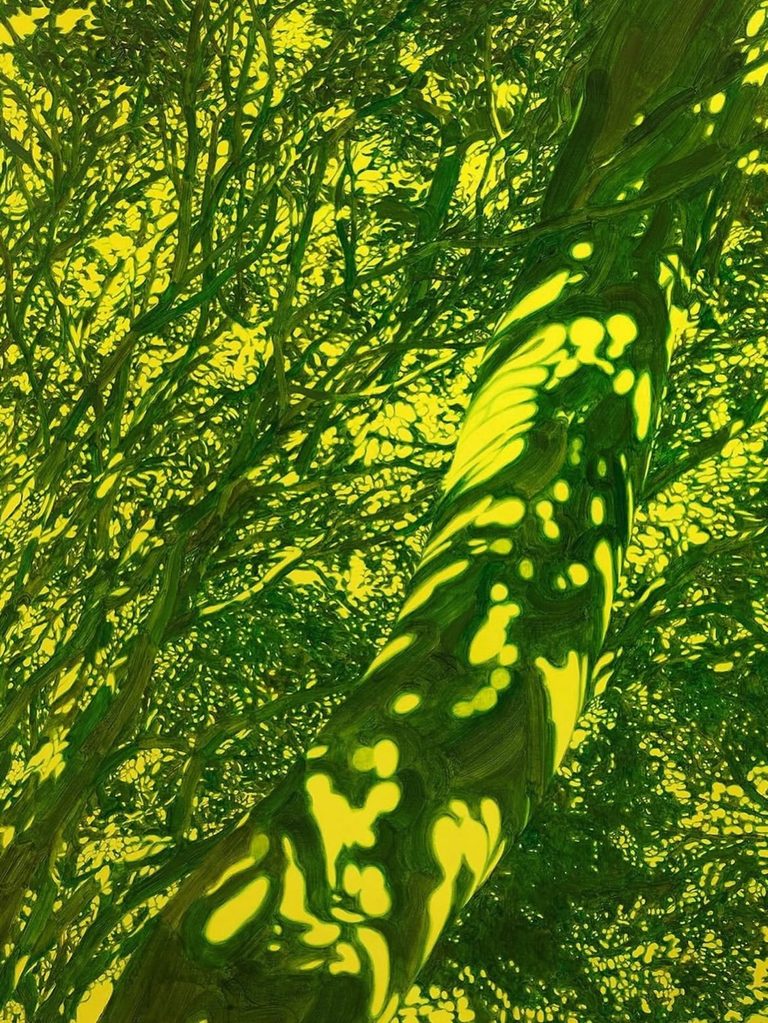
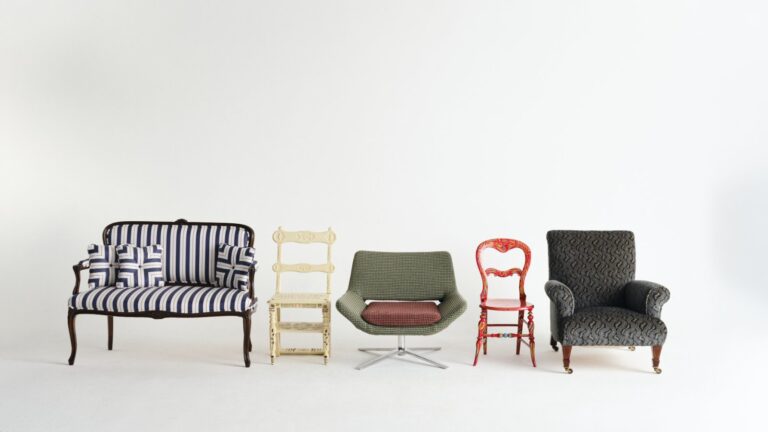
From a small city in western Germany, FOREAL has built a visual language that feels immediately recognizable: polished yet playful, technically precise yet never too serious. Echoing the geometric sophistication seen in the works of 3D artist Peter Tarka, the studio began with illustration before expanding into CGI, animation and character-driven visual storytelling.
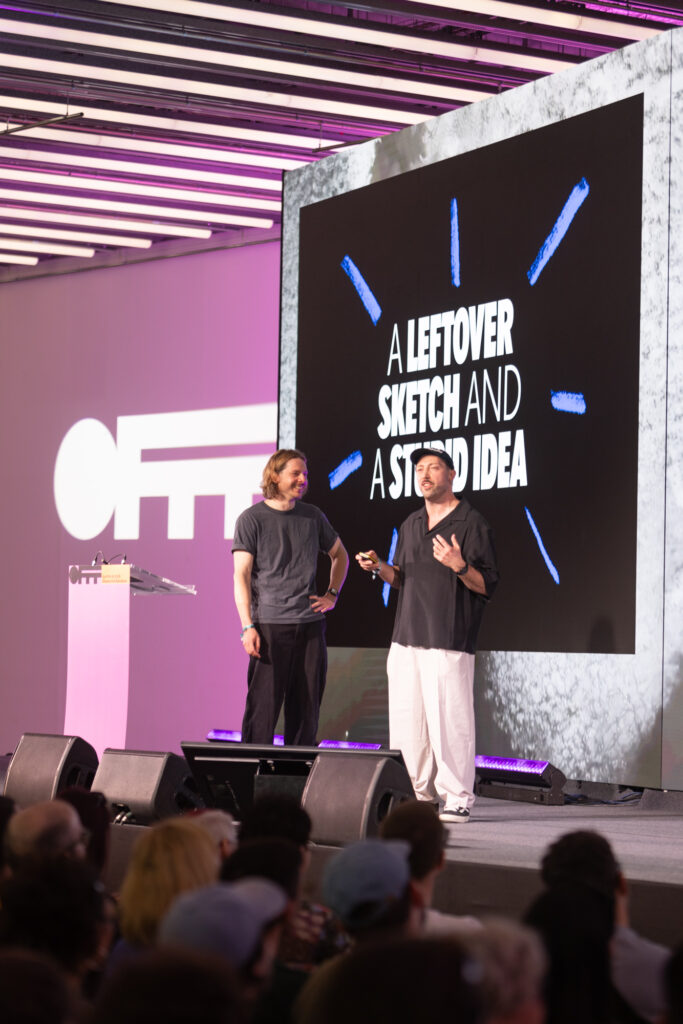
At OFFF Barcelona 2026, Visual Atelier 8 spoke with FOREAL about how that identity took shape and how humor became an integral part of their creative process. The conversation also explored how a studio far from the usual creative capitals built an international presence through collaboration, self-initiated work and a deep commitment to experimentation—a playful mastery of animated forms and digital sculpture also seen as Clara Bacou fills Outernet London with monumental digital sculptures.
How did you start the studio, and what was the initial vision? Tell us a bit about the beginning.
Benjamin Simon: Dirk and I met over 20 years ago during an apprenticeship as media designers. We went to the same school, then continued together at design school, and eventually lived in the same apartment, so we spent almost all our time together. After that, we started working for different European studios. Dirk went to England for a while, and I moved to Madrid. Later, he had the chance to join the same studio where I was working in Madrid.
At one point, we realized that the way we worked together functioned really well, and that our skills complemented each other. So we decided to move back to Germany and found our own studio in our hometown, Trier, in the southwest of Germany near Luxembourg. It is a very small city, and the idea was never necessarily to stay there forever. But somehow it worked out, and we managed to run the studio from there. At the beginning, it was just the two of us.
FOREAL started as an illustration studio, creating still images, magazine covers, editorial illustrations and key visuals for advertising. Little by little, the team grew. We had our first intern, then hired one of them full-time, and over time more people joined with different skill sets. At the same time, we started receiving more requests for animation. It was more or less the same type of work, but suddenly it needed to move. So we were pushed to bring our key visuals into motion. Everything grew very organically.
Your work has a strong sense of humor and playfulness, but also a lot of precision. How do you find that balance between design, the client’s message and these character-driven ideas?
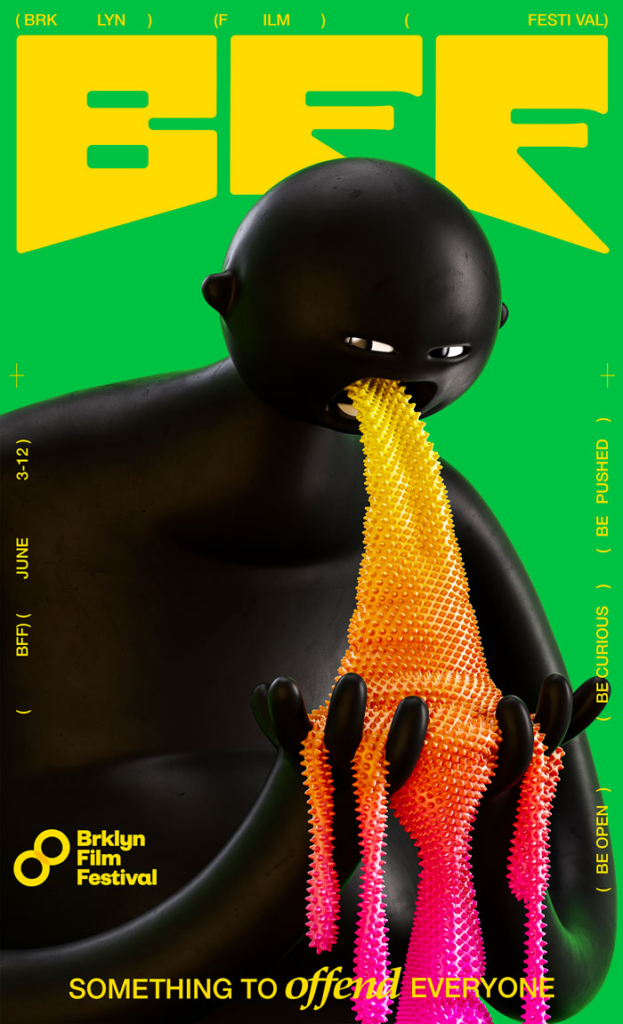
Dirk Schuster: I hope we are funny in real life, but I’m not sure. Germans are not always known as the most humorous people in the world, but we try. From the beginning, our approach was that we wanted the work to be more entertaining. If we create something, it should not only be beautiful or look nice. We like when content has another layer, when it connects through a narrative, a twist, a story or humor.
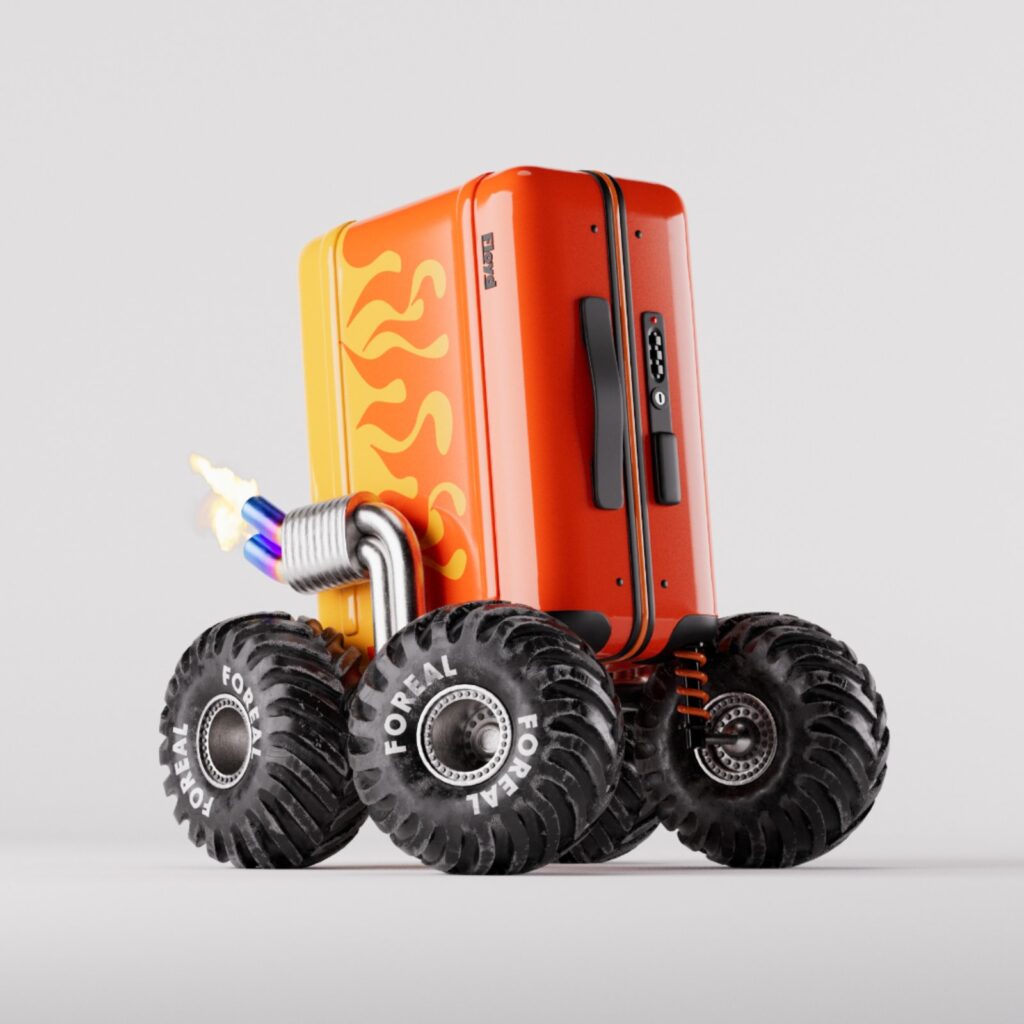
That was always our way of being creative. We wanted the image to be more than just something that looks good in the end. It helped us stand out from work that only presents shiny products in a polished way. People reacted very positively to things that felt more humorous, more playful, and that didn’t take themselves too seriously. Not all our commercial work is like that, of course, but it is something people associate with us, and it helped us create our own space within CGI and illustration.
In general, what does creativity mean for you? Is it something that comes naturally through inspiration, or is it more a disciplined process based on research, experience and work?
Benjamin Simon: I think it is a big mix of everything. Of course, it comes from what you experience and how you see things, but it is also shaped by the people around you. Our creative process is not up to a single person. It is more collaborative. Sometimes someone in the studio says something random, or has a really dumb idea, and that becomes the beginning of something. Then someone else picks it up, adds something, and the idea starts to evolve.
It is like playing ping pong. Ideas grow over time. It is not usually one sudden spark where everything is solved at once. It is more about the whole team developing something together. In the studio, we all sit around one big table. There are no separate desks, so everyone has the chance to jump in, comment and be part of the conversation. That is a key part of our process.
Has your role changed over time as founders? What do you do differently today compared to when you started?
Dirk Schuster: We are still involved in the whole process from the very beginning, but now it is in a different way. When we started, it was only the two of us, and we did everything ourselves. We created the work, handled the communication, and even did the invoicing. Today, our role is more about directing, commenting, advising and giving hints.
Benjamin Simon: There are many talented people in the team, so now it is also about leaving space for interpretation and execution. We guide the direction, but we also trust the team to bring their own ideas and skills into the work.
You work with a team that also feels like a group of friends. Were they friends before, or did those relationships develop inside the studio? And how does that affect the work?
Dirk Schuster: It is a mix. Some people we knew personally before they came to us, and some became friends through working with us. Because we are based in a small town, there is not such a large creative scene. When you work together and spend a lot of time together, you naturally get to know each other, and friendships develop.
There are positive and negative aspects to that. Of course, communication can be more casual and open, but on the other hand, you are still running a business and need to make professional decisions. Sometimes that can be tricky when personal relationships are involved. There are limits, and you need to keep those limits. But in general, when people feel comfortable and free, they can also be more creative.

Clients often come to you for a very specific visual style. Do you ever feel limited by that, or does it help you stay focused?
Benjamin Simon: Working with clients is always limiting in some way, because there is a brief, a corporate identity and a certain framework you need to work within. That is why self-initiated projects play such an important role in our studio. They are the place where we can experiment and try new things. A lot of what people associate with us actually comes from those projects.
They are our playground. Client projects often have more limitations, but self-initiated work allows us to approach things differently, test new directions and keep evolving as a studio. As a studio, you always have to reinvent yourself to stay visually relevant.
Many creatives struggle with the business side, especially finding clients. How did you build your client network and maintain those relationships over time?
Dirk Schuster: When we started around 14 years ago, everything was a bit different from today. We were lucky to have good partners on the representation side. We worked with illustration representatives in different markets, including Germany and the United States, and that helped us kickstart our career.
We were also lucky to be part of what felt like a golden era of social media. Algorithms were different, and it was possible to build a following and get your work seen. Since we are based in a small city in Germany, we did not have many direct personal client contacts. We were not going out and presenting our work in person all the time.
Our main form of marketing was putting our work online and having people react to it. That was also why self-initiated projects were so important. People saw those works, reacted to them, and clients thought, “I want something like this for my brand.” I think that is still important: do your own work, find your niche, find your own style, repeat it, and put it out there. But it is harder now. Social media has changed and classical networking and live events are becoming more important again.

Outside the studio, what do you enjoy doing to relax and clear your mind?
Benjamin Simon: Personally, I do a lot of sport. I go to CrossFit at least every second day to clear my head and reset my mind. I also go fishing occasionally, especially during the summer. Those are the things that help me stay fresh.
Dirk Schuster: For me, it is similar. I try to do sports as well, but now I have two kids, so I do not have the same space anymore to relax outside of work. In some ways, it has become the opposite: I go to work to relax. I do not necessarily feel that I need a quiet space to become creative again.
We cannot avoid speaking about artificial intelligence. Have you already started applying it in the studio, and how do you see it?
Benjamin Simon: We are also divided by it. We have very mixed feelings. On one hand, it is scary and intimidating. On the other hand, there is potential, and there are opportunities to implement it in a smart and efficient way into the process.
As long as you are not using it to replace the entire creative process, it can be an option. For us, we use it in a very iterative way. We test a lot of things: color options, compositions, lighting situations, different visual directions. It helps us create a wide range of options quickly and understand what could work.
But we try not to let it have too much impact on the final outcome. Especially at the beginning of the process, it is important for us that there is an intention and some kind of soul. We still achieve that through more classical and traditional workflows, such as sketching.
What do you think technology cannot replace in the creative industry?
Dirk Schuster: I do not want to make assumptions about that, because we have been surprised again and again over the last three years. I remember being at an Adobe event when image generation tools had just come out. We tried to recreate our own images and laughed because it did not really work. Then one year later, we were surprised by what was possible. Another year later, it had improved again.
So I do not know what can or cannot be replaced. Some people say AI cannot have taste, or cannot judge what is good and what is not. I am not sure anymore. In the general public, some obviously AI-generated images still perform very well. People might just see a cute character with big eyes and react positively to it. Then you start to question whether taste is really needed in every context.
I think art itself is probably safer, because it is one of the most human things. But in commercial creative service fields like advertising and design, I honestly do not know. We will see.
You spoke at OFFF Barcelona, in front of a global creative audience. What was the main message you wanted to share?
Benjamin Simon: What is special about OFFF is that it is much more than a design event. We started our keynote with the story of how we first came here in 2014, without knowing anyone. We had almost no social interactions at the beginning, but we were curious about everything.
Dirk Schuster: Then we met a Dutch guy, drank beer with him, and we became friends from that moment on. He was very connected to the event, and he later passed away. That relationship showed us that an event like OFFF can be much more than showing design work, being on stage, or presenting a portfolio. It can be a very human experience. You can find friends, make real connections, and create memories that stay with you. For us, that is the essence of the event.
If you could send a message to your future self, ten years from now, what would it be?
Dirk Schuster: I hope you are grateful for what you were doing ten years ago. I hope you are still doing well. I am happy with where we are right now. I do not feel like I need to chase more highs or peaks.
Benjamin Simon: I hope that in ten years we still enjoy what we do, that we have not been completely replaced by AI, and that we still love going to the studio every day.
All images courtesy of FOREAL, shared with permission
FOREAL: https://weareforeal.com/
OFFF Barcelona: https://www.offf.barcelona