Casa Plan de Barrancas by PPAA shapes domestic space through landscape integration in Mexico City
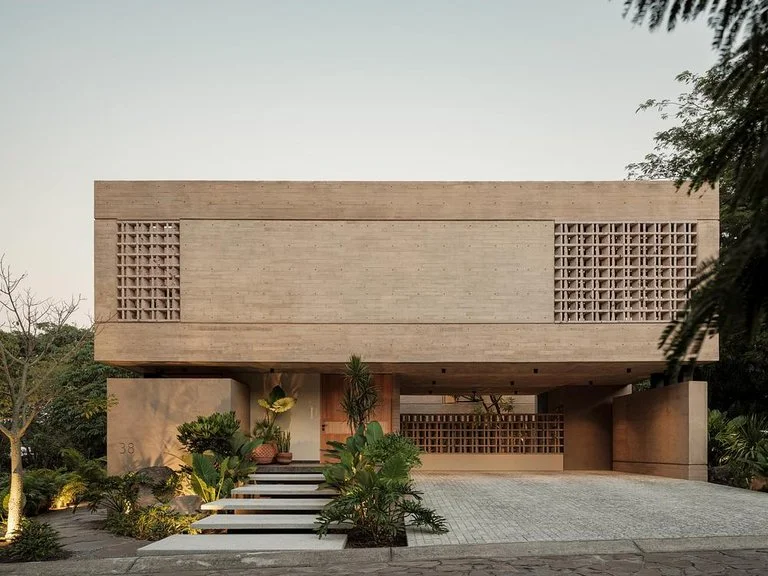
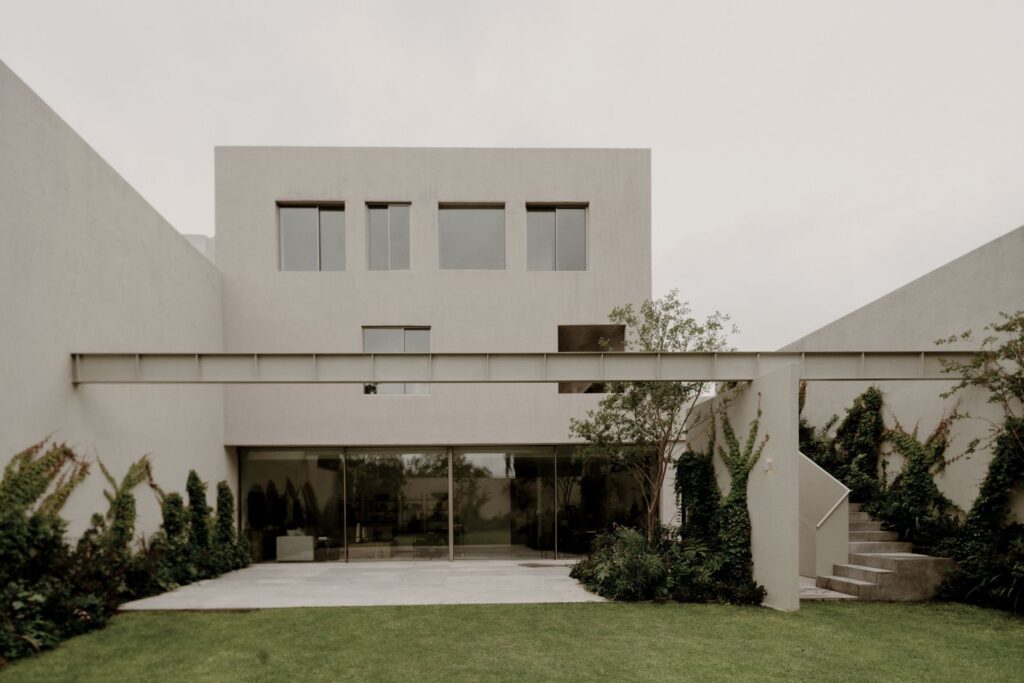
Casa Plan de Barrancas by PPAA is a residential architecture project in Mexico City that defines a precise relationship between built form and landscape through spatial hierarchy and material contrast. Located in the western part of the city, Casa Plan de Barrancas organizes domestic life through a clear distinction between public and private realms while maintaining continuity between interior and exterior environments. The project positions the ground floor as an open plane connected to vegetation, while the upper levels consolidate a more contained and private spatial condition.
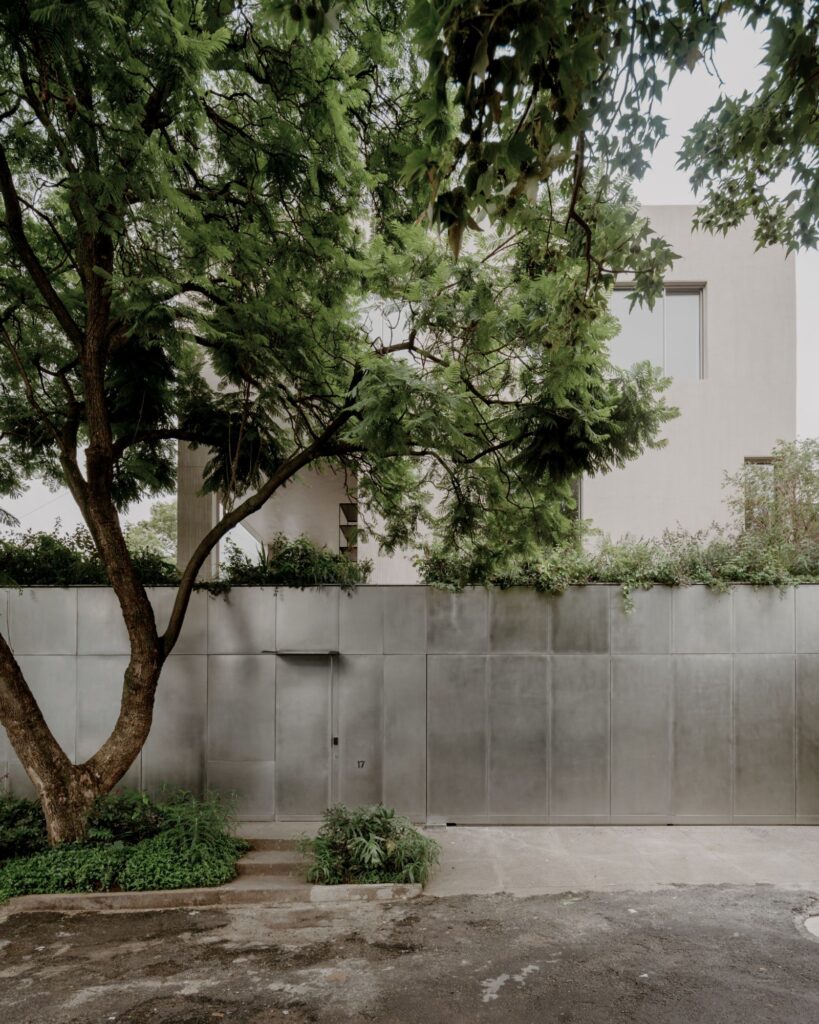
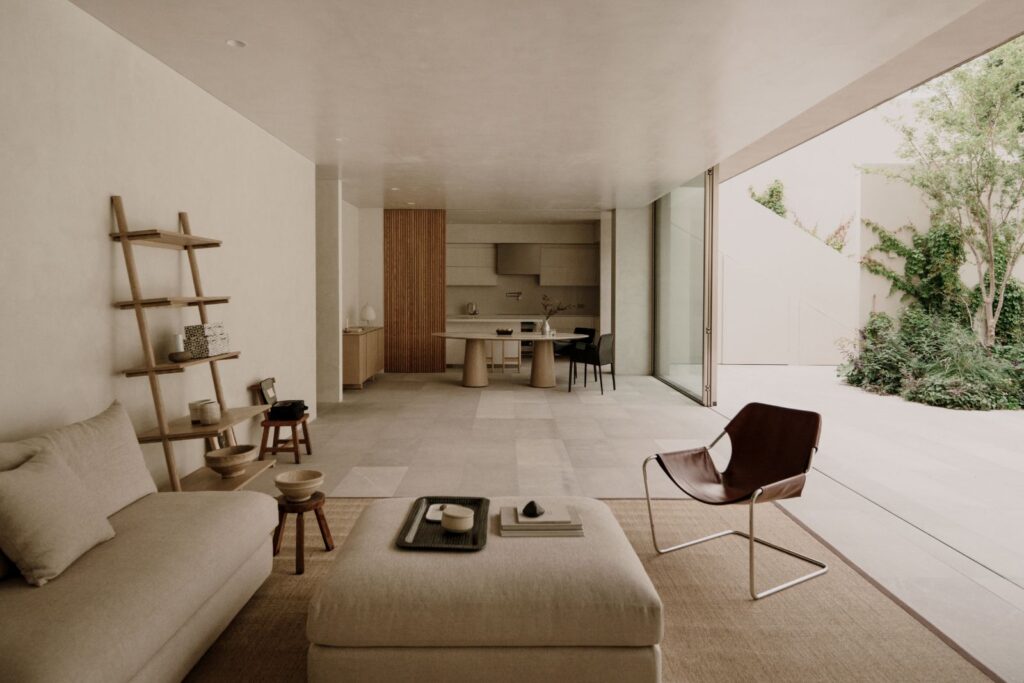
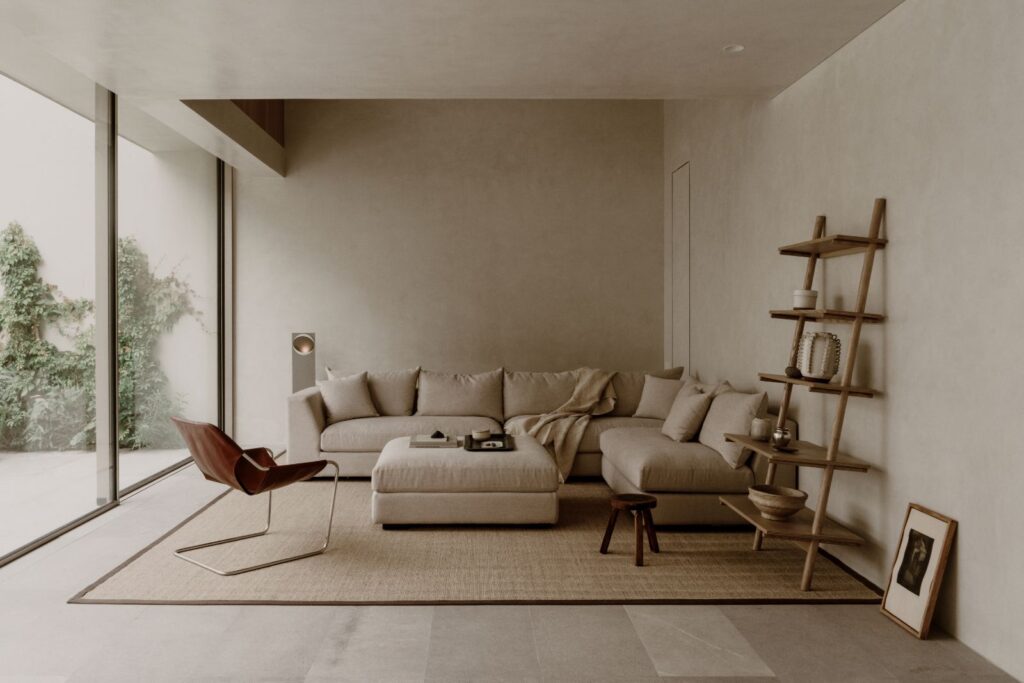
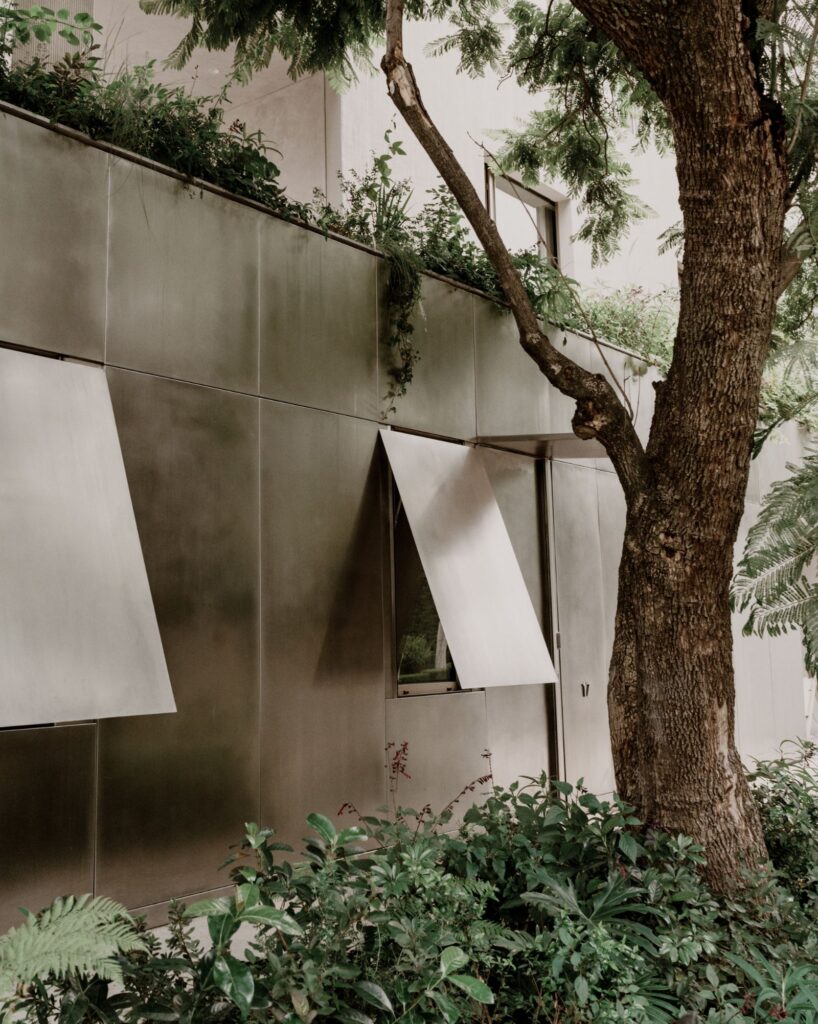
The ground floor operates as a continuous surface that accommodates the social functions of the house, directly extending toward the rear garden. Large openings allow the interior to maintain a constant visual and physical connection with the existing vegetation, establishing a natural atmosphere that shapes everyday use. This level integrates the landscape not only at the back but also toward the street through a linear planter embedded into the architectural volume, redefining the threshold between the domestic interior and the urban context.
This approach transforms the perception of Casa Plan de Barrancas from an isolated architectural object into a spatial system closer to landscape design. The use of reflective material at the base amplifies the presence of surrounding greenery, reducing the visual weight of the structure and allowing the vegetation to dominate the experience. Functional elements such as the entrance and garage are integrated within this reflective layer, reinforcing the continuity of the ground plane and creating the impression that the upper volume is suspended above a vegetated surface.
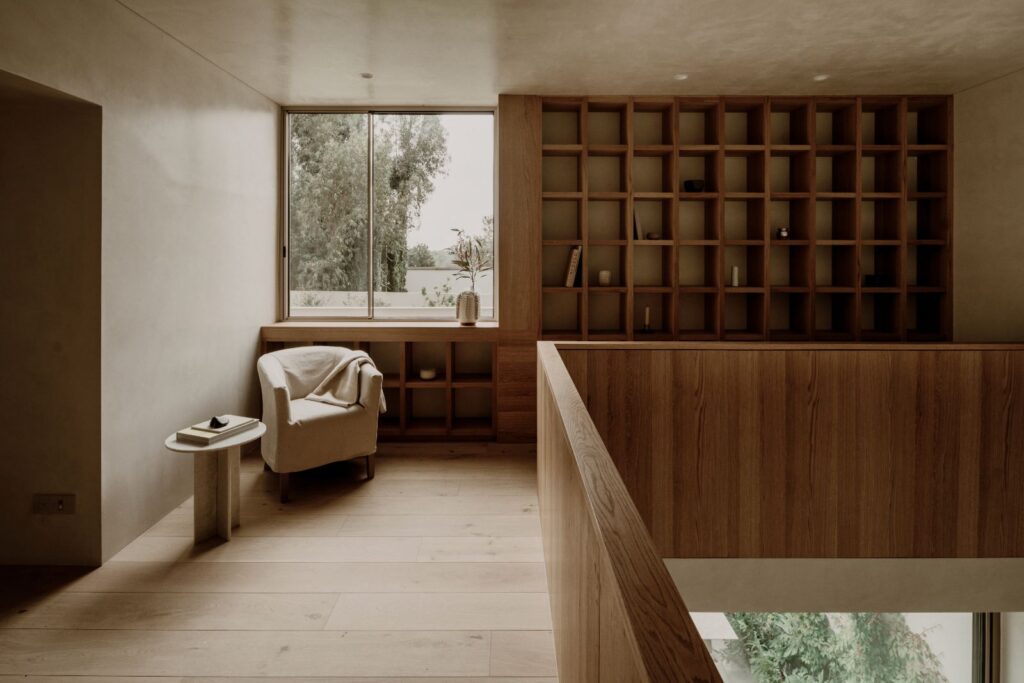
In contrast, the upper levels are defined by a solid and opaque volume that contains the private areas of the house, including bedrooms and workspaces. This volume features controlled openings that regulate light and views while ensuring privacy. Its position responds directly to the presence of a jacaranda tree along the street, generating a spatial displacement that produces a terrace. This outdoor space acts as an extension of the interior while embodying PPAA’s interest in the “defined void” as an architectural element equal in importance to built mass.
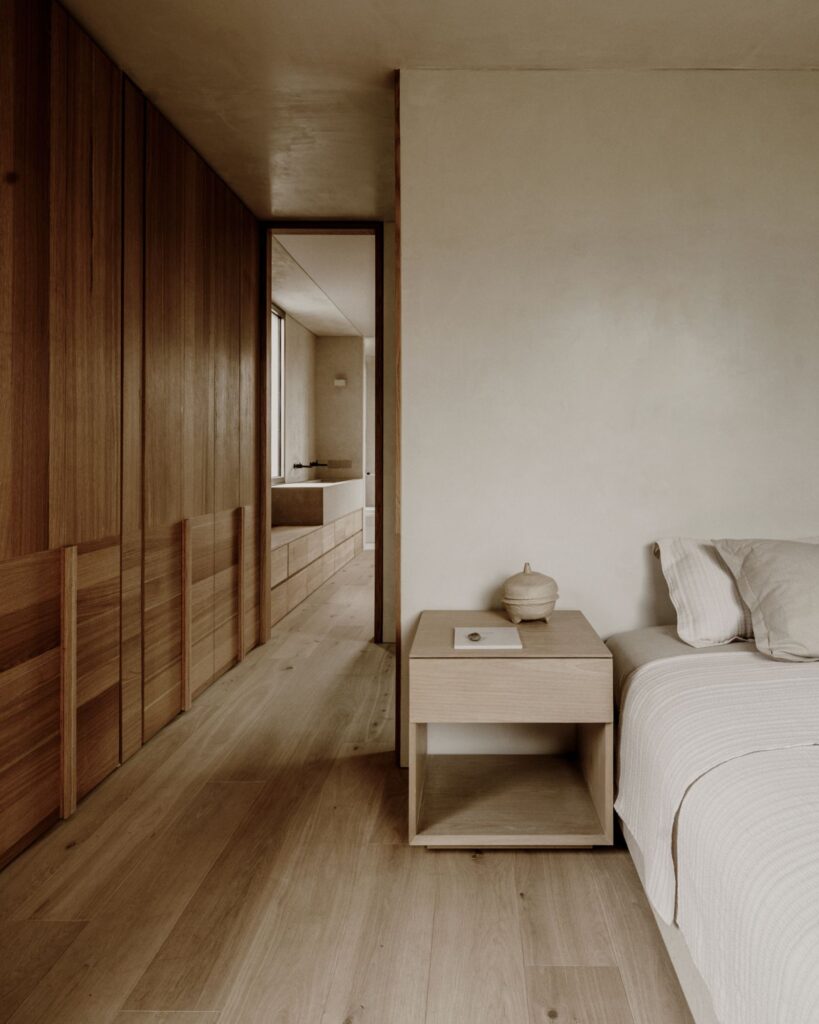
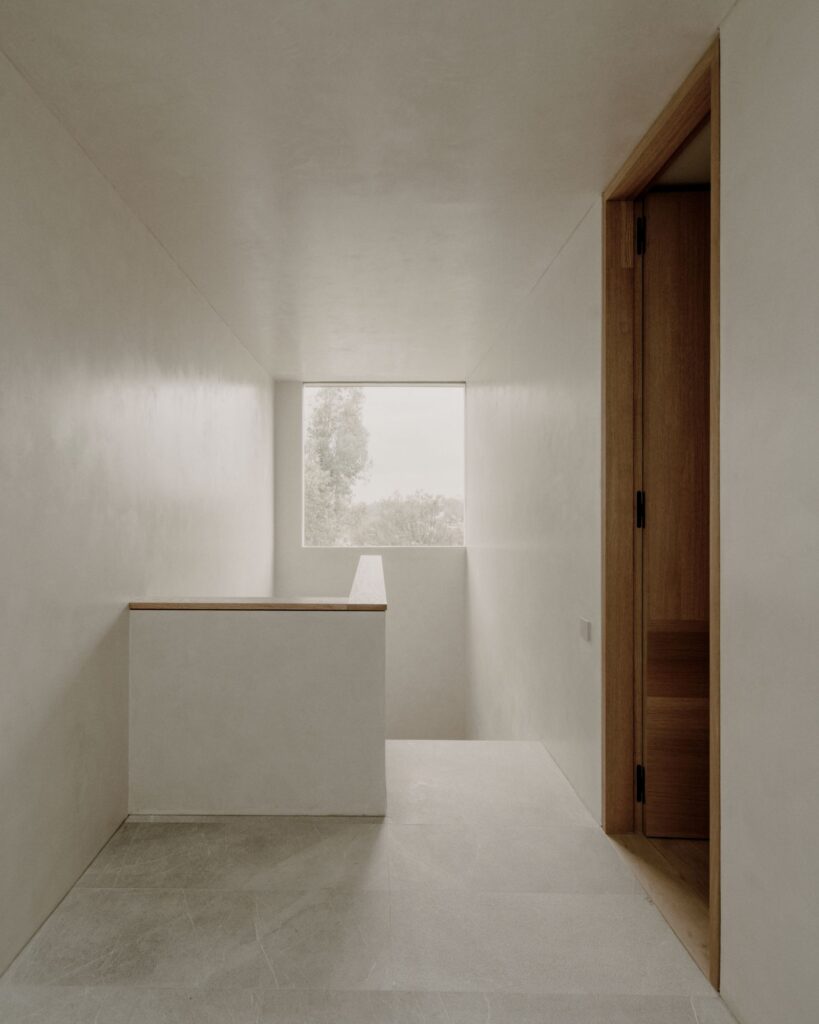
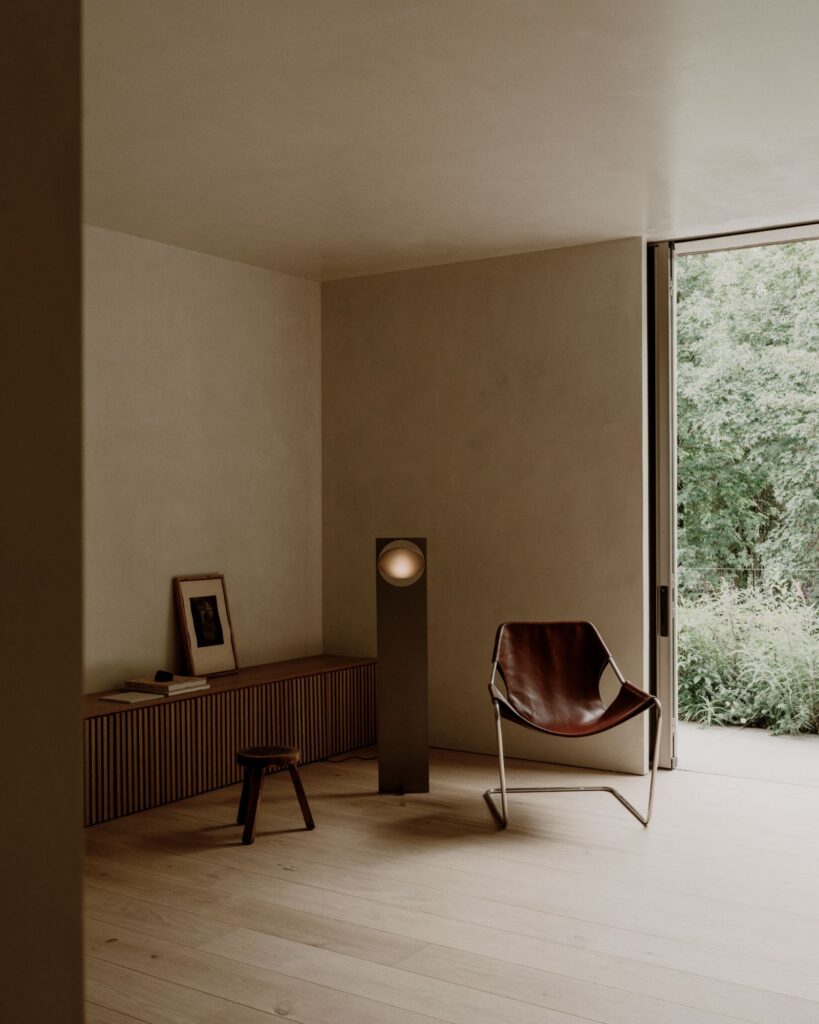
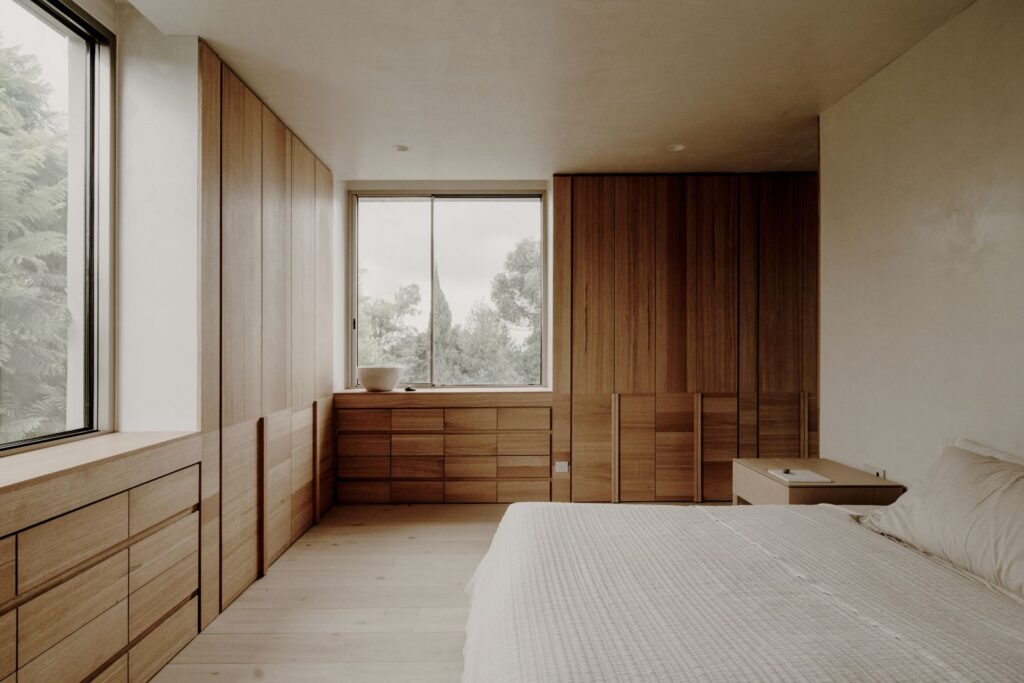
Public areas use natural plaster walls and bush-hammered marble flooring that extends from inside to outside, maintaining visual coherence. Private areas shift to wood flooring, introducing a warmer and more enclosed atmosphere aligned with the more controlled openings of the upper volume. The façade is characterized by vertical striations in plaster, giving the project a consistent geometric expression.
Casa Plan de Barrancas by PPAA also incorporates sustainable strategies at multiple levels. The house operates independently from the electrical grid through solar energy, with fully electric systems for heating and cooking. The selection of low carbon footprint materials during construction reflects a broader approach to sustainability, positioning the project as both a residential architecture intervention and a considered response to environmental conditions within Mexico City, a topographical harmony similarly achieved where Superkül integrates Ridge House with landscape through sloping roof.
Photography by Luis Garvan, with courtesy of PPAA