Sanjay Puri Architects designs Prestige University as an accessible terraced campus stage
Prestige University by Sanjay Puri Architects consolidates key campus functions into a single academic building on a 32-acre university site. The project brings together the main administration offices alongside an auditorium, seminar halls, a library and a cafeteria, positioning shared facilities in one structure intended to support daily student life as well as large events.
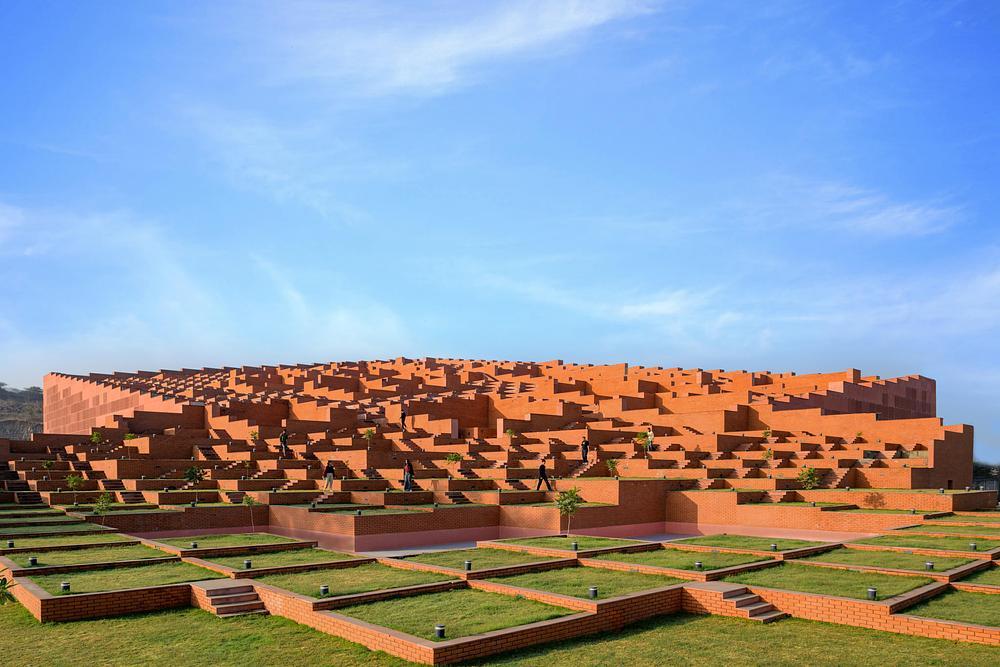
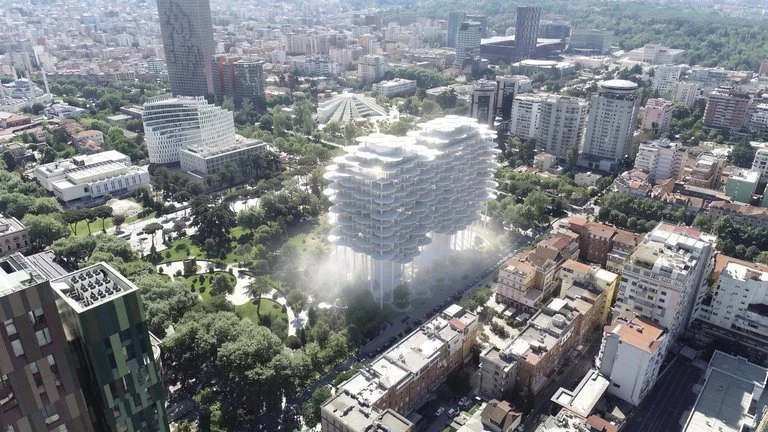
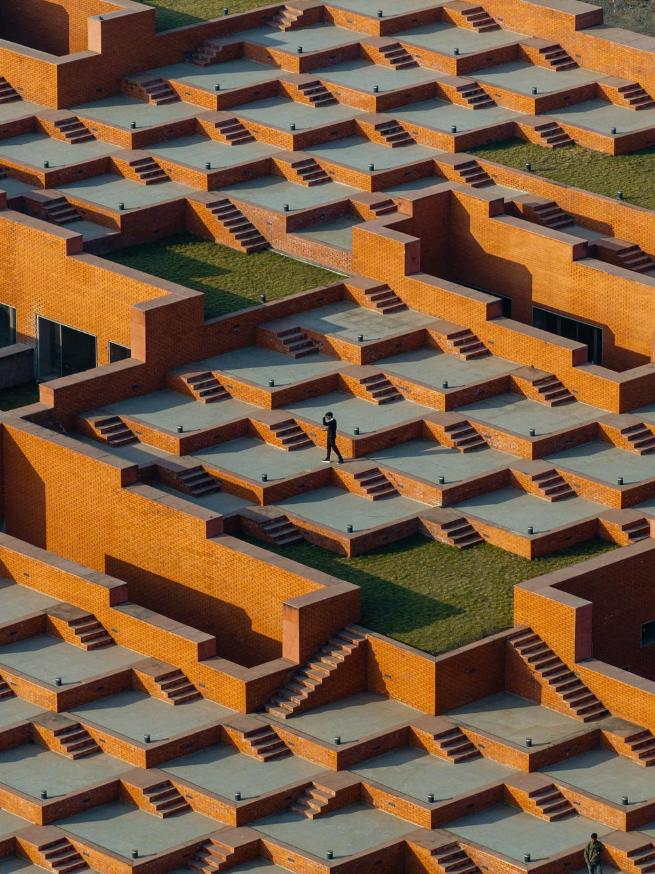
Instead of forming an imposing object, the architecture rises gradually from the approach side, stepping upward to soften the reading of its 28-metre height. This stepped massing turns the building itself into an inhabitable terrain, where movement across levels is expressed as a continuous sequence of platforms that extend the campus landscape onto the roof.
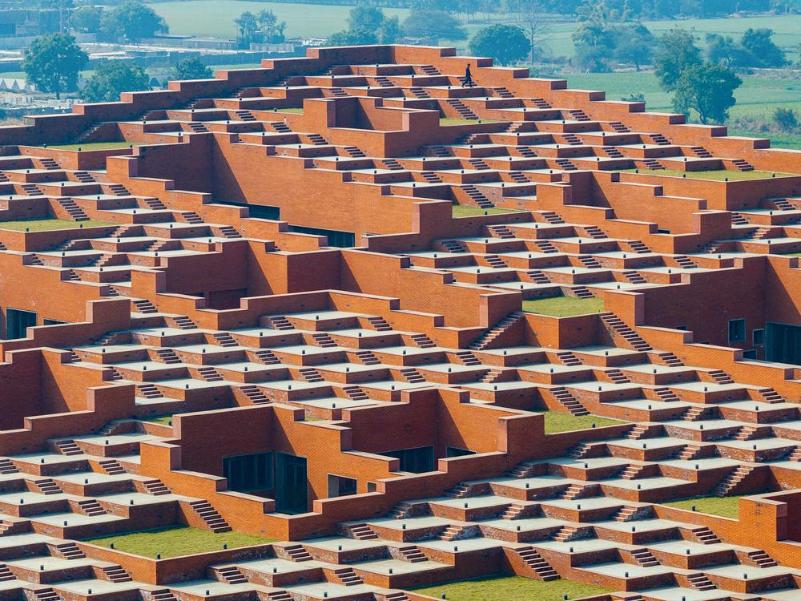
The five-level building is arranged so that the full terrace system is accessible to students and faculty, effectively turning the upper surfaces into an open auditorium. By stepping diagonally from the northern point, the terraces become a usable public realm above ground, allowing informal gatherings, circulation and campus activities to occur outdoors while remaining integrated with the building’s programme.
Related read from Visual Atelier 8: Bloomberg Student Center by BIG.

These stepped platforms are designed as multiple zones that can host different activities at the same time, while also operating collectively as an open-air venue for large-scale events. When required, the terrace seating can accommodate up to 9,000 students, transforming the roof into a multifunctional stage connected to the surrounding landscape.
Inside, the building’s functional spaces are threaded around landscaped courtyards that bring in natural light indirectly at each level. This strategy helps daylight reach internal volumes without relying on harsh direct sun, while the interplay of courts and sectional shifts creates a series of varied spatial conditions across the plan.

The project draws on north lighting and courtyard principles associated with traditional Indian architecture, supporting an energy-efficient approach with minimal dependence on artificial lighting and air conditioning. This responds directly to the local climate, where temperatures can range from 30°C to 40°C for much of the year.
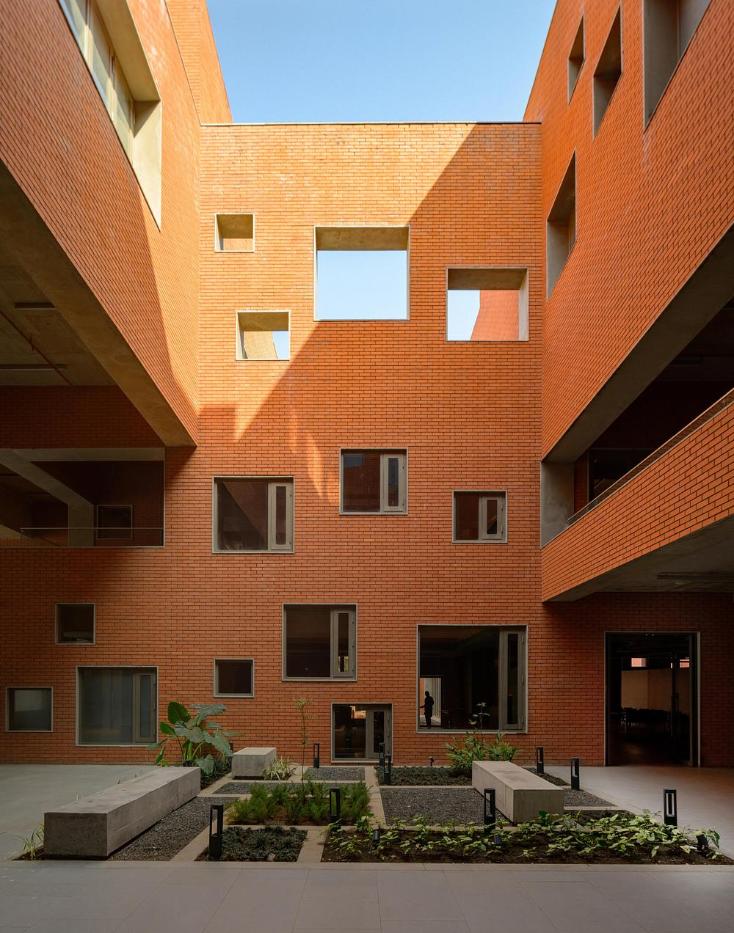
A continuous diagonal indoor street runs through the building and, together with numerous open courts, supports natural ventilation within internal areas. Varied sectional volumes, punctuated by planting, generate different experiences from level to level, balancing enclosed learning spaces with outdoor spillover areas for recreation and social use.

The stepped form also recalls India’s historic stepped wells, which served as civic spaces as much as water infrastructure. Here, that communal logic is translated into a contemporary campus setting, where the building becomes a stage for social interaction and events. In total, 463 stepped platforms create a 9,000-square-metre rooftop garden, with selected platforms made wheelchair accessible.

Programme is organised for clarity and access. The ground floor holds common facilities such as the food court, auditorium and administrative offices. Library components sit on the first floor and are connected by a bridge crossing the diagonal indoor street. Common classrooms occupy the second floor, using the open courts for light, ventilation and spillover recreation. Tiered classrooms are placed on the third floor, while the fourth floor accommodates administrative and faculty-related facilities.
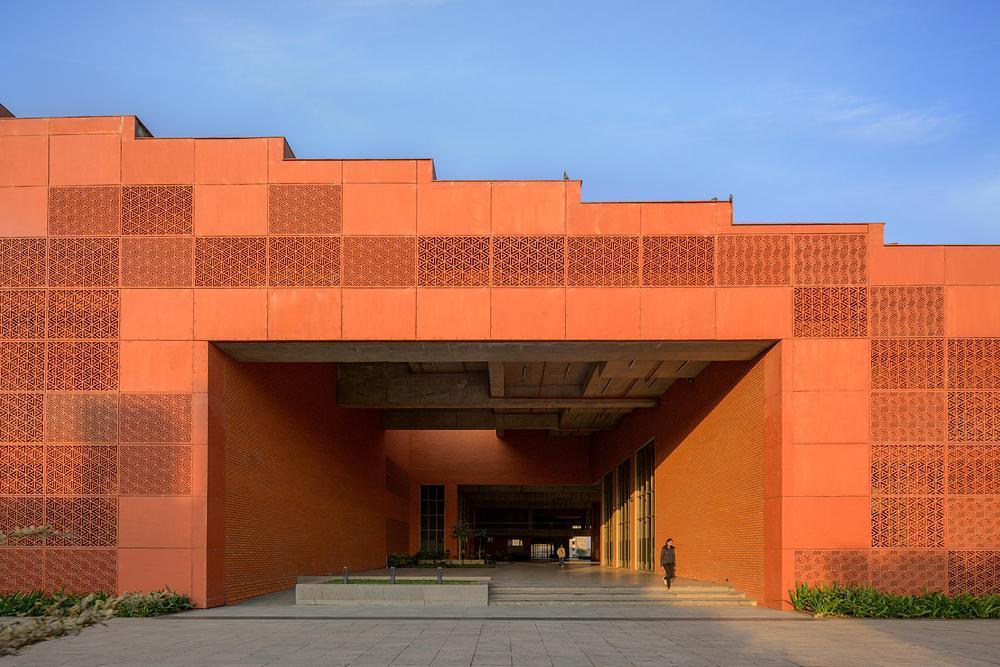
On the exterior, the east, west and south elevations are wrapped with ventilated GFRC screens to reduce heat gain in response to the climate. With an accessible ground level and a landscaped roof, Prestige University integrates functional interiors with open public space, creating interactive areas at different scales that encourage engagement across the campus community. This sculptural treatment of residential facades and cantilevered balconies is equally central to the Cielo residential building by Sanjay Puri Architects in Nagpur, adapting architectural geometry to hot regional microclimates.

Photo credit: Vinay Panjwani