Genji Kyoto: A boutique hotel inspired by an ancient tale
Running through The Tale of Genji, written around 1008 by court lady Murasaki Shikibu, is a feeling the Japanese call mono no aware: the bittersweet ache of impermanence, of beauty that exists precisely because it does not last. It is not a concept you can frame on a wall. At Genji Kyoto, the architect and interior designer have made it structural.
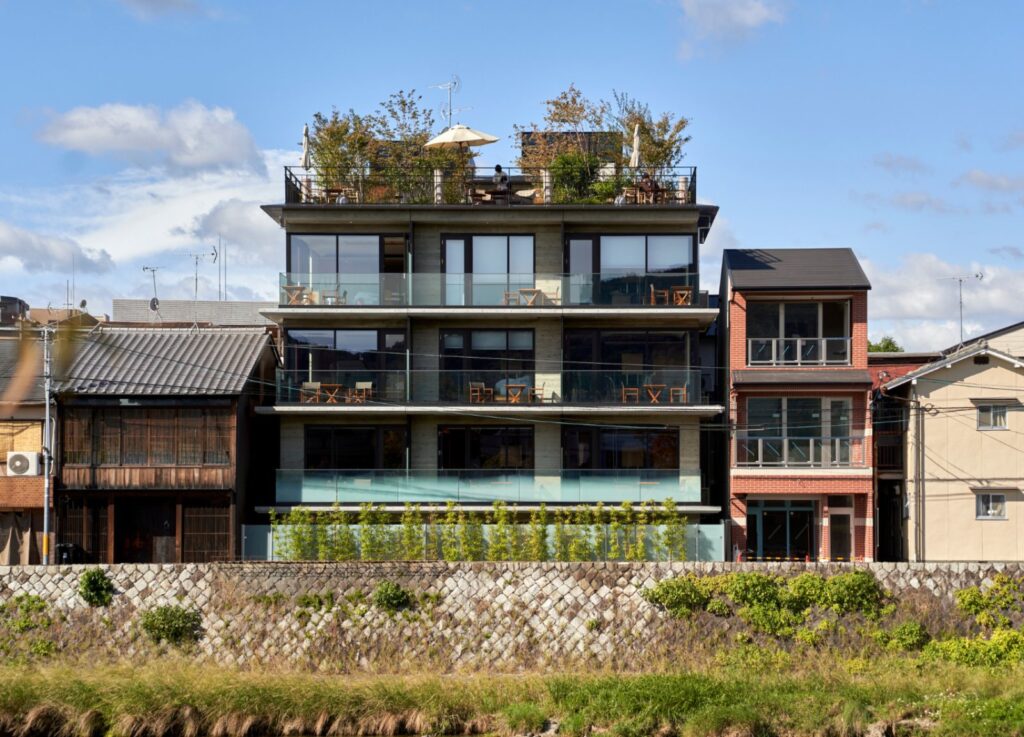
The hotel is located in Gojo-Kawaramachi, one of Kyoto’s quieter neighborhoods, on a site once occupied by four traditional machiya townhouses. Lead architect Geoffrey P. Moussas kept faith with their long, narrow proportions rather than imposing a contemporary monolithic block. The result is two separate volumes with a garden running through the gap between them, a decision that reads, from the street, as a kind of urban modesty, and from the inside, as a conversation between architecture and nature.
“The split into two towers was a response to both the site and the Genji narrative. The building style of the Heian period — Shinden Zukuri — had a master’s chamber and all the quarters for his companions consisting of little pavilions connected by bridges. That became our reference: two towers connected by bridges, so that guests feel the weather and the garden as they move between them.” Geoffrey P. Moussas, Lead Architect
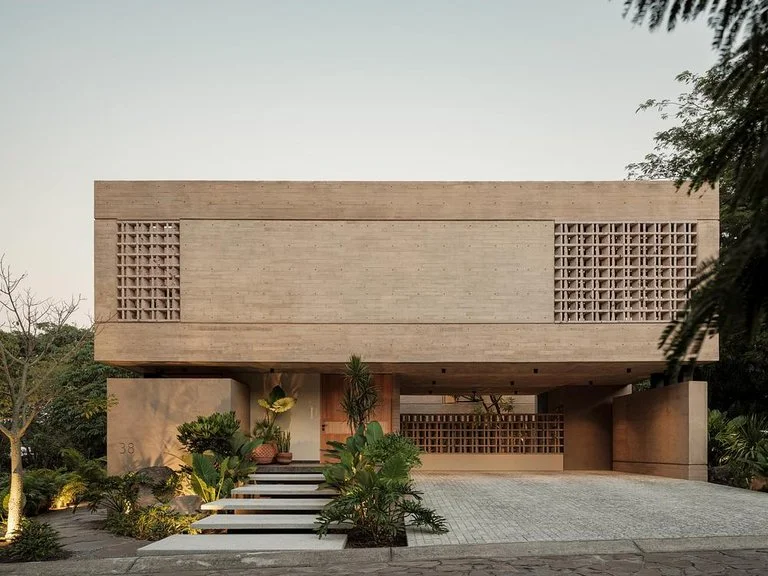
The façade is where the project earns its first close look. Contemporary building regulations make full timber construction difficult, so Moussas turned to the Sugi Ita Katawaku technique: concrete poured into cedar-board molds. When the formwork is stripped away, the surface retains every grain and knot of the wood, pressed in like a fossil. That way, the architect has created an industrial structure with an ancient feeling.
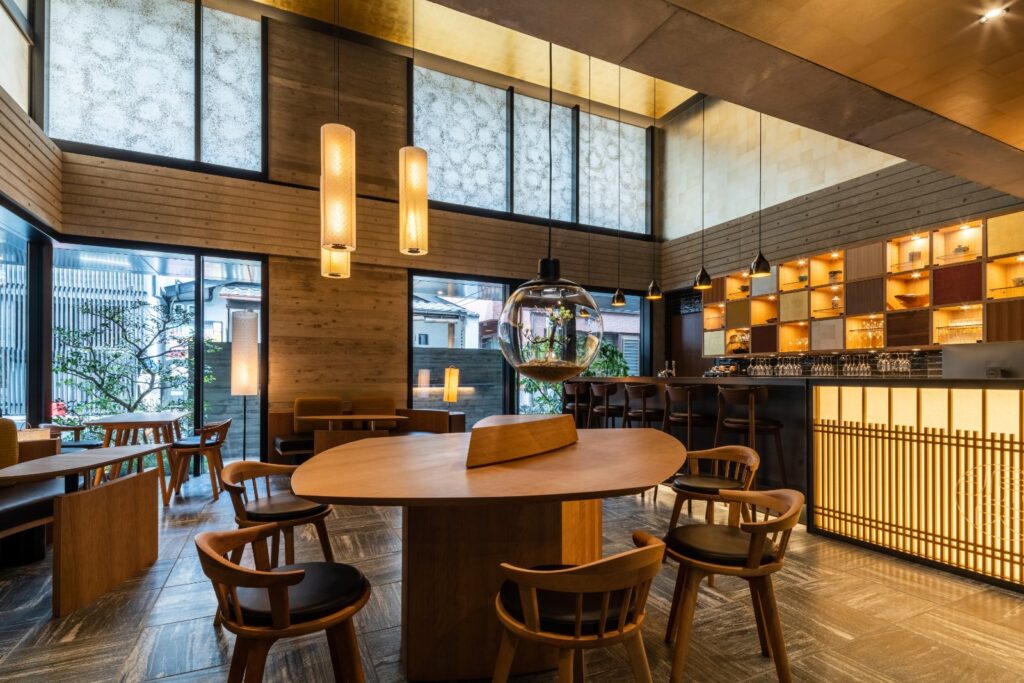
Inside, Moussas and Jun Tomita organise the interiors around the concept of Wa (harmony), which in practice means resisting the urge to fill every surface. The lobby is anchored by the washi paper installations of artist Eriko Horiki: five layers of handmade paper laminated into glass, embedded with silver flakes that scatter both natural and artificial light. By night, the whole building envelope begins to glow from within. The centrepiece is a sculptural Tachibana Table, its shape drawn from the orange blossom motif in one of the Genji chapters, flanked by sofas with swivelling seat-backs, so guests can face either the lobby or the garden beyond.
In the guest rooms, local Kyoto artists were commissioned to paint site-specific works, each reinterpreting a specific Genji chapter. The furniture is entirely bespoke, handcrafted by Kyoto’s Futaba Furniture and the artisan duo Dodo and Kawanabe of +veve. Entrance stools, tatami tables, and writing desks are all designed with diagonally curved edges that echo the Mingei folk-art tradition without replicating it. The floors shift material as you move through the space: linen tiles, cherry wood boards, rush-matted tatami, and stone paving that continues in from the pocket gardens outside.
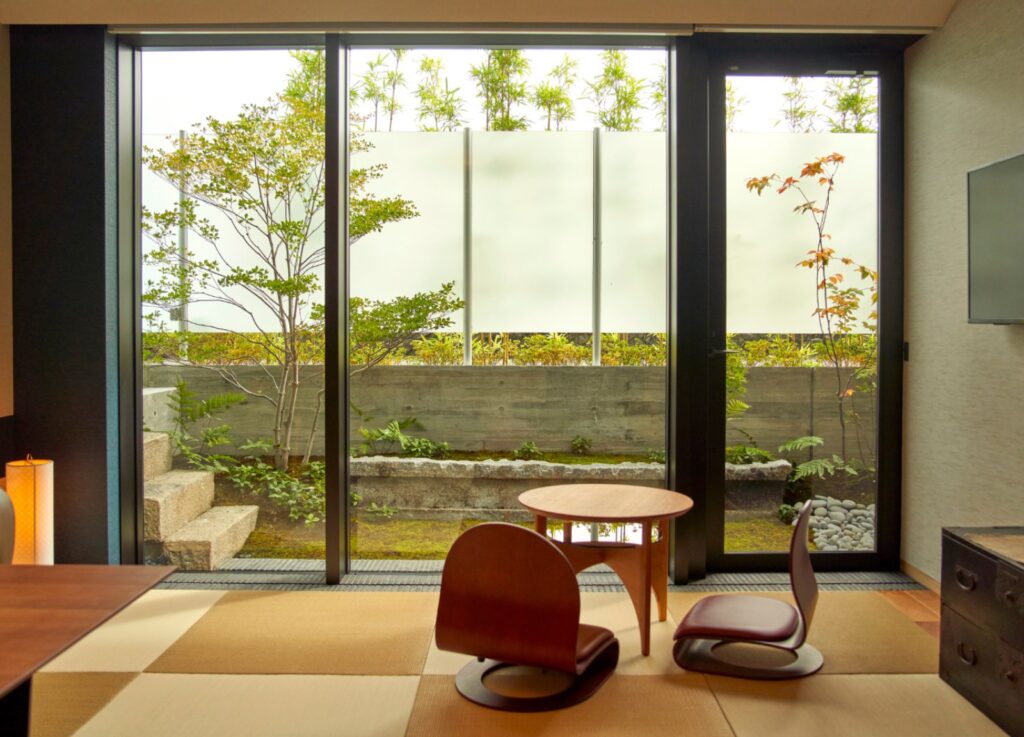
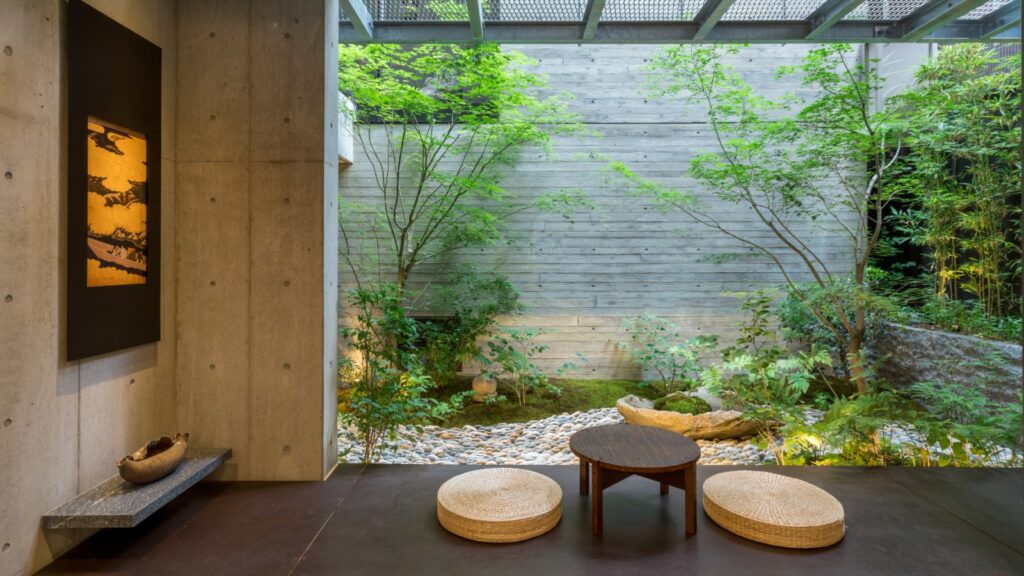
The project’s conceptual heart belongs to landscape designer Marc Peter Keane, working from the principle of Teioku Ichinyo: the idea that a garden and its building are a single inseparable thing. The structural gap between the hotel’s two wings channels the seasons through the building’s core, changing foliage becomes, month by month, a shifting installation you move through on the way to breakfast.
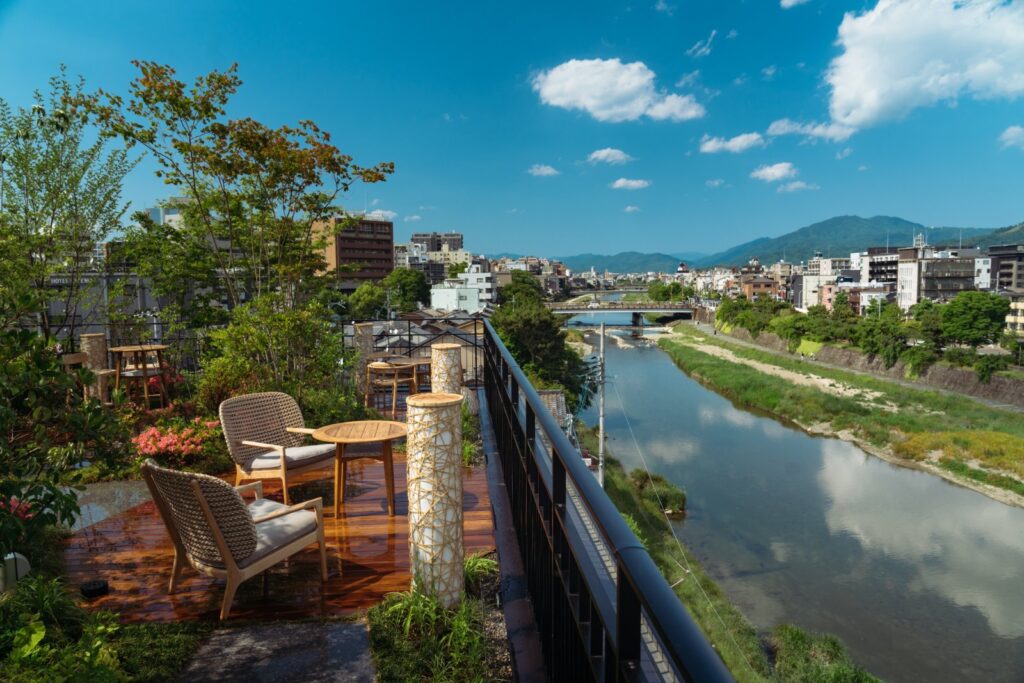
Pocket gardens (tsuboniwa) dissolve the threshold between inside and outside: river gravel spills from the exterior into the living spaces, as if the landscape had simply decided to come in. In the lobby, the Ukifune Garden places a boat-shaped stone afloat in a dry sea of raked gravel, a direct quotation from the Genji chapter known as Drifting Boat. On the rooftop, the Sky Garden is planted exclusively with species mentioned in the original text, its edges framing the Higashiyama mountains as borrowed scenery.
What makes Genji Kyoto unique in the hospitality world is not that it references literature; it is that the reference has been taken seriously at every scale, from the geometry of the façade down to the species list of the rooftop garden. The result is a building that does not feel themed. It feels considered. In a city that has spent centuries calibrating exactly that difference, guests tend to notice.
All images courtesy of Genji Kyoto