Asympta by Leopold Banchini reflects on Pantalica’s lost domestic architecture
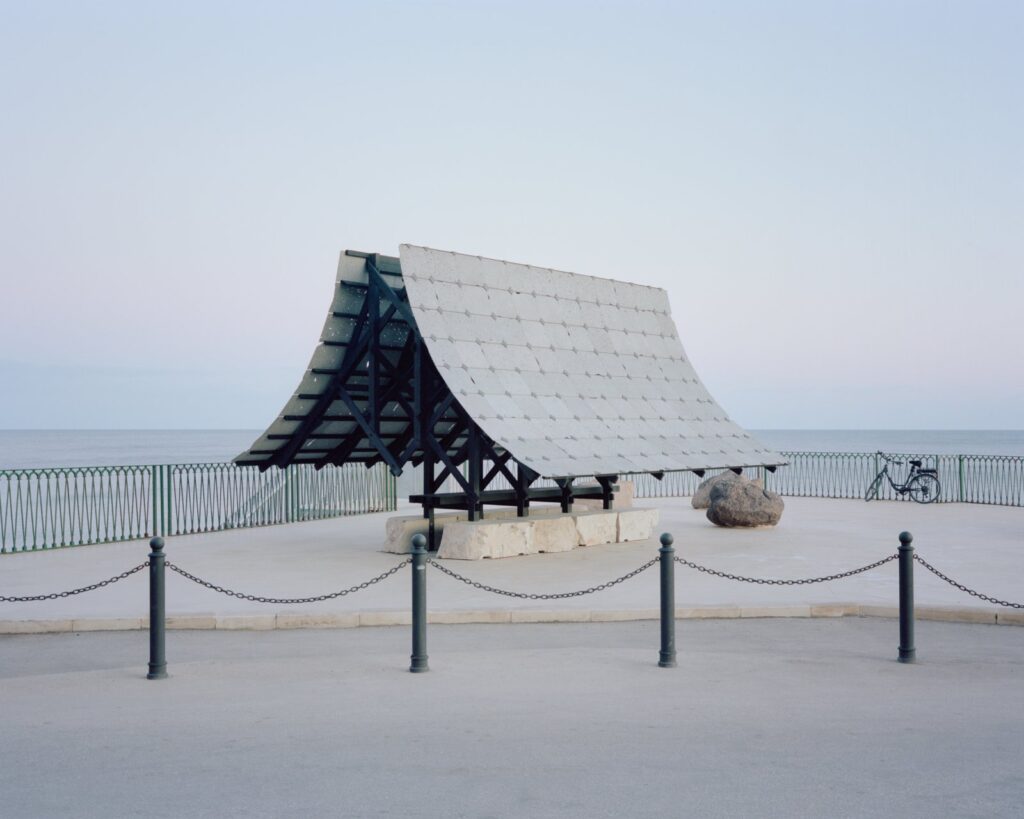
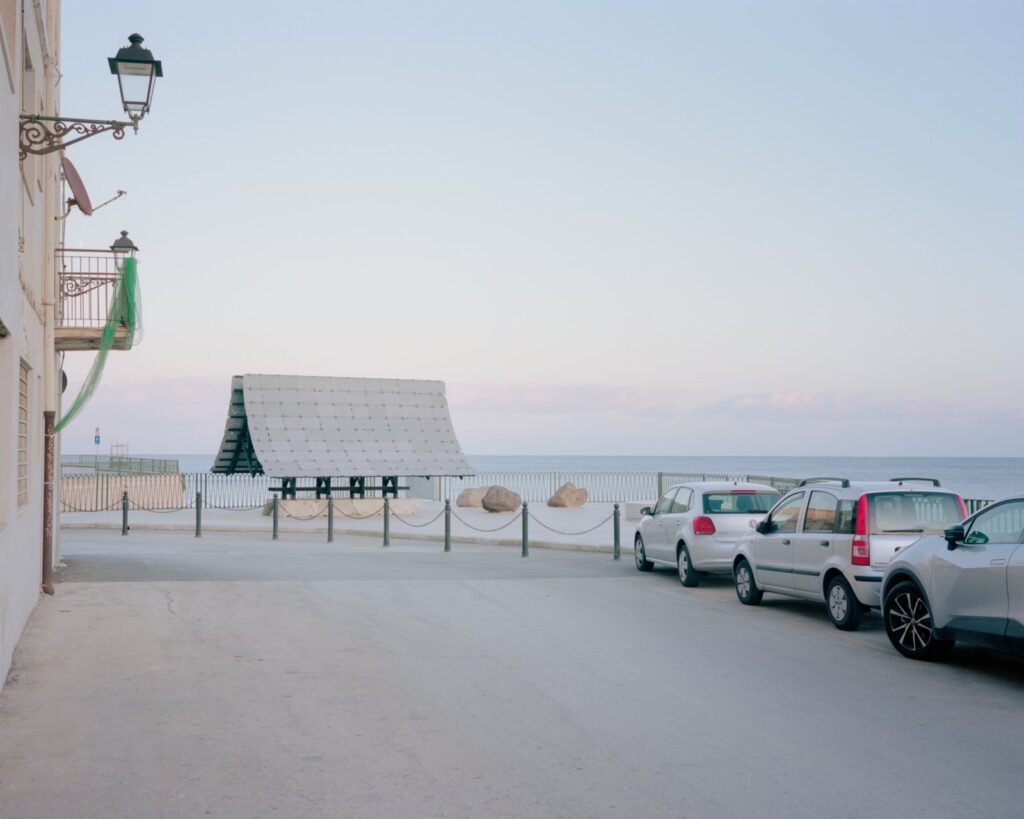
Asympta by Leopold Banchini is a speculative micro architecture developed for the Syracusa-Pantalica landscape, reflecting on the unknown domestic architecture of a prehistoric civilisation. Built by DiSe as part of COSMO festival, the temporary installation looks beyond Pantalica’s famous rock-cut necropolis to imagine how everyday shelters may have emerged from the valley’s terrain, materials and cosmologies.
Pantalica, part of the Syracusa-Pantalica UNESCO World Heritage site, contains more than 4,000 tombs carved into the limestone cliffs along the Anapo river. While this funerary landscape offers a powerful record of death and ritual, it reveals far less about how the living inhabited the area. Few traces of common architecture have survived, leaving open the possibility that homes were made from light construction techniques and local organic materials that disappeared over time.
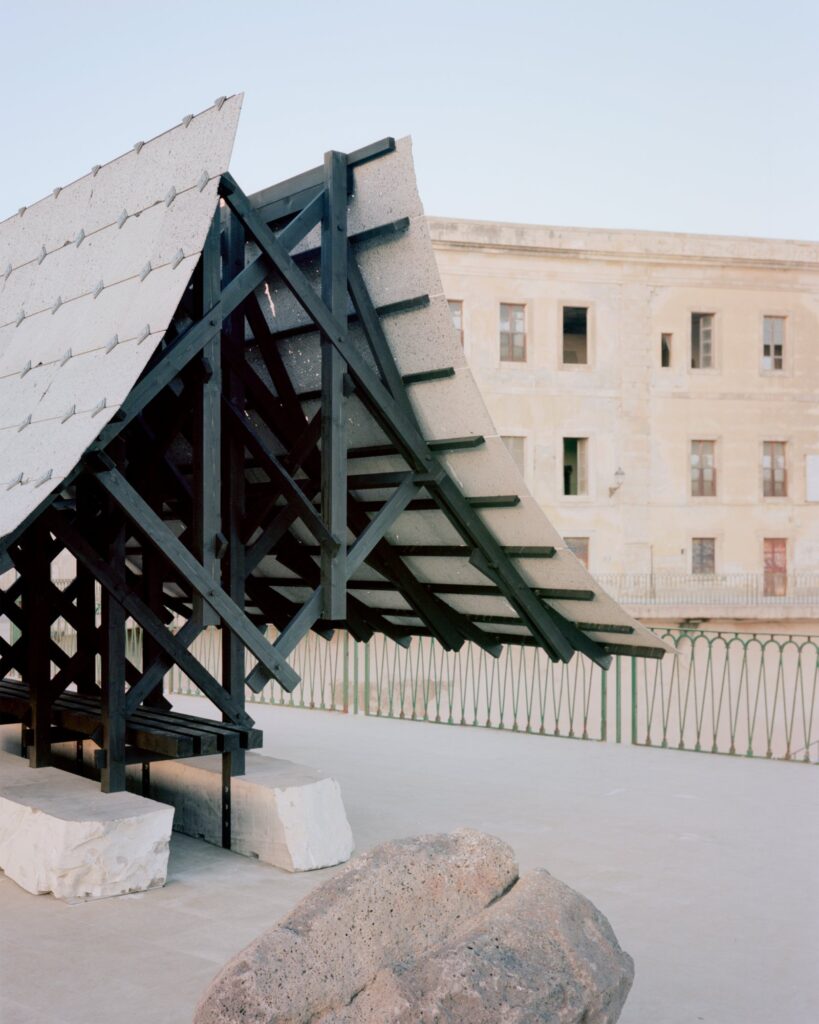
Leopold Banchini’s project begins from this absence. Asympta does not attempt to reconstruct prehistoric architecture through archaeological evidence or scientific chronology. Instead, it uses speculation as a design method, generating a provisional structure that reflects on how architecture might have taken shape through proximity to landscape, climate and available resources. The installation questions the romantic image of Laugier’s Primitive Hut, proposing a more unstable and reciprocal relationship between shelter, territory and collective life. This deep reinterpretation of vernacular dwelling traditions and natural materials also resonates where guesthouses by YOD Group reinterpret the Ukrainian hata-mazanka beneath traditional reed roofs.
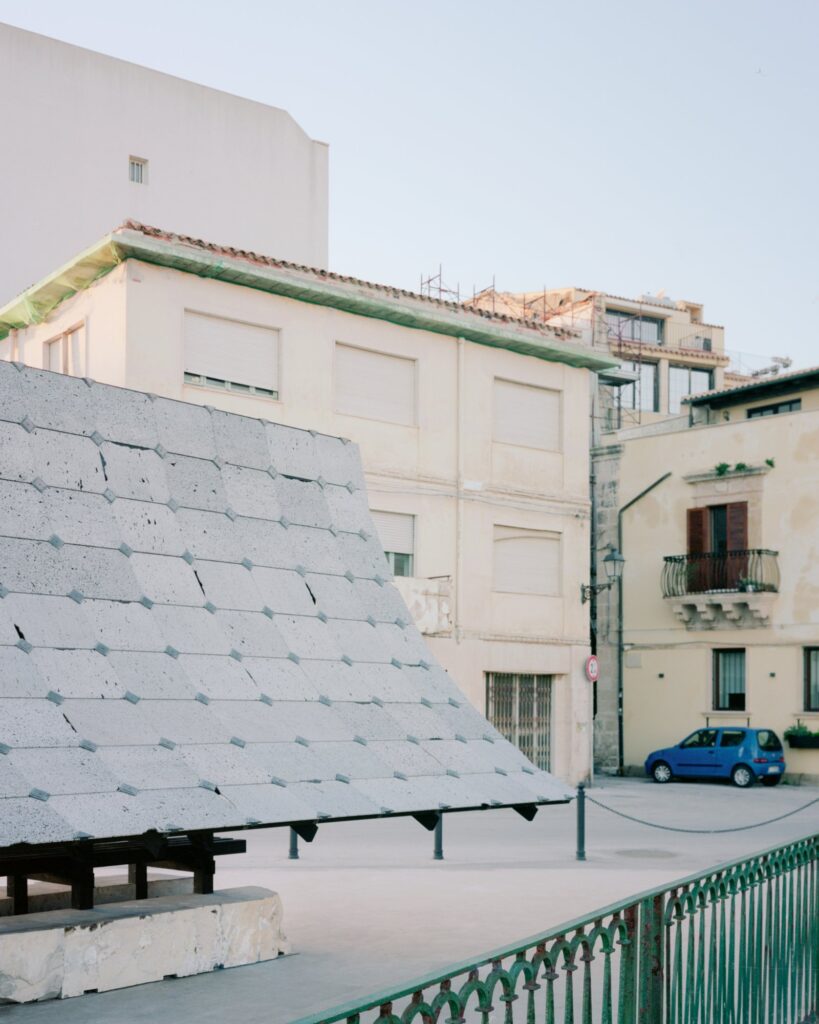
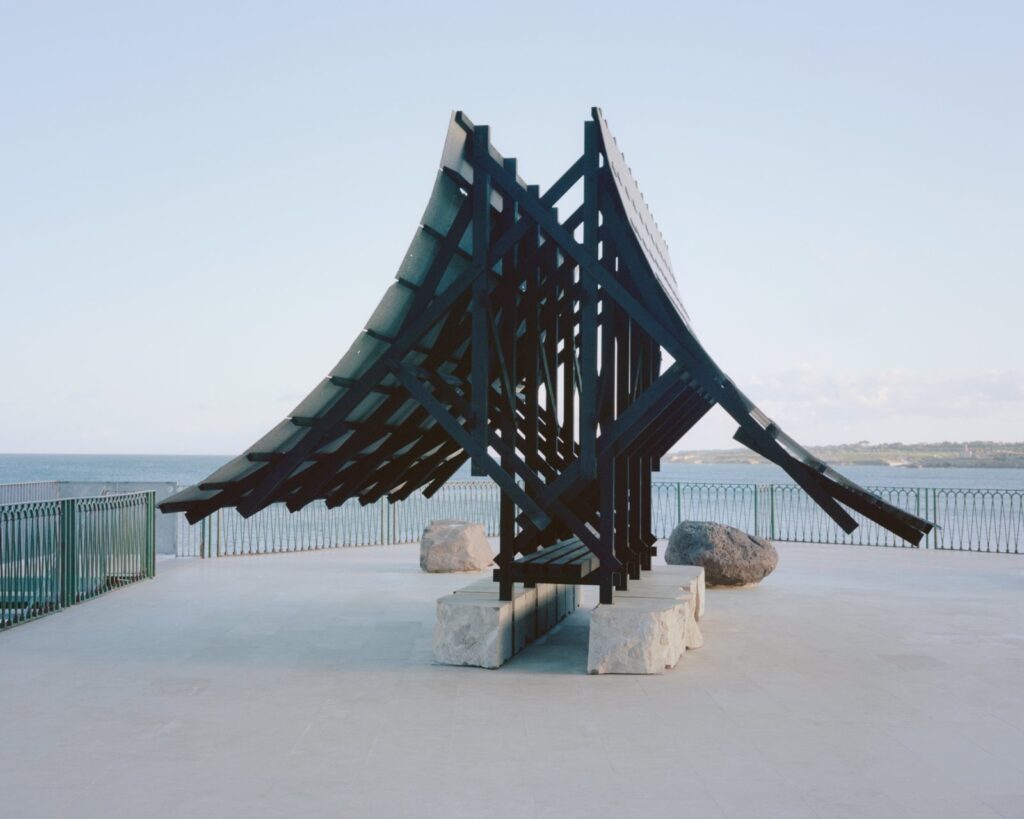
The structure is made from materials tied to eastern Sicily’s geological and craft traditions. Lava stone from nearby Mount Etna, fire-sealed local wood, Pietra Pece limestone, bronze and sheep wool felt come together to form a shaded place for meeting and reflection. These materials give the project a direct physical relationship with the island, connecting volcanic ground, extracted stone, pastoral fibres and hand-worked construction into a single architectural object. A similarly grounded relationship with Mediterranean geography and geological context is achieved when Ateno Architecture Studio designs Olen Resort as a terraced retreat on Syros, embedding stone masonry into the Aegean terrain.
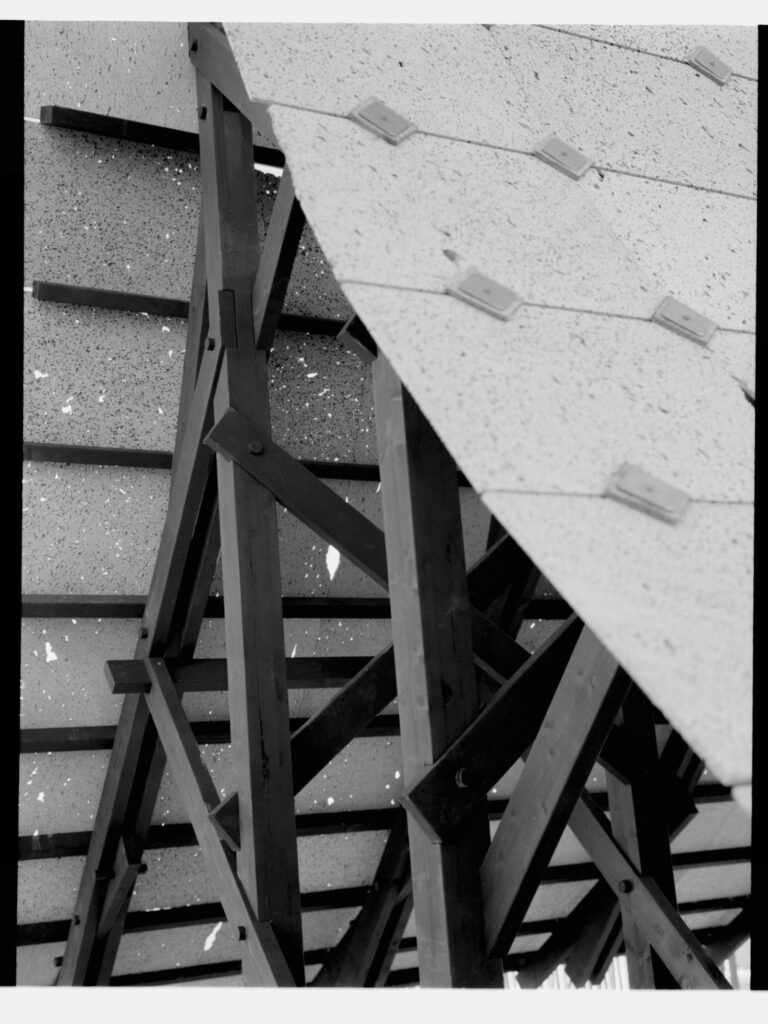
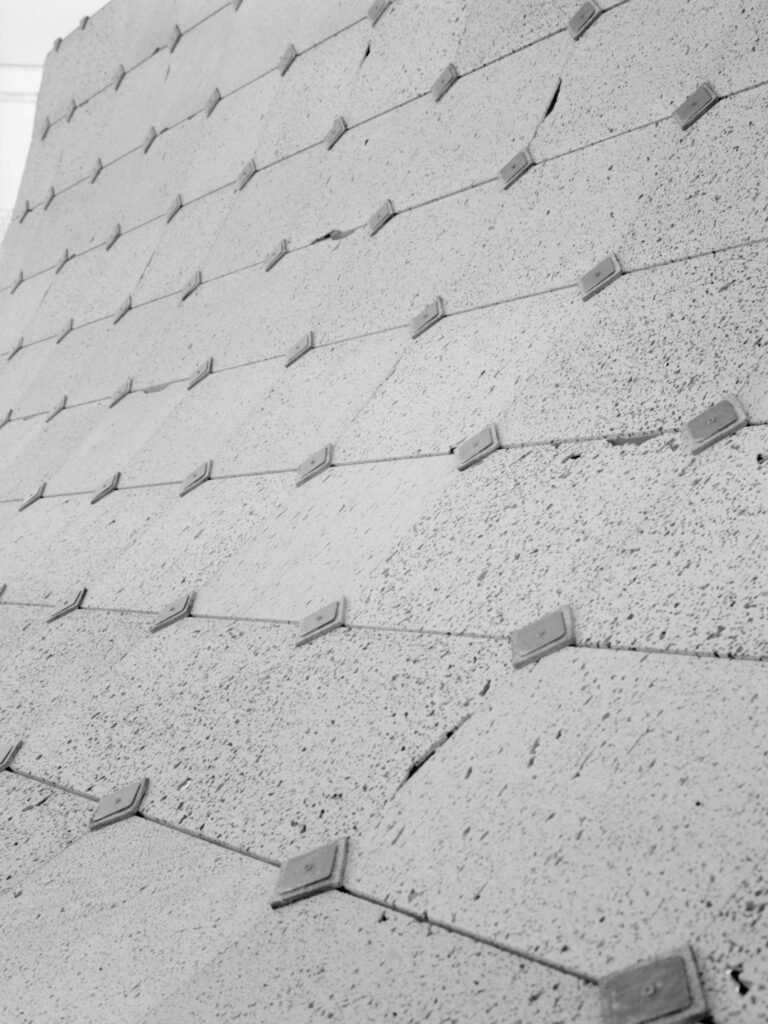
Formally, Asympta by Leopold Banchini is defined by a double asymptotic geometry. Its profile recalls both the cone of Etna, which dominates the wider Sicilian landscape, and the excavated forms of the latomie, the ancient stone quarries that shaped the region’s built history. Rather than presenting a fixed typology, the installation operates between hut, canopy, fragment and gathering space. Its open structure suggests protection without enclosure, allowing air, light and movement to remain part of the experience.
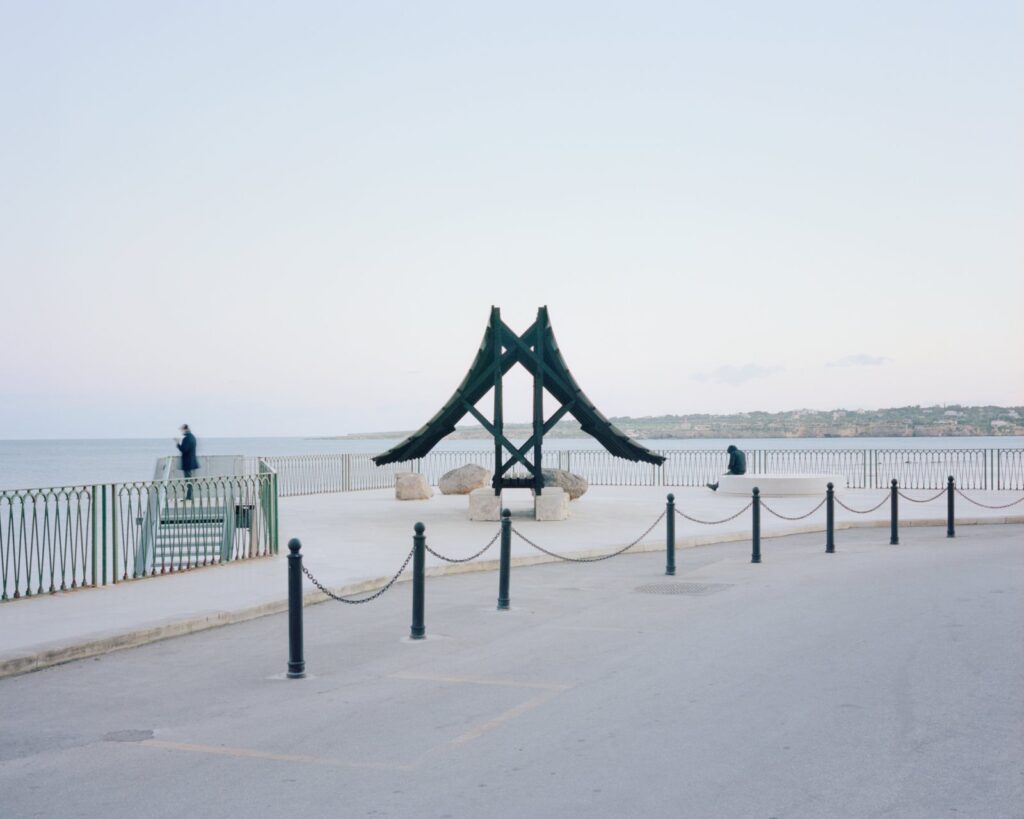
First located in Ortigia in 2025 and planned for Pantalica in 2026, Asympta is designed as a travelling and temporary architecture. Its shifting locations allow the work to build different narratives around the same questions: how communities inhabit a landscape, how materials carry memory, and how myth can be produced through construction. The project turns the missing domestic history of Pantalica into an architectural proposition, giving form to what archaeology cannot fully explain, a profound relationship between raw structure and Italian topography also explored when Minimal concrete villa by MIDE architetti connects architecture and landscape.
All images by Simone Bossi, with courtesy of Leopold Banchini, shared with permission