INSPIRED by: Aojierou
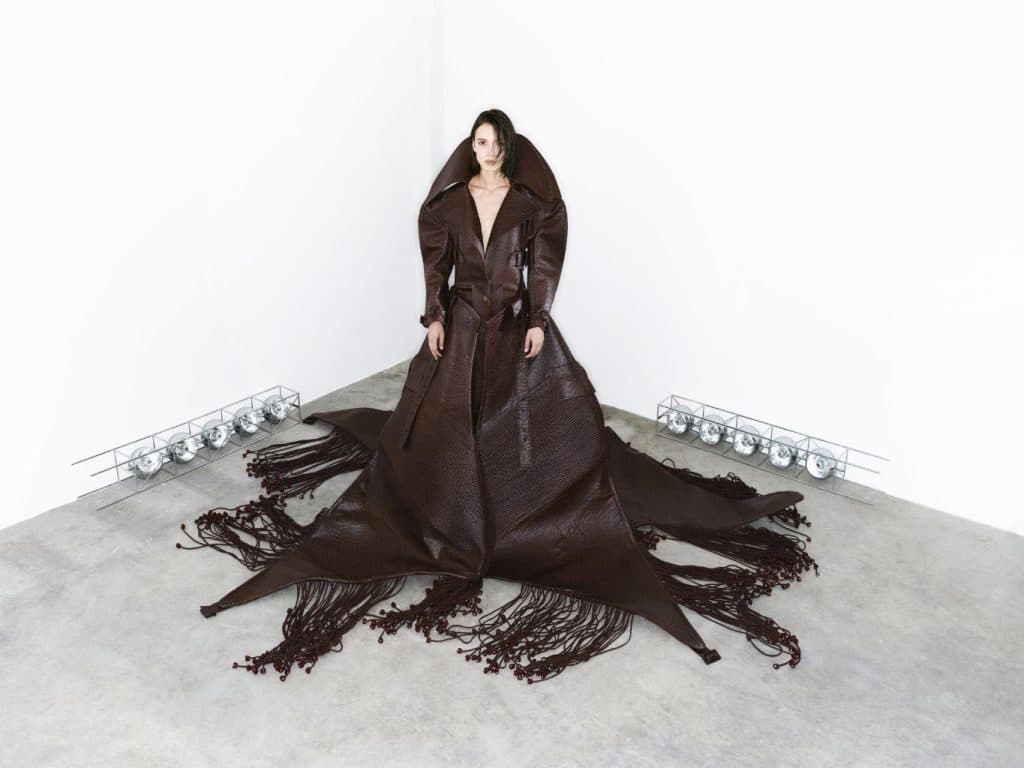
Aojierou approaches fashion as a language of empathy—a way to translate lived experience into form. Having grown up between cultures and cities, his perspective is one of constant observation, turning displacement and curiosity into creative fuel. Influenced by film, music, and the subtle details of everyday life, the designer’s work feels both cinematic and intimate, built from an understanding of how emotion can be structured into shape.
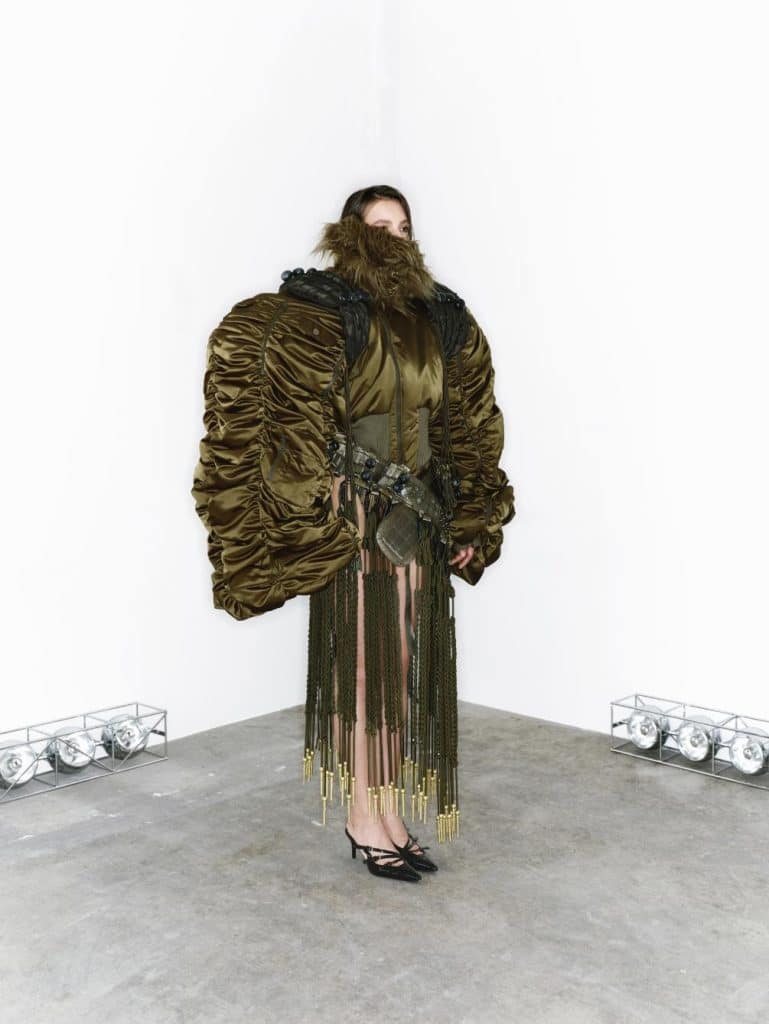
What defines Aojierou’s collections is their ability to hold opposites in harmony: softness and armor, masculinity and femininity, beauty and unrest. Each design carries a quiet tension between the need to protect and the desire to express. Through this balance, the designer has created a body of work that doesn’t just dress the body—it reveals the inner architecture of feeling that connects us all.
Every artist carries a kind of internal architecture of influences, books, music, memories, dreams, that quietly shape your creative expression. Could you walk us through a specific memory or experience that first ignited your artistic spark, how it still echoes in your work today?
For me, the earliest spark didn’t come from a single moment but from growing up immersed in films and music. The narratives in movies and the emotions in music constantly pushed me to think and feel beyond my own experiences. By trying to understand directors, screenwriters, or even lighting designers, I was also entering their inner worlds. That became a way to broaden and enrich my own worldview.
To me, empathy with the audience you’re creating for is essential. If your work is limited only to your personal experiences, your vision becomes very narrow. I’ve always loved learning about different cultures and stories, then filtering them through my own perspective to retell them. That process often becomes the foundation of my design inspiration.
Your designs often feel like they’re whispering secrets between cultures. How have your own life changes and moves between places influenced the way you think about identity and what people show or hide through clothing?
Cultural intersections appear naturally in my work because of my upbringing. I never lived in one city for more than five years, and over the years I’ve moved across more than three countries and nearly ten cities. This constant change gave me the habit of observing my surroundings from a kind of third-party perspective—studying people’s languages, customs, aesthetics, and ways of life. As a result, my designs feel as though they don’t fully belong to any single place, yet at the same time they could belong everywhere.
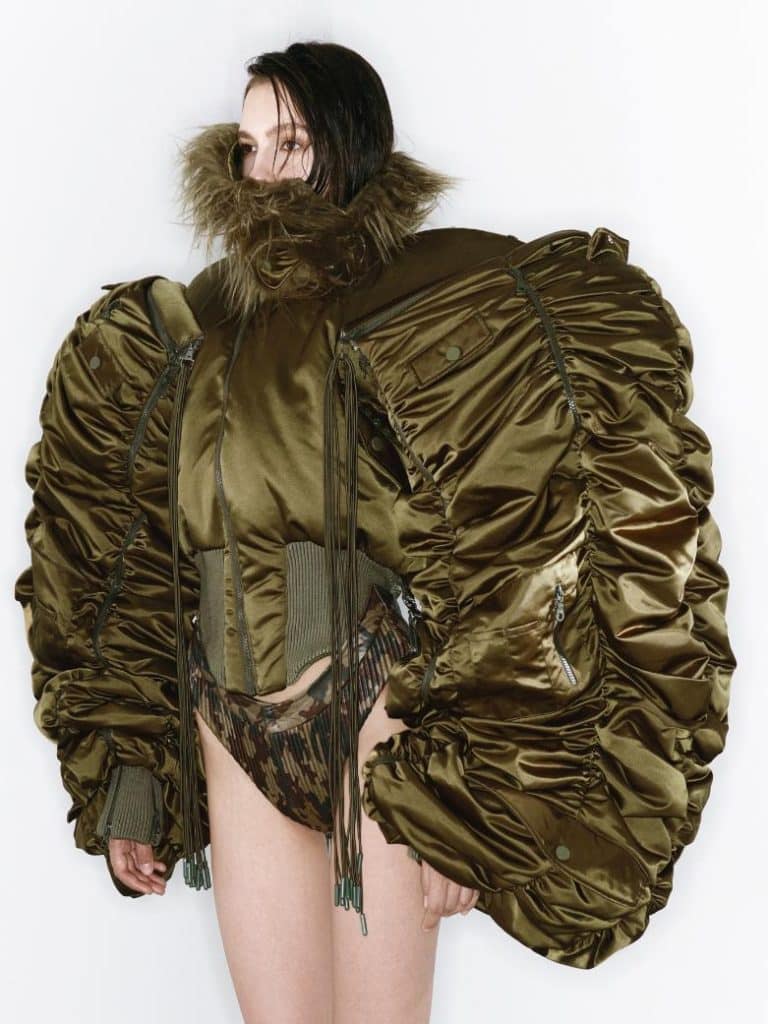
You mix traditionally masculine and feminine elements in such a natural way. What draws you to breaking those boundaries, and what kinds of conversations do you hope it starts? Do you see yourself proposing a new future body or rediscovering something timeless we’ve collectively overlooked?
When I merge so-called masculine and feminine elements, it comes from the belief that gender labels are a social construction rather than an inherent truth. Historically, high heels and tight trousers weren’t originally designed for women—they only became gendered through cultural shifts over time. As a designer, I don’t want to assign those kinds of limits to my work. Men can wear something tight or revealing, women can wear pieces that are hard, protective, and even militaristic. What interests me is creating clothing that speaks beyond those categories.
Your military wedding dress piece juxtaposes celebration and conflict. Could you walk us through the emotional process of designing something that embodies both love and fear simultaneously?
The idea came after I saw a video of a wedding that was interrupted by a sudden explosion. The bride, terrified, ran away as her dress was torn apart by the blast. That moment struck me deeply. I wanted to design a dress that could protect her, one that could withstand violence rather than succumb to it. So I combined the hardness of bulletproof materials with the volume and romance of a Victorian gown. The result was a dress that embodied both love and fear—a protective shell disguised as something celebratory. The contrast felt powerful and necessary.
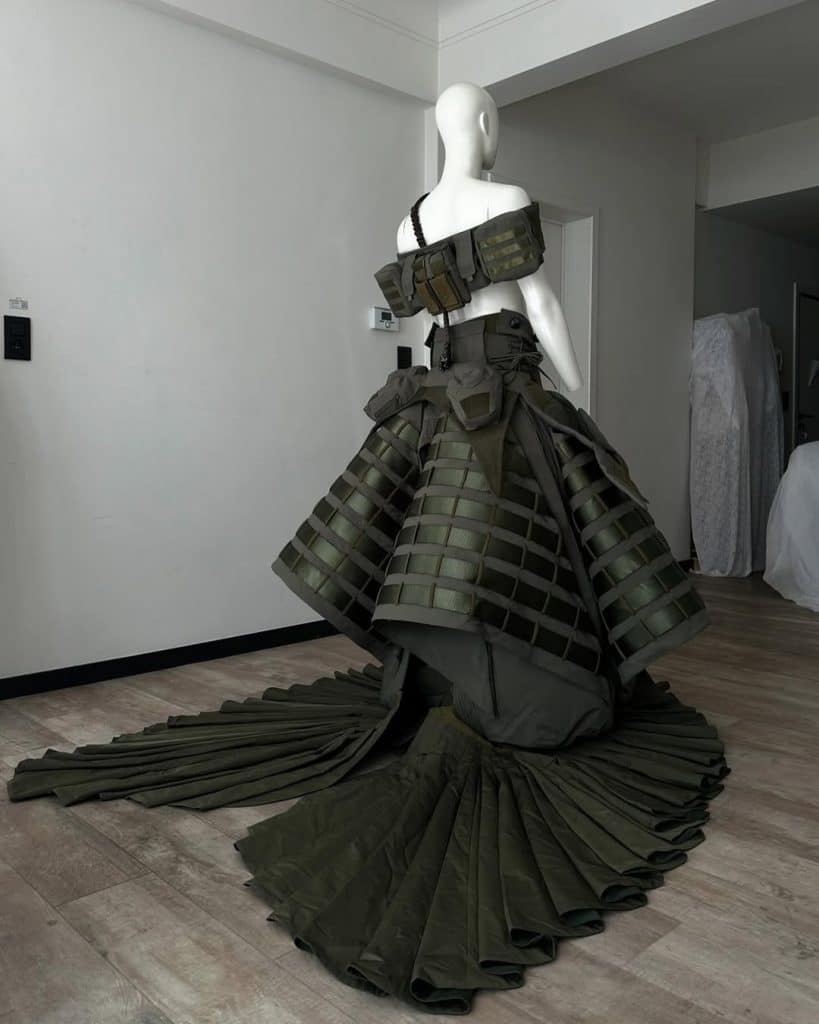
Transforming social or political realities into tactile narratives can risk aestheticizing hardship. How do you preserve the integrity of those stories while maintaining the allure of fashion?
I approach those narratives with empathy and understanding, not judgment. My intention is never to exploit people’s pain but to give form to the truths that shape their lives. When I create around something like war, for instance, I think about how people are forced to protect themselves, to live in clothes that feel heavy and uncomfortable because danger never ends. My military wedding dress was born from that same place—of wanting protection, but also making a quiet protest against violence. Still, no matter the concept, beauty remains my first priority. I always ensure that the work stands as fashion— beautiful and desirable—before layering on the message.
In an industry still driven by trends and commercial pressures, how do you protect that sense of freedom in your practice?
This is something I constantly struggle with. I know I can’t only create large, conceptual pieces forever—I also have to consider the commercial side. But for now, I feel fortunate that I’m still young enough to give myself another year or two to focus on pure expression. Fashion, for me, is like a book, a film, or a song—it’s my language of communication with the world. That’s why I hold on tightly to my voice as a designer, even if it’s not the easiest path.
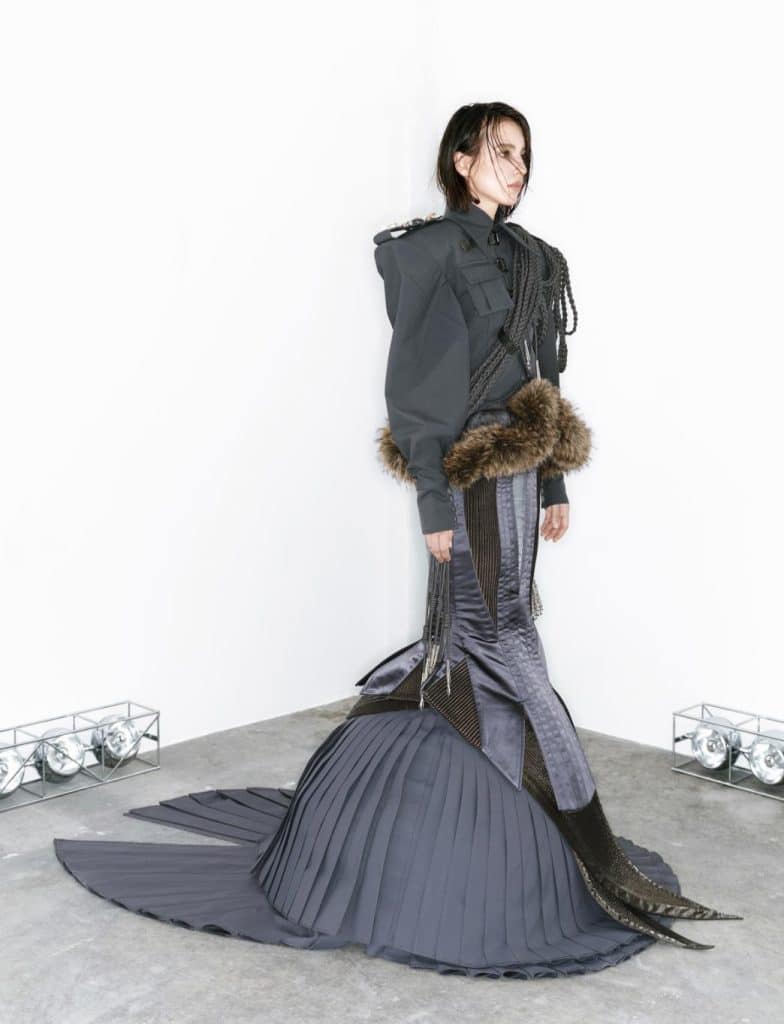
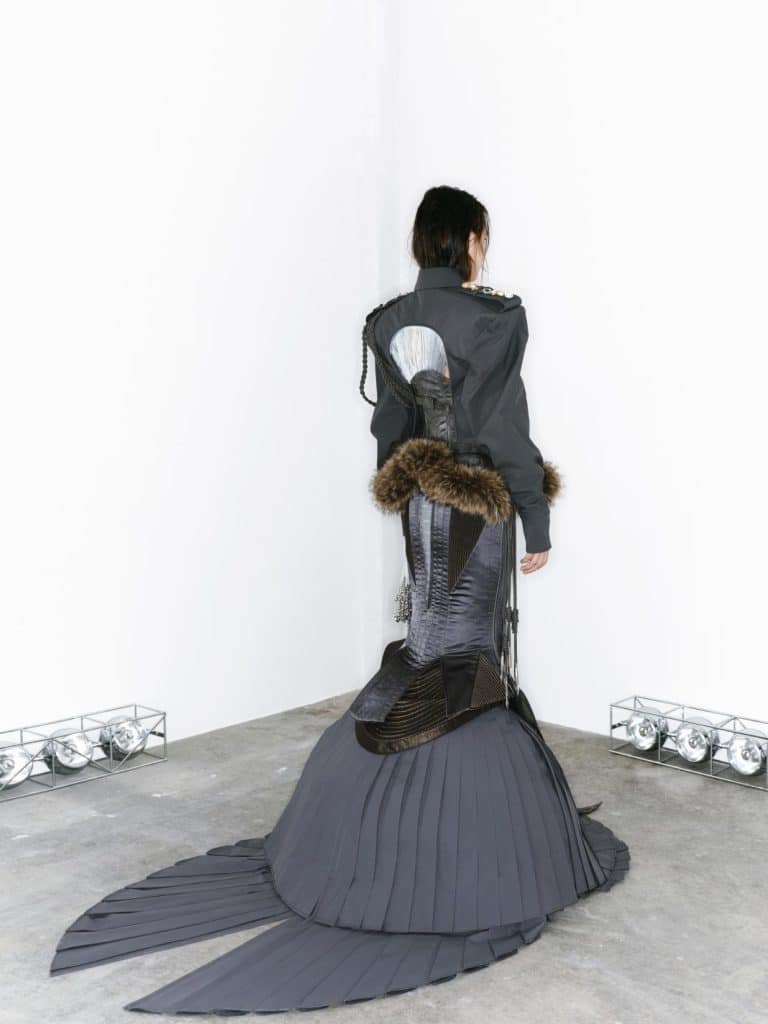
Looking ahead, are there stories or materials you’ve yet to explore, perhaps something you feel could challenge not just your audience, but your own understanding of what fashion can communicate?
Yes. So far my work has leaned heavily toward rigid, structured materials. Moving forward, I want to experiment with lighter, more fluid fabrics—pieces that are smaller in scale and closer to daily wear, while still carrying meaning. I see it as both a creative challenge for myself and a way to bring my ideas into people’s everyday lives.
Send a message to your future self.
Keep working hard. Stay true to your voice. Build a brand so distinct that people will recognize it instantly, without ever needing to see the label
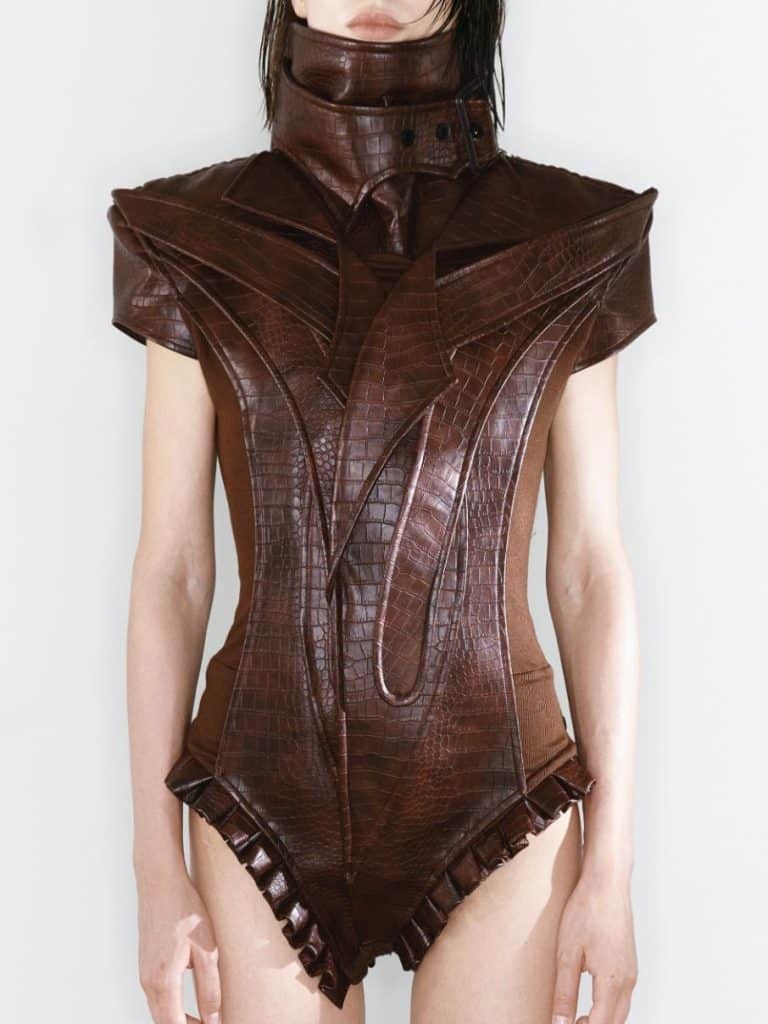
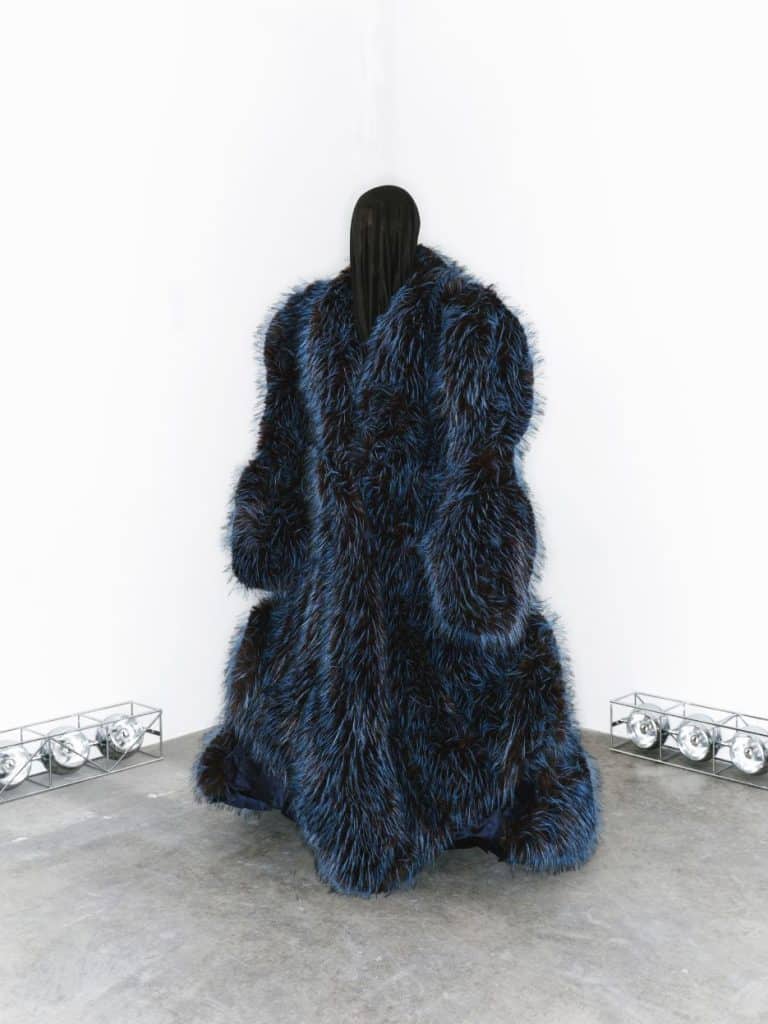
All images courtesy of Aojierou, shared with permission