Garments Shaped for Beings Beyond the Human Frame
Petoruche presents a campaign shaped by the vision of Japanese designer Yasunari Onodera, based in New York, whose work imagines clothing as an extension of existence beyond the human body.
Educated at Parsons School of Design, Onodera founded Petoruche in New York as a platform to merge Asian cultural heritage with modern minimalism. His practice weaves myth, tranquility, and contemporary form into a singular design language that reflects both restraint and imagination.
The collection draws inspiration from Ashura, a multi-faced, multi-armed figure in Buddhist cosmology, known for embodying both conflict and transcendence. Through this concept, Petoruche translates mythology into wearable form—conceiving garments for beings whose physical presence surpasses ordinary anatomy. As Onodera explains, “I’m exploring clothes for non-human beings. Fashion has been made for humans, and I’m trying to break that boundary by creating ready-to-wear garments for something else.”
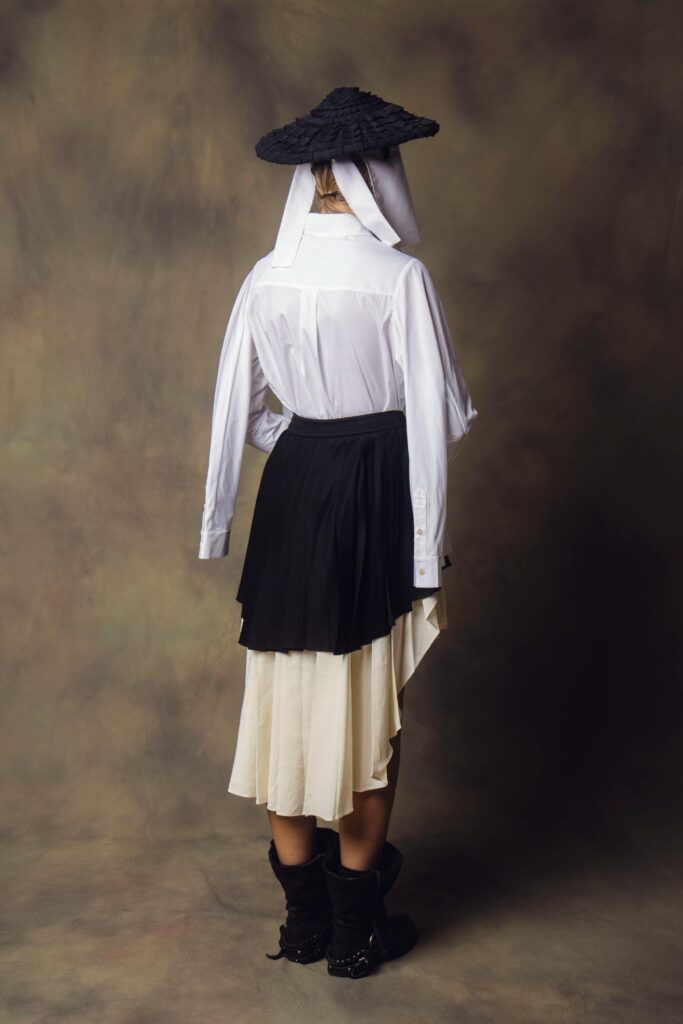
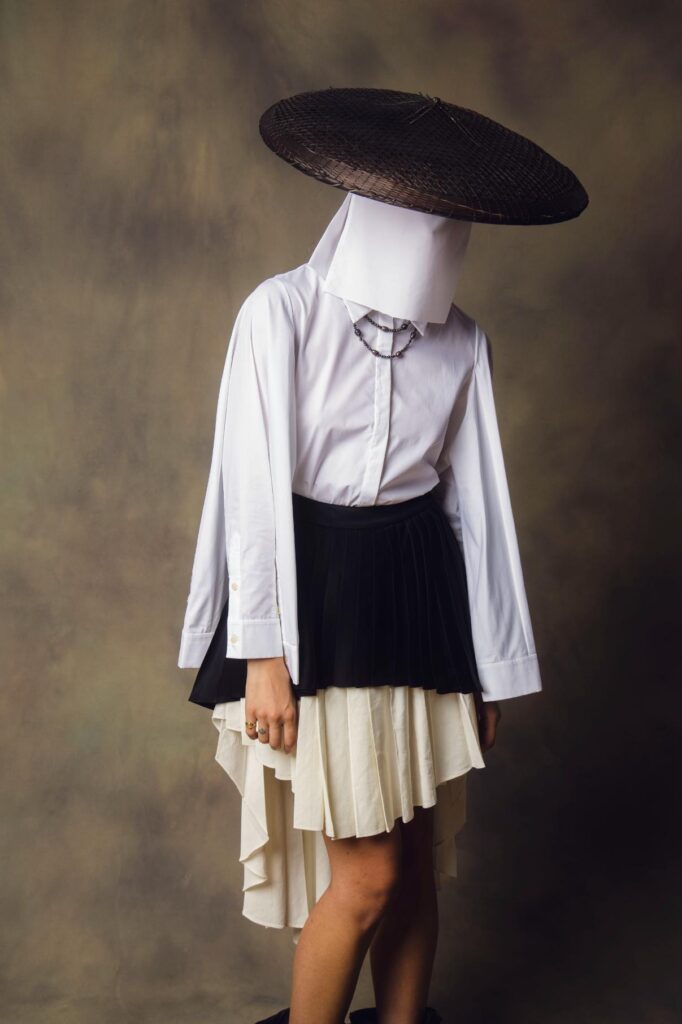
Asymmetrical Silhouettes Resembling Extended Limbs in Motion
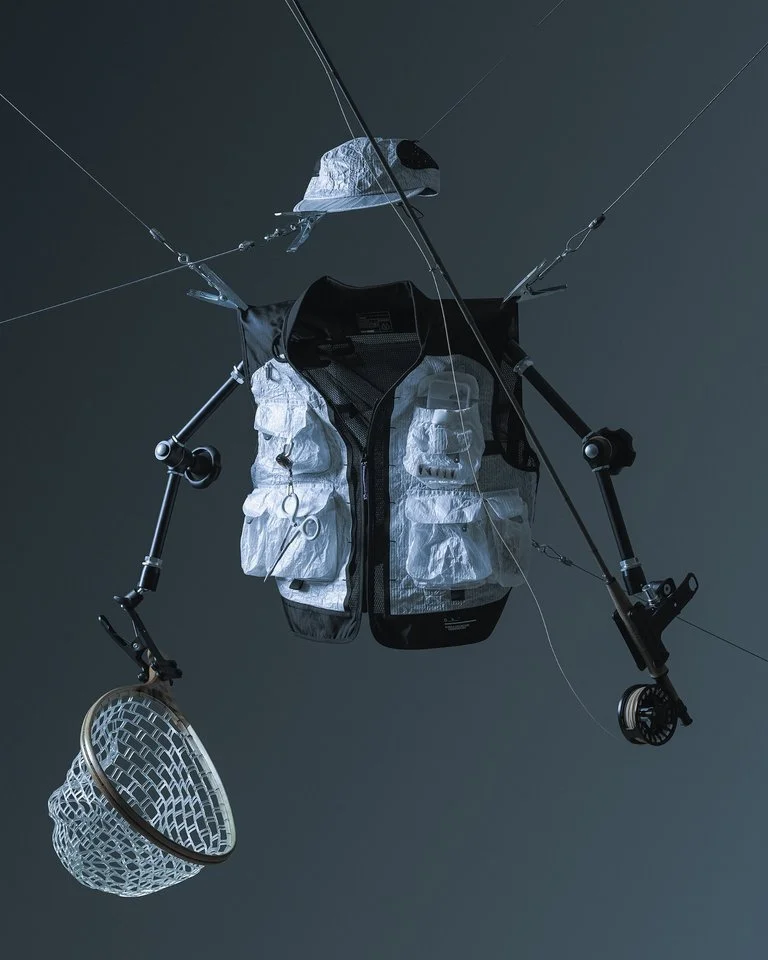
Each design interprets multiplicity as movement. Sleeves stretch in unexpected sequences, and layered panels echo the rhythm of Ashura’s many limbs. Story creation sits at the core of Onodera’s process: silhouette, pattern, and seam are treated as narrative tools to communicate the world his pieces inhabit.
The structure of each garment conveys quiet intensity—minimal yet deliberate, restrained yet expressive. This synthesis of control and fluidity defines Onodera’s aesthetic language, where the spiritual and the material intersect in a silent dialogue. To realize these narratives in precise form, he emphasizes advanced pattern-making, expanding beyond conventional sewing with hands-on skills drawn from other fields, which opens up additional construction pathways.
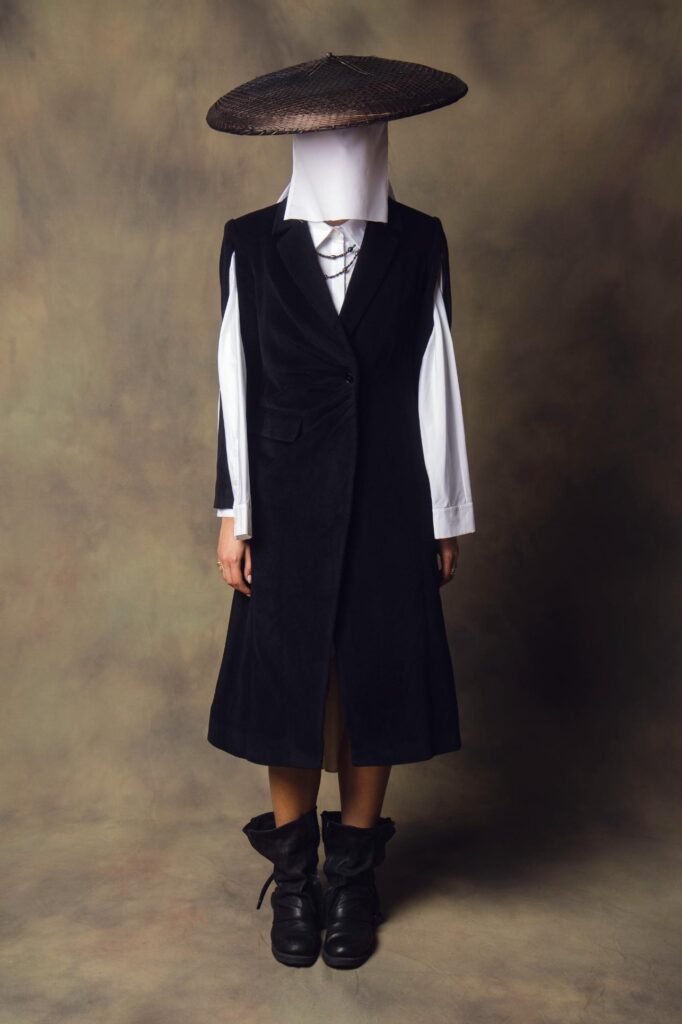
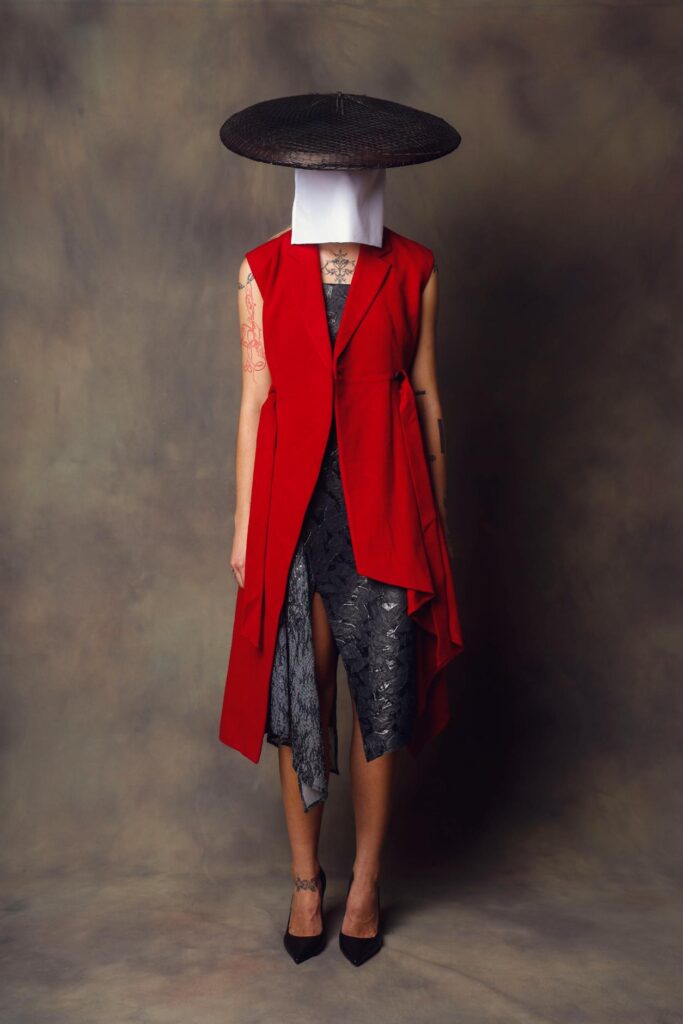
The silhouettes are intentionally ambiguous, allowing fluid transformation rather than fixed identity. Fabrics are selected not only for texture and weight but also for their ability to trace invisible gestures, suggesting unseen limbs or mirrored presences. In this way, each piece balances quiet strength with refined minimalism, accommodating forms both familiar and unfamiliar.
Neutral tones and subtle contrasts frame the idea of timelessness—an equilibrium between strength and serenity. Through this, Petoruche extends fashion into a space of contemplation, positioning clothing as a vessel of mythology rather than a product of trend. The result is a ready-to-wear proposition that treats myth, fantasy, and uncharted imagination as functional design criteria rather than surface motifs.
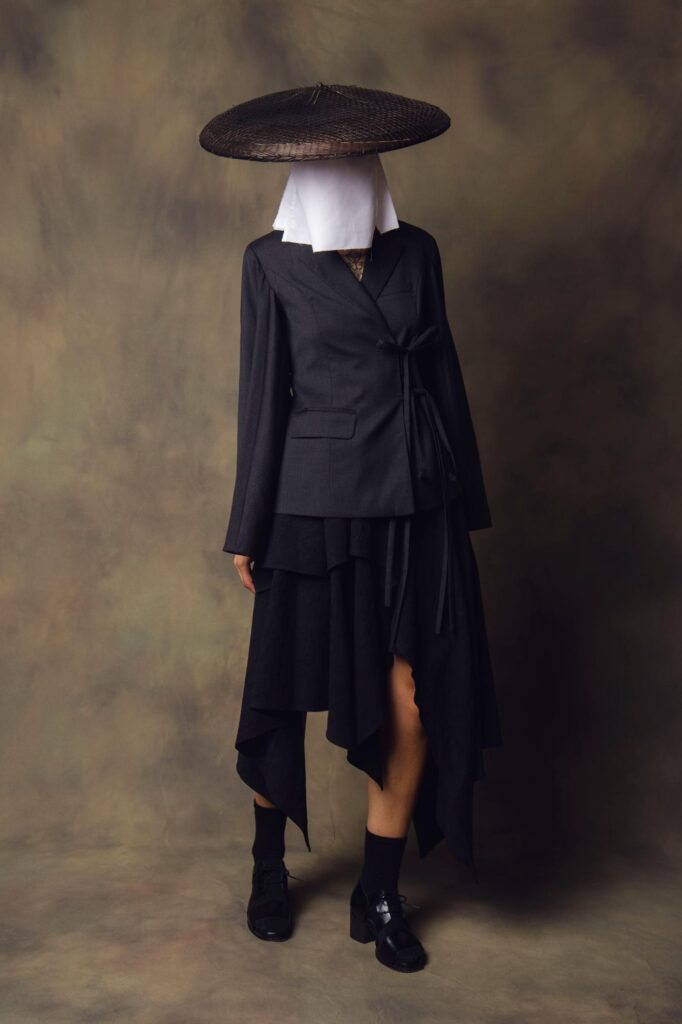
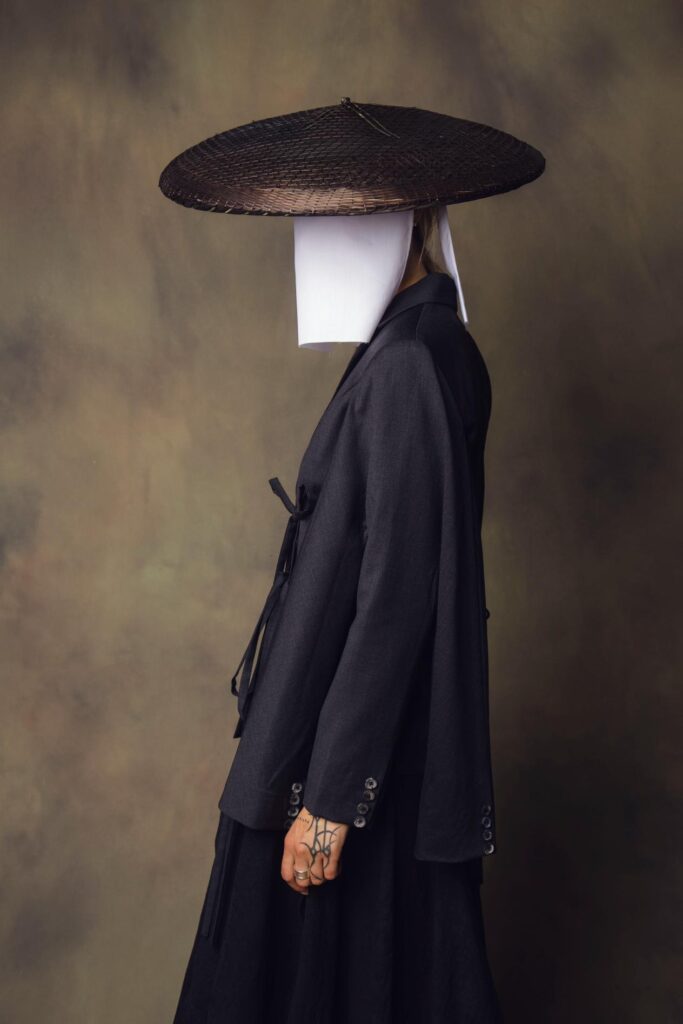
Soft Lighting Emphasizing Folds and Layered Proportions
Close-ups of fabric textures show minimalist construction. In Onodera’s interpretation, the Ashura archetype becomes a metaphor for modern existence—fragmented yet whole, reflective yet forward-moving. The garments question what it means to inhabit a form, to occupy multiple selves simultaneously.
Every seam carries intention; every fold implies the continuation of a gesture that does not end with the body. The result is not costume but composition—a crafted language of proportion and stillness that speaks to the unseen forces shaping identity.
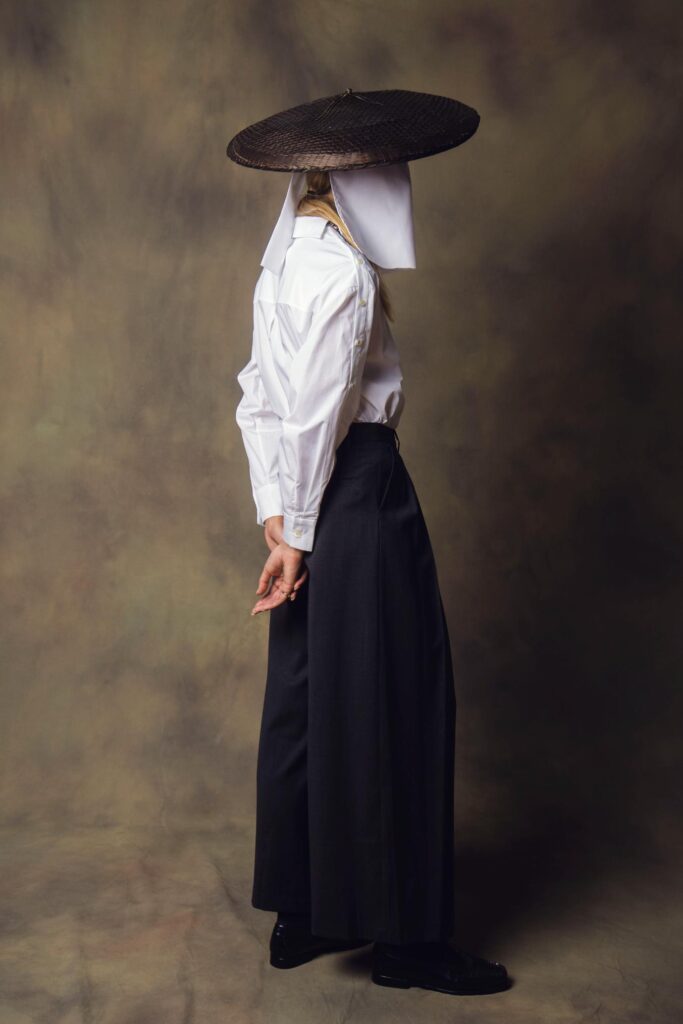
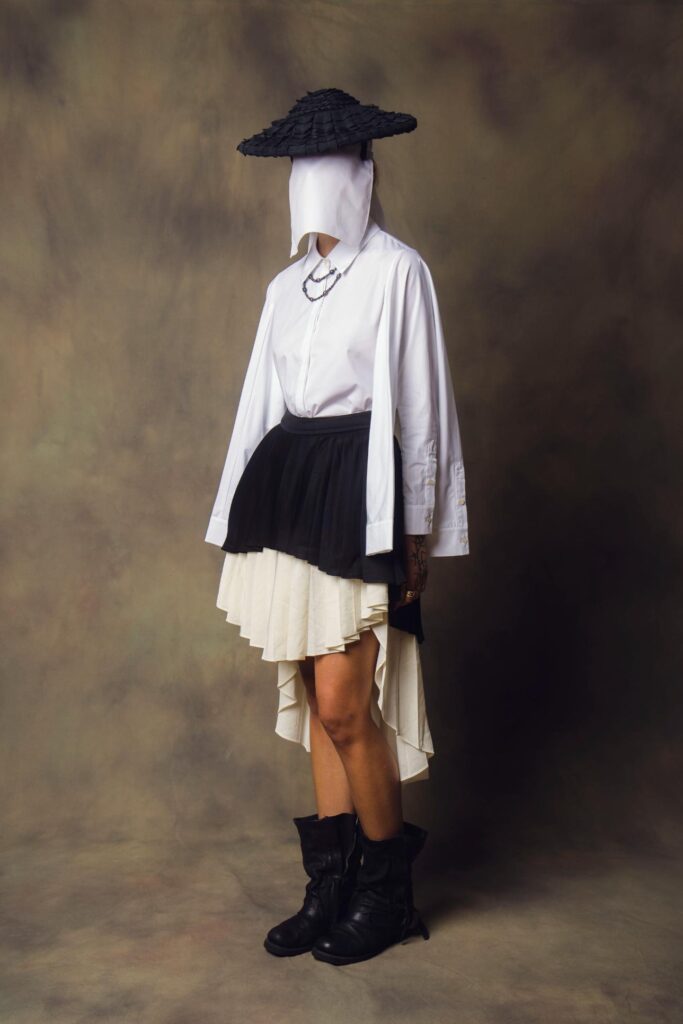
Full-Length Look Capturing Balance Between Stillness and Form
The campaign’s visual direction mirrors this sensibility. The photography situates the garments in spaces stripped of narrative excess, where light acts as an architecture that outlines possibility.
Through this restraint, Petoruche frames the collection as a meditation on presence, inviting the viewer to imagine the unseen figures for whom these garments might exist.
Petoruche’s Ashura-inspired collection reflects a practice that transcends fashion as surface. It articulates a deeper rhythm—a dialogue between imagination, anatomy, and the quiet expanse of what lies beyond human perception.
Presented with this collection under Petoruche, it demonstrates an already refined vision—poised, assured, and distinctly his own.
All images credit: Petoruche