GLA Architects completes a low impact woodland hotel in Hangzhou
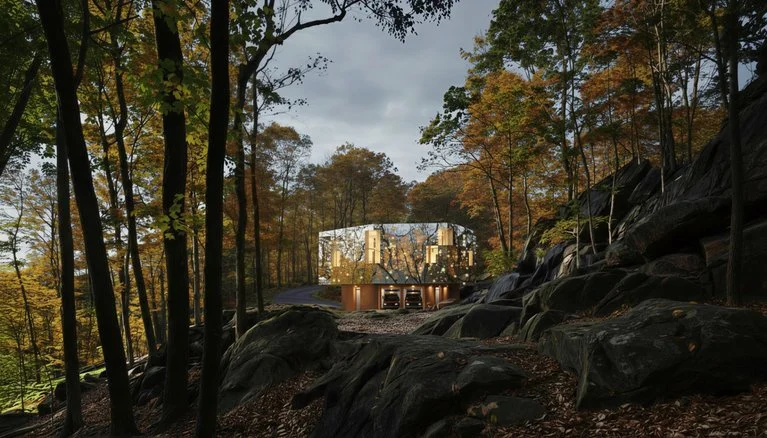
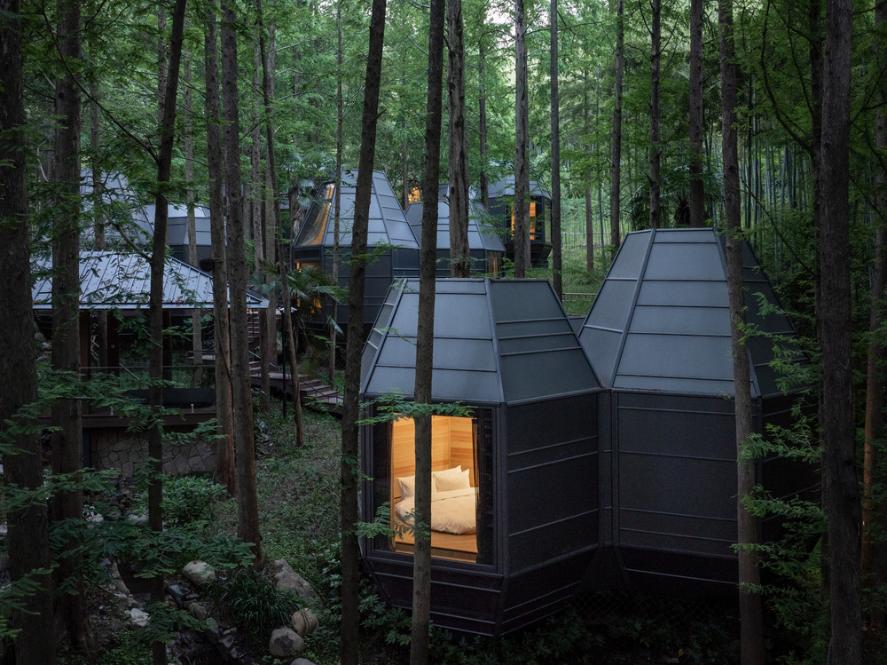
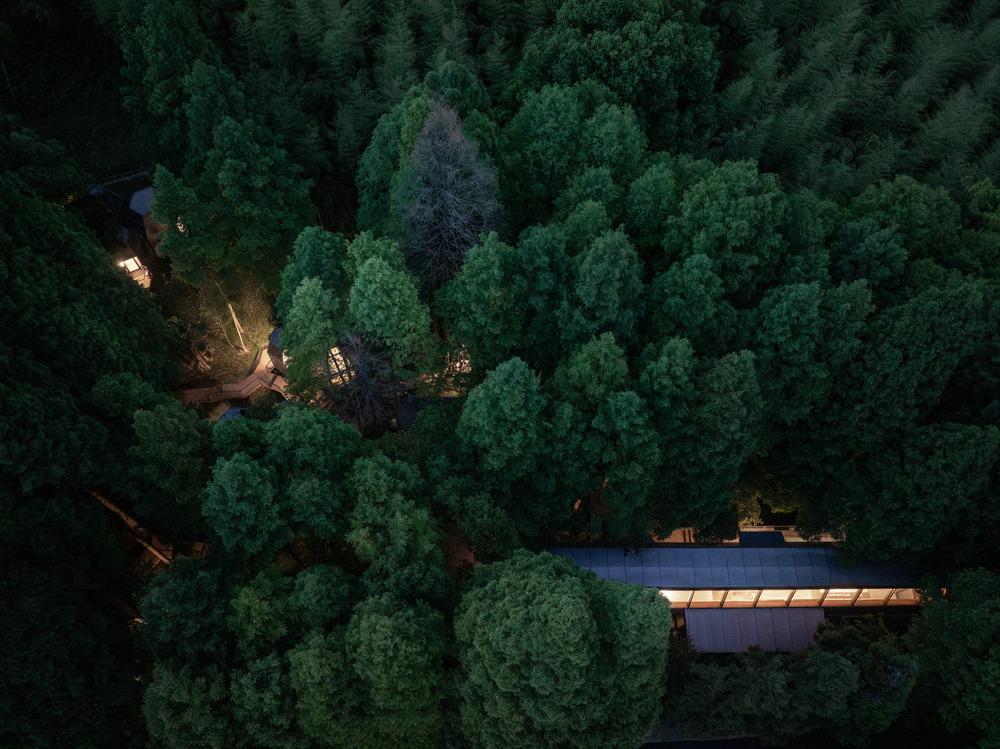
Dongmingshan Senyu Hotel is a 1,300-square-metre hospitality project completed in 2024 in Hangzhou, China, designed by GLA Architects as a minimally invasive forest retreat. Located at the end of a mountain path beside a flowing stream, the site is surrounded by mature metasequoias and dense bamboo groves. The architects preserved the ecological character of the woodland, maintaining every existing tree and carefully positioning new structures to follow the natural terrain.
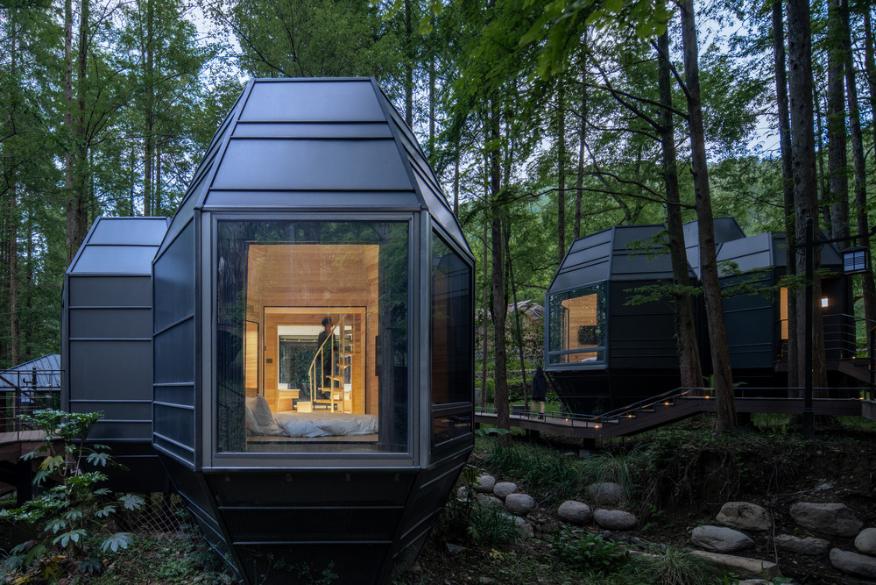
The GLA Architects project includes a reception centre and three types of cabins, arranged to maintain the integrity of the forest floor and existing vegetation. A number of decaying wooden buildings previously occupied the site. Instead of clearing the area, the design team retained the original volume of one structure and reinterpreted it as the reception centre, using the footprint as a foundation for renewal. This strategy ensured continuity while limiting ground disturbance.
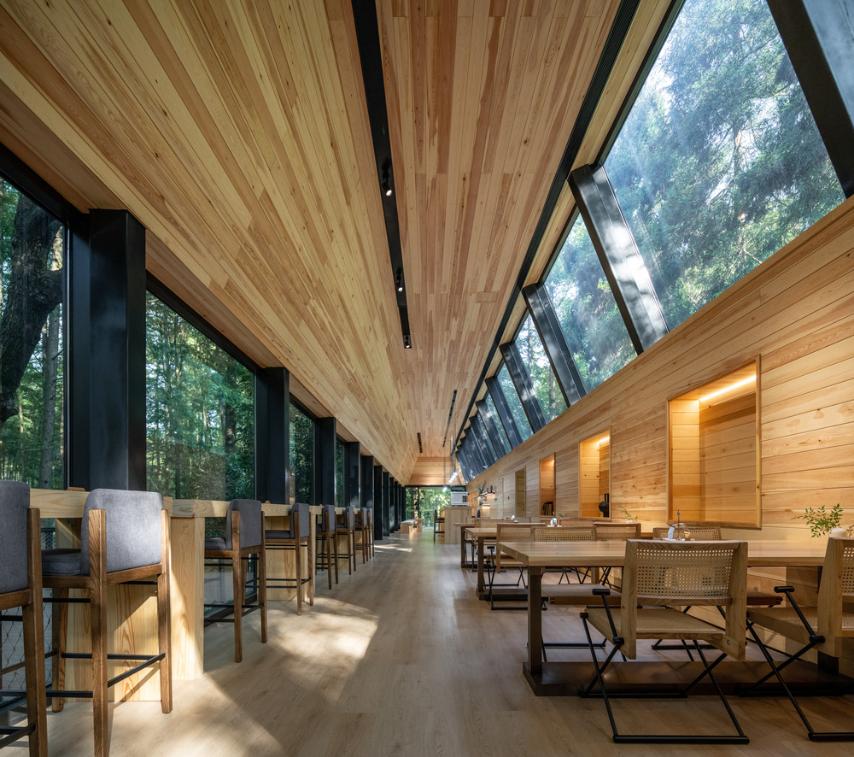
The reception building by GLA Architects establishes a spatial dialogue with its surroundings. A large south-facing window frames views of the forest and simultaneously protects the adjacent slope. Clerestory windows oriented to the north introduce filtered light from the bamboo grove, reinforcing a constant visual connection to the landscape. The interior functions as a transitional space, where guests move from the mountain path into an environment defined by timber textures, filtered daylight and natural ventilation.
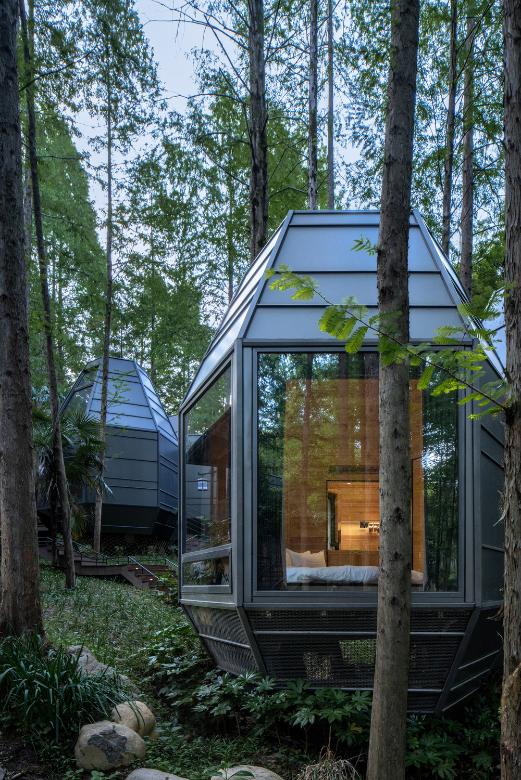
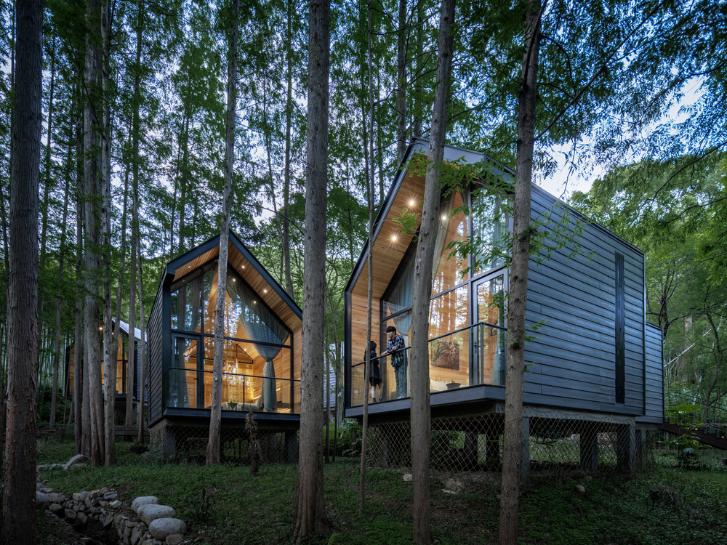
Within the metasequoia grove, the Pinecone Cabins are elevated above ground level to safeguard root systems and maintain permeability of the soil. Their modular geometry references the layered structure of pinecones, allowing flexible adaptation to irregular site conditions. Tapered rooflines correspond to the vertical rhythm of the surrounding trunks, establishing proportional continuity between architecture and forest canopy.
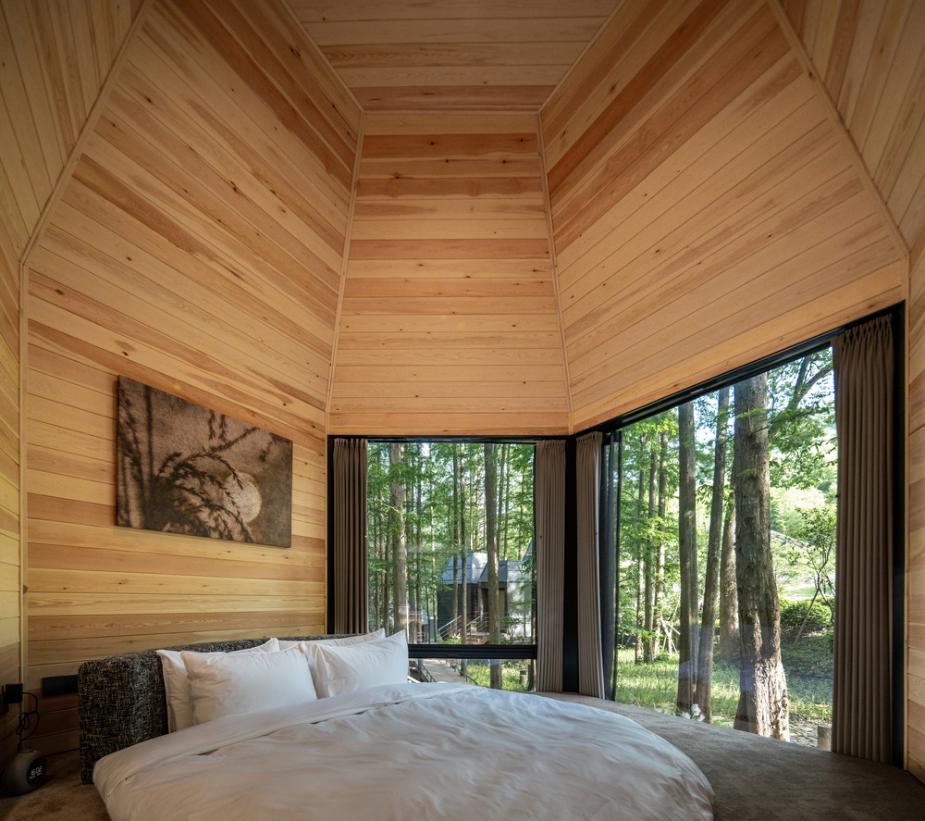
The Metasequoia Wood Cottages adopt a stilted construction method suited to Hangzhou’s humid climate and biodiverse environment. Raising the buildings enhances air circulation and reduces impact on wildlife habitats. Each cottage features a double-pitched roof and integrated skylights, enabling daylight penetration into tall interior volumes. The spatial arrangement encourages guests to perceive shifts in light, temperature and sound throughout the day.
At the forest edge, three bamboo huts present a lightweight construction wrapped in woven bamboo façades. The permeable screens filter sunlight and provide privacy without blocking views. Exposed steel frames allow for future adaptation, reflecting a pragmatic and reversible approach to construction. The material palette—timber, bamboo and steel—responds directly to local resources and building traditions.
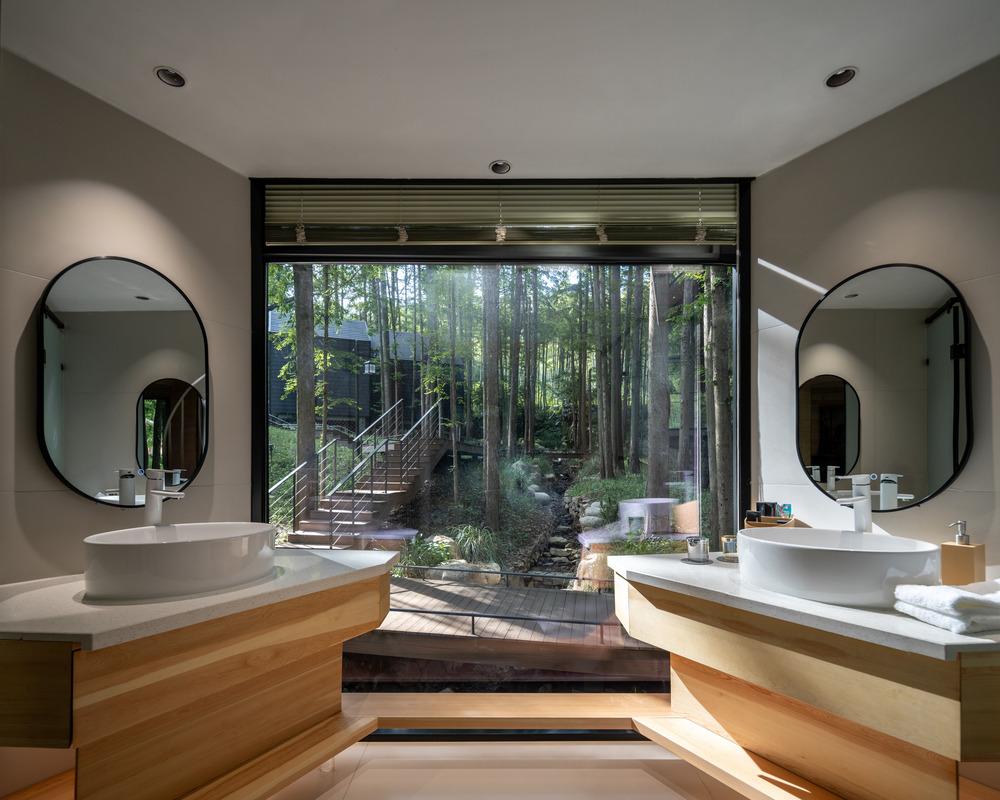
Throughout the development process, GLA Architects conducted detailed on-site surveys to map tree locations and adjust construction in real time. A similar ethos of low-impact architectural renewal guides how BHEI Architects renovate Vaal House in Gerês, restoring a stone dwelling surrounded by protected nature. The result is a hospitality project that demonstrates environmental restraint and technical precision. Dongmingshan Senyu Hotel positions architecture as a mediator between human occupation and ecological continuity, offering guests an immersive forest experience grounded in minimal intervention.
Photography by Chen Xi Studio, with courtesy of v2com
GLA Architects: https://www.instagram.com/gla_architects