Long exposure light painting transforms alpine landscapes through aerial experiments in Phénomènes by Jadikan
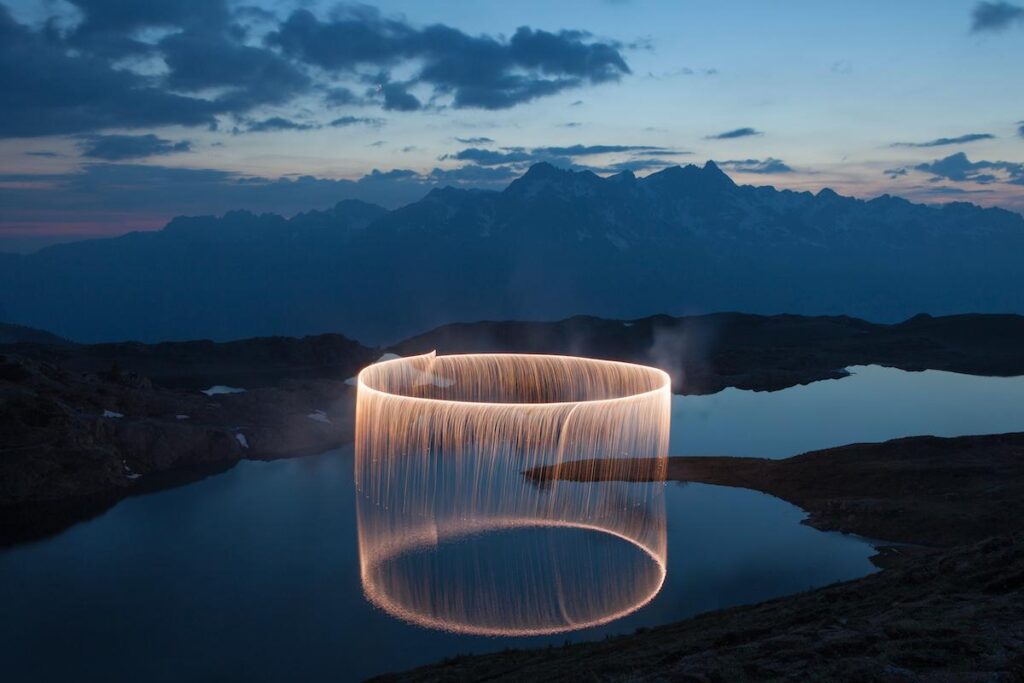
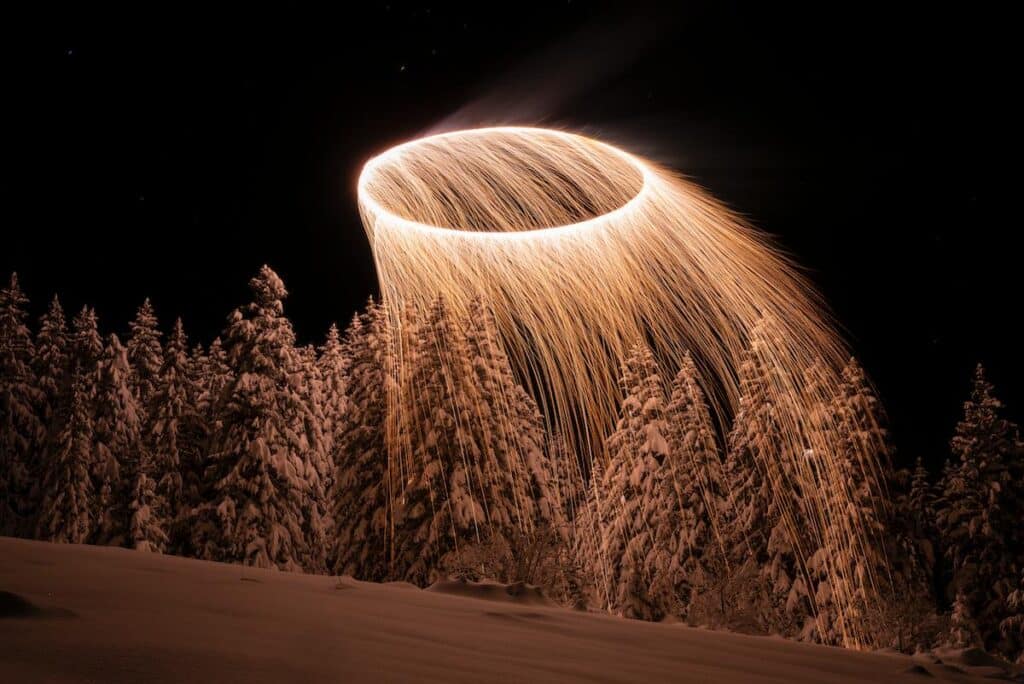
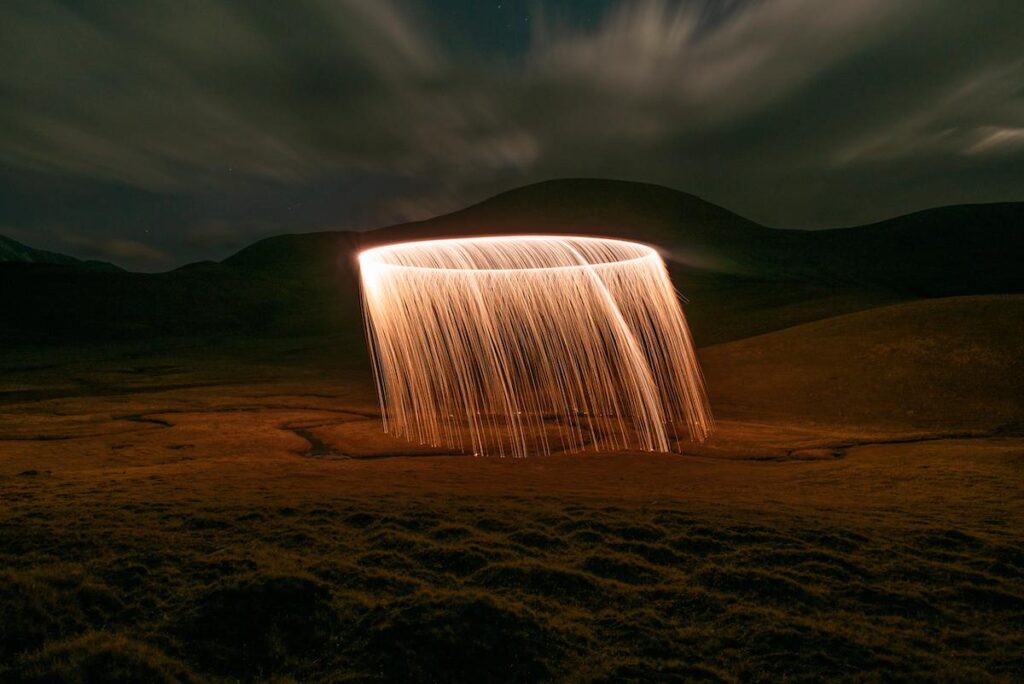
French artist Guilhem Nicolas, also known as Jadikan, presents Phénomènes, a photographic series produced through long-exposure imaging in the French Alps. The work extends his ongoing research into light painting and experimental photographic processes, combining aerial technology with controlled luminous materials to generate ephemeral formations captured against nocturnal mountain landscapes. The project positions photography as both documentation and spatial intervention, emphasizing the relationship between light, duration, and environment.
Born in 1981, Nicolas developed an interest in photographic capture during adolescence, beginning with black-and-white practice and analog darkroom processes. The discovery of chemical development and printmaking formed his understanding of photography’s material nature. After completing his studies, he relocated to Asia in 2005 to work as an economist. During this period he unintentionally produced his first luminous traces by photographing an incandescent cigarette butt, initiating empirical research into light-emitting tools and their visual outcomes. This experiment marked the origin of an investigation that continues to shape his artistic methodology.
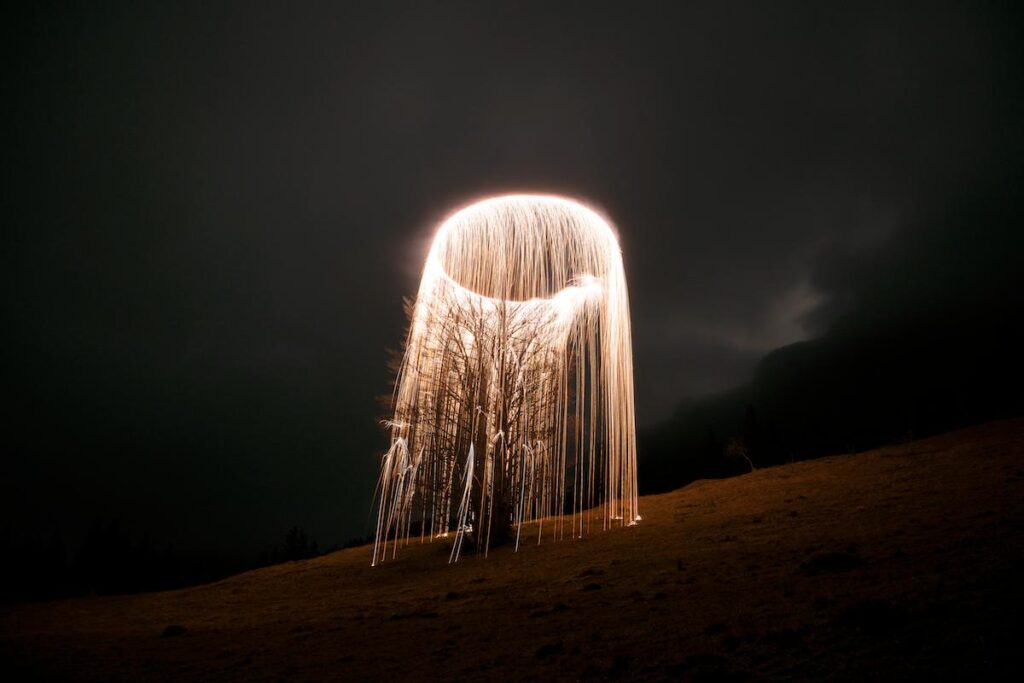
In 2009 he presented his first solo exhibition at Le Cube in Issy-les-Moulineaux, where the series appeared under the title Jadikan Lightning Project. The name Jadikan, meaning “to create” or “to transform” in Malay, reflects his conceptual approach to manipulating light as sculptural matter. Light painting enables spatial intervention through photographic long exposure, encouraging the recording of temporary luminous structures. This trajectory led to further research into stereoscopic imaging, culminating in the Solid Light project in 2013, followed by Light is not Flat, where synchronized cameras and lenticular printing generated time-based perceptual effects reminiscent of multi-perspective capture.
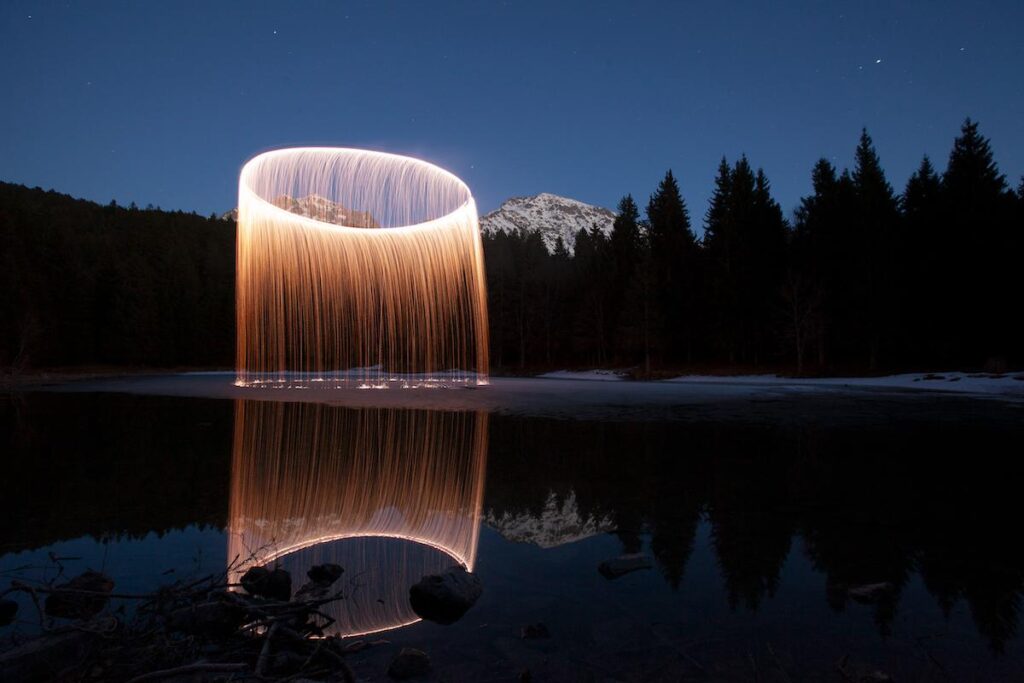
Subsequent experiments expanded into virtual reality and 360-degree environments in 2015, aiming to provide immersive and interactive viewing experiences through dedicated headsets. These investigations demonstrate a continuous engagement with technological evolution and its capacity to extend photographic language beyond two-dimensional representation. Phénomènes continues this progression by integrating drones equipped with flammable powder to produce aerial bursts of light documented through long exposures. Preparation involves daytime scouting, calibration of flight paths, and careful installation of materials prior to nightfall.
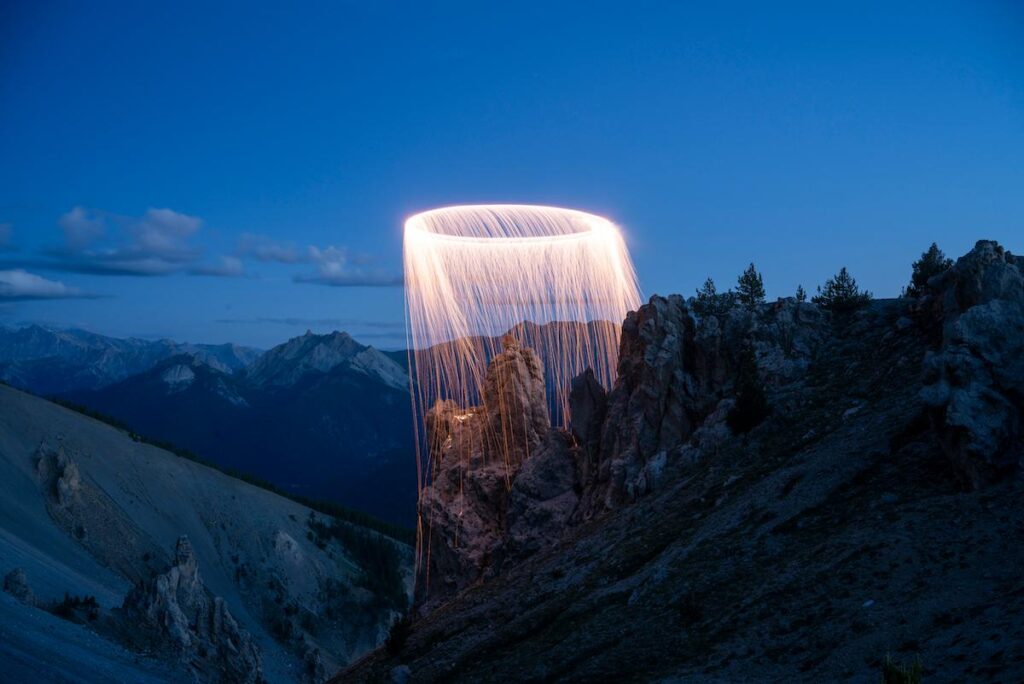
The resulting images record cascades of illumination descending toward alpine terrain, translating fleeting combustion into graphic constellations suspended across the sky. Nicolas describes the process as meticulous preparation designed to allow luminous particles to fall like rain, introducing poetic and spiritual dimensions to the setting. The photographs register atmospheric depth and spatial scale, emphasizing how technological mediation and physical phenomena intersect to construct visual narratives grounded in time and movement.
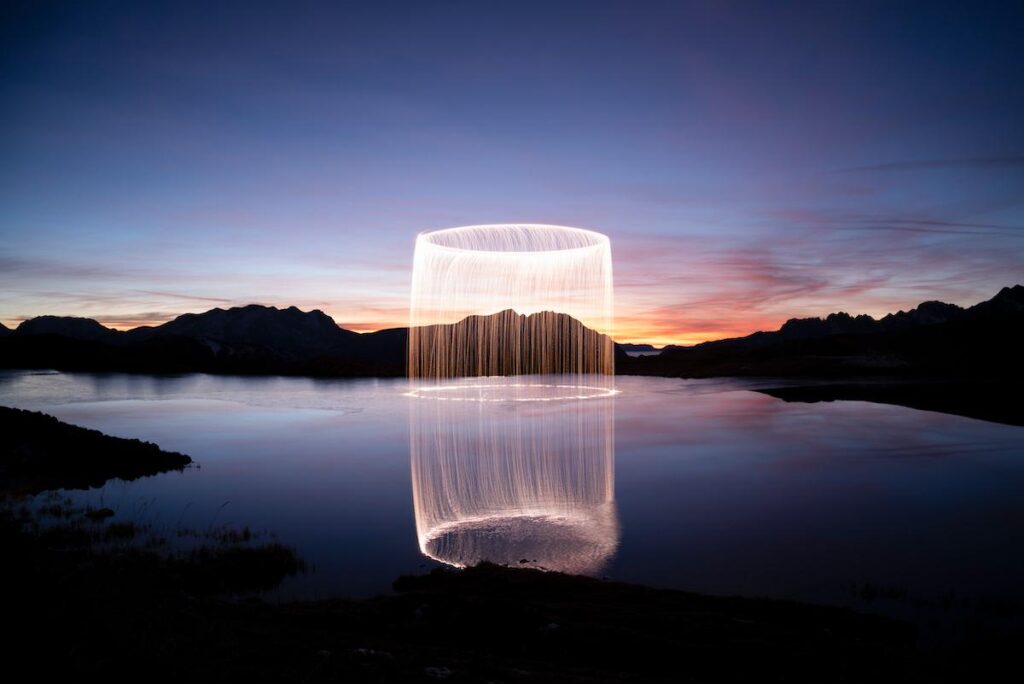
Phénomènes demonstrates the artist’s commitment to developing photography as a performative act shaped by experimentation, observation, and technical refinement. Through disciplined orchestration of light sources and imaging duration, the series contributes to contemporary discourse on expanded photography, presenting landscapes transformed by transient luminous gestures that remain accessible only through the recorded image.
All images courtesy of Jadikan