In conversation with Kasia Muzyka
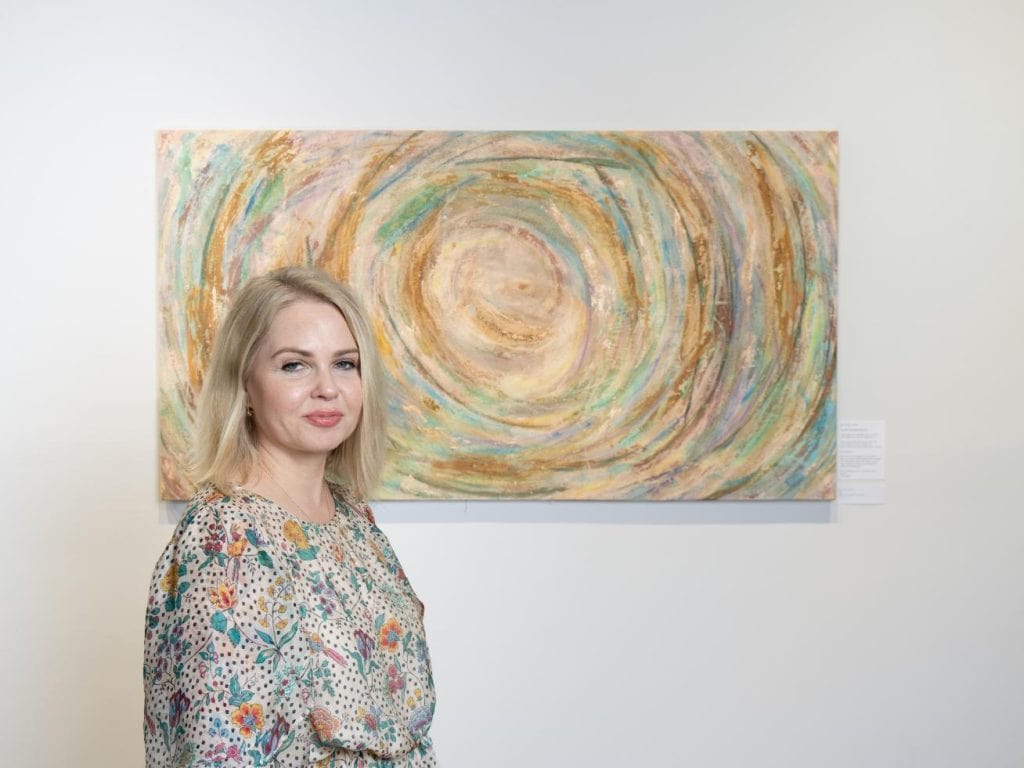
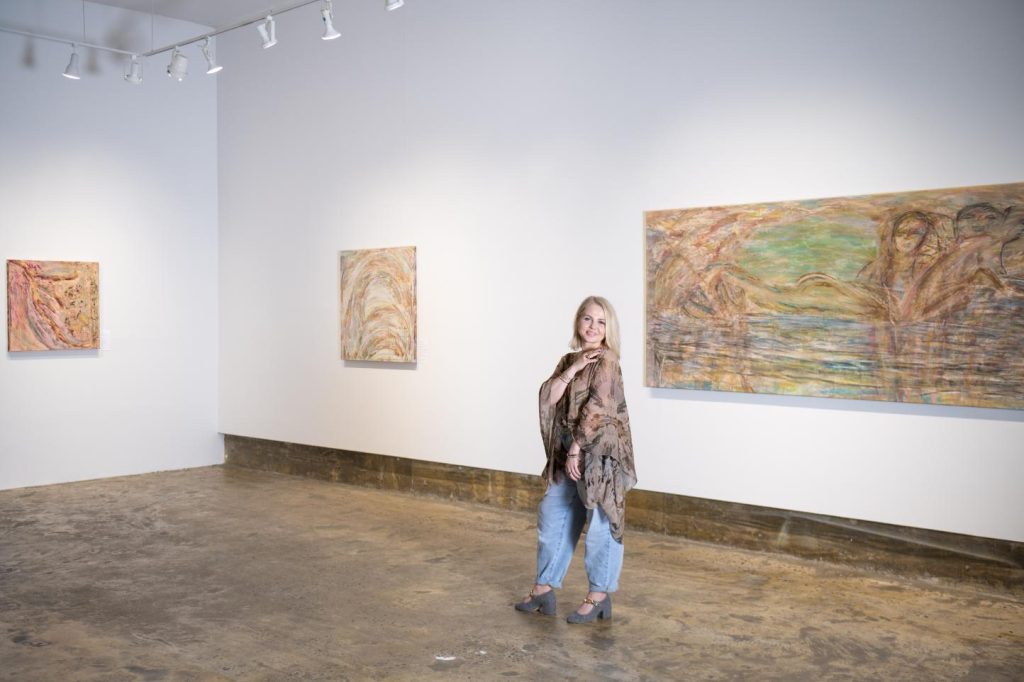
Kasia Muzyka is a Polish-American artist based in Minneapolis, MN, whose practice is rooted in intuition, spirituality, and lived experience. Working outside traditional academic frameworks, she weaves mysticism, human nature, and transcendental philosophy with questions from quantum physics. Her layered visual language explores existence, perception, and the unseen, offering audiences a contemplative journey into the mysteries of being.
Her work often centers feminine presence as a portal, creating intimate encounters that connect the visible with the invisible and the remembered with the felt. Kasia Muzyka has exhibited nationally and internationally, with solo shows including Inner Explorations at Gal Art in Minneapolis and the The Sacred Condition of Being in Manhattan.
How do mysticism and quantum theory shape your creative lens?
Both mysticism and quantum theory point to the same mystery: that reality is not fixed, but responsive. That the act of observation alters what is seen. This truth lives at the heart of my creative process. I approach painting not as a way to represent the world, but to participate in its unfolding.
Mysticism teaches me to listen, to commune with the unseen. Quantum theory reminds me that nothing is truly separate—that frequency, intention, and presence are part of creation itself. My work lives in the space between these: where matter remembers spirit, and form emerges from formlessness.
What role does memory play in your work?
Memory, to me, is not just personal—it’s ancestral, cellular, even cosmic.
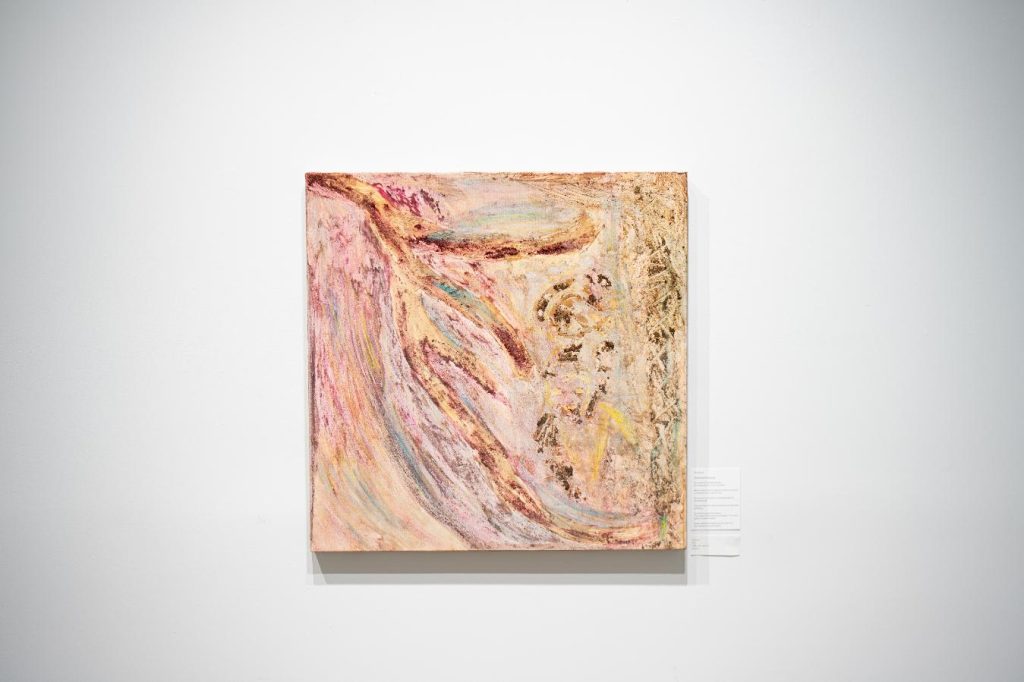
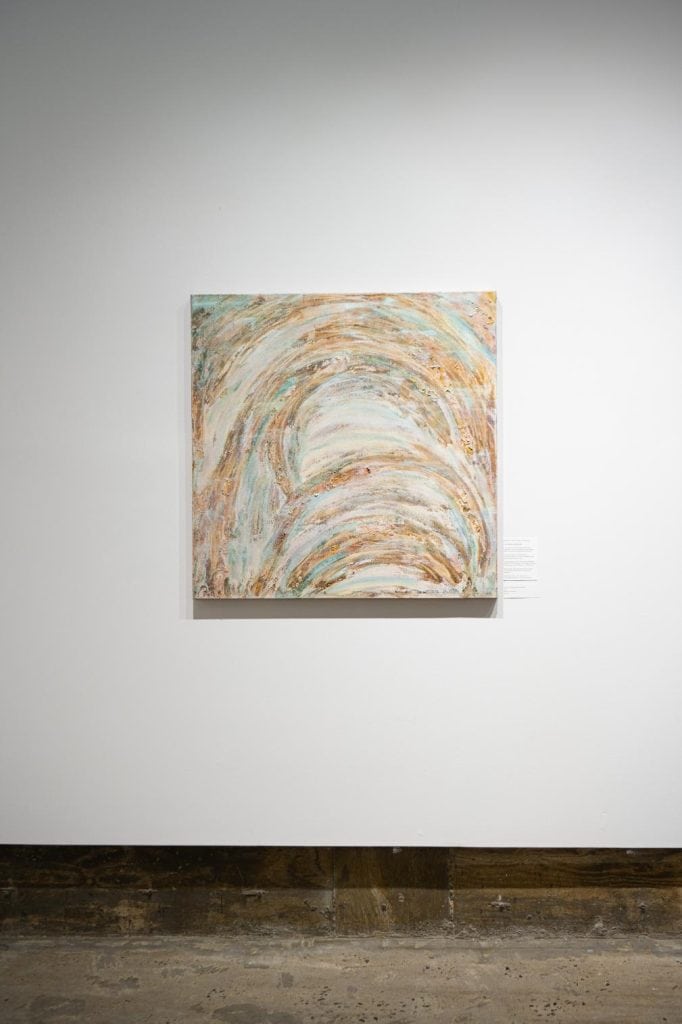
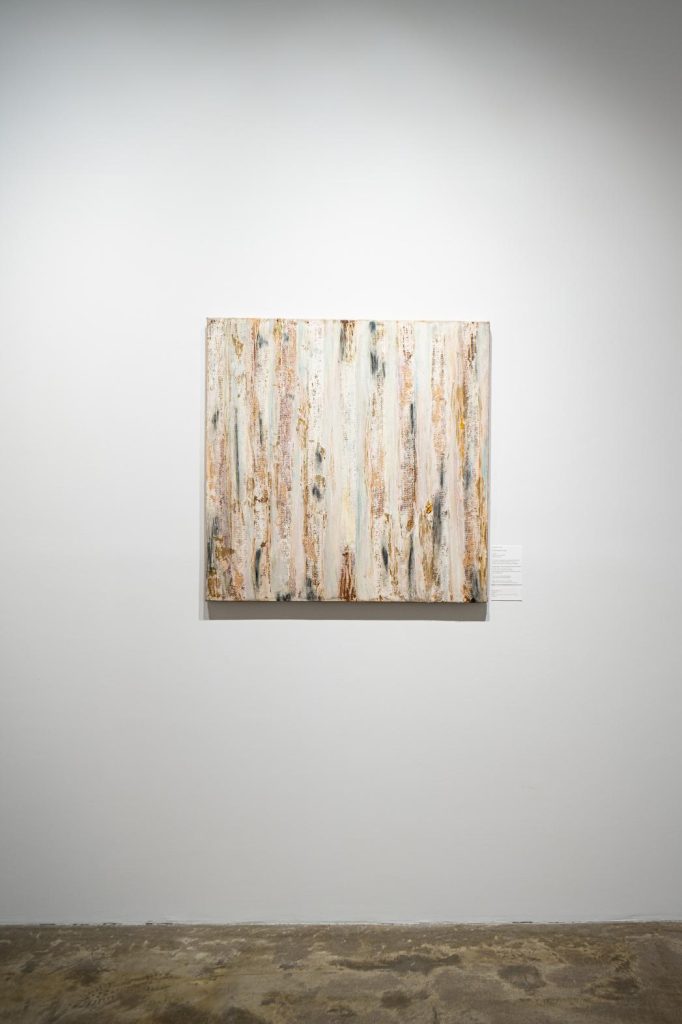
The materials I use—wine, earth, pigment, ash—carry memory. And the images that surface often feel like something I’ve always known, rather than something I’ve made. My work is an excavation, a re-membering. Sometimes what emerges is a personal echo; other times, it feels like I’m touching the collective or the mythic. Memory doesn’t always arrive as a narrative—it arrives as frequency, sensation, symbol. My paintings are vessels for that kind of remembering.
Can you elaborate on your use of abstraction as a form of spiritual language?
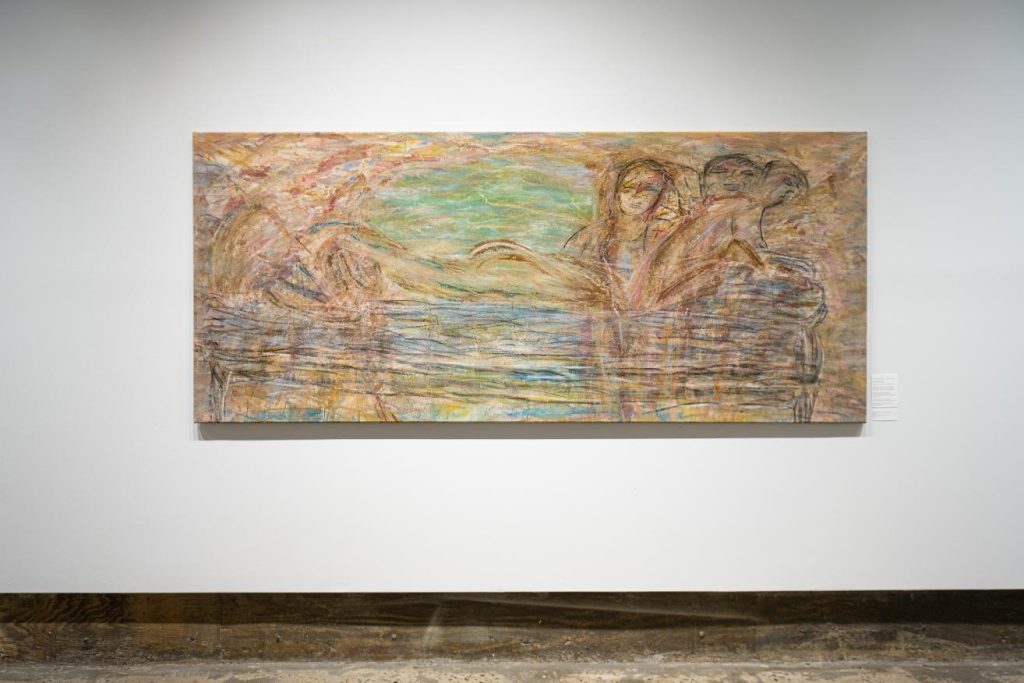
Abstraction allows for mystery. It moves beyond literal meaning and opens a space for the viewer to feel rather than decode.
In my work, abstraction becomes a spiritual language—a way to speak of what cannot be spoken. The forms, textures, and layers are not meant to be understood, but entered. They hold archetypes, frequencies, codes. I think abstraction bypasses the mind and speaks directly to the body and the soul. It’s not what the image is, but what it unlocks.
Do you believe all art has the potential to be sacred?
Yes—if it’s created with presence.
Sacredness, to me, isn’t about theme or subject. It’s about intention. When art is made from a place of truth, of reverence, of deep listening—it holds a certain frequency. That doesn’t mean it has to be serious or quiet or “spiritual.” The sacred can roar, it can be playful, raw, even disruptive. But there’s a quality of aliveness, of soul, that sets it apart. I believe art made from that space becomes more than image—it becomes offering.
How do you define intuition in the creative process?
Intuition is listening before logic.
It’s the inner pulse that tells me when to pause, when to shift, when a piece is finished—even when it makes no sense technically. It’s not random or vague; it’s a refined kind of knowing. In my process, intuition is what guides me to materials, gestures, symbols. I often don’t fully understand what I’m painting until much later. But I trust that the work knows more than I do—and that if I follow the current, it will reveal what needs to be seen.
In what ways does your art act as a portal for viewers?
I think of each piece as an opening—something to enter, rather than observe from a distance.
Because the work is layered and non-linear, it invites the viewer into a slower kind of seeing. One that is felt before it is named. For some, it evokes memory. For others, emotion, stillness, or even a kind of activation. I’ve heard people say the paintings feel like mirrors, or like they’ve stepped into a space that remembers them. That, to me, is the work doing its true task: not just to be seen, but to awaken the seer.
All images courtesy of Kasia Muzyka