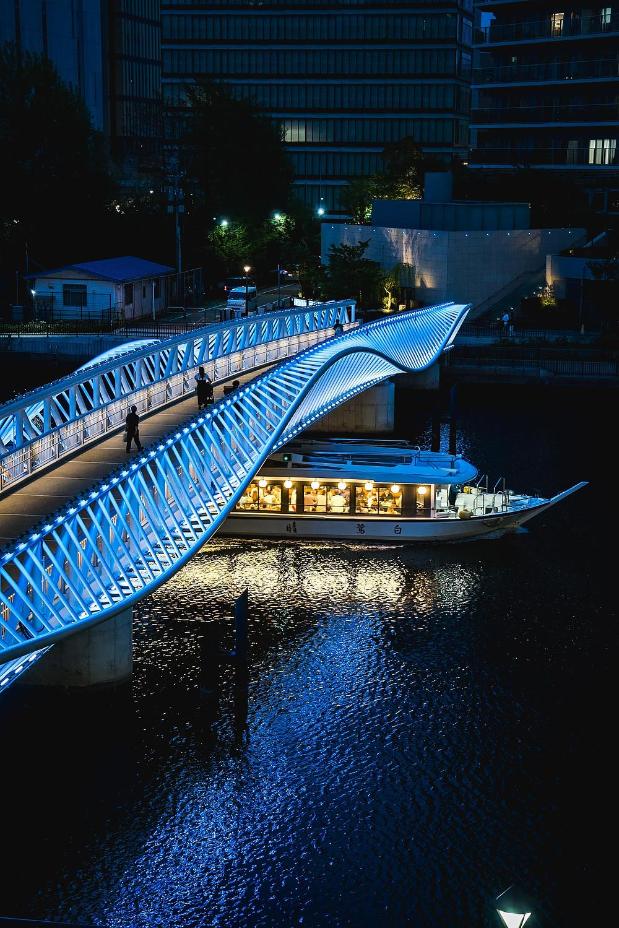
Reimei Kobashi by Hoshino Architects connects Tokyo districts with an undulating pedestrian bridge
The Pedestrian Bridge “Reimei Kobashi” by Hoshino Architects establishes a contemporary connection across Tokyo’s waterfront, linking Kachidoki Station to Harumi 3-chome while extending pedestrian continuity across the Asashio Canal.
Opened to the public on March 25, 2024, the infrastructure responds to the ongoing transformation of the bayfront district, where residential density and public mobility networks continue to expand.
The project integrates circulation, visual identity, and environmental presence through an architectural language that prioritizes spatial continuity and urban accessibility, positioning the footbridge as both a functional route and a civic landmark.
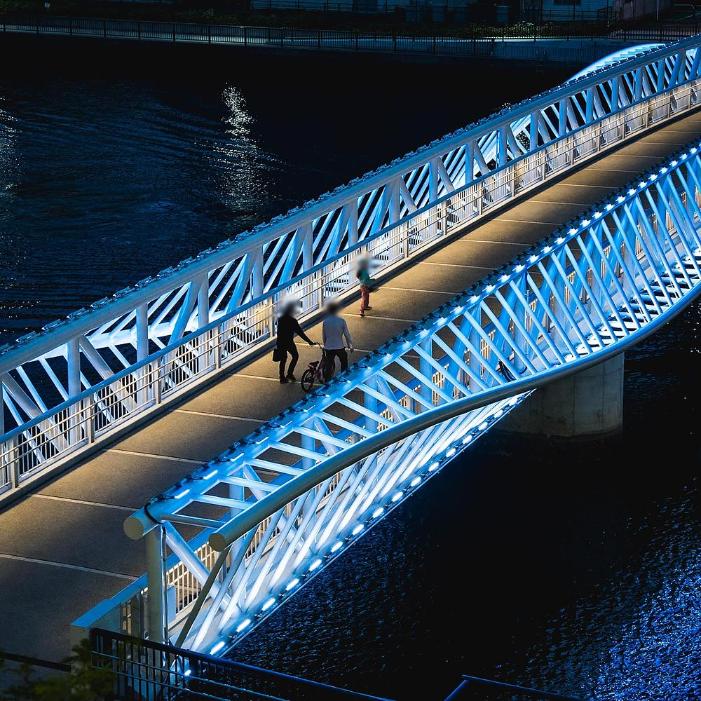
Spanning toward Grand Marina Tokyo, the bridge introduces a softly arching geometry that references wave patterns across the canal’s surface. Its white, continuous structure appears suspended above the water, presenting an uninterrupted spatial gesture that draws attention to movement across and below it.
The gentle undulation of the form reflects a deliberate calibration of curvature and elevation, enabling the structure to express kinetic qualities while maintaining structural clarity. Through this controlled variation of geometry, the bridge communicates motion as a perceptual condition experienced by pedestrians in transit.
The relationship between structure and environment becomes evident through the shifting interplay of light and shadow cast upon the canal. As daylight conditions evolve, the silhouette projected across the water generates layered patterns that echo wave formations, amplifying the sensory experience of the crossing.
These interactions extend the architectural presence beyond its physical boundaries, allowing the Reimei Kobashi bridge to operate simultaneously as infrastructure and atmospheric device, continuously shaped by climatic and temporal factors.
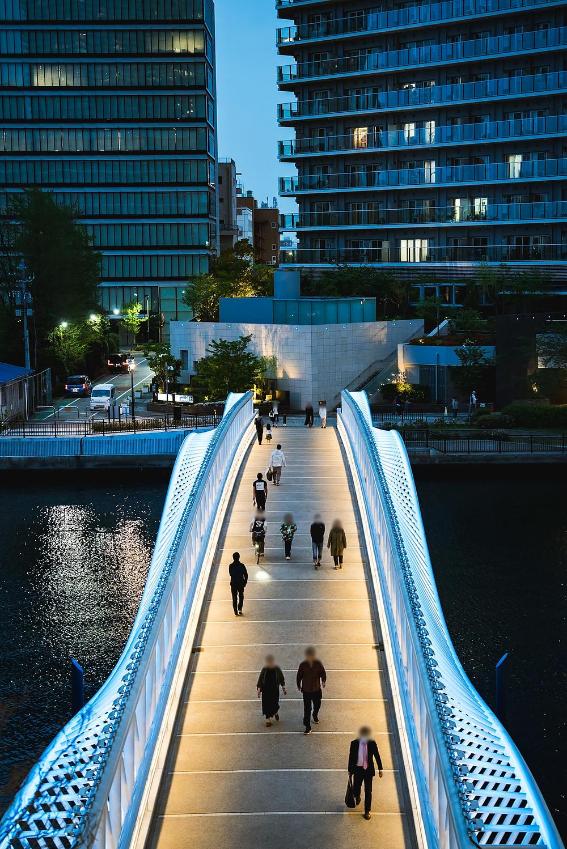
Hoshino Architects Inc. organized the design as a unified sequence articulated through three-dimensional geometric modulation. This fluid progression encourages pedestrians to perceive a sense of transition while crossing, achieved through incremental spatial variation rather than abrupt structural change.
Such continuity supports both accessibility and orientation, ensuring clarity of circulation while sustaining an engaging experiential rhythm. The structure’s white surface reinforces legibility within the dense visual context of the waterfront, contributing to urban navigation and spatial recognition.
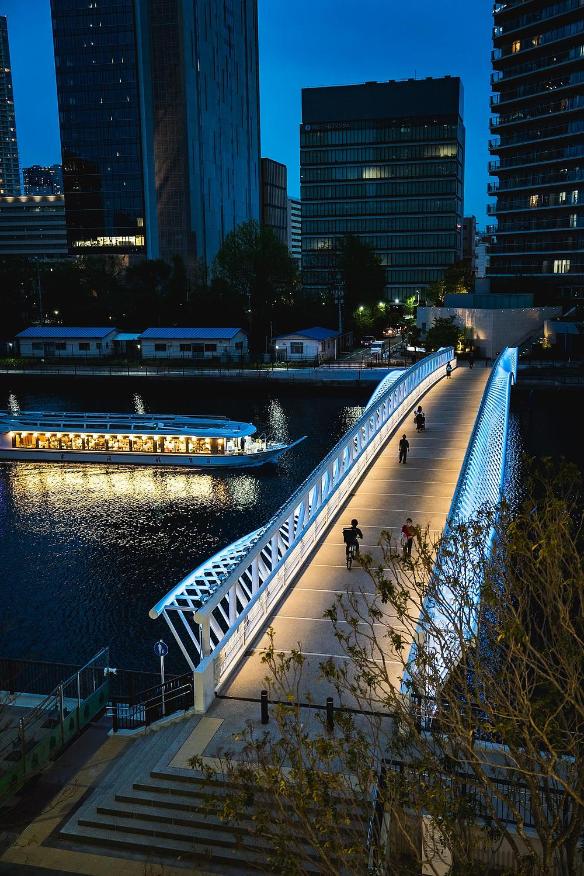
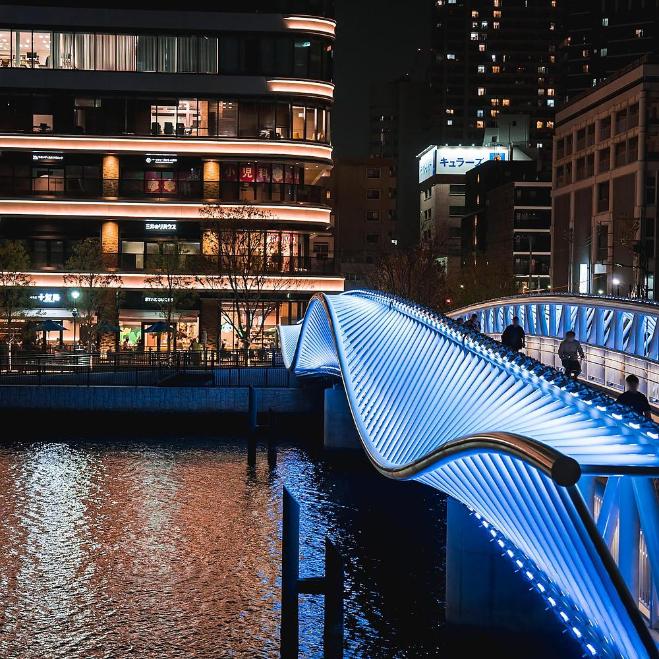
Illumination strategies expand the bridge’s presence after sunset, transforming it into a dynamic nighttime participant in the district’s evolving public realm. Programmable lighting systems adjust colour sequences according to seasonal conditions and weekly cycles, establishing temporal variation through calibrated chromatic transitions.
Independent rhythms assigned to upper and lower surfaces of the rippled geometry produce layered colour relationships that shift gradually throughout the evening. This orchestration introduces a visual cadence that residents encounter repeatedly, reinforcing familiarity while sustaining perceptual diversity.
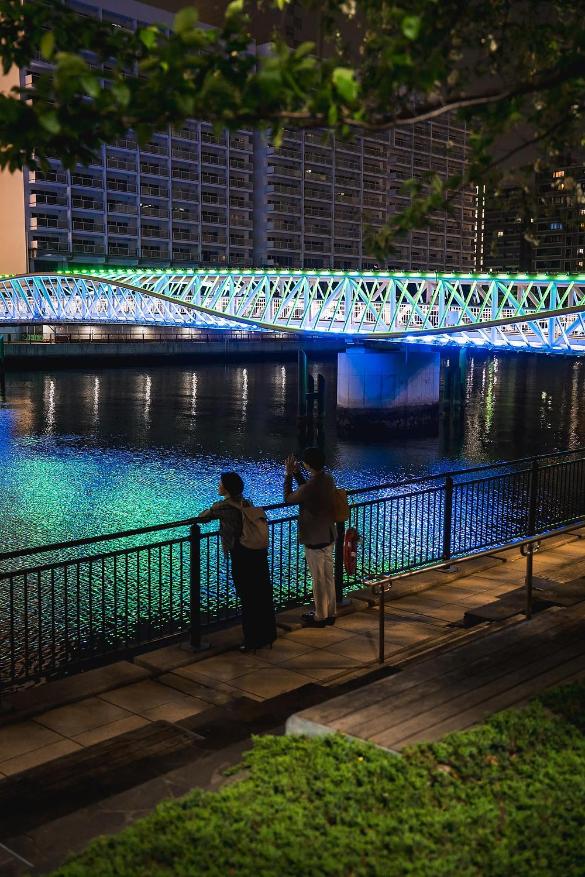
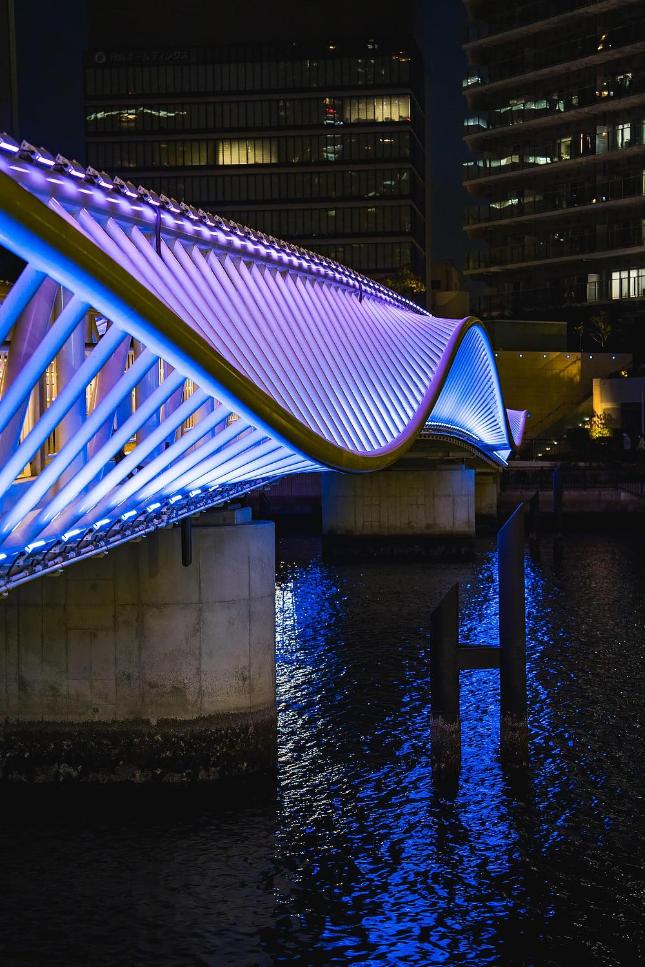
By integrating lighting behaviour with architectural form, the bridge extends civic engagement beyond daylight hours. The resulting nocturnal atmosphere contributes to the waterfront’s identity as an inhabited urban landscape, encouraging evening pedestrian use and social interaction.
Through its synthesis of circulation infrastructure, geometric continuity, and responsive illumination, Reimei Kobashi demonstrates how contemporary pedestrian bridges can participate actively in shaping spatial perception, urban connectivity, and daily experience along Tokyo’s redeveloping shoreline.
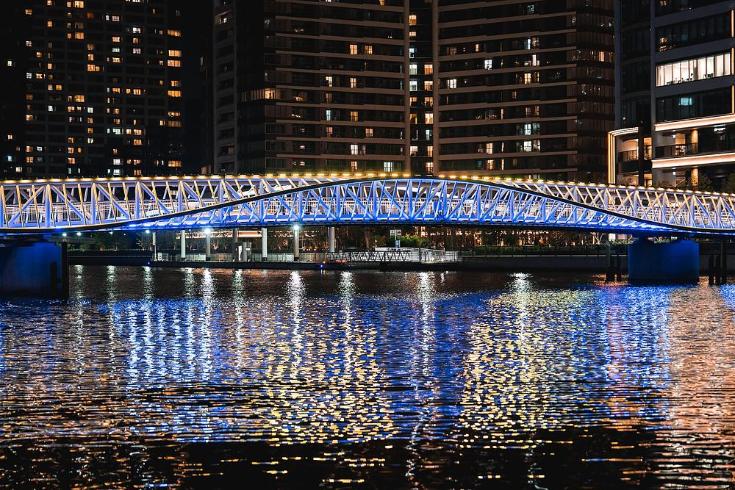
Photography by ebi_times, with courtesy of v2com