In conversation with Rick Dick
Rick Dick constructs images that move through the visual system of fashion with deliberate precision. Working with AI as a generative medium, he builds scenes that echo the aesthetics of luxury campaigns, editorial photography, and celebrity culture. His practice is less about producing images than directing them, where timing, reference, and cultural awareness define the result. Within this process, AI becomes a tool for amplification, allowing familiar codes to be extended into new visual propositions.
Satire operates at the core of Rick Dick work. His images rely on small displacements, unexpected proportions, or narrative inconsistencies that quietly destabilize what appears authoritative. The viewer is first drawn in by recognition, then held by a sense that something does not fully align. Circulating widely across digital platforms and engaging both audiences and industry figures, his work exists within the same economy of visibility it reflects on. In this interview, Rick Dick addresses the role of AI in reshaping authorship, the function of humor in contemporary image-making, and the possibility of maintaining a critical position from inside the system itself.
Let’s begin with your now iconic statement, “Exist without conforming!” You have embodied this philosophy with fearless daring so successfully that you were honored by la Fédération de la Haute Couture et de la Mode and permitted to speak to the entire high fashion world at large, proving that your contributions and output are a thing sought by many even if not stated openly. With this as context, please do share your philosophy on how one can remain nonconformist within a system that is in denial of its conformist demands.
For me, “exist without conforming” doesn’t mean being against everything all the time. It means not letting the system decide who you have to be to belong. Fashion is full of coded expectations: what’s cool, what’s luxury, what’s relevant. You can either chase those codes or use them as material. I chose the second option. I work inside the fashion imagery, but I twist it, exaggerate it, and sometimes break it.
That’s how I stay nonconformist: I use the language of the system to question the system. The only way to remain nonconformist is to accept that at some level you will never be “comfortable” inside the structure. You observe, you play, you collaborate, but you never fully blend in. You keep a bit of distance, a bit of irreverence. That distance is where my work lives.
People question where an artist’s persona originates. How much of Rick Dick is the unfiltered voice of Riccardo from Maremma? When creating pieces that satirize powerful celebrities or cultural moments, do you feel like you’re channeling a younger more rebellious version of yourself? This is to ask truly, what is the psychological root of your fearlessness, might it come from a Maremman belief that no one’s above being questioned? Please enlighten us.
There is no strict border: Rick Dick is Riccardo filtered through years of pop culture, memes, fashion, and irony. Growing up in Maremma, you develop a very practical sense of proportion. Nature is bigger than you, problems are put into perspective, and people are quite direct. I think my “fearlessness” comes from that: from not feeling intimidated by roles and titles. A famous editor, a luxury house, a celebrity, they are people inside a system, not gods.
When I satirize powerful figures or big cultural moments, I don’t feel like I’m attacking them; I’m simply putting them in a different light. Sometimes I do channel a younger version of myself, a bit more raw and rebellious, but with a more mature sense of responsibility now. The root is simple: no one is above being questioned. Especially in a culture as performative as fashion.
What does a day in the life of Rick Dick resemble, and how much do you laugh at your own creations while in the process of making them before pushing post?
My days are a mix of very normal and very surreal. There’s a lot of research: scrolling, reading, watching shows, following fashion weeks, saving references, and observing what people are talking about online. Then there’s the studio time: testing ideas, prompting, editing, compositing, refining. I do laugh at my work, especially at the early sketch stages when an idea suddenly “clicks” and I see where it can go. If it doesn’t at least make me smile or think, I usually don’t post it. The humor is never an afterthought, it’s part of the quality control.
There have only been a small handful of world-recognized creatives within fashion who have used humor to enhance their work, I think of artists such as Phyllis Posnick or Jean-Paul Goude in editorials with surrealistic aspects that raised a smirk or gasp by ironic or even dark humor. What do you think it is about the addition of humor that disarms and even enlightens? Or, granting its obvious power, why do you think austere image makers or orchestrators of prestige seem to treat humor as though a forbidden element?
Humor is dangerous because it breaks distance. The moment you laugh, you’re no longer intimidated. You’re engaged, awake, but less obedient. That’s why humor can also be enlightening: it allows you to see the absurd logic behind certain rituals, images, or hierarchies. Austere image makers often avoid humor because fashion has long been built on aura, mystery, and control. Humor punctures that aura. If your prestige depends entirely on being untouchable, a joke can feel like a threat. I see humor as a tool of intimacy and critique at the same time. It lets you enter the image, enjoy it, and then realize what it’s really saying.
Your work has gone cyclically viral leading me to believe that you have a formula wielded at will. How did it feel the first time you received millions of views and outpourings of praise, and how does one best navigate the ups and downs associated with fame and its sometimes unpredictable results?
The first time something really exploded, it was surreal. Seeing millions of views, comments from people I admired, my images circulating everywhere, it felt exciting, but also slightly unreal, like watching it happen to someone else. You quickly learn that virality is not a stable currency. It comes and goes, and if you chase it, you become a slave to the algorithm instead of serving your work. I try to stay anchored to the process: create, refine, publish, move on. The healthiest way I’ve found to navigate it is this: enjoy the peak, don’t panic in the quiet moments, and never confuse numbers with value. The work has to make sense even when no one is watching.
What is your relationship to image making now since SOTA tools are released and updated on a near weekly basis, and that image making has become chiefly about ideation and originality of concept and less about the intricacies of process? Do you notice yourself missing the use of Photoshop to edit for long periods having grown up using it? And what do you think the creatives of tomorrow will look like process and tool-wise?
I grew up with Photoshop, so it will always be part of my foundation. I still use it, especially for refining and composing. But yes, image-making now is much more about ideas and direction than about manually executing every step. I don’t “miss” the long sessions, because I still have them, they just look different.
Instead of cutting and pasting every pixel, I spend more time deciding what to say, what to show, how far I can push an idea. The creatives of tomorrow will probably be hybrid: less defined by one tool and more by their ability to orchestrate many. Prompting, editing, curating, coding, directing, it will all blend. The ones who stand out will be those with a clear point of view, not just a fast workflow.
AI is either loved, misunderstood or hated, but you have embraced these tools very early on and made images that people could only imagine, and you have been celebrated for doing so. What is your view on AI fears or hints from world-recognized image makers who feel like they will be displaced by the machines? Are their fears warranted? Your recent campaign with United Colors of Benetton shows that new tools when properly used can make campaigns better without taking away a need for creatives.
I understand the fear. When a new tool appears and suddenly everyone can produce images, it’s easy to feel replaceable. But tools don’t remove the need for vision; they shift where the value lies. In the Benetton campaign, AI didn’t replace creatives, it expanded what was possible in terms of mood, diversity of visuals, and speed. There was still a brief, a concept, an art direction, approvals, and a lot of human judgment. I think the real risk is not “being displaced by machines,” but refusing to learn how to work with them. AI is powerful, but it’s not autonomous meaning. Without humans deciding what to do with it, it’s just output.
Being world recognized and having had your work liked and shared by top celebrities and fashion houses must have granted you a feeling of accomplishment and recognition that remains as part of your identity until today. How does your family feel about your triumph over fashion and Pop culture via satire, and do you have any plans of making more tangible works and showing them in galleries or exhibitions in the future?
My family is proud, sometimes amused, sometimes a bit astonished. For someone from outside the fashion or art world, seeing your work reposted by major brands or celebrities feels almost unreal. But they’ve seen the years of work behind it, so they know it wasn’t accidental. I do see a future in more tangible works: prints, installations, maybe objects or collaborations that bring this digital language into physical space. Exhibitions interest me especially as a way to slow down the experience: to allow people to stay with the images longer than a swipe.
One way to remain above the system is to see fashion and pop culture for what they are: a collaborative creative machine that relies on past notions of value linked to power, be it royalty, fame, or exclusive rarity. These values may no longer exist as they did historically, but perpetuate themselves through allusions to heritage and brand reputation.
Having worked both as a brand consultant and a celebrated satirist, you have a rare view of the “core facade” and “imaginative realm” that insiders admit govern this industry. Your own success proves that new forms of value, based on wit, digital fluency, cultural resonance, can be created outside traditional hierarchies. With this in mind, and seeing how malleable approaches can be, how would you refashion this system?
If I could refashion the system, I would start by diversifying what we call “value”. Right now, value is still heavily associated with heritage, exclusivity, and a certain kind of seriousness. I would integrate other currencies: wit, agility, digital culture, openness to collaboration, and a more honest relationship with the audience.
I’d love to see a system where a meme, a campaign, a runway, and an artwork can coexist on a more equal level, all recognized for their impact on how we think about identity, beauty, and power. Less gatekeeping, more dialogue. Less pretending to be untouchable, more admitting that fashion is a collective hallucination we’re all maintaining together, and that sometimes, the most interesting contributions come from outside the traditional hierarchy.
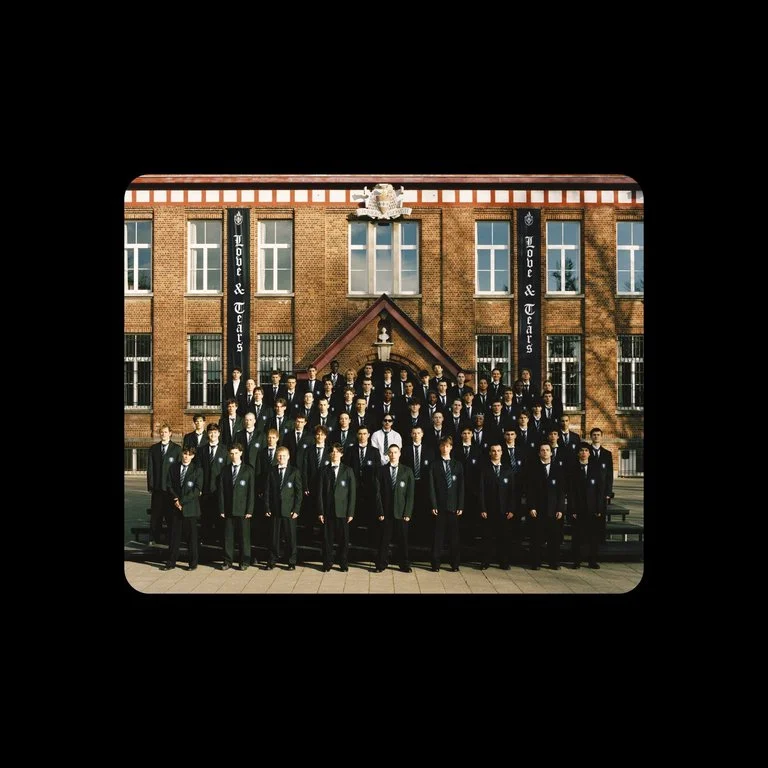
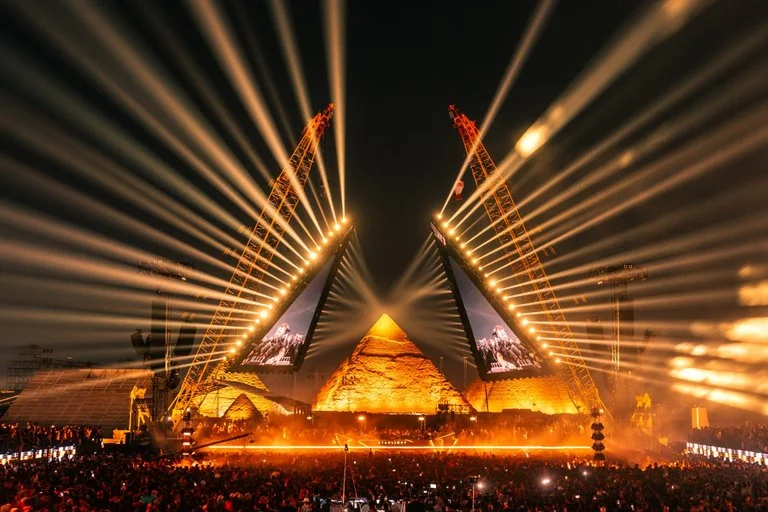
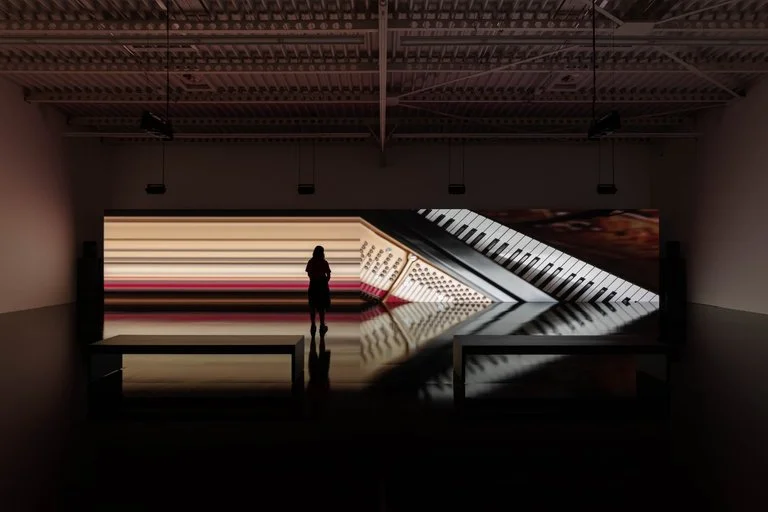
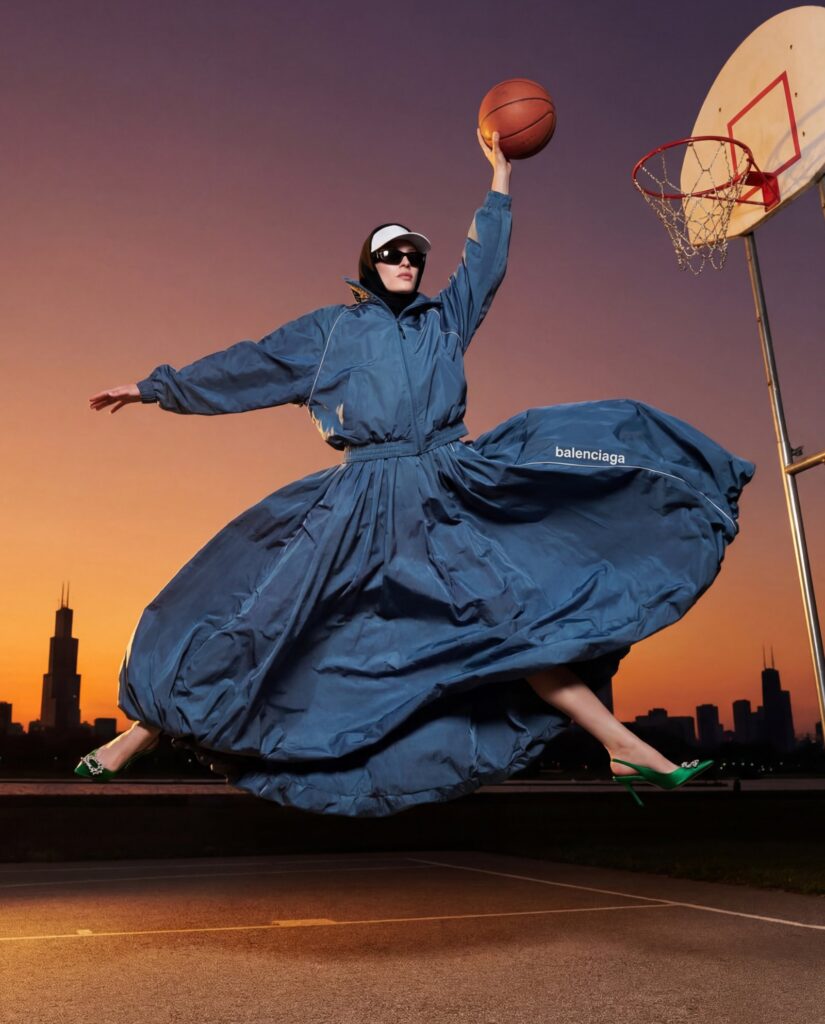
All images are generate with AI by Rick Dick, shared with courtesy of the artist
Rick Dick Instagram: https://www.instagram.com/rickdick_