Beijing Art Museum by Snøhetta and BIAD shapes a new cultural district
Snøhetta, in partnership with the Beijing Institute of Architectural Design, secured the commission for the Beijing Art Museum in Tongzhou District. The institution adds a second cultural landmark to Snøhetta’s portfolio in the Chinese capital after the Beijing Library opened in 2023. Expected to play a major role in the cultural ecosystem of Beijing, the project spans more than 110,000 square meters and presents fine arts, intangible heritage, fashion design and contemporary creative practices. With its interdisciplinary reach, the museum is set to nurture Beijing’s art scene while advancing civic life within the expanding district.
The institution is envisioned as a place where collecting and presenting coexist as equal ambitions. Through this approach, the museum amplifies the act of perception, turning looking into an aesthetic experience in its own right. It channels a constellation of relationships: linking past and future, artists and viewers, architecture and terrain, individuals and collective life, and Beijing to wider cultural networks. This relational matrix positions the museum as a platform for multiple creative voices and interpretations to exist concurrently, generating an environment defined by cultural plurality.
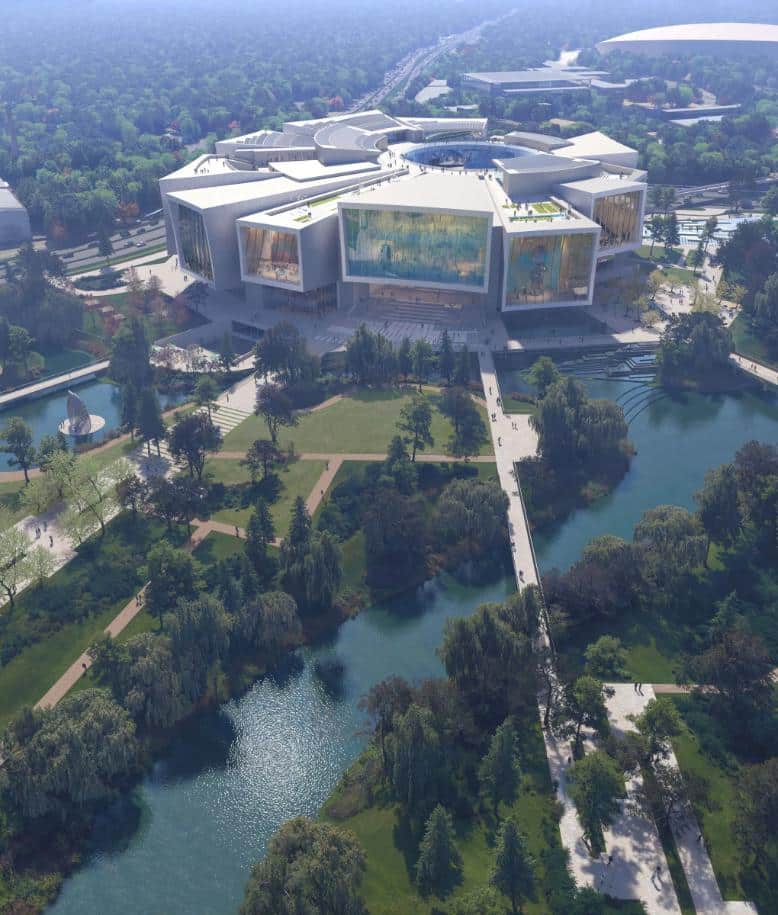
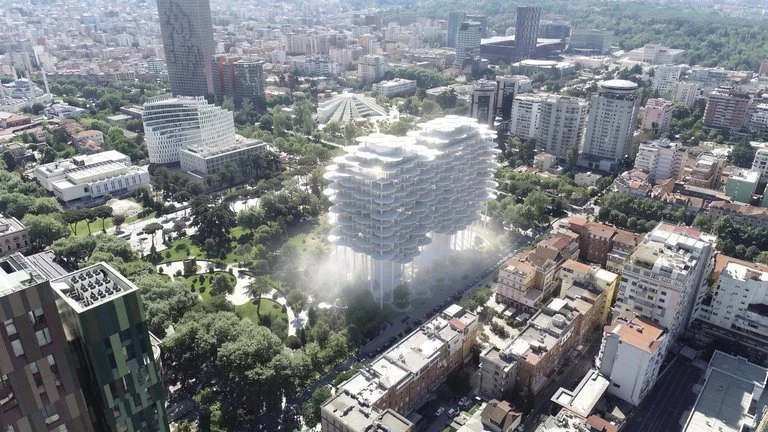
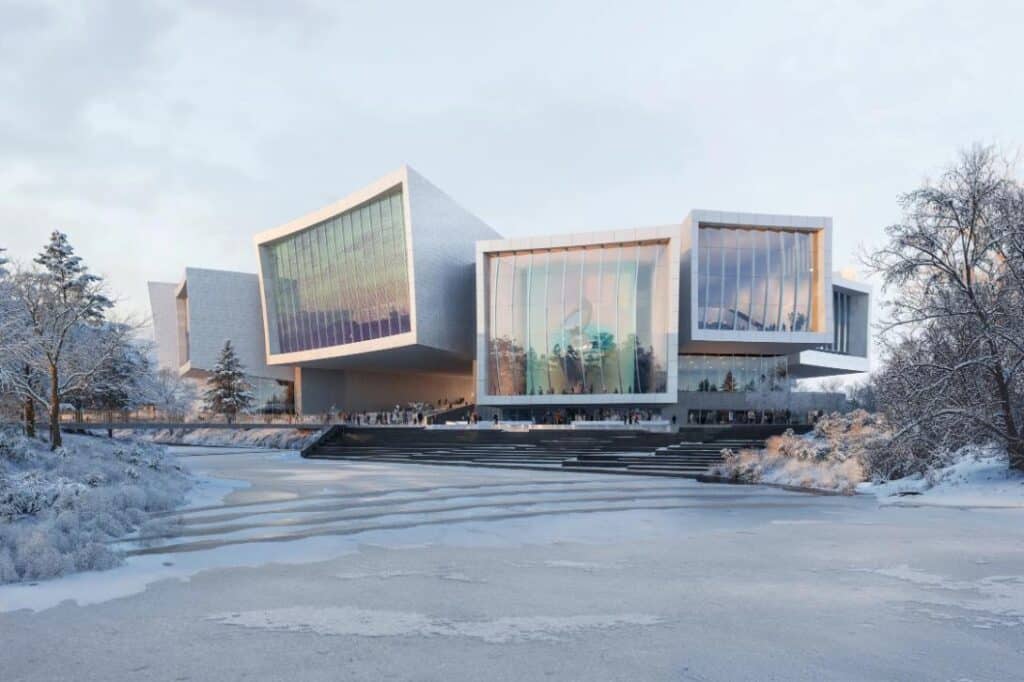
Located above a metro line, the building also works as an urban connector. The sculptural volumes radiate outward from a central core, accompanied by rippled facades that soften the transition between built form and open ground. The public realm gains significance as outdoor spaces encourage community use and situate the museum within everyday life. The architectural strategy accommodates programmatic density while promoting accessibility for diverse audiences and purposes.
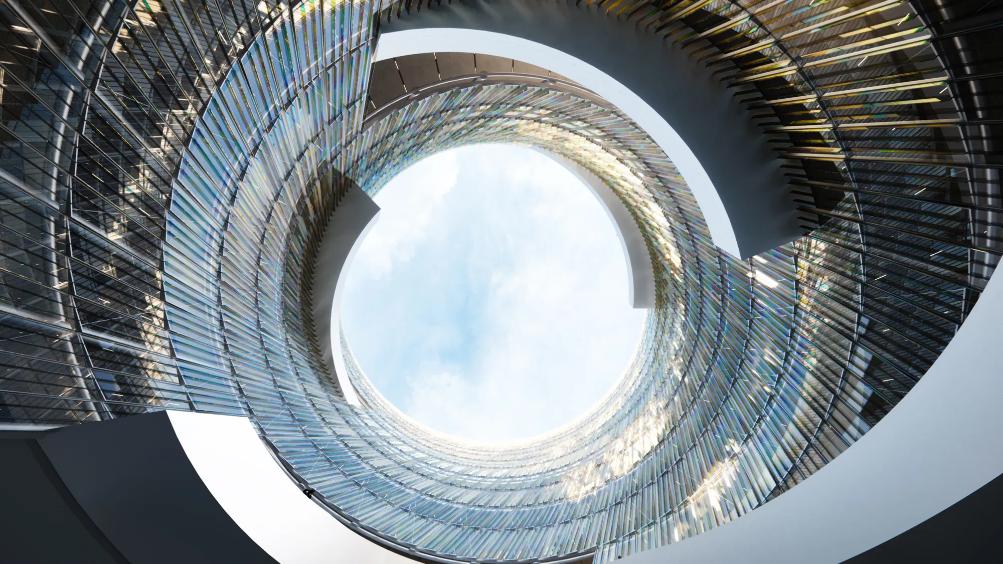
A circular atrium sits at the center and draws exhibition areas, gathering spaces and circulation pathways inward. Multi-level vantage points create visual continuity inside, fostering dialogue between visitors and artworks. Galleries and supporting zones spiral around the void and extend into petal-shaped wings with panoramic outlooks across the developing surroundings. These outward views reinforce the idea of mutual observation, pairing the act of seeing the city with the awareness of being part of its cultural present.
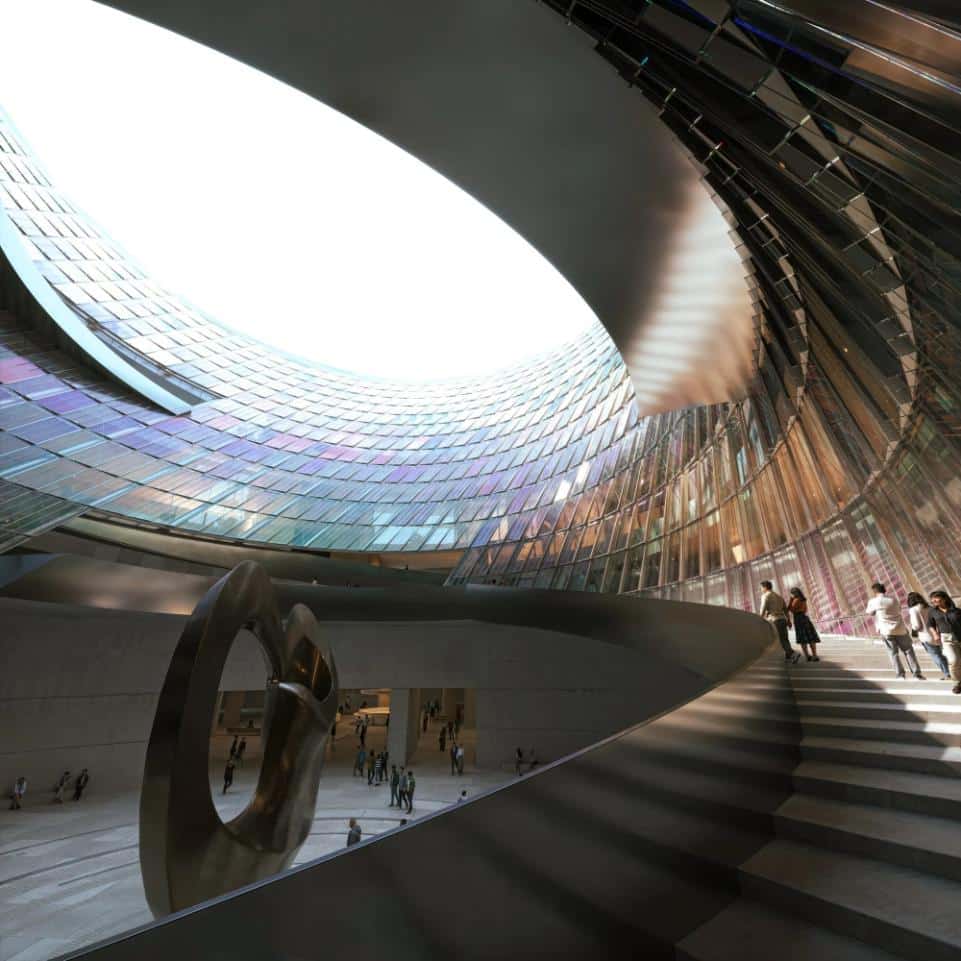
The surrounding grounds extend the architectural language into a civic landscape that encourages art installations, informal conversation and outdoor participation. Building, interior and terrain function as a continuous system, linking cultural expression with daily urban rhythms. In doing so, the Beijing Art Museum positions itself as a conduit where cultural narratives connect across timeframes, audiences and mediums.
Sustainability underpins the project. Photovoltaic surfaces occupy the roofscape, and the terrain incorporates water strategies compatible with sponge city principles. These measures support long-term ecological performance and stability. Construction began on December 31, 2025, with opening scheduled for 2029.
All images by Snøhetta